
-
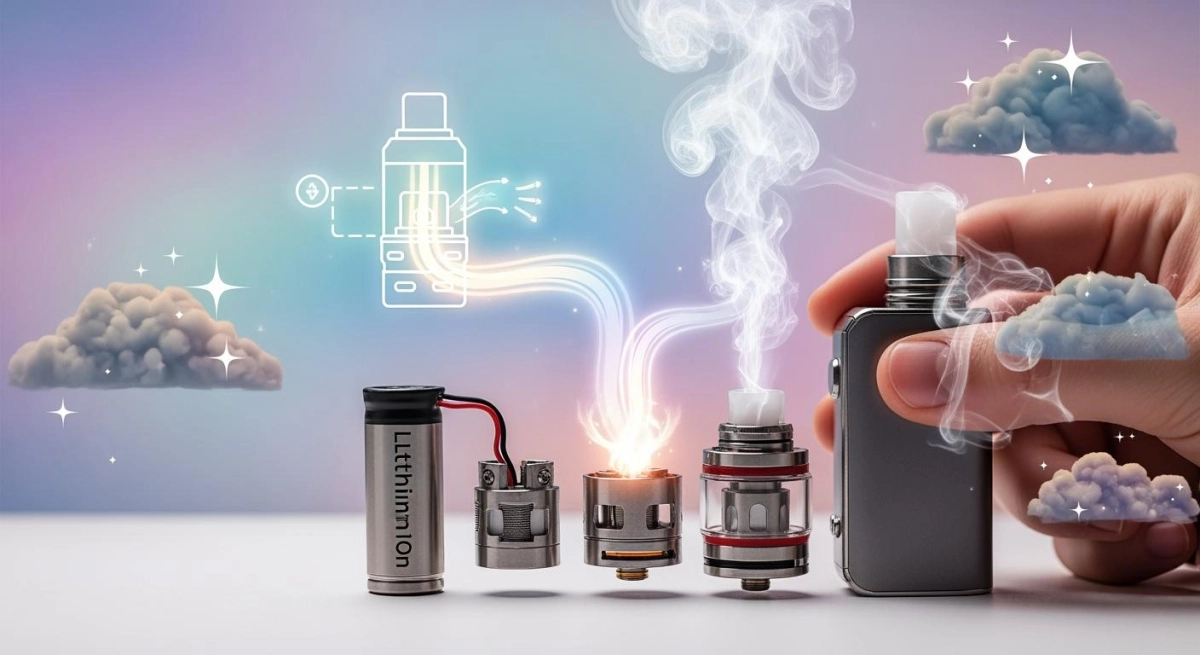
Vapes use battery power to heat a coil.
-
The coil heats a liquid, turning it into an inhalable aerosol.
-
No burning takes place—only vaporization occurs inside the device.
How do vapes work? The hardware delivers electrical energy from a battery to a coil, which heats up and vaporizes liquid for inhalation. This process creates the vapor that users inhale.
Important: This article explains how vape hardware and vaporization physics work. It is for technical education only and does not provide medical or health advice or recommend using any nicotine or cannabis products. Public-health agencies such as the U.S. Centers for Disease Control and Prevention (CDC)</a > and the World Health Organization (WHO)</a > note that e-cigarette aerosol can contain nicotine and other harmful substances and is not safe for youth, pregnant people, or non-smokers. Anyone making health decisions about vaping should rely on qualified health professionals and official guidance.
Key Takeaways
-
Vapes use battery power to heat a coil, which vaporizes liquid into an inhalable aerosol.
-
The vaping process involves several steps, from activating the device to inhaling the vapor.
-
Vapes do not burn material; they heat and vaporize a liquid instead of combusting tobacco. Laboratory comparisons have found that e-cigarette aerosol can contain fewer types and lower levels of many toxic chemicals than cigarette smoke for adult smokers who completely switch, but the aerosol is still not harmless and can contain nicotine and other toxic substances.
-
Understanding the components of a vape—battery, chip, coil, wick, and airflow path—helps explain how devices work and why design choices matter.
-
Adjusting settings like wattage and airflow can change vapor production, temperature, and perceived flavor.
-
Regular maintenance, such as cleaning contacts and checking for clogs, supports consistent performance and helps prevent common hardware issues.
How do vapes work: The process
Understanding how do vapes work begins with the core mechanism that transforms electrical energy into an inhalable vapor. This process relies on a series of precise steps that occur inside every vape device.
Step-by-step process
The operation of a vape follows a clear sequence. Each step plays a critical role in delivering a consistent vaping experience:
-
The user activates the vape by either pressing a button or inhaling through the mouthpiece.
-
The battery supplies electrical energy to the atomizer, which contains the coil.
-
The coil receives power and begins the heating process.
-
The heating process causes the coil to heat up the wick, which holds the liquid.
-
The liquid absorbs heat and turns into vapor, forming an aerosol made of tiny droplets suspended in air.
-
The user inhales the aerosol through the mouthpiece.
This sequence answers the question, how does a vape work, by showing the direct path from battery activation to vapor inhalation.
Electrical energy to heat
The battery serves as the power source for all vapes. When the user activates the device, the battery sends electrical current to the coil. The coil, made from a resistive metal wire, converts this electrical energy into heat. The heating process depends on the resistance of the coil and the amount of power supplied by the battery. Lower-resistance coils heat up faster and can produce more vapor, while higher-resistance coils heat more slowly and use less power.
Heat to vapor (aerosol)
Once the coil heats up, it transfers heat to the wick. The wick, usually made from cotton or ceramic, draws liquid toward the coil using capillary action. As the coil reaches the right temperature, the liquid in contact with the coil vaporizes. This vapor forms an aerosol, consisting of tiny liquid droplets and vapor mixed with air. The user inhales this aerosol, not smoke, through the mouthpiece. The entire process happens in seconds, providing a controlled vaping experience.
No combustion, only vaporization
A key difference between vapes and traditional cigarettes lies in the absence of combustion. Vapes do not burn any material. Instead, they use a controlled heating process</a > to vaporize liquid. This distinction changes the chemical composition of what the user inhales. Cigarette smoke is created by combustion, which breaks down tobacco and paper at very high temperatures and generates thousands of chemicals, including many known carcinogens.
E-cigarette aerosol, by contrast, is produced by heating a liquid. It has a different chemical profile and, in independent reviews of adult smokers who completely switch, has generally shown lower levels of many toxicants compared with cigarette smoke. At the same time, agencies such as CDC stress that e-cigarette aerosol can still contain nicotine, ultrafine particles, and other potentially harmful substances and should not be considered harmless.
The question, how do vapes work, therefore centers on this controlled vaporization process. Every vape uses electrical energy to create heat, which then produces vapor without burning the material in the device.
What’s inside a vape: Core components
Battery and chip
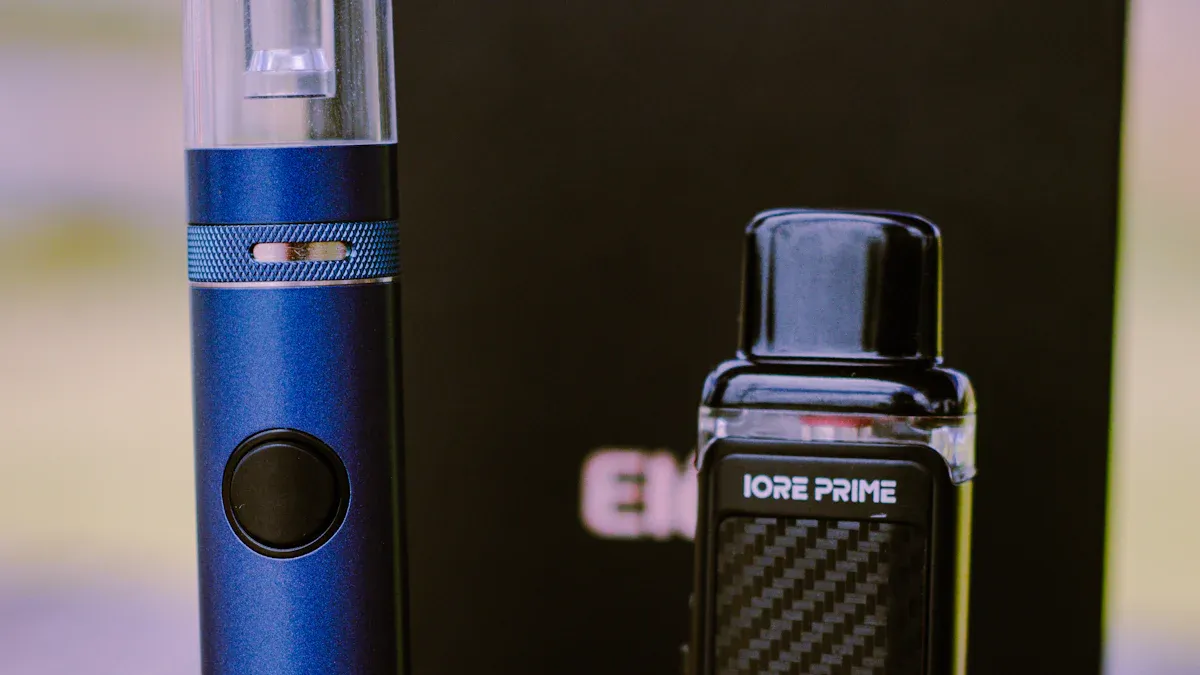
Every vape relies on a battery to supply power. The battery stores electrical energy and releases it when the user activates the device. Most vape devices use rechargeable lithium-ion batteries. These batteries provide stable voltage and high energy density, which supports consistent vapor production. The chip, also called the control board or PCB, manages the flow of electricity. It regulates power output, monitors safety features, and sometimes allows users to adjust settings.
The chip works with the battery to ensure safe and efficient operation. It prevents overheating, overcharging, and short circuits. Some advanced chips allow users to change voltage, wattage, or temperature. This flexibility helps control how does a vape work with different liquids and supports different vaping styles.
Coil and resistance
The coil acts as the heating element in all vapes. It consists of a thin wire or mesh made from metals like kanthal, stainless steel, or nickel. When electricity passes through the coil, resistance causes the wire to heat up. This heat vaporizes the liquid that touches the coil.
Coil resistance plays a key role in device performance. Resistance is measured in ohms (Ω). Lower resistance allows more current to flow and therefore more heat; higher resistance limits current and heat generation.
|
Coil Type |
Resistance Range |
Heat Generation |
Vapor Production |
Flavor Intensity |
|---|---|---|---|---|
|
Low-Resistance (Sub-Ohm) |
< 1.0 Ω |
Heats quickly, uses more power |
Produces thick, dense vapor clouds |
Enhances flavor intensity, runs hotter |
|
High-Resistance |
> 1.0 Ω |
Heats more slowly, uses less power |
Milder vapor production |
Provides a smoother, gentler flavor |
Low-resistance coils use more power and create larger vapor clouds. High-resistance coils use less power and produce a smoother, cooler vapor. The choice of coil affects how does a vape work with liquid and the overall user experience. The coil’s design and material also influence the heating speed and consistency.
Wick and capillary action
The wick delivers liquid from the tank or reservoir to the coil. It uses capillary action to draw liquid toward the heating element. The wick must stay saturated to prevent dry hits and ensure steady vapor production.
Common wick and coil configurations include:
-
Traditional wire coil with cotton wick. Cotton absorbs liquid well and works reliably at low to medium power.
-
Mesh coil. Mesh provides a large surface area. Most designs use thin cotton strips behind the mesh.
-
Ceramic coils. Ceramic wicks use tiny pores to move liquid. They offer good heat stability but wick more slowly.
Organic cotton is popular for its absorbency and neutral taste. Its fiber structure supports rapid capillary action, which keeps the coil supplied with fresh liquid. This process is essential for consistent vapor and flavor. The wick’s material and design are important components of a vaping device and affect how vapes perform over time.
Understanding what’s inside a vape helps explain how each part works together. The battery and chip supply and control power. The coil and resistance determine heating and vapor output. The wick and capillary action ensure the coil always receives enough liquid. These components form the core of how vapes function.
Airflow path and mouthpiece
The airflow path and mouthpiece form essential parts of every vape device. The airflow path directs air from the outside, through the device, and over the coil before reaching the user’s mouth. The mouthpiece serves as the final exit point for the vapor.
Engineers design the airflow system to control how much air mixes with the vapor. Open airflow systems allow more air to pass through and support direct-to-lung (DTL) vaping, which produces larger vapor clouds and a cooler inhale. In contrast, restricted airflow systems use smaller air inlets. These systems create a tighter draw, similar to traditional smoking and often preferred for mouth-to-lung (MTL) use.
Many modern vape devices include adjustable airflow rings. By opening or closing the air inlets, users can balance vapor density, warmth, and draw tightness. Wide-open airflow works well with sub-ohm coils and higher power settings. Restricted airflow enhances flavor and suits users who want a more controlled, cigarette-like experience.
The mouthpiece also affects the vaping experience. Wide-bore mouthpieces allow more vapor and air to pass through, which suits DTL styles. Narrow mouthpieces restrict airflow, making them ideal for MTL vaping. The combination of airflow design and mouthpiece shape determines the feel, flavor, and vapor output of the device.
Safety features
Vape hardware includes several safety features to protect users and maintain device reliability. Manufacturers integrate these features into the chip and battery system to reduce the risk of overheating or electrical faults.
|
Safety Feature |
Description |
|---|---|
|
Overheat Protection |
Automatically shuts down the device if it gets too hot. |
|
Short-Circuit Protection |
Cuts power if a short circuit is detected between battery and coil. |
|
Overcharge Protection |
Stops charging when the battery reaches full capacity. |
|
Timeout Cutoff |
Automatically stops firing after several seconds of continuous activation. |
Tip: Many regulated devices also include auto shut-off features. If the fire button is held too long, the device will stop heating to prevent overheating.
These safety features work together to keep vape devices operating within intended limits. They help prevent common electrical issues and contribute to the overall reliability of the hardware.
Science behind vaping: Vaporization explained
How does a vape work: Physics
The science behind vaping starts with the physical principles that drive vaporization inside vape devices. When a user activates a vape, the battery sends electrical energy to the coil. The coil heats up, transferring energy to the liquid held by the wick. This process relies on well-known thermal concepts:
|
Principle |
Description |
|---|---|
|
Vapor Pressure |
As temperature rises, more molecules escape from a liquid into the vapor phase, increasing vapor pressure. |
|
Latent Heat of Vaporization |
The energy required to convert a unit mass of liquid to vapor without changing the remaining liquid’s temperature. |
|
Specific Heat |
The energy needed to raise the temperature of a unit mass of a substance by one degree; relevant when selecting metals and ceramics for coils and housings. |
|
Thermal Conductivity |
A measure of how easily a material transmits heat; high thermal conductivity helps spread heat evenly across a coil or heating plate. |
Vaporization occurs when the coil reaches a temperature high enough to turn liquid into vapor without igniting it. Oil-based and dry-herb vaporizers apply the same principle: bringing material to a controlled temperature below the point where combustion starts, so aerosol is produced rather than smoke.
Ohm’s law and power
The science behind vaping also involves electrical laws. Ohm’s law describes how voltage (V), current (I), and resistance (R) interact in vape coils: V = I × R. For a given battery voltage, lowering the coil’s resistance increases current and power, which raises the coil temperature more quickly.
Engineers balance coil resistance, battery output, and device limits to keep operation within safe ranges. Regulated devices monitor these values and cap the maximum wattage so that the coil heats efficiently without exceeding material or safety limits.
Temperature control
Temperature control plays a key role in consistent vaporization. Instead of letting wattage fluctuate freely, some devices estimate coil temperature using resistance changes in materials such as stainless steel or nickel. The chip then adjusts power in real time to keep the coil within a selected temperature range.
This approach helps:
-
Reduce dry hits when the wick is running low on liquid.
-
Avoid overheating, which can degrade liquid ingredients and darken/burn the wick.
-
Provide a more repeatable experience from puff to puff, even as the battery voltage slowly drops.
Scientific and regulatory reviews—such as the National Academies report on the public health consequences of e-cigarettes</a >—highlight that how hot a device runs strongly influences which by-products can form. Keeping temperatures within design limits is therefore essential for both device reliability and risk management.
Aerosol vs smoke
A vape device heats a liquid to form an aerosol. This process, called aerosolization, uses controlled temperatures. The coil inside the device typically operates in the 150–250 °C range. The liquid absorbs this heat and turns into tiny droplets suspended in air. Users inhale this aerosol through the mouthpiece. No burning occurs during this process.
Cigarettes, on the other hand, rely on combustion. When a user lights a cigarette, the temperature at the burning tip can exceed 600 °C. This high heat burns tobacco and paper, producing smoke. Combustion breaks down the material and creates thousands of new chemical compounds. Many of these compounds are toxic or carcinogenic; public health sources estimate that cigarette smoke contains thousands of chemicals, including dozens that are known to cause cancer.
Laboratory analyses comparing cigarette smoke and e-cigarette aerosol have found substantial differences in toxicant profiles. CDC summaries</a > note that e-cigarette aerosol generally contains fewer types and lower levels of many harmful chemicals than smoke from burned tobacco products—but also emphasize that the aerosol is not harmless and can expose users to nicotine, ultrafine particles, volatile organic compounds, and other toxicants. E-cigarettes are therefore not recommended for youth, young adults, pregnant adults, or people who do not already smoke.
To illustrate key differences, the table below summarizes findings from comparative research:
|
Aspect |
Vape Aerosol |
Cigarette Smoke |
|---|---|---|
|
Production Process |
Aerosolisation (heating liquid) |
Combustion (burning tobacco and paper) |
|
Typical Temperature |
~150–250 °C |
Often > 600 °C |
|
By-product Profile |
Fewer types and generally lower levels of many toxicants, though not free of harmful substances |
High levels of tar, carbon monoxide, and numerous carcinogens |
|
Combustion Products |
No ash; no carbon monoxide from burning tobacco |
Produces ash, carbon monoxide, and large quantities of solid particulates |
Note: Vape devices do not produce tar or carbon monoxide in the same way that burning tobacco does, but their aerosol can still contain nicotine and other harmful compounds. For risk information, readers should rely on public health agencies and evidence syntheses rather than marketing materials.
Device types: Comparing vape hardware
Cigalikes
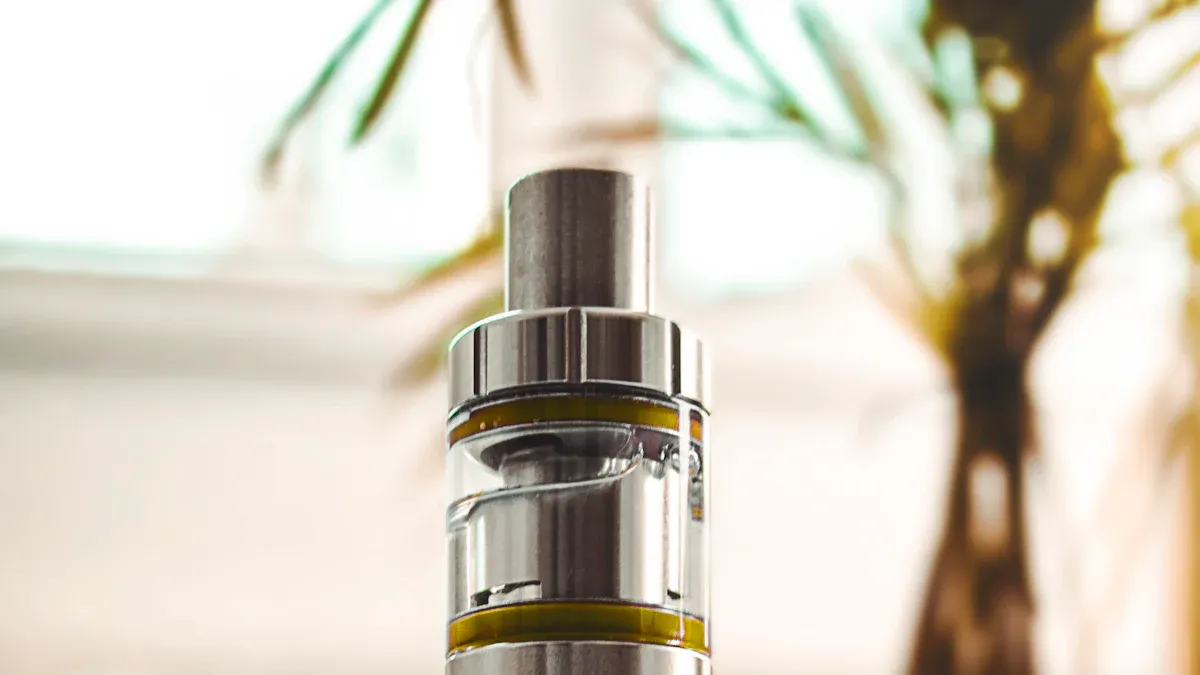
Cigalikes represent the earliest form of vaping devices. Designers created these devices to mimic the look and feel of traditional cigarettes. Most cigalikes use a compact, lightweight body and simple operation: users activate the device by inhaling, which triggers the battery to heat the coil.
Typical hardware characteristics include:
-
Very small integrated battery
-
Pre-filled, non-refillable cartridges
-
Draw-activated firing with no buttons
-
Limited vapor output and battery life
Cigalikes appeal to people who want a straightforward, familiar footprint, with minimal settings or maintenance.
Vape pens
Vape pens offer a step up in both performance and customization. These devices feature a slim, pen-like shape with a larger battery than cigalikes. Many provide button-activated firing, adjustable airflow, and replaceable coils.
-
Support for refillable tanks or pre-filled pods
-
Moderate battery capacity for longer use
-
Replaceable coils and wicks
-
Basic control over wattage or voltage on some models
Vape pens suit users who want more control and better runtime without jumping to large box-mod systems.
Pod systems
Pod systems have become popular for their compact size and ease of use. These devices use detachable plastic pods that hold the liquid. Users insert the pod into the battery section, which automatically connects the coil and wick to the power source.
Pods may be pre-filled and disposable or refillable. Many pod systems are draw-activated and use ceramic or mesh coils for smooth vapor and consistent flavor. Their moderate battery size strikes a balance between portability and runtime.
Note: Pod systems often use integrated coils. When the coil reaches end of life, the entire pod is replaced, simplifying maintenance.
Disposables
The hardware inside a disposable vape is optimized for simplicity: fixed-power electronics, pre-set airflow, and non-replaceable coils. This makes them convenient but also raises environmental questions, because each unit contains a battery and electronics that must be disposed of responsibly.
Settings and performance factors
Resistance and power
Resistance and power play a central role in how vapes function. The coil inside a vape determines resistance, measured in ohms (Ω). Lower resistance allows more current to flow, which increases the heat produced by the coil. Higher power settings send more energy to the coil, raising its temperature quickly.
Users who select low-resistance coils often notice larger vapor clouds and a warmer inhale. High-resistance coils use less power and produce a smoother, cooler vapor. The balance between resistance and power affects how efficiently vapes turn liquid into vapor and how long coils last.
Voltage, wattage, and temperature modes
Vape devices offer different ways to control performance. Many vapes allow users to adjust voltage, wattage, or temperature. Each setting changes how the device heats the coil and vaporizes the liquid.
|
Aspect |
Effect on Performance |
|---|---|
|
Higher Wattage |
Increases power to the coil, resulting in more heat and vapor; excessive wattage can overheat the coil and taste burnt. |
|
Temperature Control Mode |
Maintains a target temperature by adjusting power, helping prevent dry hits and preserving flavor. |
|
Battery Voltage |
A fully charged battery delivers power more reliably; as voltage drops, vapor output can decline. |
Tip: Start in the middle of the manufacturer’s recommended wattage range for a coil and adjust gradually. This helps avoid accidental overheating while you tune flavor and cloud production.
Airflow styles (MTL, RDL, DL)
Airflow style shapes how a vape feels and performs. Most hardware is tuned for one of three general draw styles:
-
MTL (Mouth-to-Lung): Tight airflow, similar to the draw on a traditional cigarette. Produces small, concentrated vapor clouds and works well with higher-resistance coils.
-
RDL (Restricted Direct Lung): Looser than MTL but more restricted than fully open DL. It offers a balance between vapor production and throat sensation.
-
DL (Direct Lung): Open airflow that allows vapor to move directly into the lungs. Produces large clouds and typically pairs with low-resistance coils and higher wattage.
Adjustable airflow rings or sliders let users move between these styles on compatible devices by opening or partially closing the air inlets.
Impact on vapor output
Vapor output describes how much visible aerosol a vape device produces with each puff. Several hardware factors influence this output, including wattage, coil resistance, airflow design, and battery capacity. Each factor interacts with the others to shape the overall vaping experience.
Higher wattage and lower coil resistance generally produce more vapor but use liquid and battery charge more quickly. Wide, open airflow paths let more air pass over the coil, increasing vapor volume and cooling the inhale. Tight airflow paths create a more restricted draw, which produces less vapor but can intensify the sensation of each puff.
|
Factor |
Effect on Vapor Output |
|---|---|
|
Higher Wattage |
Larger, denser vapor clouds; faster coil wear |
|
Lower Wattage |
Smaller, smoother vapor; extended coil life |
|
Low Resistance Coil |
Increased vapor production at a given voltage |
|
High Resistance Coil |
Reduced vapor output; often used for MTL |
|
Open Airflow |
More vapor, cooler inhale, DL-style draw |
|
Tight Airflow |
Less vapor, warmer sensation, MTL-style draw |
|
Large Battery |
More puffs at consistent power |
|
Small Battery |
Performance may drop as charge declines |
Tip: Finding the right combination of wattage, coil resistance, and airflow helps users achieve their preferred vapor output while staying within the device’s specifications.
Troubleshooting: Common hardware issues
Weak vapor
Weak vapor often signals a problem with the device’s core components. Users may notice thin clouds or a lack of visible aerosol when using their vape. Common causes include:
-
Low or depleted battery charge
-
Poor contact between the battery and cartridge
-
Clogged cartridges or blocked airflow paths
-
An empty or faulty cartridge or pod
-
Coils that were not properly primed before use
Regular maintenance helps prevent these issues. Cleaning battery contacts and keeping airflow channels clear supports consistent vapor production. Properly primed coils and a fully charged battery are essential for reliable performance.
Tip: If weak vapor persists, try a fresh coil or pod and test with a known-good battery. This quickly reveals whether the issue is with the cartridge or the power source.
Device not firing
A vape device that does not fire will not produce vapor, even when activated. This issue usually relates to electrical connections or battery function. To troubleshoot, follow these steps:
-
Ensure the cartridge is attached securely, but not over-tightened.
-
Check if the battery is charged and switched on. Many vapes require five quick presses of the button to power up.
-
Clean the connection points between the battery and cartridge.
-
Test the fire button to confirm it moves freely and is not stuck.
-
Charge the battery fully if it appears low or dead.
If the device still does not fire, inspect the coil and cartridge for visible damage. Faulty coils or broken connections may require replacement.
Leaking or spitback
Leaking occurs when liquid escapes from the tank or pod. Spitback happens when hot droplets reach the mouthpiece during vaping. Hardware issues often cause these symptoms:
-
Excess liquid in the central airflow chimney
-
Worn or poorly seated O-rings and seals
-
Overfilling the tank or pod
-
Very forceful draws that pull liquid into the chimney
-
Mishandling or improper storage (for example, on its side)
Keeping the device upright, filling only to the indicated line, and regularly checking seals all help minimize leaks and spitback. If the problem continues, replacing the pod or tank is often the simplest fix.
Burnt or dry hits
Burnt or dry hits occur when the coil overheats without enough liquid to vaporize. This results in a harsh, unpleasant taste and can damage the coil. Several hardware-related factors can cause this issue:
-
Insufficient liquid in the tank or pod
-
Excessively high wattage for the coil being used
-
Using a new coil without priming and waiting for saturation
-
Coil and wick combinations that do not match the viscosity of the liquid
-
Repeated puffs in rapid succession (“chain vaping”) that do not give the wick time to re-saturate
Tip: To prevent burnt or dry hits, always keep the tank filled, stay within the recommended wattage range, and pause briefly between puffs so the wick can draw in fresh liquid.
Electrical contact problems
Electrical contact problems can stop a vape device from working or cause inconsistent performance. These issues often arise from poor connections between the battery, cartridge, or charging contacts. Dirt, residue, or misalignment can block the electrical flow.
To identify and resolve electrical contact problems, users can follow these steps:
-
Visual inspection: Check the device for visible damage. Inspect all connection points for dirt, debris, or corrosion.
-
Test the battery: Make sure it is fully charged.
-
Test the cartridge: Try using a different cartridge to see whether the original one is faulty.
Regular maintenance helps prevent contact problems. Cleaning the connection plate and charging contacts removes residue that can interfere with electrical flow. Proper storage and careful assembly reduce the risk of loose or misaligned parts.
Note: If cleaning and checking connections do not resolve the issue, the device may require professional inspection or replacement of damaged components.
Vapes use lithium-ion batteries and control electronics to convert electricity into heat, which then vaporizes liquid and creates an inhalable aerosol. Each hardware component—battery, chip, coil, wick, airflow system, and safety logic—plays a vital role in that process. Device design and manufacturing quality remain essential for consistent performance and for keeping devices within their intended operating limits.
Independent evidence reviews, such as the National Academies report and guidance from agencies like CDC, WHO, and the UK National Institute for Health and Care Excellence (NICE)</a >, highlight both the potential for reduced exposure to certain toxicants when adult smokers switch completely to regulated e-cigarettes and the remaining uncertainties and risks—especially for youth and non-smokers. This article does not attempt to resolve those debates; it focuses on how the hardware works so engineers, retailers, and informed consumers can better understand the technology itself.
For deeper technical insights into vape hardware, threading standards, and product design, readers can explore additional engineering-focused guides on Vapehitech.com.
FAQ
How does a vape device detect when to activate?
Most vape devices use either a button or an airflow sensor. The sensor detects a pressure drop when a user inhales. The chip then signals the battery to send power to the coil.
What materials make up vape coils?
Manufacturers often use metals like kanthal, stainless steel, nichrome, or nickel for coils. These metals provide stable resistance and heat quickly. The choice of material affects heating speed, temperature control compatibility, and durability.
Why do some vapes have adjustable airflow?
Adjustable airflow lets users control how much air mixes with vapor. More airflow creates cooler, larger clouds. Less airflow produces warmer, denser vapor. This feature helps customize the draw style (MTL/RDL/DL) and overall feel of the device.
What causes a vape to stop producing vapor?
A vape may stop producing vapor if the battery is empty, the coil is burnt out, electrical contacts are dirty, or the tank/pod is empty. Blocked airflow or a device that is turned off can also cause this issue.
How does temperature control work in vape devices?
Temperature control mode uses changes in coil resistance to estimate the coil’s temperature. The chip adjusts power to keep the coil within a set range. This helps avoid overheating, protects the wick, and keeps vapor output more consistent.
Can users replace coils and wicks in all vape devices?
Not all devices allow coil or wick replacement. Vape pens and box mods often support replaceable coils and tanks. Many pod systems and disposables use integrated, non-replaceable coils and wicks for convenience.
What safety features do modern vape devices include?
Modern vape devices commonly include overheat protection, short-circuit protection, overcharge protection, and timeout cutoffs. These features help prevent electrical faults and support safer day-to-day operation when devices are used as intended.
Why does vapor output decrease as the battery drains?
As the battery loses charge, it may supply less power to the coil, especially in unregulated or partially regulated devices. Lower power means the coil heats up more slowly, which reduces vapor production until the battery is recharged.







3 Comments
Fantastic write‑up — very informative and easy to follow!
Helpful article — I learned something new today!
Really enjoyed this post — thanks for the great insights!