
Sourcing & Standards · MoFu · Empty Hardware Only
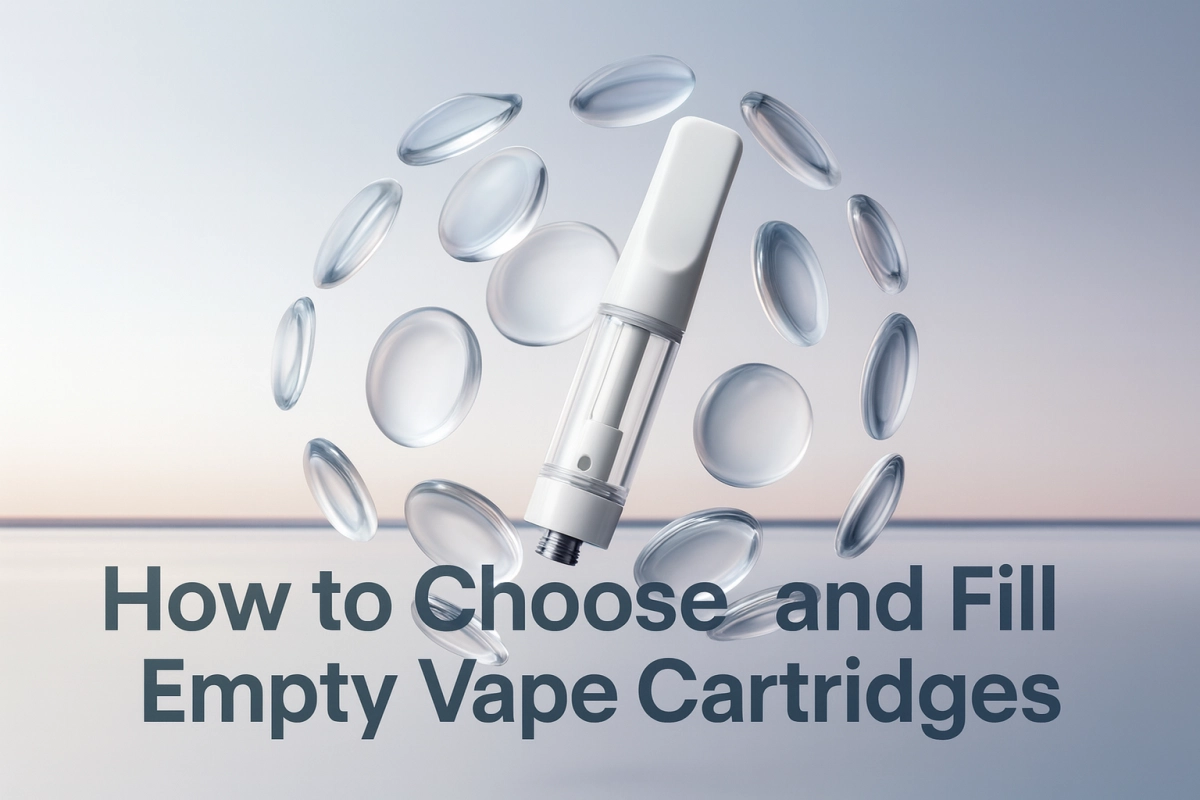
Scope. This article is written for B2B teams that buy and qualify empty vape cartridges only — no oil, no THC, no CBD, no nicotine. We focus on choosing between CCELL-class cartridges and other 510 options, how to fill them in licensed facilities, and which data and documents regulators expect to see.
On Vapehitech, you can treat empty vape cartridges as the category hub for 510 tanks, with CCELL platforms grouped under ccell cartridge and ccell ceramic cartridge. For broader SKU planning and price comparisons, buyers who are building full programs usually use the vape carts wholesale view to benchmark capacities and formats across brands.
1) Why empty vape cartridges and CCELL matter in 2025
510 cartridges are still the backbone of many regulated vape programs. CCELL and CCELL-class platforms lead the high-end segment because they combine porous ceramic cores, tight dimensional control and a large ecosystem of compatible batteries. For licensed producers, they are often the default choice when reliability and flavor consistency matter more than tiny cost differences.
At the same time, public-health history reminds us that hardware is only one part of the safety story. During the 2019–2020 EVALI outbreak in the United States, the U.S. Centers for Disease Control and Prevention (CDC) recorded 2,807 hospitalized cases and 68 deaths linked to e-cigarette or vaping product use across all 50 states and two territories, before case reporting was closed in February 2020.1 Most patients had used THC products from informal sources, and later lab work identified vitamin E acetate as a major toxicant in lung fluid samples.2,3
Takeaway. Hardware choice can reduce leak, clog and heavy-metal risks, but it cannot repair unregulated oil supply chains. When you select empty vape cartridges, you are building one layer of a system that also includes oil formulation, accredited lab testing and compliant packaging.
2) Hardware vs oil: separating risk layers for YMYL content
Because this topic touches on consumer health and safety, it falls into the “Your Money or Your Life” (YMYL) category. A clear separation between what hardware can control and what only oil producers can control is essential.
2.1 Hardware layer (empty vape cartridges)
- Defines tank volume, glass thickness, coil and core type, air path geometry and seals.
- Determines leak rates, clog risk and compatibility with specific viscosity windows.
- Is evaluated with drawings, sampling plans, dimensional checks and packaging tests.
2.2 Oil and formulation layer
- Covers cannabinoid potency, solvents, cutting agents, pesticides and residual metals.
- Is controlled by licensed labs and producers using accredited methods (for example ICP-MS for heavy metals and validated chromatographic potency methods).
- Was the primary focus of EVALI investigations: vitamin E acetate was detected in 94 % of 51 bronchoalveolar-lavage samples from EVALI patients, but in none of the healthy controls.2
Why this distinction matters. When regulators or investors review your documentation, they want to see that you treat hardware selection, oil formulation and lab testing as separate but connected files. This article focuses on the hardware file for empty vape cartridges and how CCELL-class platforms fit into it.
3) Choosing empty vape cartridges: CCELL vs other options
From a sourcing standpoint, CCELL-class cartridges sit at the more engineered end of the spectrum: tighter tolerances, consistent ceramics, and a defined ecosystem of batteries and filling fixtures. Other 510 platforms can also work well, but the evaluation should be deliberate.
3.1 Threading, capacities and intended use
- Thread standard. Most carts in this class use 510 threading. Verify that your target platforms and batteries follow the same mechanical standard and pin height.
- Volume choices. 0.5 ml and 1.0 ml remain the most common. Larger tanks increase potential exposure when something goes wrong, so QC and packaging expectations should scale with capacity.
- Use cases. Decide early whether your program aims at medical micro-dose formats, high-potency adult-use SKUs, or both. This influences bore sizes, coil power ranges and what “premium” means for your audience.
3.2 Core and coil technology
Modern CCELL-class cartridges usually rely on porous ceramic heating elements that wick thick oils without the cotton used in older e-cigarette designs. In manufacturer literature, these cores are engineered to hold temperature in a narrow window and to balance vapor density with flavor preservation.4–7
- For thick extracts. Look for ceramic cores with multiple intake holes and chimneys sized for your oil’s viscosity. Under-sized intakes tend to starve the coil and cause burnt hits; over-sized ones can flood the chamber.
- For thinner distillates. You may prefer smaller inlets or slightly lower power ranges to avoid spit-back and flooding.
- Validation step. Run side-by-side stability tests on CCELL and non-CCELL options with your actual oil and power profile, then track leak and complaint rates over a statistically meaningful sample, not just a few hand-filled test units.
3.3 Materials, heavy-metal pathways and hyper-accumulator crops
Cannabis and hemp are known “hyper-accumulator” plants: they readily pull trace metals from soil and nutrients into the biomass.8 That makes heavy-metal controls important not only for oil but also for any metallic components in direct contact with the formulation.
Many U.S. states require cannabis manufacturers to meet numeric heavy-metal limits. California, often cited as a strict benchmark, sets maximum levels for inhaled products of 0.5 µg/g lead (Pb), 0.2 µg/g arsenic (As), 0.2 µg/g cadmium (Cd) and 0.1 µg/g mercury (Hg) in finished cannabis goods.9 These limits assume typical daily consumption and are aligned with pharmaceutical toxicology guidance.
For empty vape cartridges, the practical implication is simple: select hardware where the entire liquid path (core, tube, joints and seals) is designed to keep extract exposure to metals far below these thresholds when the system is used as intended. CCELL and similar vendors typically publish statements about material choices and heavy-metal testing to support that expectation.4–7
3.4 Documentation from vendors
Whether you choose CCELL or another engineered platform, serious suppliers should be able to provide:
- Drawings and tolerances. Basic dimensional drawings with capacity, glass thickness, port sizes and recommended capping depth.
- Materials declarations. Clear descriptions of metals, ceramics, plastics and seals used in the wetted path, with references to applicable standards.
- Heavy-metal test summaries. Ideally performed by laboratories accredited under ISO/IEC 17025, using ICP-MS methods similar to AOAC OMA 2021.03 or ASTM D8469-22 for cannabis matrices.10,11
- Reliability data. Leak and clog performance over time under representative storage temperatures and shipping conditions.
4) How Vapehitech organizes empty vape cartridge families
This guide is brand-neutral, but it helps to understand how a catalog is structured when you compare CCELL with other options.
- Category level. The empty vape cartridges category groups 510-thread tanks by capacity, material and core type so buyers can benchmark specs and price tiers.
- CCELL focus. The ccell cartridge and ccell ceramic cartridge views isolate CCELL-class platforms for teams that want to standardize on a smaller, better-documented set of SKUs.
- Program view. Teams building full lineups often start from the vape carts wholesale overview, then shortlist 1–2 flagship cartridges and matching batteries for deeper qualification.
5) Filling empty vape cartridges: high-level SOP for licensed producers
Filling and capping is not a DIY activity. It belongs in licensed facilities with validated oils, controlled environments and documented quality systems. The outline below reflects common structure across successful programs; each producer must adapt it to local regulations and their own standard operating procedures.
5.1 Prepare oil in a validated viscosity window
- Start from a formulation that has a current Certificate of Analysis from an accredited lab covering potency, residual solvents, pesticides and heavy metals.
- Warm oil gently (for example in a controlled oven or oil bath) to the temperature range recommended by both the oil team and the cartridge vendor. Overheating can degrade cannabinoids and terpenes, while under-heating may leave the oil too viscous to fill cleanly.
- Record viscosity measurements or process surrogates (such as time-to-flow in a standardized funnel) as part of batch records so operators know whether they are in the qualified window.
5.2 Set up filling equipment and quantify fill volumes
- Use filling machines or fixtures designed for cartridges, with stainless-steel needles matched to the port geometry so they do not scrape glass or ceramic.
- Verify fill volumes gravimetrically: weigh empty cartridges, fill them, then weigh again. Many programs target a tolerance of ±2 % to ±3 % around nominal volume (for example 0.49–0.51 g for a 0.5 g target) to reduce both under-fill complaints and over-fill waste.
- Document fill speeds, pressures and temperatures that produce clean, bubble-free fills without foaming or splashing.
5.3 Cap with controlled torque or press force
Each cartridge platform has a recommended capping method and depth or torque window. Over-tightening can crack glass or crush seals; under-tightening can leave micro-gaps that leak during storage and transport.
- Use dedicated fixtures and torque tools or calibrated presses instead of hand-feel alone.
- Run first-article capping tests on small samples and inspect for cracks, stress whitening and seal deformation.
5.4 Soak, equilibrate and release by data
- After capping, allow cartridges to sit upright for a defined soak period so oil fully saturates the core and seals.
- Pull a statistically meaningful sample and check for leaks, draw resistance and flavor at your target power settings.
- Only then move to full-scale production and final packaging. Treat any early leak or clog signals as reasons to pause and adjust before scaling.
Compliance note. This section is a high-level outline for licensed producers. It is not a recipe for home mixing or self-medication and must always be implemented under relevant laws, validated lab methods and your own quality system.
6) Leaks, clogs and burnt hits: common failure modes and mitigations
Regardless of brand, most complaints about filled cartridges fall into three groups: leaks, clogs and burnt or off-tasting hits. CCELL-class hardware reduces the probability of these issues but cannot eliminate them if oil, power or process choices are poor.
6.1 Leaks
Typical causes.
- Under-filled or over-filled cartridges that leave cores partially exposed or over-pressurized.
- Damaged or misaligned seals, especially after aggressive capping or rough shipping.
- Oils significantly thinner than the cartridge was designed for, often because of heavy cutting.
Mitigations.
- Respect manufacturer fill-volume windows and viscosity recommendations.
- Train operators on fixtures and torque targets; routinely check for cracked glass or distorted gaskets.
- Store and ship in temperature-controlled conditions to avoid extreme expansion and contraction.
6.2 Clogs
Typical causes.
- Oil cooling and thickening in cold environments, especially near the mouthpiece.
- Condensate buildup in the chimney after repeated short puffs.
- Carbonization of oil on the coil after running power too high or too long.
Mitigations.
- Choose ceramic cores and inlet geometries matched to your oil’s viscosity range.
- Recommend storage and use temperatures that keep oil mobile, avoiding glove-box or trunk extremes.
- Validate battery power curves so even long draws stay inside a safe temperature envelope.
6.3 Burnt or off-tasting hits
- Running coils hotter than your oil or flavor system can tolerate, degrading terpenes and cannabinoids.
- Allowing oil levels to drop too low before cartridges are discarded or refilled.
- Using additives that are not designed for inhalation or not validated with your cartridge platform.
Reality check. Good empty vape cartridges and CCELL-class hardware make problems less likely, but they cannot rescue unsafe oils, unvalidated flavors or weak QC. Treat hardware, oil, filling and packaging as one integrated system.
7) Compliance, child-resistant packaging and heavy-metal documentation
Even when you only sell empty hardware, your customers operate in tightly regulated environments. Understanding their compliance expectations helps you design better sourcing and QA files.
7.1 Child-resistant (CR) packaging expectations
Many legal markets require that filled cartridges be sold in child-resistant packaging. Two widely cited standards are:
- ISO 8317. The international standard for re-closable child-resistant packaging, which defines performance tests using panels of children and adults.
- U.S. 16 CFR 1700.20. The U.S. Consumer Product Safety Commission’s protocol for “special packaging,” which requires that at least 85 % of tested children cannot open the package within five minutes and at least 80 % cannot open it within ten minutes, while a high percentage of adults must be able to open and properly close it again.12,13
As an empty-hardware supplier you are usually not the party certifying final CR packaging, but you should confirm that your cartridges and mouthpieces are compatible with the tubes, jars or cartons your customers use in their compliance files.
7.2 Heavy-metal testing and materials files
Because cannabis state programs typically set numeric heavy-metal limits for finished products, serious cartridge programs maintain a materials file for each platform. At minimum, this should contain:
- Heavy-metal test reports for lead, cadmium, arsenic, mercury and, where required, additional elements such as chromium, nickel or copper, tested by ISO/IEC 17025-accredited laboratories using ICP-MS methods validated for cannabis matrices.9–11
- Materials declarations describing alloys, ceramics and polymers in the wetted path and confirming that any plating or solder does not introduce unexpected metals into the oil.
- Reliability and packaging summaries showing cart performance after vibration, drops and temperature cycling representative of distribution. Many teams adapt procedures from small-parcel test protocols such as ISTA 3A.
Regulatory context. Reviews of state heavy-metal rules show that most jurisdictions adopt limits for at least the “big four” metals (Pb, As, Cd, Hg) and that California’s inhaled-product limits of 0.5 µg/g Pb, 0.2 µg/g As, 0.2 µg/g Cd and 0.1 µg/g Hg are often treated as a de-facto benchmark.9,14 Aligning your hardware documentation with these levels makes it easier for brands to demonstrate compliance.
7.3 Your role as a hardware partner
Vapehitech’s role is to provide clearly specified empty hardware options — including CCELL-compatible cartridges — and to help B2B buyers match those platforms to their oils, filling equipment and regulatory context. We do not design oil formulations, we do not fill cartridges and we do not provide legal advice; instead, we focus on making the hardware side transparent and testable.
8) FAQ & next steps
Does a premium CCELL cartridge make any oil safe?
No. High-quality empty vape cartridges reduce hardware-related risks such as leaks, clogs and heavy-metal exposure, but they cannot fix unsafe oil formulations or unregulated supply chains. Public-health investigations of EVALI found that over 80 % of patients reported using THC-containing products from informal sources and that vitamin E acetate was present in the lung fluid of nearly all sampled patients, while accredited, lab-tested products in regulated channels were not implicated in the same way.1–3,15
Is it safe to refill cartridges at home?
From a risk perspective, home refilling blurs the line between licensed manufacturing and informal experimentation. This guide is written for licensed producers and brands working with validated oils and quality systems. For consumers, the safer path is to use regulated, lab-tested products from licensed stores in their jurisdiction and to avoid informal, home-mixed or illicit options.
How many cartridge platforms should a brand standardize on?
Most efficient programs standardize on one or two flagship empty vape cartridges (for example, a primary CCELL platform plus a qualified alternative) and a small set of compatible batteries. This makes training, filling SOPs and documentation simpler and keeps complaint data comparable over time.
What is the best way to compare CCELL and non-CCELL options?
Treat it as an engineering and compliance evaluation rather than a visual one: request drawings, materials declarations and heavy-metal test data; run side-by-side filling and storage trials with your own oil; and track leak, clog and customer-complaint rates over statistically meaningful samples. Let data, not only marketing language, determine which empty vape cartridges deserve a place in your program.
Disclaimer: This article is for B2B hardware and packaging education only. It does not provide medical or legal advice, does not endorse any specific oil formulation and does not promote the use of controlled substances. Always consult local regulations, qualified counsel and accredited laboratories when designing your products and compliance strategy.

3 Comments
Simple and clear, thanks for writing this.
Interesting read, looking forward to more posts!
I love your insights on this topic.