

Scope: This page is written for empty only discussions and general product literacy. It avoids describing filled substances, dosing, or medical claims. Where “puff counts” are mentioned, they are treated as test-method outputs that must be interpreted against standardized regimes and real-user puff behavior.
Direct answer
If you’re asking how long does a disposable vape last, the most accurate answer is: it depends on (1) the test regime behind the puff claim and (2) how you actually draw (duration, intensity, and spacing). Standardized lab regimes (for example, the ISO routine analytical regime commonly referenced in research) use fixed puff volume, duration, and interval to make results comparable. Real-world use is more variable, which is why two people can finish the same unit in very different timeframes.
Key takeaways (MoFu-friendly)
- Puff count is not a calendar: “X puffs” is a measurement under a defined regime, not a promise of “days.”
- Your draw pattern is the biggest variable: longer draws and shorter rests usually mean fewer real puffs.
- Most “short lifespan” complaints are failure modes: airflow restriction, contact closure issues, or liquid feed lag.
- Best practice is interpretation + signals: compare units using a consistent regime assumption and consistent failure signals.
For a broader “replace vs troubleshoot” framing that stays empty only, you can reference this internal hub: how long do vapes last.
What changed in 2025
More public data now connects disposable use patterns to faster depletion
2025 studies increasingly report that disposable users often take longer puffs and shorter intervals than the assumptions many buyers carry over from older cigarette-style comparisons. That matters because depletion is not only “how many puffs,” but also how hard and how often those puffs are taken.
Standards-based language is becoming the default way to interpret puff claims
Instead of debating puff numbers in isolation, teams are increasingly asking: “Under what regime?” ISO documentation and CORESTA guidance are widely cited in the scientific and testing ecosystem to define routine regimes and to discuss more intense regimes for higher-output conditions. This shift helps buyers compare listings more consistently and reduces arguments when real-world results differ from label claims.
What “lifespan” means for disposables
Lifespan has three practical meanings
- Usable puffs: how many satisfying draws occur before performance drops below your threshold.
- Usable time: how many days the unit remains consistent under your daily pattern.
- Usable performance window: when output stays stable (draw resistance, vapor consistency, taste neutrality).
Why puff claims and real life diverge
A puff claim is best treated as a test-method output. Regimes typically fix parameters such as puff volume, puff duration, and puff interval. In reality, users vary all three: longer draws, stronger pulls, and back-to-back draws can raise thermal load and stress liquid feed, which can reduce the number of satisfying puffs even if the label looks generous.
If your team wants a neutral explanation of draw behavior terms (MTL/RDL/DTL) without marketing language, this internal guide helps standardize wording: how to inhale a vape.
The 8 biggest factors that move lifespan
1) Puff duration (seconds per draw)
Longer draws usually consume more liquid per puff and can push the heating zone closer to the limits of liquid replenishment. If the baseline regime assumes a 3-second draw, moving to 4–5 seconds can plausibly reduce the number of satisfying puffs even when everything else looks “the same.”
2) Puff interval (rest time between draws)
Short intervals reduce recovery time for liquid feed and increase sustained heat. In practical terms: rapid back-to-back draws can make a unit feel “done early” because performance becomes inconsistent (weaker output, harsher taste, tighter draw) even though some capacity remains.
3) Draw intensity (how hard you pull)
Stronger pulls can change airflow conditions and aerosol formation. Users who pull harder often take larger effective puff volumes, which can change depletion speed and can amplify variability between people using the same unit.
4) Airflow restriction (clogs, condensation, intake blockage)
A restricted airflow path forces users to pull harder and longer, which can accelerate depletion and can also create “false end-of-life” symptoms (weak output that looks like depletion but is actually blockage). If you’re troubleshooting a sudden drop in output, start here: pen not hitting.
5) Contact closure and connection stability
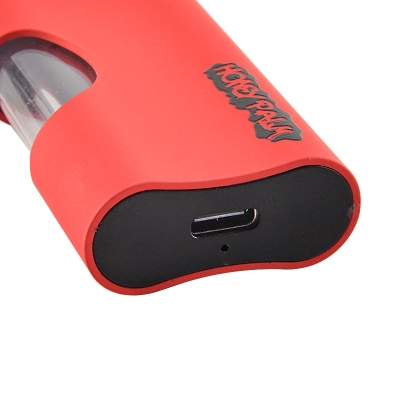
Intermittent contact closure can mimic depletion: the unit “sometimes works,” “sometimes doesn’t,” or “works when repositioned.” When comparing listings, it’s reasonable to treat connection stability as a lifespan driver because unstable closure increases wasted attempts and encourages longer pulls. For a neutral maintenance-and-diagnosis view: 510 connector problems.
6) Liquid feed dynamics (wick saturation and replenishment)
Many early “end” reports are really feed lag: the heating zone outpaces replenishment under certain draw patterns. A unit can appear depleted when it is actually underfed in the moment. This is why “gentler, shorter, spaced draws” often restore consistency without any modification.
7) Form factor constraints (air path geometry, internal volume, tolerances)
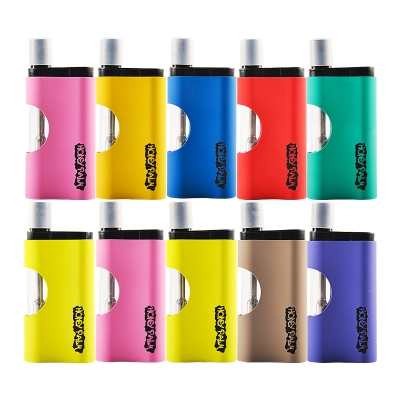
Different form factors can behave differently under identical user patterns. That does not mean one is “better” in general; it means buyers should compare like with like and avoid mixing expectations between thin formats and thicker formats. For neutral background: thin vs traditional formats.
8) Storage and handling (orientation, contamination, lint)
Pocket lint, dust, and contamination near the mouthpiece or intake are frequent sources of airflow restriction. Orientation can also change how condensation accumulates. Treat handling as a controllable variable: keep openings clean, store upright when possible, and avoid stuffing the mouthpiece area with debris-prone items.
A practical lifespan estimator
Step 1: Treat puff count as a regime-based baseline
If a label claims “N puffs,” assume it was measured under a fixed regime (fixed duration/interval/volume). Your real puff count tends to drift lower when your average draw is longer than the baseline and when your intervals are shorter.
|
Your typical pattern |
What changes |
Expected impact on real usable puffs |
|---|---|---|
|
Short, spaced draws (gentle MTL) |
Lower intensity, longer rest |
Often closest to label claims (higher usable-puff retention) |
|
Longer draws (4–5 s) at similar spacing |
More consumption per draw |
Commonly fewer real usable puffs vs baseline |
|
Back-to-back draws (short rest) |
Higher sustained heat + feed stress |
Often fewer satisfying puffs and earlier inconsistency |
|
Tight draw due to restriction |
Users pull harder/longer |
“Feels depleted” early; fix restriction first |
Step 2: Convert puffs to days using your own daily draw count
A simple planning estimate is: Days ≈ (your realistic usable puffs) ÷ (your puffs per day). If you don’t track puffs, use a 48-hour observation window: count how many times you pick it up and how many draws you take each time. Your goal is not precision; your goal is making comparisons using the same method every time.
Buyer-friendly example
If two listings both claim the same puff count, but one tends to clog sooner (tighter draw) or shows more intermittent contact closure, the real usable time can be meaningfully shorter even if “capacity” is theoretically similar.
Signals and failure modes to standardize
Why “it died early” is usually a signal problem
“Early end-of-life” reports often mix three different causes: (1) true depletion, (2) airflow restriction, and (3) intermittent contact closure. Standardizing signals keeps troubleshooting neutral and repeatable.
|
Signal |
What it usually indicates |
What to do first (safe, no hacks) |
|---|---|---|
|
Draw suddenly feels tight |
Restriction (lint/condensation/blockage) |
Inspect openings, clear visible debris only, rest upright, retry gentle draws |
|
Output becomes intermittent |
Contact closure or airflow change |
Re-seat gently; if applicable, dry-wipe contact area; avoid liquids on contacts |
|
Output weakens gradually over time |
Approaching end of consistent performance window |
Reduce draw duration, increase rest; if no improvement, treat as end-of-life |
|
Harsh or “dry” sensation |
Feed lag under your draw pattern |
Stop, let it rest; resume with shorter, gentler draws; avoid rapid chaining |
|
Gurgle/spitback sensations |
Condensation accumulation |
Rest upright; wipe mouthpiece exterior; avoid overpulling |
Note: The steps above are intentionally conservative. Do not puncture, pry, modify, or heat a disposable. If performance becomes abnormal (heat, odor, leakage into openings), stop using it.
How to make a disposable last longer (without hacks)
Use a “gentle, consistent draw” pattern
- Prefer shorter draws over long pulls when consistency matters.
- Increase rest time between draws to reduce sustained stress.
- If output drops, troubleshoot restriction before assuming depletion.
Keep airflow openings clean
- Keep mouthpiece and intake areas free of lint and debris.
- Store upright when possible to reduce condensation pooling.
- Avoid overly tight pockets that can block intake openings during use.
Standardize your evaluation method when comparing listings
For MoFu comparisons, the best “expert move” is consistency: compare units using the same draw pattern assumptions and the same signals. This prevents you from attributing user-pattern differences to “quality” differences.
FAQ
Is there a single “average number of days” a disposable lasts?
Not reliably. Days depend on how often you draw and how long each draw is. Treat label puff counts as regime-based baselines and convert to days using your own daily usage estimate.
Why do two people finish the same disposable at different speeds?
The biggest drivers are puff duration, puff interval, and draw intensity. Longer draws and shorter rests usually reduce real usable puffs.
What’s the most common reason a disposable feels “dead early”?
Airflow restriction (tight draw from debris or condensation) and intermittent contact closure are common culprits. Troubleshoot restriction and connection stability before assuming depletion.
Authoritative references used
The links below are provided for verifiability and test-method context. They are included as standards-based anchors for interpreting puff claims and understanding puff behavior variability.
- ISO 20768 standard conditions for routine analytical vaping
- CORESTA comparison of vaping puffing regimes
- CORESTA CRM 81 routine analytical aerosol generation/collection (definitions and conditions)
- CORESTA technical guide on aerosol collection and testing considerations
- CDC/NIOSH study on puff topography sensitivity (puff volume effects)
- Scientific Reports (2025): disposable e-cigarette use patterns and outcomes
- PubMed (2025): review of e-cigarette puffing topography metrics
- Wadkin et al. (2023): puffing topography overview (analytical discussion)
Editorial note: This article is informational and focuses on empty only literacy. It does not provide legal advice, and readers should verify requirements for the markets where they operate.





3 Comments
Good read. I found this helpful.
Clear and easy to follow. Nice job.
Very informative post. Thanks for sharing.