
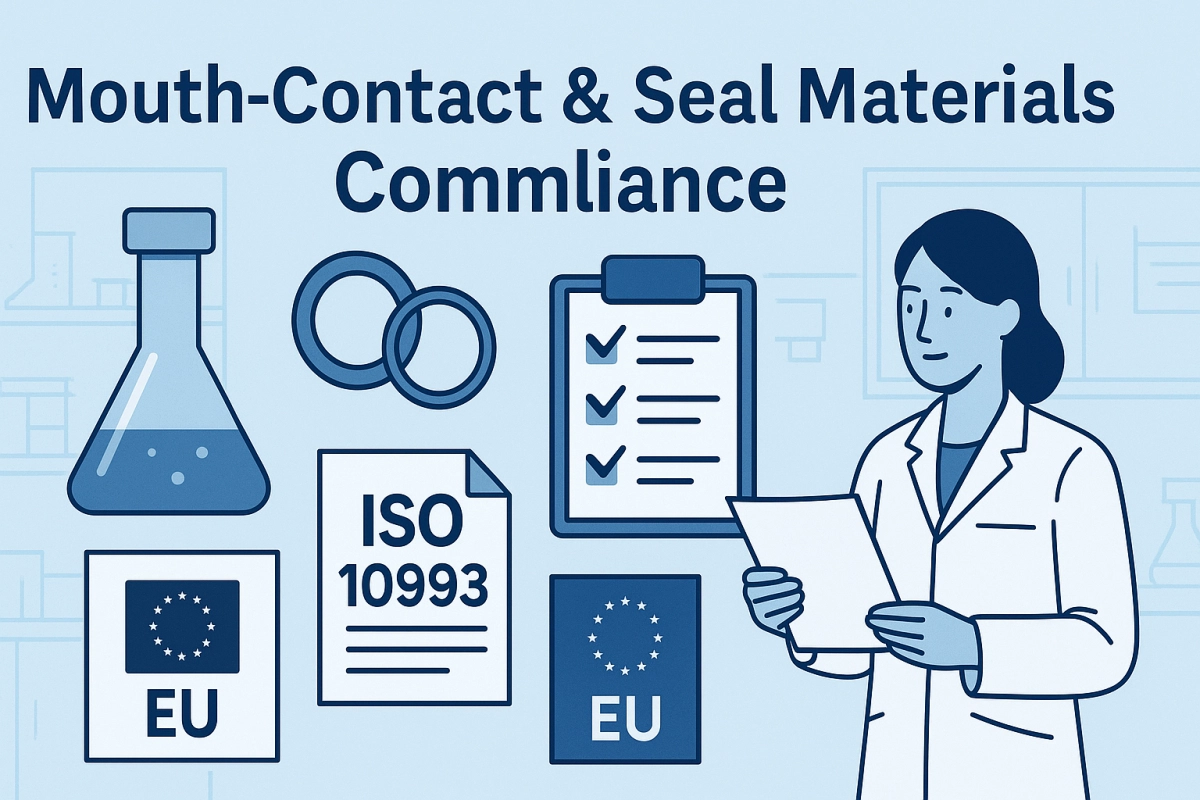
Mouth-Contact & Seal Materials Compliance (2025): ISO 10993 Biocompatibility, Food-Contact Rules, and Extractables/Leachables Strategy
Scope: This guide addresses empty hardware (mouthpieces, internal wetted surfaces, O-rings/gaskets) for B2B buyers. It is not legal advice and does not assess finished, filled products. For specific jurisdictions, consult qualified compliance specialists.
- Executive Summary
- What Counts as Mouth-Contact & Sealing Materials
- Risk-Based Route: ISO 10993-1
- Chemical Characterization: ISO 10993-18 (with 2022 amendment)
- Toxicological Risk Assessment: ISO 10993-17:2023
- Food-Contact Rules (EU & US): When and How to Leverage Them
- Extractables/Leachables: Study Design & Reporting
- Material & Colorant Selection Tips
- Supplier Documentation Packet (checklist)
- Tying It to IQC & Leak Integrity
- Download-Style Templates (fields)
- Compliance & Safety Notes
1) Executive Summary
For components that touch lips or e-liquid (mouthpieces, oil-contact plastics, elastomeric seals), use a three-line evidence set: (A) ISO 10993 risk management for biocompatibility, (B) food-contact frameworks (EU 1935/2004 and EU 10/2011; US FDA FCS/FCN) where applicable, and (C) an Extractables/Leachables (E/L) plan that characterizes chemical release and documents toxicological risk.
Keep substance restrictions current: align parts and colorants with RoHS and REACH SVHC declarations; the Candidate List was updated in 2025 and continues to change, so request dated declarations each sourcing cycle.
2) What Counts as Mouth-Contact & Sealing Materials
- Mouth-contact: mouthpieces (PCTG/PC/PEEK/PEI), anti-spitback inserts, tip covers.
- Wetted surfaces: internal tubes, reservoirs, ceramic interfaces, adhesives/coatings that can contact condensate or aerosol path.
- Seals: O-rings/gaskets (silicone, FKM/FPM, EPDM), valve membranes.
Document contact type (direct vs indirect), temperature bands, and contact duration — these drive test selection and toxicological thresholds.
3) Risk-Based Route: ISO 10993-1
Start with ISO 10993-1’s risk-management approach: define device materials and body-contact category, review existing data, and only add testing where a scientific gap remains. This prevents unnecessary animal tests and focuses on chemical assessment and biocompatibility endpoints that truly matter.
4) Chemical Characterization: ISO 10993-18
Run chemical characterization first. ISO 10993-18:2020 (with a 2022 amendment on uncertainty factors) sets out how to profile constituents via extractions (exaggerated, simulated, or exhaustive) matched to realistic use. Output: an identified/quantified list with analytical method, LOQs, and uncertainty bounds. Tie the study design to your aerosol path, temperatures, and expected solvent systems.
- Define materials of construction and grades (resins, elastomers, pigments, additives).
- Select extraction vehicles and time/temperature that bracket worst-case but remain technically justified.
- Report unknowns as TICs and chase structural IDs for toxicology-relevant peaks.
5) Toxicological Risk Assessment: ISO 10993-17:2023
The 2023 revision clarifies how to use chemical-characterization results to estimate patient exposure and determine if risks are negligible or tolerable. It introduces modern screening concepts and improves calculations for cumulative exposure. Document margin-of-safety logic, exposure scenarios (puffs/day, devices/day), and any read-across or TTC/TSL-style screening you apply.
6) Food-Contact Rules (EU & US): When and How to Leverage Them
EU: Framework Regulation (EC) No. 1935/2004 plus plastic-specific Regulation (EU) No. 10/2011 require that materials intended to contact food do not endanger health, alter composition, or impair organoleptic properties. Where resin/colorant suppliers can issue declarations of compliance or specific migration data aligned to these rules, you can incorporate them as supportive evidence — especially for mouthpieces and seals with incidental saliva contact.
US: FDA’s Food-Contact Substance (FCS) program uses a risk-based premarket notification system (FCN). For commodity polymers/additives already cleared in 21 CFR or the FCN inventory, obtain supplier support (letter of guaranty, conditions of use, limitations). For novel uses, consult toxicology/chemistry guidance before considering an FCN path.
7) Extractables/Leachables: Study Design & Reporting
Extractables = compounds drawn out under exaggerated conditions; Leachables = compounds that migrate under normal storage/use. For mouthpieces and seals, pair a well-justified extractables study (to screen the chemistry space) with a targeted leachables check in simulated use (e.g., humid air/condensate, realistic temperatures/puffing regimes). Use reporting thresholds tied to toxicological screening logic and justify any non-targets.
- Map study design to user exposure (puffs, duration, max devices/day).
- Align analytical scope (GC-MS/LC-MS/ICP-MS) with polymer/elastomer chemistry and likely additives (antioxidants, curing agents, plasticizers, pigments).
- Archive raw data; ensure lot traceability to production parts.
8) Material & Colorant Selection Tips
- Mouthpieces: medical/food-grade PCTG or PC with documented additives; consider PEEK/PEI for higher temperature stability.
- Seals/O-rings: high-consistency silicone (HCR) with low-volatiles post-cure, or FKM where solvent resistance is critical; verify peroxide vs platinum cure implications for E/L.
- Colorants: avoid pigments with heavy-metal risks; request masterbatch composition and compliance letters (RoHS, REACH SVHC, and food-contact suitability where applicable).
9) Supplier Documentation Packet (what to request)
- Bill of Materials for every mouth-contact/wetted/seal part (resin grade, elastomer compound, masterbatch IDs).
- ISO 10993 dossier: 10993-1 matrix + any existing 10993-5/-10 data and chemical characterization per 10993-18 (with method summaries).
- Food-contact evidence: EU 1935/2004 declaration; EU 10/2011 plastic DoC (if applicable); US 21 CFR/FCN references for resin/additives with conditions of use.
- Substance restrictions: dated RoHS (10 substances) and REACH SVHC Candidate List declarations at article level; require updates after any ECHA list change.
- E/L reports: extractables profile + leachables (simulated use), reporting thresholds, toxicology rationale (10993-17).
- Traceability: batch COAs, cure/post-cure parameters (elastomers), pigment lots, and change-control policy.
10) Tying It to IQC & Leak Integrity
Once materials are locked, connect documentation to incoming QC and functional risk controls: verify hardness/durometer and dimensions on O-rings, confirm torque windows and press-fit force for seals, and run airflow/draw-resistance spot checks on each lot.
11) Download-Style Templates (fields you can copy into XLS)
- Material DoC form: part no. → resin/elastomer grade → masterbatch ID → 10993 evidence → EU 10/2011 status → US 21 CFR/FCN ref → RoHS → REACH SVHC date → signature.
- E/L summary table: analyte → method → max level (µg/device/day) → exposure assumption → toxicology endpoint → margin of safety → decision.
- Change control: supplier change type (resin, pigment, cure system) → notification window → re-test triggers → interim containment.
12) Compliance & Safety Notes
Standards and chemical lists evolve. Re-confirm REACH SVHC and any regional migration limits at least twice per year. Hardware discussed here is for adult (21+) markets where permitted. This article is informational and not a substitute for legal or regulatory counsel.

1 Comments
Thanks for the tips, I’ll try them out.