
Vape Hardware Safety & Compliance 2025: Buyer’s Verification Checklist (UL 8139 | UN 38.3 | IEC 62133-2 | RoHS/REACH | USB-C/PD)
This final revision adds a jurisdiction quick map, an anonymized case snapshot, and ready-to-use email/BOM/SVHC templates so your team can execute audits immediately.
- The core “3+2” compliance stack
- USB-C & fast-charge expectations (EU)
- Jurisdiction quick map (US/EU/UK/CA/AU/GCC)
- Lab credibility: ISO/IEC 17025
- EU take-back duties: WEEE
- Buyer’s verification checklist
- Case snapshot (anonymized)
- Annex: ready-to-use templates
- Document red flags
- FAQ
- Related reading (internal)
- Primary sources
The core “3+2” compliance stack
1) UL 8139 (device electrical system)
UL 8139 evaluates electrical/heating/charging systems at the device level and is commonly required by major North American retailers and insurers.[UL scope]
2) UN 38.3 (cell/pack transport safety) + Test Summary (TS)
All lithium cells/packs shipped must pass UN 38.3 tests. Provide a standardized Test Summary (TS); PHMSA’s template was revised July 2024.[PHMSA TS]
3) IEC 62133-2 (rechargeable Li-ion cells/batteries)
Use cell OEM evidence aligned to IEC 62133-2:2017 + Amd.1:2021 for portable applications.
4) RoHS (10 restricted substances)
Collect declarations and analytical data for high-risk parts; the EU lists ten restricted substances (Pb, Cd, Hg, Cr⁶⁺, PBB, PBDE, DEHP, BBP, DBP, DIBP).[RoHS]
5) REACH (SVHC) duties
Monitor the Candidate List and request dated supplier statements at each update (e.g., Jan 2025).[ECHA SVHC]
USB-C & fast-charge: what the EU “common charger” means
Directive 2022/2380 requires USB-C and interoperability for fast-charging devices. Implement USB Power Delivery (USB-PD) with negotiated profiles and protections; label power clearly.[EUR-Lex] [USB-IF]
Jurisdiction quick map (summary, non-exhaustive)
UL 8139UN 38.3 TSRoHS (retailer policy)
Federal transport (PHMSA) requires UN 38.3 TS. Retailers/insurers often ask UL 8139 evidence. Material restrictions vary by state/retailer policy.
USB-C/PDRoHSREACH SVHCWEEE
Device interoperability (USB-C/PD), hazardous substances (RoHS), SVHC communication (REACH), producer responsibility (WEEE).
UKCA/WEEE-UKUK RoHS
Post-Brexit frameworks mirror EU in scope with UK registries/markings; maintain separate WEEE registration and RoHS declarations.
UN 38.3 TSRetailer policies
Transport rules align with UN; retailers may require UL/CSA evidence for electrical safety.
UN 38.3 TSE-waste schemes
Battery transport per UN; state e-waste obligations may apply for collection/recycling.
UN 38.3 TSGSO marks (select)
Customs commonly request UN documents; check national schemes for electrical/e-waste marks where applicable.
Note: Always confirm the latest legal requirements with local counsel or your Authorized Representative. This map is a planning aid, not legal advice.
Lab credibility: insist on ISO/IEC 17025
Accept reports only from labs accredited to ISO/IEC 17025 under the ILAC MRA, with scopes covering the exact methods you need.
EU take-back duties: WEEE producer responsibility
Register nationally (not EU-wide), join a scheme, report placed-on-market volumes, and apply the crossed-out wheeled-bin symbol.[EU register] [WEEE label]
Buyer’s verification checklist
- Device safety: UL 8139 report/cert for exact model/PCBA. Verify in UL Product iQ when available.
- Transport safety: UN 38.3 Test Summary (T.1–T.8 results, lab & manufacturer info, dates, signatures) per PHMSA (2024).
- Cell safety: IEC 62133-2 evidence from cell OEM (CB report or equivalent).
- BMS/protection: OVP/UVP/OCP/OTP thresholds; charge termination logic; NTC placement.
- Materials: RoHS DoC + targeted analytical data for high-risk parts.
- REACH: Latest SVHC statements; if any SVHC ≥0.1% w/w in an article, ensure supply-chain communication.
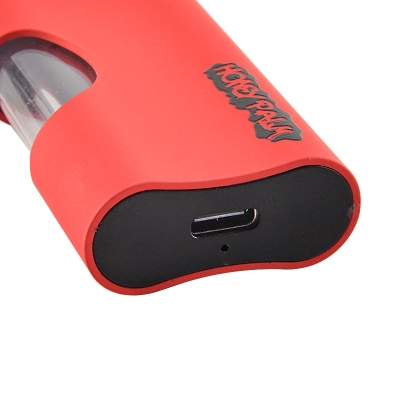
- Charging: USB-C receptacle spec; PD profiles (e.g., 5 V/3 A; negotiated higher profiles); clear power labeling.
- Laboratory: ISO/IEC 17025 cert (number, scope) and report authenticity path.
- Traceability: Label/marking samples; batch/lot mapping to reports; change-control plan.
- EU logistics: WEEE producer registration (country & ID) and scheme membership.
Case snapshot (anonymized, 2025 Q2)
Goal: evaluate a rechargeable 2 mL postless AIO for North America + EU.
| Control item | Supplier evidence | Result | Notes |
|---|---|---|---|
| UN 38.3 TS | PHMSA 2024 template, T.1–T.8 PASS | OK | Cell P/N matched carton and label |
| IEC 62133-2 | CB report (2017+A1:2021) | OK | Cell OEM Tier-1 |
| UL 8139 | Engineering eval, not full cert | Conditional | Retailer requested full cert for shelf placement |
| USB-C/PD | PD 3.0 profiles 5 V/3 A | OK | Thermal rise ≤ 18 °C at no-airflow bench |
| RoHS/REACH | DoC + lab data (PCBA, cable) | OK | SVHC none ≥0.1% (declared) |
| WEEE | Not planned by buyer | Plan | EU distributor to handle producer role |
Outcome: device approved for pilot, contingent on upgrading to UL 8139 certification and confirming EU WEEE registration prior to mass market.
Annex: ready-to-use templates
A) Supplier request email (copy/paste)
Subject: Compliance documents request for [Model]/[PCBA rev]
Hello [Supplier],
Please share PDFs for:
1) UL 8139 [report/certificate] for the exact device model/PCBA;
2) UN 38.3 Test Summary (PHMSA July 2024 format) for every cell/pack P/N;
3) IEC 62133-2 (2017+A1:2021) evidence for the cell;
4) RoHS DoC + analytical data for high-risk parts (PCBA/cables/soft plastics);
5) REACH SVHC statement (dated to latest Candidate List);
6) ISO/IEC 17025 accreditation and report authenticity path;
7) USB-C/PD profiles supported and labeling;
8) WEEE producer registration (if EU).
Thanks, [Your name / QA].
B) BOM + SVHC screening table
| # | Part | Material | RoHS risk | SVHC risk | Evidence |
|---|---|---|---|---|---|
| 1 | PCBA assembly | FR-4 + solder | Medium | Low | Lab Pb/Cd/Hg/Cr⁶⁺ test report |
| 2 | USB-C cable | PVC + Cu | High | Medium | Phthalates report (DEHP/DBP/BBP/DIBP) |
| 3 | Mouthpiece | Food-grade polymer | Low | Medium | Supplier SVHC statement |
C) UN 38.3 TS field checklist (quick view)
| Required field | Example content | Status |
|---|---|---|
| Manufacturer & P/N | ABC Cell Co., 103450-2S | Present |
| Test lab & address | XYZ Testing, Shenzhen | Present |
| Tests T.1–T.8 | Altitude / Thermal / Vibration / Shock / Short / Impact / Overcharge / Forced-Discharge | PASS |
| Test dates & signatures | 2025-03-14, Authorized signatory | Present |
| Contact for inquiries | compliance@xyztest.com | Present |
How to spot red flags in documents
- Mismatched model numbers or PCBA revisions between reports and samples.
- Outdated UN 38.3 TS format or missing lab/manufacturer contacts (use the PHMSA 2024 template above).
- Generic RoHS/REACH PDFs with no BOM coverage or test scopes.
- Non-accredited labs (no valid ISO/IEC 17025 scope for the methods used).
FAQ
Do I need both UL 8139 and IEC 62133-2?
Yes. UL 8139 covers the complete device electrical system; IEC 62133-2 covers cells/packs. Using both provides complementary evidence.
What must appear on a UN 38.3 Test Summary?
Manufacturer and cell/pack identification, lab details, test dates, pass/fail for T.1–T.8, and authorized signatures—per PHMSA’s 2024 template.
If my device supports fast charging, do I need USB-PD?
In the EU, fast-charge devices must interoperate with USB-PD under the common-charger rules. Implement negotiated profiles and protections, and label power clearly.
Primary sources (dated)
- UL Standards: UL 8139 scope text (battery-operated e-cig systems). Link.
- UL Solutions overview: e-cig & vape electrical certification (UL 8139). Link.
- PHMSA: Lithium Battery Test Summaries — landing page + Revised July 2024 template PDF. Landing · PDF.
- IEC Webstore: IEC 62133-2 (2017 + Amd.1:2021). Link.
- European Commission: RoHS Directive — restricted substances list. Link.
- ECHA: Candidate List updates (e.g., Jan 2025). Link.
- EUR-Lex: Directive (EU) 2022/2380 (USB-C common charger) — legal text/PDF. Link.
- USB-IF: USB Power Delivery overview/spec package. Overview · Spec package.
- EU “Your Europe”: WEEE responsibilities (register nationally). Link.
- EU “Your Europe”: WEEE label meaning. Link.
Important (21+): This article covers hardware safety/compliance for empty devices. Local regulations vary. Nothing here is medical or legal advice.

1 Comments
I found this blog randomly, but it’s actually pretty good.