
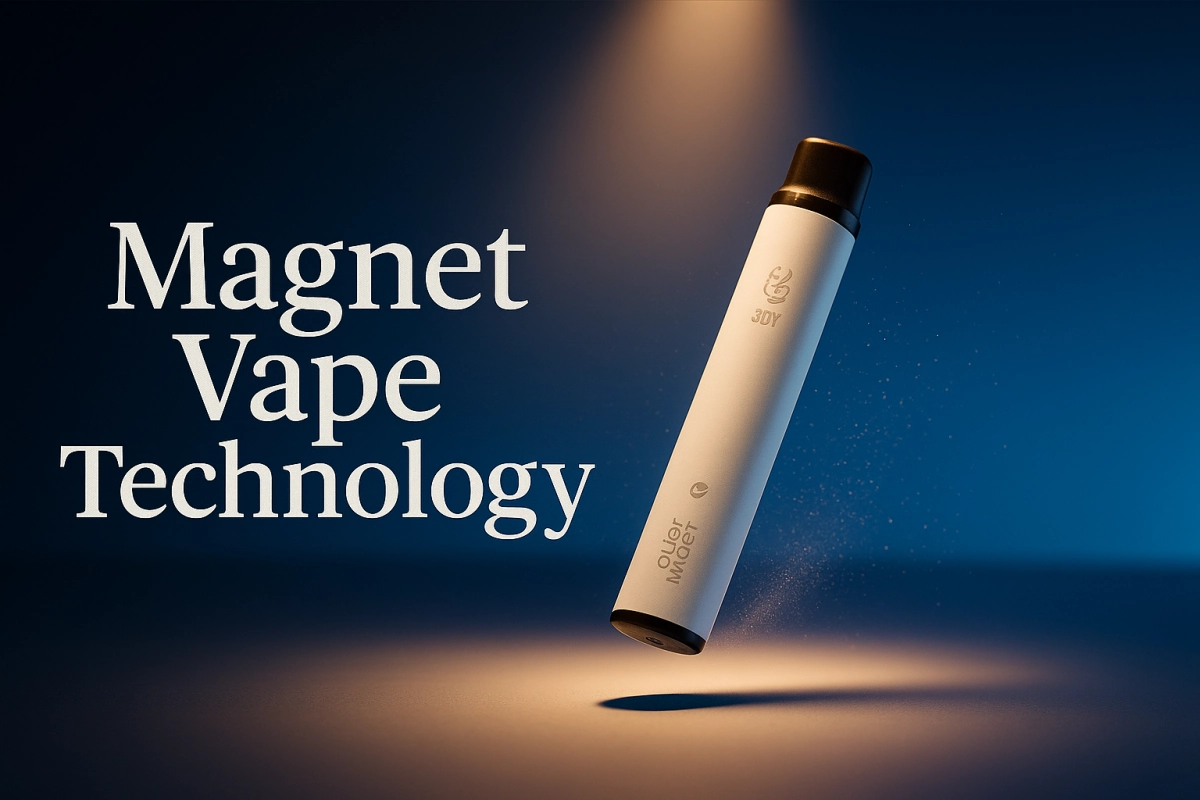
MoFu • Informational / Why • Keyword: magnet vape • Pillar: magnetic vape
Why magnet vape technology is taking off
The current shift toward magnet vape designs is not just about convenience. It’s a response to a practical hardware problem: many connection failures come from human factors—misalignment, partial seating, and wear from repeated assembly cycles. Magnets reduce those user-dependent variables by making the “correct” connection easier to achieve consistently.
In MoFu terms, this matters because reliability is rarely decided by a single feature. It’s decided by how often a device connects cleanly, seats fully, and maintains stable continuity under everyday handling. A well-engineered magnetic vape interface aims to improve those outcomes.
The “why” in one sentence
Magnet vape technology wins when it reduces user error and stabilizes the physical interface without adding new failure points.
What changed in design priorities
- More modular platforms (swap-friendly designs)
- More emphasis on repeatable seating and serviceability
- Higher expectations for “it just works” assembly
How a magnetic vape connection actually works
Magnet = alignment & retention; contacts = electrical continuity
A common misconception is that magnets “carry” the connection. In reality, magnets mainly provide alignment (self-centering) and retention (holding force). The actual continuity is created by metal contact geometry: pins, pads, or a threaded interface that compresses into position.
Why contact force and surface finish matter more than “strong magnets”
Even a strong magnetic pull can’t compensate for poor contact design. Stable continuity depends on contact pressure, consistent mating depth, and surface finish (including plating choices) that tolerate micro-movement and contamination. If your magnet vape connection uses spring contacts (like pogo pins), the connector design principles—force curve, travel, and finish—become central to long-term reliability.
Engineering background (useful for an EEAT “why” section): The basics of pogo pin connectors (DigiKey) and Connector tutorial: contact finishes and reliability (DigiKey).

Three common architectures
| Architecture | Why it exists | What it does well | What to watch |
|---|---|---|---|
| Magnetic pod bay | Fast, repeatable “drop-in” seating | Self-centering, reduced user error | Debris can block full seating; cleaning access matters |
| Magnetic adapter interface | Convenience and reduced repeated assembly cycles | Faster swaps, less thread wear | Loose interfaces can cause intermittent continuity |
| Magnetic pad mating | Blind mating with consistent compression | Repeatable alignment in compact designs | Surface contamination raises resistance quickly |
Advantages that matter (users + QA teams)
The best magnet vape products don’t just feel easier to connect—they also reduce the “gray area” where a part is almost seated but not fully seated. That’s where many intermittent issues begin.
User-facing advantages
- Faster swaps: snap-in seating is quicker than repeated twisting.
- Self-centering: less fumbling and fewer partial connections.
- Better daily consistency: the connection tends to land in the same position each time.
Advantages for QA and support
- Fewer user-error incidents: less misalignment and cross-threading.
- More repeatable testing: a consistent seat improves diagnostic clarity.
- Clearer failure signatures: issues often reduce to seating, debris, or interface fit.
Practical MoFu takeaway: magnetic vape interfaces can reduce support cases tied to fitment—if the system design controls keying, contact geometry, and tolerances.
Limits and failure modes (where “magnet vape” goes wrong)
1) Dirty contacts: magnets don’t fix contamination
Pocket lint, dust, and residue can build up on contact surfaces. Magnets may still pull parts into position, but continuity becomes unstable. This often presents as intermittent response, weak performance, or “works only when pressed or wiggled.”
2) Tolerance stack: more parts can mean more variation
Adapter-style interfaces can introduce tolerance stacking. Small variances across multiple parts may produce uneven seating or inconsistent compression. In MoFu evaluation, this is why you test not just “does it connect,” but “does it connect the same way across units.”
3) Retention tuning: too weak vs too strong
Retention force is a design decision. Too weak can shift in a pocket; too strong can make removal awkward and accelerate wear on contact finishes. The best designs balance secure carry with deliberate release.
| Symptom | Likely root cause | Fast diagnostic | Design signal |
|---|---|---|---|
| Intermittent connection | Contaminated contacts | Inspect pads/pins; dry-wipe; reseat | Contact design needs better protection/cleaning access |
| Wobble or rocking | Incomplete seating / tolerance stack | Check flush fit; reseat repeatedly | Keying and mating surfaces need refinement |
| Disconnects in pocket | Retention force too low | Pocket test (walk/sit/stand) | Retention + geometry not tuned for carry |
Safety notes you should include in any responsible guide
High-powered magnets and child safety
Small, strong magnets can cause severe internal injury if swallowed—especially multiple magnets. Keep devices and any detachable magnetic parts away from children and pets.
Implanted medical devices and magnets
Magnets in consumer electronics can affect some implanted medical devices. Users with implanted devices should follow medical guidance on safe handling and distancing.
Nickel sensitivity (materials awareness)
Some magnets and metal components use nickel-containing finishes. For users with nickel sensitivity, avoid prolonged skin contact and favor designs that keep magnetic parts enclosed.
These references are provided for consumer education context and do not replace professional medical advice.
Popular models (market examples, not buying advice)
“Popular models” in magnet vape technology are best discussed as market examples, because product generations change quickly. The goal here is to show how mainstream platforms describe and implement magnetic vape connections—not to recommend specific purchases.
| Platform example | What it illustrates | Where it’s documented |
|---|---|---|
| Uwell Caliburn family | Clear “magnetic pod connection” messaging in mainstream pod designs | Caliburn A3 product page (Uwell) |
| OXVA XLIM family | “Strong magnetic connection” positioning for pod seating reliability | OXVA XLIM comparison article |
| SMOK Novo family | Another mainstream example referencing magnetic pod seating | SMOK Novo blog post |
| Vaporesso XROS family | Pod-platform ecosystem messaging that includes magnetic connection language | Vaporesso XROS activity page |
Tip for MoFu writing: keep model mentions as examples of connection style and documentation—avoid prices, “best deals,” or purchase prompts.
How to evaluate a magnet vape design (MoFu checklist)
If you’re comparing platforms or screening designs, evaluate the magnetic vape interface as a system. The magnet is only one part. The goal is stable seating, stable continuity, and predictable behavior under handling.
Connection geometry checks
- Keying: does it “only fit one way”?
- Seat depth: does it land in the same depth every time?
- Rocking: any wobble indicates uneven mating surfaces.
- Debris tolerance: does the bay trap lint?
Contact reliability checks
- Contact protection: are pads/pins shielded from contamination?
- Cleaning access: can you wipe contacts quickly?
- Compression: is there consistent spring force or compression behavior?
- Finish durability: does the surface show early wear or discoloration?
MoFu-friendly “what good looks like”
A strong magnet vape design feels consistent across repeated attach/detach cycles, doesn’t rely on user finesse, and maintains stable continuity even after normal pocket handling. If a connection is sensitive to tiny changes in angle or pressure, the system likely needs better keying, mating surfaces, or contact design.
Why this is “revolutionizing” hardware
The real “revolution” in magnet vape technology isn’t magnets alone—it’s the shift toward repeatable modular hardware. When magnets are paired with keying, controlled tolerances, and reliable contact design, the interface becomes easier to use, easier to maintain, and less dependent on perfect assembly behavior.
In other words, magnetic vape connections are winning because they make the correct connection the default—while reducing the most common user-driven failure points. For MoFu readers evaluating platforms, this is the practical reason magnetic vape designs keep showing up across mainstream model families.
Related reading on Vapehitech (internal links)
These internal links are intentionally limited to five total and chosen to strengthen your magnetic vape topic cluster through connection fundamentals, compatibility, and maintenance.
- 510 thread adapters — when fitment and interface geometry cause “it works sometimes” issues
- 510 threading basics — a grounding reference for universal connection language
- 510 cartridge systems — system-level thinking about interfaces and repeatability
- 510 connector maintenance — contact hygiene and seating checks that also apply to magnetic designs
- vape guides — additional educational content without sales pressure
References
- CPSC magnet safety guidance
- Safety Standard for Magnets (final rule)
- 16 CFR Part 1262 (magnet safety standard)
- FDA: magnets and implanted medical devices
- AHA: magnets and pacemakers/ICDs
- AAD: nickel allergy overview
- DigiKey: basics of pogo pin connectors
- DigiKey: connector tutorial (reliability fundamentals)
- Uwell: Caliburn A3 (magnetic pod connection example)
- OXVA: XLIM comparison (magnetic connection example)
- SMOK: Novo series (magnetic pod connection example)
- Vaporesso: XROS family page (magnetic connection example)




3 Comments
Good overview, appreciate the info.
Simple and useful, thanks!
Great post, learned something new today.