
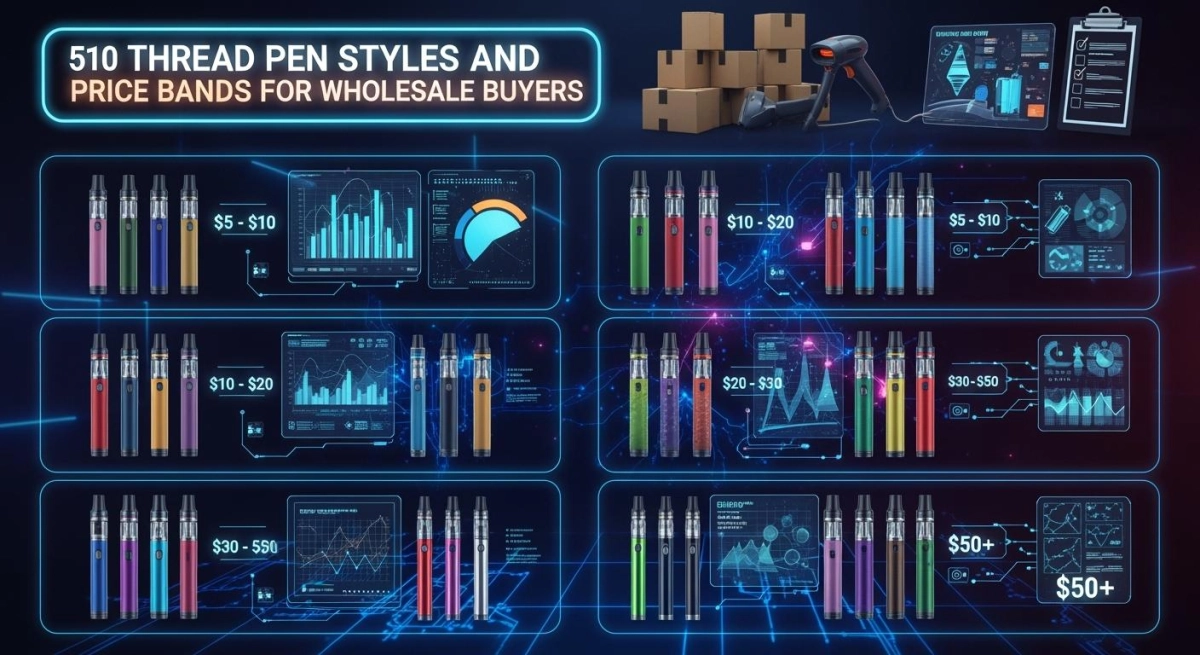
For B2B programs, choosing the right 510 thread pen is less about “features on paper” and more about measurable outcomes: fewer compatibility complaints, fewer DOA replacements, and lower support load per 1,000 units shipped. This guide compares 510 thread pen styles, must-have features, and value tiers using a QC-first lens so you can reduce return rates and improve customer satisfaction without overpaying for unused functions. The focus is hardware selection and wholesale execution—no product effects, no claims you can’t verify on intake.
Transparency note: Vapehitech supports B2B hardware sourcing. The checklists below are designed to be supplier-agnostic and verifiable. Use them to validate any vendor’s spec sheet before you scale purchase orders.
Key Takeaways
-
Style drives returns. Pen vs box, button vs auto-draw, and connector design affect misfires, thread wear, and “doesn’t work” tickets.
-
Compatibility is a system. Fit is not only “510”; it’s thread tolerance, center-pin contact, and airflow alignment.
-
Value tiers are about TCO. The cheapest unit price often increases total cost via DOA, RMAs, and freight rework.
-
QC must be staged. Sample → pilot → production acceptance is the fastest way to prevent “same SKU, different batch” failures.
Tip: If you’re doing bulk procurement, read in this order: Matrix → Compatibility → QC. That sequence prevents most post-delivery disputes.
510 Thread Pen Styles
In wholesale, “style” is your first risk filter. The same cartridge can behave differently depending on contact stability, airflow path, and how users activate the device. If you need a quick baseline on cartridge/connection context, start with this 510 cartridge guide.
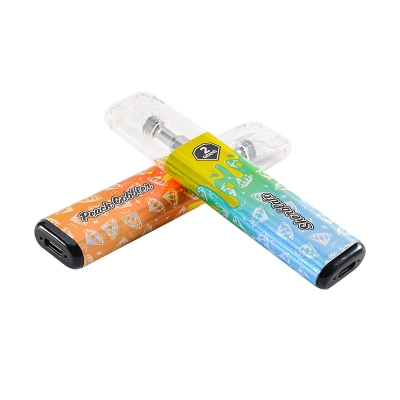
Slim Pen (tube-style)
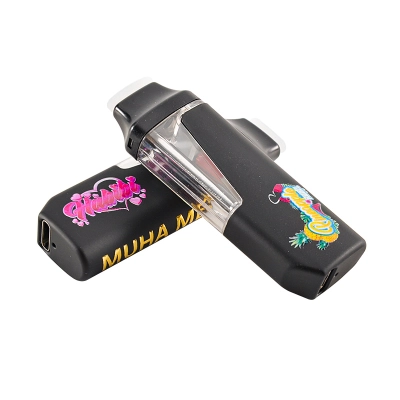
Slim pens are optimized for portability, low BOM complexity, and fast turnover. They sell well in volume, but returns spike if the button feel is inconsistent, the center-pin sits too low, or the threads are soft and cross-thread easily. In B2B terms, slim pens win when you enforce tight incoming inspection on connector fit and charging port durability.
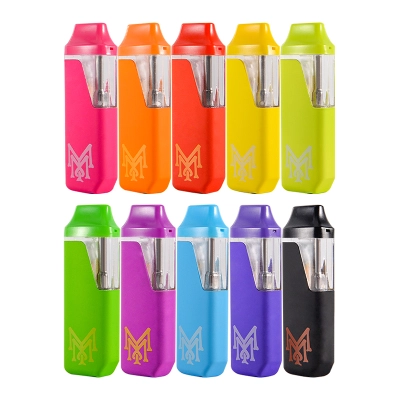
Box / “mini-mod” style
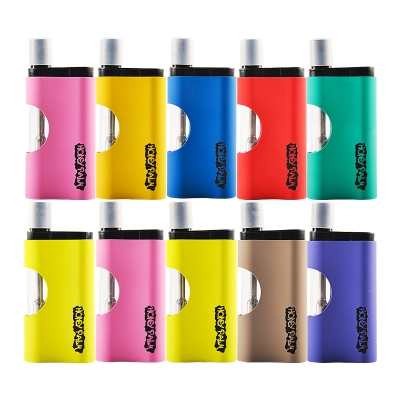
Box-style pens improve grip, reduce accidental drops, and often provide clearer user feedback (battery/voltage indicators). They typically allow more internal space for stable boards and more consistent output under load. That’s useful when your customer base prioritizes “works every time” over ultra-compact form.
Button vs Auto-Draw
Button activation reduces false triggers during transport and gives users a clearer “on/off” mental model. Auto-draw reduces learning friction but is more sensitive to airflow sensor drift and condensation. If you run auto-draw at scale, require sensor consistency checks during pilot batches and set strict DOA definitions.
Fixed Output vs Adjustable Modes
Adjustable modes (multi-level output, preheat) can reduce “weak hit / clogged draw” complaints, but only if the modes are stable and documented. If the vendor cannot provide clear mode definitions and tolerance windows, your support tickets will increase because users can’t reproduce behavior. For a deeper component-level view of how the heating system interacts with control modes, see this 510 atomizer guide.
Key Features
The most “return-sensitive” features are the ones customers don’t notice until something fails: connection integrity, switch consistency, and charge-port durability. Use the feature list below as a procurement checklist, not marketing copy.
Connector Integrity (threads + center-pin contact)
-
Thread feel & finish: smooth engagement, no grit; avoids cross-thread RMAs.
-
Center-pin travel: consistent spring action; prevents “doesn’t fire” tickets across mixed cartridge brands.
-
Contact material: corrosion-resistant contact surfaces reduce intermittent faults after storage.
Activation Consistency
-
Button: tactile consistency, debounce stability, and cut-off timing are the real quality signals.
-
Auto-draw: airflow sensor repeatability and moisture handling reduce false negatives/positives.
User Feedback (LED indicators)
Clear battery/mode indicators reduce “device is dead” returns that are actually “needs charge” cases. In wholesale, that reduces support load and replacement leakage.
Charging Port & Mechanical Durability
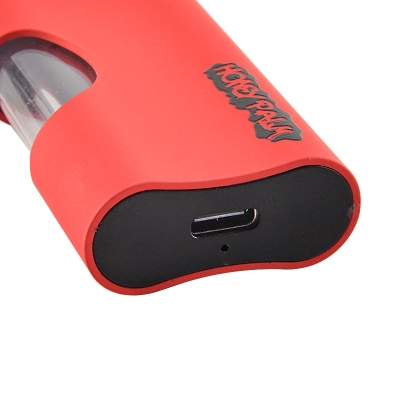
USB-C is preferred for durability and compatibility, but only if the connector is mechanically reinforced. Require a pilot batch drop/handling check and inspect the port for looseness after repeated plug cycles (record results; don’t rely on claims).
Safety Protections (functional, testable)
You don’t need a long spec sheet—only protections you can validate in QC: short-circuit response, over-current shutoff behavior, and consistent auto-cutoff. Define what “pass” means before mass production.
Style Comparison Table
This matrix is written for wholesale decision-making: which style reduces returns, which style reduces confusion, and which style supports stable repeat orders.
|
Decision Factor |
Slim Pen |
Box / Mini-Mod |
Button |
Auto-Draw |
|---|---|---|---|---|
|
Return risk drivers |
Thread wear, center-pin mismatch |
Lower drop/impact failures |
Misuse is lower (clear activation) |
Sensor drift / condensation sensitivity |
|
Support ticket pattern |
“Doesn’t fire” (contact-related) |
“How to change mode” (if complex) |
“Locked/unlocked” confusion if UI unclear |
“Inhale not working” if sensor inconsistent |
|
Best-fit buyer |
High-volume, price-sensitive |
Reliability-led, repeat-order programs |
Retail teams that want predictable behavior |
Simple user experience markets |
|
QC emphasis |
Thread + center-pin fit tests |
Mode stability + drop handling checks |
Button feel consistency + cut-off checks |
Sensor repeatability + airflow checks |
Note: For B2B, “best” is the option that keeps behavior consistent across batches. Consistency beats feature count.
Universal Compatibility
“Compatible with 510” is not a guarantee. Compatibility failures are usually tolerance and contact problems—not the thread name. Use this short reference on the standard itself: 510 threading.
What to verify (minimum set)
-
Fit: cartridge seats flush without wobble; no forced tightening.
-
Contact: consistent firing across a mixed cartridge sample set (different brands/batches).
-
Airflow alignment: draw does not “choke” due to misaligned intake paths.
Incoming test method (simple + repeatable)
Use a small mixed cartridge set for intake verification (e.g., 6–10 units) and record pass/fail by symptom category: no fire, intermittent, loose fit, airflow restricted. This creates a vendor-agnostic defect profile you can compare between sample, pilot, and production batches.
Price Bands & Value Tiers
Avoid picking tiers by unit price alone. Your true cost includes DOA handling, replacement freight, and the operational time your team spends on issues. Below is a tier breakdown written in “procurement language,” not marketing language.
Budget Tier (price-first)
-
Best for: promotions, high-turnover programs with strict incoming inspection.
-
Tradeoff: higher variance between batches unless the supplier’s process controls are mature.
Value Tier (balanced)
-
Best for: most wholesale buyers—stable spec, fewer tickets, predictable reorder.
-
Tradeoff: ensure mode definitions are documented; “mystery modes” create support friction.
Premium Tier (reliability + UX)
-
Best for: brand-forward programs, lowest complaint rates, longer lifecycle expectations.
-
Tradeoff: risk of paying for features users don’t use; validate what your buyers actually want.
Value/Price Table
This table avoids exact pricing (which changes by region, MOQ, and terms) and instead compares tier-level TCO drivers. Use it to negotiate what matters: defect caps, acceptance criteria, and after-sales terms.
|
Tier |
What you’re really buying |
TCO drivers |
Best use case |
Red flags |
|---|---|---|---|---|
|
Budget |
Basic functionality |
Higher DOA variance, more support time |
Entry programs with tight QC gates |
No pilot option, unclear defect policy |
|
Value |
Stable spec + usable indicators |
Lower returns, fewer “can’t reproduce” issues |
Repeat wholesale orders |
Mode behavior undocumented |
|
Premium |
Durability + consistency + UX |
Lowest complaint rates when QC is enforced |
Brand-led programs |
Paying for unused complexity |
Quick TCO math example: Total Cost = unit price + (DOA% × replacement cost) + (return handling time × labor rate) + (extra freight/rework). Even small defect swings matter at scale.
QC Checklist
The fastest path to H-level operational quality is a staged QC workflow with explicit definitions. Use the definitions below so vendors can’t hide behind vague terms.
Definitions (make them contractual)
-
DOA: device fails basic function on first inspection under normal use (define your test conditions).
-
Major defect: customer-impacting functional failure (no fire, intermittent fire, charge failure, unsafe behavior).
-
Minor defect: cosmetic or packaging issues that do not change function (define what is acceptable).
-
AQL: an acceptance sampling framework used to define pass/fail at inspection scale (commonly implemented via ISO 2859-1).
Stage 1 — Sample Evaluation (pre-pilot)
Request a sample set that matches the exact configuration you intend to buy (same housing, same activation type, same indicators, same port). Your goal is to confirm “spec is real” before you talk volume.
|
Check |
How to verify |
Pass/Fail definition (example) |
|---|---|---|
|
Connector fit |
Test with mixed cartridge set; check wobble and seating |
Pass if stable seat + consistent contact across set |
|
Activation consistency |
20 activation cycles; record misfires |
Fail if intermittent behavior appears |
|
Charging durability |
Plug/unplug cycles; check port looseness |
Fail if port becomes loose or inconsistent charge |
|
Indicator accuracy |
Verify indicator changes match device state |
Fail if indicator misleads user repeatedly |
Stage 2 — Pilot Batch (the truth test)
A pilot batch exposes process drift: “same SKU, different batch.” Use acceptance sampling to decide if the batch can scale. If you use ISO-based sampling, reference ISO 2859-1 and define your AQL for critical/major/minor defects before shipping.
-
Record defect codes: No fire / intermittent / charge failure / loose fit / indicator mismatch / cosmetic.
-
Keep retention samples: store 3–5 units from the pilot as a reference set for future disputes.
-
Require batch traceability: lot number + production date + line (if available).
Stage 3 — Production Acceptance (protect the reorder)
Before accepting full production, verify: (1) pilot-equivalent behavior, (2) packaging integrity in transit, (3) documentation consistency. If you ship DDP/FOB/CIF etc., align responsibilities using Incoterms so damage/claims don’t become a negotiation later.
Practical standard set (non-battery) for wholesale operations: ISO 2859-1 (sampling), ISO 9001 (quality management), ICC Incoterms (trade terms), ISTA 3A (small-parcel packaging), IEC 61000-4-2 (ESD test method).
Buyer Profile Comparison
Retailers vs Distributors
Retailers prioritize ease-of-use and low “training time.” Distributors prioritize batch consistency and repeat-order stability. Match your style and tier choice to the cost center: retailers pay for user confusion; distributors pay for defect variance.
Budget vs Premium Programs
-
Budget programs: win on price, but only if you enforce strict sample/pilot gates and defect caps.
-
Premium programs: win on consistency; you’re buying fewer support tickets and fewer replacements.
Red Flags (stop the PO)
-
No pilot option; vendor pushes straight to production.
-
Vague defect policy (no DOA definition, no timeframe, no remedy).
-
No lot traceability or configuration control.
-
Mode behavior undocumented (buyers can’t reproduce performance).
Internal & External References
Internal (your 4 required links)
External (primary/authoritative, non-battery)
Conclusion
A wholesale-ready 510 thread pen program is built on three controls: (1) style choices that reduce predictable failures, (2) compatibility checks that are more than “it’s 510,” and (3) staged QC with clear pass/fail definitions and traceability. If you want a sourcing workflow you can reuse across vendors and SKUs, start here: wholesale guide.
Next step (simple): run the sample checklist, then a pilot batch with defect codes. If the pilot is stable, you have a repeat-order foundation.
3 Comments
I learned something new today. Keep up the good work!
Very helpful content. Thanks for sharing your insights!
Great post! I really appreciate how clearly you explained everything.