
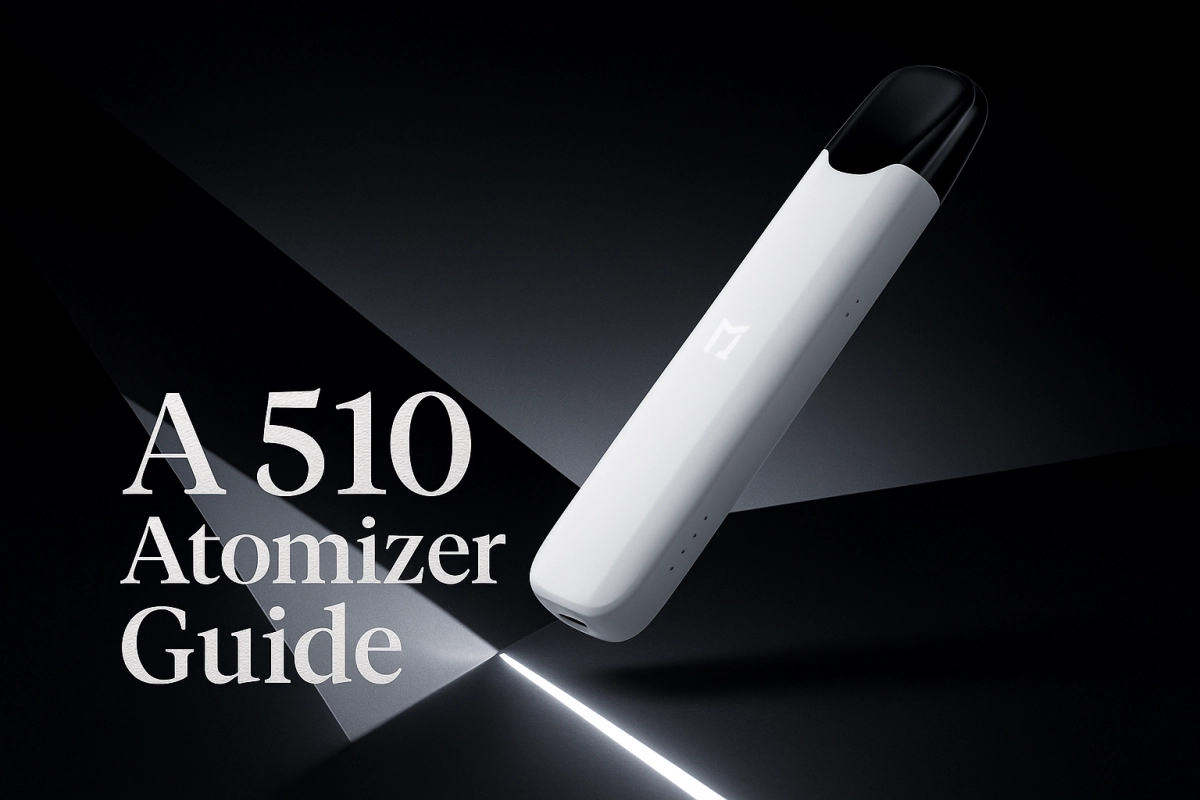

What a “510 Atomizer” Means in 2025 (and Why the Term Is Overloaded)
The phrase 510 atomizer is used in two common ways. In traditional vape hardware, “atomizer” can mean a tank (or rebuildable) that contains a coil/wick assembly. In a cartridge-focused ecosystem, “atomizer” is often used more broadly to describe any 510-thread atomizing hardware attached to a battery—especially 510-thread cartridges.
For MoFu buyers, it helps to treat “510 atomizer” as an ecosystem label: a 510 attachment that must meet two requirements: (1) mechanical fit through the thread geometry and seating depth, and (2) electrical reliability through the center-pin + ground path contact.
510 Atomizer Types: Cartridges, Tanks, and Rebuildables
Type 1: 510-thread cartridges (integrated atomizing core)
These are self-contained atomizing “modules” that attach via 510 threads. In wholesale programs, their main advantage is lower maintenance burden and easier standardization when the supplier controls connector depth, pin geometry, and the core assembly.
Type 2: 510 tanks (replaceable coil head systems)
Tanks separate the “atomizer head” (coil + wick) from the tank body. They can be service-friendly, but they add variability: coil-head tolerances, user installation differences, and more moving parts that can trigger support tickets.
Type 3: rebuildable atomizers (RTA/RDA/RDTA)
These are enthusiast categories designed for rebuildable coils. They matter mostly for completeness and compatibility testing, but they are rarely the lowest-support option for scaled B2B distribution.
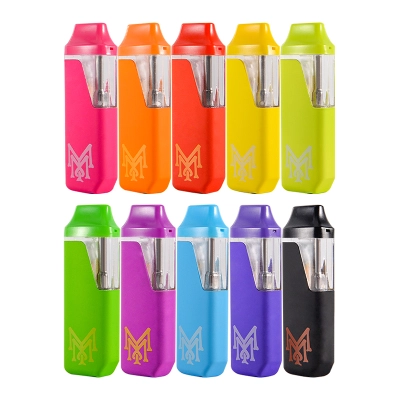
Capacity-based qualification is one of the fastest MoFu paths for cartridge programs: compare 1ml 510 atomizer cartridges against 0.8ml 510 atomizer options to see which base geometry, seating depth, and contact behavior stay consistent across your battery fleet.
MoFu Comparison: What Matters for Buyers and Support Teams
| Decision factor | Why it matters | What to verify |
|---|---|---|
| Connector seating depth | “Fits” is not enough; a base that bottoms out on a recessed housing can lose pin contact. | Battery recess compatibility testing; confirm cartridge base shoulder geometry. |
| Center-pin contact reliability | Intermittent contact creates “no-fire” complaints and inconsistent heating reports. | Pin height tolerance; spring-travel margin (on battery side); contamination sensitivity. |
| Thread quality & plating consistency | Rough starts and wobble create friction in retail and spike returns. | Thread engagement feel; plating uniformity; burr checks under magnification. |
| Support burden | The cheapest SKU can become expensive if it drives tickets and RMAs. | Track issues by lot: “no-fire,” wobble, restricted draw, contact residue. |
Maintenance SOP: Keeping 510 Atomizers Consistent
The fastest way to stabilize performance in 510 ecosystems is to protect the contact surfaces and keep the interface clean. Most “mystery” failures are traceable to connector residue, pin contact height drift, or thread damage.
Step 1 — Clean the 510 interface (threads + contact points)
- Use a lint-free swab on the threaded area and the contact surfaces.
- If you use a cleaning fluid, choose an electronics-safe option and ensure everything is fully dry before reassembly.
- Avoid aggressive tools that can scratch plating or deform the insulator around the center pin.
Step 2 — Don’t over-tighten
Over-tightening can compress the insulator or push a floating/spring pin beyond its comfortable travel, which can make contact unstable. Teach staff and end customers: snug + quarter-turn is usually enough for a stable seat.
Step 3 — Store hardware to prevent contact contamination
- Keep the connector end protected (caps or trays) to avoid dust and fibers.
- Separate lots and label by connector batch so you can trace issues quickly.
- If field feedback shows rising “no-fire” complaints, check for contamination patterns before assuming a full design issue.
Troubleshooting: Symptoms → Causes → Fixes

| Symptom | Most likely cause | What to do (fast, safe checks) | Prevention for B2B |
|---|---|---|---|
| Fits but doesn’t fire | Center-pin contact not closing the circuit (pin too low, limited travel, contamination) | Clean contact points; test on a second battery style; inspect pin/insulator for deformation | Set pin height tolerance; cross-test on recessed + flush connectors; track by connector lot |
| Wobble after tightening | Thread cut variance, plating build-up, or seating shoulder not square | Check first thread for damage; confirm seating surface; reject lots with inconsistent starts | Incoming QC: thread engagement feel + gauge checks; plating uniformity controls |
| Hard to start threading | Burrs or damaged first thread; cross-thread risk | Inspect under magnification; stop forcing; isolate batch | Burr control at machining; sampling plan that targets first-thread defects |
| Intermittent performance | Mixed connector depths or pin-contact sensitivity across lots | Compare units across batches; identify whether issue clusters around one lot | Lot-level traceability; stable BOM for connector + insulator; consistent assembly torque |
Top Recommendations (By Scenario, Not Hype)
“Top recommendations” for a MoFu buyer should be about repeatability, support burden, and compatibility across battery fleets—not a rotating list of brand names that ages quickly.
Recommendation #1: Lowest support burden (scale-friendly)
Prioritize integrated 510-thread cartridge platforms with consistent base geometry, robust plating, and predictable contact behavior across multiple battery styles. This approach minimizes “user assembly” variability and tends to reduce ticket volume.
Recommendation #2: Best for mixed batteries (compatibility-first)
Choose designs that remain stable on both flush and recessed connectors. Avoid bases that bottom out before the center pin makes reliable contact. Validate with cross-testing during pilot.
Recommendation #3: Best for repeat wholesale reorders (lowest variability)
Select suppliers that can document connector specs and keep a stable BOM for the connector/insulator assembly. The goal is to keep lot-to-lot behavior consistent so your support and QA playbooks stay valid over time.
B2B Sourcing & QC Checklist (Reduce Returns)
Spec-sheet must-haves (minimum viable clarity)
- Connector geometry: thread quality expectations, seating depth, base/shoulder dimensions
- Contact behavior: center-pin height tolerance, insulator material, plating targets
- Compatibility scope: battery connector styles used in your program (flush + recessed)
- Lot traceability: connector batch ID and assembly date for root-cause clustering
Incoming QC (fast checks that catch most issues)
| Check | How often | What it catches | Pass criteria (practical) |
|---|---|---|---|
| Thread start + engagement feel | Every lot (sampling) | Cross-thread risk, burrs, plating build-up | Smooth start; no skipping; consistent seat without wobble |
| Battery fleet cross-test | Every pilot + periodic audits | Recess bottom-out, pin-contact failures | Consistent firing/contact across at least 3 connector styles |
| Contact contamination check | Every lot | Residue-driven “no-fire” complaints | Clean contact surfaces; minimal debris; “dry to touch” before pack-out |
| Lot-level defect logging | Always | Hidden batch issues | Defects cluster identification within 24–48 hours of reports |
FAQ
Is a 510 atomizer the same thing as a 510 cartridge?
Sometimes. In many buyer conversations, “510 atomizer” is used as shorthand for the atomizing attachment in a 510 ecosystem—often a 510-thread cartridge. In tank systems, the atomizer may refer to a replaceable coil head or the tank assembly itself.
Why do 510 atomizers fail more often in mixed-battery programs?
Mixed battery fleets introduce more variation in connector recess depth and pin travel. A cartridge can thread in perfectly and still fail electrically if contact geometry is marginal. Cross-testing across multiple battery connector styles reduces surprises.
What is the simplest maintenance habit that prevents most issues?
Keep the 510 interface clean and dry, protect contact points during storage, and avoid over-tightening. Most “no-fire” issues are contact-related, not “mystery defects.”
External References
These links support standard definitions of atomizer types, coil/atomizer components, and how a 510 connector completes electrical contact. (Open in a new tab.)
- Innokin: Different types of vape atomizers
- Innokin: Vape parts explained (coil / wick / heating element)
- Innokin: What is the 510 thread and how does it work?
- Creme de Vape: Inside a 510 connector (center pin + ground path)

3 Comments
Very helpful article, I appreciate the insights!
Awesome content! Really well-written and easy to follow.
Thanks for the tips! I’m going to try this out myself.