
MoFu • Informational / How-To • B2B Buying
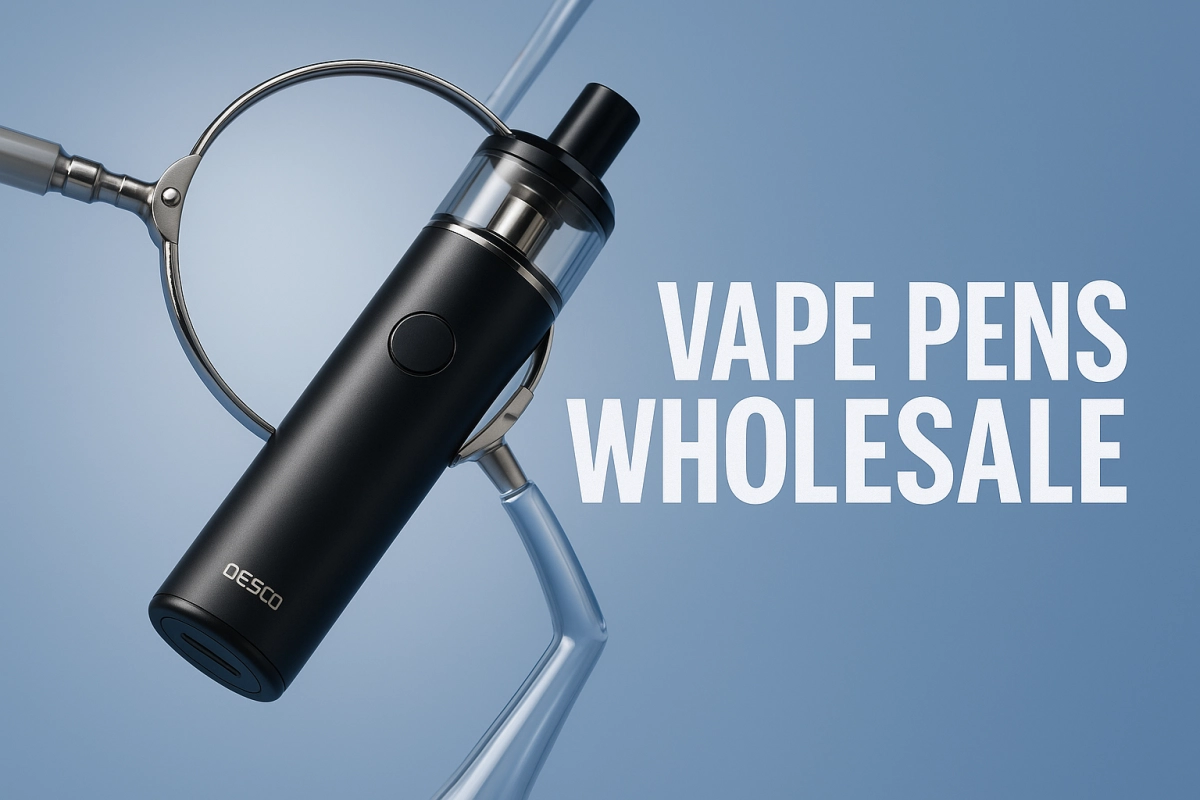
If you’re sourcing vape pen hardware at scale, your margin isn’t decided by sticker price—it’s decided by rejection rate, packaging durability, supplier process control, and the true landed cost of every saleable unit. This 2025 playbook shows how to evaluate suppliers like a procurement team (not a shopper).
Scope & clarity: This article is written for B2B education about empty hardware only (unfilled shells/units). It does not provide instructions for filling, consuming, or using any nicotine/THC/CBD products, and it is not medical or legal advice. When the market uses names like “live resin” or “liquid diamonds,” treat them as exterior-style naming, not a description of contents.
Table of contents
1) What “good” looks like in wholesale sourcing 2) Build a supplier scorecard (fast, repeatable) 3) Sampling & AQL: stop guessing and start measuring 4) Traceability + packaging: prevent expensive surprises 5) Landed cost math that protects your margin 6) Terms that reduce risk without being combative 7) Red flags, plus a 15-minute final checklist FAQ Sources & standards (external links)1) What “good” looks like in wholesale sourcing
Reliable wholesale sourcing is boring—by design. The best suppliers produce predictable batches, document what changed (and why), and make it easy for you to accept or reject lots using a consistent standard. In practice, “good” looks like:
- Stable build and fit: consistent tolerances, assembly alignment, and repeatable performance across a lot.
- Clear documentation: lot IDs, cartons labeled, change logs, and a straightforward way to tie what you received to what was approved.
- Packaging that survives shipping: fewer crushed cartons, fewer broken mouthpieces, fewer returns triggered by transit damage.
- Predictable lead times: realistic ETAs and proactive updates (silence is a cost driver).
Notice what’s missing: “lowest price.” Pricing matters, but in B2B it’s a component of margin, not the definition of margin. The most common margin killer isn’t unit price—it’s unplanned loss (rejections, returns, rework, and customer support time).
2) Build a supplier scorecard (fast, repeatable)
The simplest way to avoid “emotion-based purchasing” is a scorecard. Keep it lightweight: 10–12 criteria with 0–2 points each, and require a minimum pass score before you scale an order.
2.1 The 10 criteria that matter most
| Category | What to ask for | Why it matters to margin |
|---|---|---|
| Quality system | Evidence of a QMS (e.g., ISO 9001-aligned processes) and who owns QC decisions | Reduces “randomness” between lots and prevents repeat defects |
| Incoming materials control | How they qualify materials; change control; supplier list stability | Material drift is a classic root cause for leaks, cracks, and fit issues |
| Lot identification | Lot code format, carton label samples, and how they trace lots internally | Without traceability, every issue becomes a “whole inventory” issue |
| Sampling plan | What sampling standard they follow (AQL / attribute inspection) and how rework is handled | Lets you accept/reject consistently instead of arguing after damage is done |
| Packaging validation | Drop/vibration test approach (e.g., ISTA-style distribution simulation) | Less transit damage → fewer returns and fewer chargebacks |
| Documentation | Spec sheets, packaging specs, photo standards, and approval workflow | Prevents “but we thought you meant…” production mistakes |
| Transparency | Can they share real photos/videos of your lot before shipment? | Early problem detection is cheaper than post-arrival rework |
| Communication | Named owner, response SLA, escalation path | Saves days when a shipment is time-sensitive |
| Commercial terms | Clear Incoterms and who pays for what/when | Landed cost stability protects margin forecasting |
| After-sales resolution | Credit/replacement rules tied to photos, lot IDs, and defect type | Turns disputes into a process, not an argument |
2.2 A practical way to run your first supplier audit (remote)
- Carton label photo with lot code
- QC checklist sample (redacted is fine)
- Packaging spec (dimensions + materials)
- What changed?
- When did it change?
- How did they validate the change?
- Do they answer precisely?
- Do they dodge?
- Do they provide files without friction?
- “Ship only after we approve pre-ship photos”
- “No substitutions without written approval”
A supplier that cannot produce basic documentation on a micro-order will not magically become organized at scale.
3) Sampling & AQL: stop guessing and start measuring
If you’re buying wholesale, you need a method to accept or reject lots without inspecting every unit. That’s what attribute sampling is for. Many procurement teams use AQL-style sampling approaches based on ISO 2859-1 (sampling procedures for inspection by attributes).
3.1 How to use AQL thinking without turning your warehouse into a laboratory
- Define “critical / major / minor” defects in plain language (e.g., cracked shell = critical; cosmetic scuff = minor).
- Agree on a sample size per lot size and a pass/fail threshold before you place a large PO.
- Document the inspection method (photos, checklists, and how you record failures).
ISO 2859-1 remains widely referenced, and ISO is also moving toward a new edition (ISO/FDIS 2859-1) in 2025—another reason to keep your approach documented and up to date. The goal isn’t to “name-drop ISO”; it’s to make your acceptance process consistent from month to month.
3.2 A buyer-friendly defect list (starter template)
| Defect class | Examples (hardware-only) | Typical business impact |
|---|---|---|
| Critical | Cracked body; broken mouthpiece; damaged seals; internal contamination visible | Immediate rejects, high return risk, brand damage |
| Major | Loose fit; inconsistent airflow; misaligned parts; missing accessories promised in spec | Higher support burden, inconsistent user experience after filling/pack-out by licensed teams |
| Minor | Small cosmetic scuffs; tiny print alignment variance within tolerance | Usually manageable, but can matter for premium positioning |
4) Traceability + packaging: prevent expensive surprises
Two systems protect your margin quietly: traceability and packaging validation. Traceability prevents “everything is affected” panic. Packaging validation prevents damage-related returns that look like “quality issues” to customers.
4.1 Traceability basics (what to demand)
- Lot code on master cartons (and ideally inner cartons).
- Consistent SKU naming across invoice, carton labels, and spec sheets.
- Simple batch mapping: PO → production date range → lot code → carton range.
GS1 publishes traceability standards that help supply chains design consistent “identify, record, share” workflows. You don’t need enterprise software to benefit—just a stable lot-code discipline and the habit of recording what you received.
4.2 Packaging validation: the “returns insurance” you can actually measure
For wholesale, packaging is part of product quality. Distribution simulation frameworks (like ISTA procedures) exist because real shipping includes drops, vibration, stacking, and mixed handling. You can use those ideas to pressure-test packaging design and reduce damage claims.
- Start simple: require a drop/vibration approach appropriate for parcel shipping.
- Be specific: specify carton structure, inserts, and the pass criteria (“no crushed inner cartons,” “no damage to units”).
- Record outcomes: damage rate by lane (USA/UK/DE/PL, etc.) so you can fix the worst lane first.
4.3 Child-resistant packaging: keep it factual, not promotional
Even when discussing empty hardware, many buyers prefer packaging systems that can support child-resistant expectations in their target market. In the U.S., the CPSC provides business guidance on the Poison Prevention Packaging Act (PPPA) and related special packaging requirements. The practical takeaway for B2B teams: define your packaging requirement early, use a documented test method, and avoid “we’ll figure it out later.”
5) Landed cost math that protects your margin
Profit margin is a math problem plus a process problem. If you only look at unit price, you’re blind to the costs that actually show up on your P&L: shipping, duty, warehousing, defects, returns, and support.
5.1 The simplest landed-cost model (copy/paste)
| Line item | What to include | Why it matters |
|---|---|---|
| Unit price | Ex-factory or supplier price | Base cost, but rarely the full story |
| Freight + insurance | International + domestic legs, plus any cargo cover | Often swings cost by lane and season |
| Duties + customs fees | Brokerage, clearance, and applicable tariffs | Common margin surprise if not forecasted |
| Packaging loss rate | Damaged cartons / broken units per shipment | Turns into refunds, reships, and chargebacks |
| Defect/rejection rate | Units rejected at incoming QC + post-ship issues | Hidden cost that scales with volume |
| Ops overhead (lightweight) | Pick/pack, labeling, storage (rough allocation is fine) | Makes margin real, not theoretical |
5.2 Incoterms: the fastest way to stop fee surprises
Incoterms clarify who is responsible for costs, risks, and logistics steps in a shipment. Buyers don’t need to memorize eleven terms— they just need the discipline to put the correct term on every PO and invoice.
- Write the Incoterm + named place: e.g.,
FOB NingboorDDP New Jersey. - Confirm what’s included: “Does this include duty? clearance? last-mile delivery?”
- Match payment terms to control points: don’t pay 100% before you have pre-ship evidence.
The U.S. International Trade Administration offers a plain-language overview of Incoterms responsibilities; ICC is the official publisher of Incoterms rules.
6) Terms that reduce risk without being combative
Good terms aren’t about fighting with suppliers—they’re about reducing ambiguity. These are the clauses that protect margin the most:
6.1 The “no substitution” rule
Clause idea: “No material, tooling, packaging, or component substitution without written approval. Any unapproved substitution is grounds for lot rejection.” This one line prevents the most common “silent drift” behavior.
6.2 Pre-shipment proof package (PSP)
Ask for a simple PSP: carton label photos (with lot code), random unit photos, and a short QC checklist. Set a clear rule: “Shipment may not depart until PSP is approved.” It’s a low-friction way to catch problems early.
6.3 Credit/replacement tied to evidence
Make resolution predictable: “Credit or replacement applies when defects are documented with photos/videos, lot codes, and a defect count.” This shifts disputes from emotion to process.
6.4 Packaging and transit responsibility
If you’re getting crushed cartons, treat it as a packaging-spec and distribution-sim issue. You can require a minimum packaging integrity standard for the lanes you ship most (parcel vs freight vs mixed).
7) Red flags, plus a 15-minute final checklist
7.1 The red flags that usually predict margin pain
- They won’t share documentation (specs, lot codes, packaging details).
- They pressure you to skip sampling (“everyone buys like this”).
- They avoid naming a responsible owner for QC decisions.
- Pricing changes after you approve the sample without a clear reason.
- They can’t describe change control (what happens when a supplier changes something).
7.2 The 15-minute “ready to scale” checklist
- Approved spec sheet + packaging spec
- AQL-ish sampling plan agreed in writing
- Incoterm + named place on the PO
- No-substitution clause included
- Pre-ship proof package approved
- Lot codes visible on cartons
- Carton count + weights match invoice
- Clear resolution process documented
If you want a deeper QC + packaging workflow, use the internal empty vape sourcing checklist as your internal SOP baseline and adapt it to your lanes and customer expectations.
FAQ
Is it better to buy fewer SKUs or more SKUs when starting?
Fewer SKUs usually improve margin early because they concentrate volume, simplify QC, and reduce “inventory fragmentation.” Expand SKU count after you’ve proven stable lots and predictable transit outcomes.
How do I keep the blog informational (not salesy) while still being commercial-intent?
Anchor the article around buyer decisions: documentation, sampling, packaging durability, and landed cost. Avoid hype language and avoid focusing on “effects.” A reader should finish with a procurement workflow, not a shopping impulse.
What feature comparisons are most helpful for MoFu buyers?
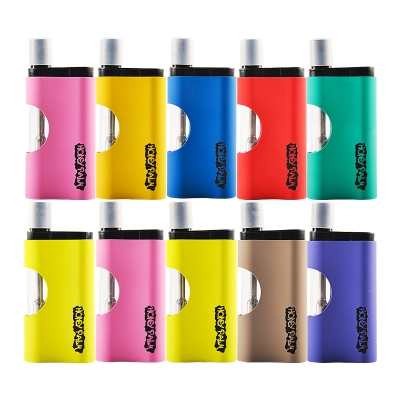
Compare features that affect returns and support volume: packaging integrity, traceability, and consistency across lots. A feature page like vape with screen is useful when it’s discussed as a spec branch, not as a “must-buy.”
Do I need third-party verification for every lot?
Not always. Many teams use tiered validation: deeper checks for new suppliers or new formats, lighter checks for proven suppliers. When you do use external labs, ISO/IEC 17025 is a widely recognized competence standard for testing and calibration laboratories.
What’s the most common reason margins shrink after scaling?
Scaling amplifies small loss rates. A 2% damage-rate that feels “fine” at small volume becomes a major expense at large volume when you add refunds, reships, and support time.
Sources & standards referenced (external links)
These are widely cited, primary sources used to support the procurement concepts in this guide (quality systems, sampling, traceability, packaging testing, and shipping terms).
- ISO 9001:2015 (Quality management systems): https://www.iso.org/standard/62085.html
- ISO/IEC 17025:2017 (Testing & calibration laboratories): https://www.iso.org/standard/66912.html
- ISO 2859-1:1999 (AQL sampling / attribute inspection): https://www.iso.org/standard/1141.html
- ISO/FDIS 2859-1 (new edition under development): https://www.iso.org/standard/85464.html
- GS1 Global Traceability Standard: https://www.gs1.org/standards/gs1-global-traceability-standard/current-standard
- ISTA Test Procedures overview: https://ista.org/test_procedures.php
- ISTA 3A overview (PDF): https://ista.org/docs/3Aoverview.pdf
- Incoterms® 2020 (ICC official): https://iccwbo.org/business-solutions/incoterms-rules/incoterms-2020/
- Know Your Incoterms (U.S. ITA): https://www.trade.gov/know-your-incoterms
- CPSC PPPA business guidance: https://www.cpsc.gov/Business--Manufacturing/Business-Education/Business-Guidance/PPPA
- eCFR 16 CFR Part 1700 (Poison Prevention Packaging): https://www.ecfr.gov/current/title-16/chapter-II/subchapter-E/part-1700
- FDA ENDS overview (components/parts scope): https://www.fda.gov/tobacco-products/products-ingredients-components/e-cigarettes-vapes-and-other-electronic-nicotine-delivery-systems-ends
3 Comments
Thanks for the insights, very useful.
Helpful content, appreciate the effort!
Good job on this blog, keep it up!