

Scope: This page is written for empty only procurement and QC workflows. It avoids discussing filled substances, dosing, or medical claims. It focuses on verifiable controls: traceability records, labeling evidence, acceptance sampling logs, and documented disposition.
Direct answer and what “proof” looks like
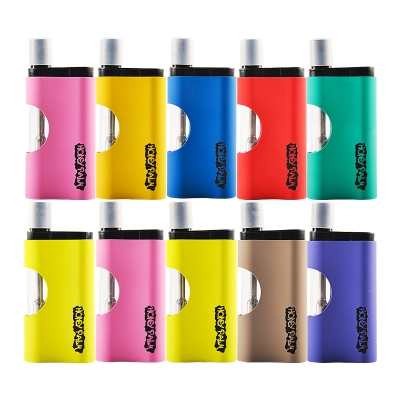
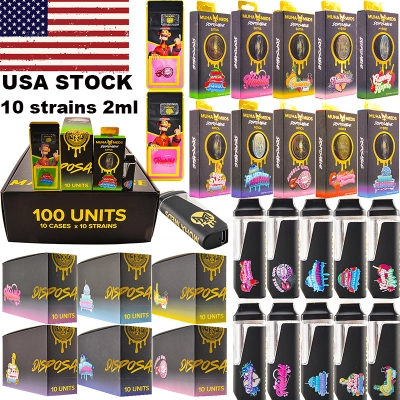
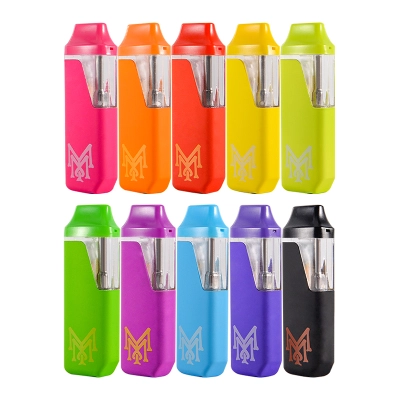
B2B teams spot fake ace ultra premium packman shipments fastest when they stop debating “looks real” and instead require a repeatable proof set: (1) traceability linkage from carton labels to purchase documents, (2) a controlled evidence pack stored the same way every time, and (3) a disposition decision that is logged and auditable. For internal terminology alignment across listings, keep your hub consistent via best ace ultra premium packman.
Scenario your receiving team should assume by default
- Counterfeit risk: packaging and labeling mimic the brand, but record linkage is missing, inconsistent, or duplicated.
- Grey-market risk: units are physically plausible, but chain-of-custody evidence (PO, shipper, carton ID range) is incomplete.
- Unauthorized variant risk: “near-match” versions appear (finish, label layout, case-pack) without controlled change notice.
Your goal is not to “win an argument.” Your goal is to make the same call every time with the same evidence.
This playbook is aligned to widely used supply chain frameworks for fraud risk management, authentication evaluation, traceability design, and inspection by attributes. In this article we cite those sources explicitly in References and use them as public, standards-based anchors rather than marketing claims.
Procurement maturity is measured by how quickly you can answer three questions: Which variant is it? Which lot is it? What evidence proves it?
PASS / QUARANTINE / ESCALATE decision flow
The fastest teams use a single triage flow. It reduces debate, keeps suspect cartons out of put-away, and makes escalations easier to complete with complete evidence.
|
Status |
Trigger (objective) |
Immediate action |
Required record |
|---|---|---|---|
|
PASS |
Carton labels match PO fields, lot/batch data is complete, and no red flags appear in the evidence pack. |
Release to inventory with receiving record ID. |
Receiving log + photo set + disposition entry. |
|
QUARANTINE |
Any missing or inconsistent label fields, incomplete chain-of-custody, or variant drift vs approved reference. |
Hold in labeled area; block put-away; notify QC owner. |
Quarantine log + red-flag list + photo set. |
|
ESCALATE |
Duplicate identifiers across cartons, altered labels, repeated mismatches, or supplier cannot reconcile records. |
Open an escalation ticket with full evidence pack attached. |
Escalation summary + all artifacts + final disposition. |
Quick steps for a real vs fake assessment (empty only)
- Stop the clock: do not mix cartons into active stock until label fields are captured and matched to purchase documents.
- Capture label evidence: take photos of carton faces + close-ups of lot, batch/date codes, and any 2D code area.
- Match three fields: supplier name/ID, item/variant descriptor, and lot or batch identifier must reconcile to the PO + shipping documents.
- Check for drift: if label layout, print quality, or case-pack differs from your approved reference without a controlled notice, treat as QUARANTINE.
- Decide and log: PASS / QUARANTINE / ESCALATE must be recorded with a unique receiving record ID.
Worked example 1: “Variant drift” that looks harmless
Finding: Cartons match PO number, but label layout changed (font/spacing) and case-pack count differs from last shipment.
Call: QUARANTINE (not “PASS with a note”).
What resolves it: supplier provides a controlled change notice that includes effective lot, updated packing spec, and revised case-pack record. If they cannot, ESCALATE.
Worked example 2: “Near-perfect” packaging with bad identifiers
Finding: Two cartons share the same lot/batch code and identical label ID formatting, but shipper documents reference a different lot.
Call: ESCALATE. Duplicate or conflicting identifiers are a high-signal risk in traceability systems.
What resolves it: reconciliation proof: corrected shipper record + carton ID range mapping + receiving log update + signed disposition.
Traceability checks for Ace Ultra Premium Packman
Traceability is practical: carton reality, receiving logs, and consistent field capture. Start by treating each shipment as a traceability “unit of control.” If your team is also maintaining family-level references, keep naming consistent via ace packman disposable.
Lot, batch, and label verification (what to capture every time)
|
Field |
Accept criteria (objective) |
Evidence artifact |
Common failure mode |
|---|---|---|---|
|
Supplier identity |
Matches PO header and shipper documents. |
PO PDF + shipper doc + receiving record. |
Unknown intermediary or inconsistent seller name. |
|
Variant descriptor |
Matches your approved naming and case-pack. |
PO line item + carton label photo set. |
“Near-match” version not in your approved list. |
|
Lot / batch ID |
Present, legible, and consistent across docs. |
Close-up label photo + shipper lot reference. |
Missing, overwritten, duplicated, or conflicting IDs. |
|
Carton ID range |
Recorded before cartons are separated/mixed. |
Carton face photos + receiving log entry. |
No carton trace after put-away; cannot isolate later. |
|
Chain-of-custody |
Handoffs and dates are recorded for the shipment. |
Receiving checklist + timestamped photo names. |
Gaps: “arrived somehow” with no accountable owner. |
If your process requires deeper packaging and labeling requirements (label positions, carton panels, required fields, separation rules), standardize them once and point teams to packaging & labeling traceability</a > so receiving teams aren’t improvising every week.
Missing 2D code or “portal mismatch” handling
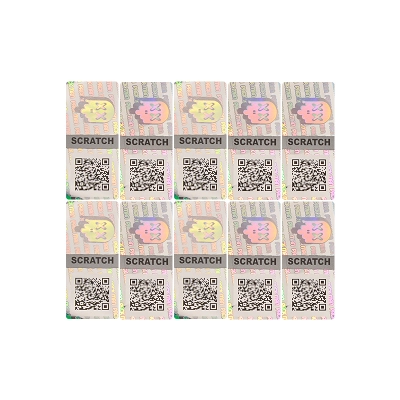
- Treat missing or unreadable 2D code areas as a process trigger, not a public “how-to.” Your job is to validate record linkage and keep the audit trail complete.
- If a portal result (screenshot or claim) conflicts with your purchase documents, do not “average the truth.” QUARANTINE and require record reconciliation.
- Never publish or circulate security feature details. Limit evidence sharing to the minimum needed for internal escalation.
Practical rule: if you cannot reconcile identifiers to your own purchase and receiving records, you do not have proof. QUARANTINE is the proof-preserving action.
Minimum evidence pack and red-flag actions
QC tools become “authoritative” when they produce repeatable artifacts. This section replaces generic tables with a field-ready evidence pack that your team can implement immediately.
Minimum evidence pack to request or retain
Implementation tip: use a consistent folder + filename pattern so an auditor can find proof in seconds. Example format: YYYYMMDD_PO####_LOT####_CARTON##_##.jpg
|
Artifact |
Minimum fields |
Storage rule |
Why it matters |
|---|---|---|---|
|
Purchase document |
PO number, supplier identity, line item, case-pack. |
Save as PDF in shipment folder. |
Root proof for what you ordered. |
|
Shipper document |
Shipment ID, carton count, lot/batch reference. |
Save alongside PO; keep same folder. |
Links cartons to shipment reality. |
|
Carton photo set |
All label panels + close-ups of identifiers. |
At least 6 photos per shipment. |
Prevents disputes after put-away. |
|
Receiving record ID |
Date/time, receiver, location, disposition status. |
One ID per shipment; never reused. |
Makes proof auditable and searchable. |
|
Quarantine log (if needed) |
Reason code, cartons affected, owner, next action. |
Keep a single master log + shipment attachment. |
Stops suspect cartons from leaking into stock. |
Red flags table (objective triggers and safe actions)
|
Red flag |
What it suggests |
Action |
Evidence to attach |
|---|---|---|---|
|
Lot/batch missing or overwritten |
Traceability break; cannot isolate later. |
QUARANTINE; require reconciliation. |
Close-up photos + PO + shipper doc. |
|
Duplicate identifiers across cartons |
High-signal counterfeit/replication risk. |
ESCALATE; block put-away. |
Carton ID range photos + receiving log. |
|
Label layout drift without notice |
Unauthorized variant or unlogged change. |
QUARANTINE; request change notice. |
Side-by-side label photo set + last approved ref. |
|
PO fields don’t match carton descriptors |
Grey-market mixing or misrepresented shipment. |
QUARANTINE; reconcile documents. |
PO line item + carton label + shipper document. |
|
Repeated issues across multiple shipments |
Supplier control weakness or hostile channel. |
ESCALATE; open corrective action. |
Trend notes + prior receiving IDs + evidence packs. |
If you want a program-specific, time-pressed checklist your receiving team can run the same way every time, connect your workflow to qc checklist & consistency signals</a >.
QC inspection methods and acceptance sampling records
Visual checks are necessary, but they are not “proof” unless they are recorded consistently. The goal is to make inspection repeatable with an attributes-based record, aligned to AQL inspection frameworks referenced in References.
Packaging and brand color consistency (record what you can prove)
- Compare cartons against an approved reference set: typography sharpness, alignment, and print clarity. Record deviations as “label drift” with photos.
- Check for consistent placement of required identifiers (lot/batch/date code area). Missing placement is a traceability failure, not a cosmetic issue.
- Do not rely on subjective words (“high quality”). Use defect classes: Minor / Major / Critical, and define examples internally.
Attribute sampling: the record template that auditors actually use
|
Record field |
Example (safe) |
Why QC cares |
|---|---|---|
|
Lot size (N) |
N = 2,400 units (from shipper document) |
Defines population; prevents “moving target” sampling. |
|
Sample size (n) |
n recorded per your inspection level |
Proves repeatability and prevents ad-hoc checks. |
|
Defect taxonomy |
Critical: missing lot ID; Major: label drift; Minor: scuff |
Turns opinion into consistent classification. |
|
Counts + disposition |
Major=3, Critical=1 → QUARANTINE |
Links findings to PASS/QUARANTINE/ESCALATE. |
|
Receiving record ID |
RR-2025-12-29-014 |
Makes the decision searchable and auditable. |
|
Photo attachments |
6+ photos named by PO + lot + carton index |
Enables independent verification later. |
QC credibility is a paper trail: your sampling record must be understandable to someone who was not there.
Sourcing controls and reporting (stay legit without oversharing)
This article is not legal advice. The practical goal is to reduce exposure to counterfeit, grey-market mixing, and unauthorized variants through documentation discipline.
Procurement controls that reduce counterfeit exposure
- Require purchase documents that clearly identify the variant descriptor and case-pack, and keep them tied to carton evidence.
- Reject “trust me” sourcing. If a channel cannot produce reconcilable records, it is not a controllable channel.
- Use controlled terminology: one internal name per variant, one receiving record ID per shipment, and one disposition decision per receiving record.
Reporting suspected counterfeit (internal first, evidence always)
- QUARANTINE suspect cartons and prevent mixing. The first priority is containment and proof preservation.
- Create an escalation summary: what mismatched, which cartons, and which identifiers conflict.
- Attach the evidence pack (PO + shipper doc + photos + receiving record ID) and route to the accountable owner in your organization.
If your team needs a broader internal primer on authenticity signals that stays neutral and evidence-driven, use ace ultra premium authenticity guide</a >.
Safety note: do not publish security feature details (code formats, placement rules, or “how to bypass” language). Keep investigations and evidence sharing internal and minimal.
Authoritative references used
External links are provided for verifiability and standards context. This page uses them as public anchors for procurement/QC governance.
- GS1 Global Traceability Standard</a >
- ISO 22380 product fraud risk</a >
- ISO 12931 authentication criteria</a >
- ISO 2859-1 AQL sampling</a >
- OECD/EUIPO fakes report 2025</a >
Editorial note: This article is informational and focuses on empty only procurement and QC workflows. It does not provide legal advice. Always confirm requirements for the markets where you operate.
FAQ
What is the fastest reliable way to spot fake shipments?
Use the same proof set every time: reconcile PO fields to carton labels, capture lot/batch evidence before put-away, and log a PASS/QUARANTINE/ESCALATE disposition with a unique receiving record ID.
Is a missing 2D code automatically proof of counterfeit?
Treat it as a process trigger. QUARANTINE and require reconciliation to your own purchase and shipment records. The core proof is record linkage plus consistent evidence, not a single surface feature.
What should be in the evidence pack if you escalate?
At minimum: PO PDF, shipper document, carton photo set (all panels + close-ups), receiving record ID, and a short mismatch summary that names the conflicting identifiers and cartons.
How do you avoid turning this into “marketing language”?
Replace subjective claims with controlled fields: defect taxonomy, objective red flags, sampling record fields, and written disposition. Auditable proof beats adjectives.

3 Comments
This was quick and useful.
Nice post. Looking forward to more updates.
Helpful content. Keep it up.