
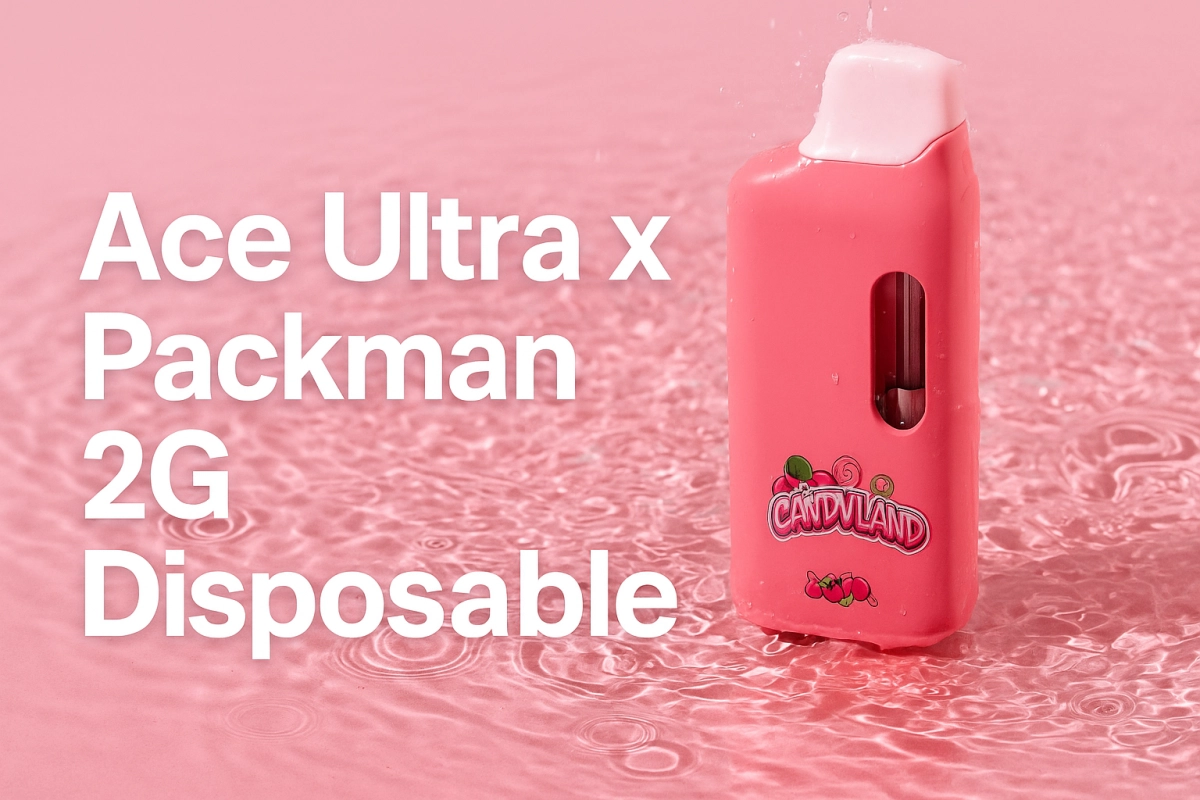
This is a hardware-first quality playbook designed for distributors, brand teams, and importers who need repeatable QC on 2g disposable shells. It avoids medical or clinical claims and focuses on what you can verify: fit & finish, seal behavior, airflow consistency, packaging readiness, and documentation discipline.
1) Why 2g programs raise QC stakes
A 2g disposable platform is a “longer lifecycle” device. That longer lifecycle amplifies small manufacturing variations: a tiny mismatch in mouthpiece fit, a slightly off center post, or a micro-gap at a seam can stay invisible at first—then show up as higher return rates once products move through multiple handling steps (inbound freight, warehouse pick/pack, parcel delivery, retail display).
What changes at 2g
- More time on shelf → packaging durability matters more.
- More handling events → cosmetic defects become reputational defects.
- Longer usage window → early-stage “minor” issues feel bigger to customers.
QC goal (MoFu reality)
- Reduce disputes by documenting acceptance criteria before shipment.
- Translate “quality” into measurable signals a team can check in minutes.
- Build a repeatable supplier feedback loop (not a one-off inspection).
2) Consistency signals: what predicts fewer returns
Good QC is not “checking everything.” It’s concentrating on the signals that correlate with stability and customer confidence. Below is a practical set of signals that you can verify on empty hardware without needing lab equipment.
| Signal | Quick check (30–90 seconds) | What “good” looks like | Why it matters |
|---|---|---|---|
| Fit & finish uniformity | Visual scan under bright light; compare 5 units side-by-side | No gaps, no sharp edges, uniform seams, consistent surface texture | Users judge “authenticity” and trust from build cues before they judge performance |
| Mouthpiece alignment | Press-fit check; gentle twist; check for rocking or wobble | Consistent seating; no rocking; no audible creak; no visible micro-gap | Mouthpiece issues often show up as leakage, condensation complaints, or perceived “cheapness” |
| Airflow consistency | Draw test across 10 units (same operator; same draw length) | Similar draw resistance; minimal whistle; stable feel | Airflow variance drives “some units work, some don’t” customer narratives |
| Rattle / loose internals | Gentle shake + tap test near ear | No loose parts; no knocking; no “floating” sound | Loose internals correlate with shipping damage and cosmetic rejects at retail |
| Residue / contamination | Swab mouthpiece area + airpath entry (dry swab) | Clean swab; no oily film; no strong odor; no discoloration | Cleanliness is a trust issue and a compliance risk for some retailers |
3) Defect taxonomy: critical vs major vs minor
To keep discussions neutral and non-salesy, define defects like a manufacturing team would—by risk and customer impact. This helps you negotiate objectively and document disputes cleanly.
| Category | Definition | Examples (hardware-only) | Typical action |
|---|---|---|---|
| Critical | Creates safety/compliance exposure or makes a unit unusable | Sharp edges; cracked housing; broken mouthpiece; severe contamination | Hold lot subset; root cause + containment before release |
| Major | Likely to cause returns, negative reviews, or retailer rejection | Visible gaps; inconsistent seams; frequent airflow outliers; loose internals | Segregate; rework if possible; supplier corrective action |
| Minor | Cosmetic variance that doesn’t change function | Small paint variation; tiny surface scuff under normal handling | Accept with notes; monitor trend across lots |
Once you have this taxonomy, you can set acceptance rules without sounding like marketing—just standards.
4) Incoming inspection checklist (AQL-based)
Most B2B teams use an AQL-style sampling approach so QC is fast, repeatable, and scalable. The most cited reference is ISO 2859-1 (sampling procedures for inspection by attributes). The ISO group is also progressing a newer draft revision, so it’s worth referencing the standard family rather than hard-coding one edition in your SOP.
4.1 Pre-checks (before opening cartons)
- Carton integrity: crushed corners, punctures, water marks, reseal tape, mismatched labels.
- Count verification: case count matches packing list; no mixed SKUs inside a case unless specified.
- Lot traceability: confirm the lot/batch identifier is present on outer cartons (or on an enclosed doc).
4.2 Unit-level QC (your “core 10-minute routine”)
Use the same routine every time so your team’s results are comparable across months and warehouses.
| Checkpoint | How to check | Pass condition (plain language) | Defect class |
|---|---|---|---|
| Seams & edges | Visual scan + fingertip sweep | No sharp edges; seam line is uniform; no cracks | Critical / Major |
| Mouthpiece fit | Press + gentle twist | No wobble; no visible gap; consistent seating depth | Major |
| Airflow outliers | Same operator draws on multiple units | No extreme tight/loose outliers; minimal whistle | Major |
| Rattle / loosening | Shake + micro-tap test | No loose internals sound; no structural creak | Major |
| Cleanliness | Dry swab near mouthpiece/airpath zone | No residue; neutral smell; no discoloration | Critical / Major |
| Cosmetic consistency | Compare units side-by-side | Surface finish and color are internally consistent for the lot | Minor (trend) |
4.3 How to record issues (so suppliers can actually fix them)
- 1 photo wide + 1 photo close: show the full unit and the defect detail.
- One-line description: “mouthpiece micro-gap visible on 7/50 sampled units.”
- Defect category: critical / major / minor.
- Count and percent: number of defect units and sample size (e.g., 7 out of 50).
5) In-process checks: the “no-surprises” loop
Incoming QC catches problems after shipping. In-process checks reduce the chance of shipping a problem in the first place. Even if your factory partner runs their own checks, ask for evidence and keep it standardized.
What to request from the line
- First-article photos for each production shift
- Hourly “golden sample” photos against a master reference
- Defect tally sheet (by category) for each lot
- Evidence of containment when a defect spikes
What to do at your warehouse
- Run the same 10-minute unit QC routine on arrival
- Keep photo archives by lot code
- Track defect rates by supplier + by warehouse lane
- Escalate only with documented evidence
6) Packaging readiness: transport + child-resistant logic
For 2g programs, packaging failures feel like product failures. Retailers and distributors often use established packaging test frameworks to reduce “unknowns” in parcel delivery conditions. A common reference is ISTA Procedure 3A for individual packaged-products shipped through parcel systems.
6.1 What to check on packaging (hardware-first, non-battery)
- Carton strength: corners remain square; no panel collapse after stacking.
- Internal immobilization: devices don’t rattle within the retail box.
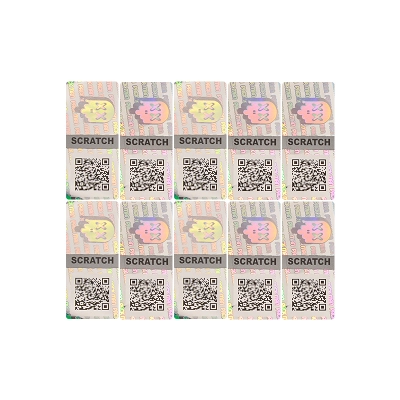
- Tamper evidence: seals show clear disturbance when opened.
- Label readability: lot/batch marks remain legible after handling.
6.2 Child-resistant packaging (when applicable)
In many markets, retailers apply child-resistant packaging expectations across categories because it reduces risk and improves compliance confidence. ISO 8317 is widely cited for test methods and performance requirements for child-resistant reclosable packages. Even when your hardware ships empty, aligning packaging logic to recognized CR requirements can improve retailer acceptance.
7) Documentation pack: what to require from suppliers
High-trust programs look boring on paper: clear specs, revision control, lot traceability, and objective records. ISO 9001 is the most referenced quality management framework for making this kind of documentation systematic (and ISO has also published recent amendments and drafts signaling ongoing updates to the standard family).
7.1 Minimum doc set (practical, not bureaucratic)
- Product specification sheet: drawings or photos that define the build and finish standard.
- Packaging specification: materials, dimensions, inserts, and sealing method.
- Lot traceability mapping: how carton codes map to production time/line.
- Incoming QC template: checklist used at origin (with sample photos).
- Corrective action format: a simple 8D/5-Why record, with evidence of containment.
7.2 The one doc most teams forget
Change log / revision control. Many “mysterious” quality problems are actually silent revisions (new mold, new finish process, new packaging insert). Require suppliers to flag revisions and ship a “golden sample” with each change.
8) A simple supplier scorecard you can actually run
If you want fewer arguments and better quality, score suppliers on things they can control and you can verify. Below is a lightweight scorecard that supports MoFu decisions (scale / pause / rework) without sounding like a sales page.
| Dimension | What you track | How often | What “green” means |
|---|---|---|---|
| Batch consistency | Major-defect rate on arrival + number of airflow outliers | Every lot | Stable or improving trend across 3 lots |
| Documentation discipline | Lot traceability completeness + revision notices | Every lot | No missing lot mapping; changes disclosed before shipping |
| Packaging robustness | Transit damage rate + carton/label integrity | Monthly review | Low damage rate; no repeated packaging failures |
| Corrective action quality | Time to containment + evidence quality in 8D/5-Why | Per incident | Fast containment + repeat issue prevented |
| Retail acceptance | Retailer rejects + reason codes | Quarterly | Rejects decline and remain explainable |
9) FAQ for Ace packman program owners
What makes a QC checklist “High-trust” for distributors?
It’s repeatable, evidence-based, and tied to defect categories. You can show it to a supplier or retailer and both will understand what “pass” and “fail” mean. A checklist becomes high-trust when it produces the same decision regardless of who runs it.
Should we inspect every unit?
Usually no. Most programs use sampling plus strong documentation. The goal is to detect lot-level risk early, then tighten sampling when defects spike. If a supplier’s quality is unstable, increase sampling until stability returns.
How do we keep the article non-salesy but still commercially useful?
Focus on neutral language: checklists, acceptance criteria, documentation, and consistency signals. Avoid price claims and “best/cheapest” framing. The value comes from making sourcing decisions easier and reducing returns.
What’s the fastest way to reduce disputes with suppliers?
Speak in counts and photos: “7 out of 50 sampled units show mouthpiece micro-gap,” plus clear defect categories. This reduces subjective arguments and speeds corrective action.
What should never be in a QC blog like this?
Avoid medical outcomes, therapeutic effects, or instructions related to filling/formulation. Keep the scope hardware-first: build cues, airflow consistency, packaging readiness, and documented quality management practices.
References & standards (external)
These sources are widely used as neutral benchmarks for sampling, quality systems, and distribution testing. They help reinforce trust without turning your blog into a sales pitch.
- ISO 2859-1: Sampling procedures for inspection by attributes (AQL) — ISO standard page
- ISO/FDIS 2859-1 (draft revision underway) — ISO draft page
- ISO 9001: Quality management systems — Requirements — ISO standard page
- ISO 9001:2015 Amendment 1 (2024) — ISO amendment page
- ISO/DIS 9001 (draft information / future revision context) — ISO draft page
- ISO 8317: Child-resistant packaging — Requirements and test methods — ISO standard page
- ISTA Test Procedures (includes Procedure 3A for parcel delivery shipments) — ISTA overview page
- ISTA Procedure 3A overview — Procedure 3A section (ISTA)


3 Comments
Nice breakdown, well explained.
Super easy to understand, thanks!
Very useful, keep it up.