
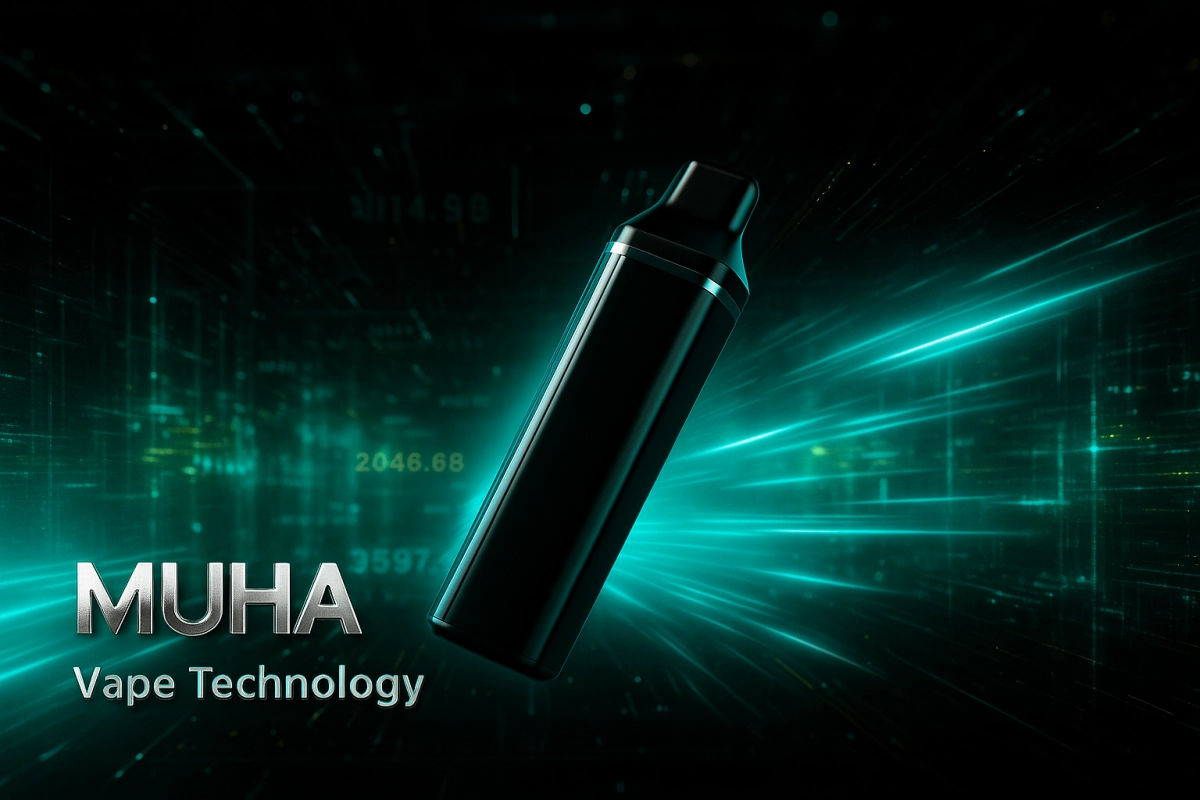
MoFu · Informational/“How” · Focused on muha vape. Educational, neutral tone—no sales language.
What “consistency” means in muha vape systems
In this guide we use muha vape to refer to Muha-style empty disposable systems and related 510 hardware whose electronics and atomizers are tuned for repeatable aerosol output under standardized conditions. We focus on hardware only—coil, intake, battery management, and firmware—so B2B buyers can compare devices without hype.
Lineup context: Muha Meds carts vs. disposables
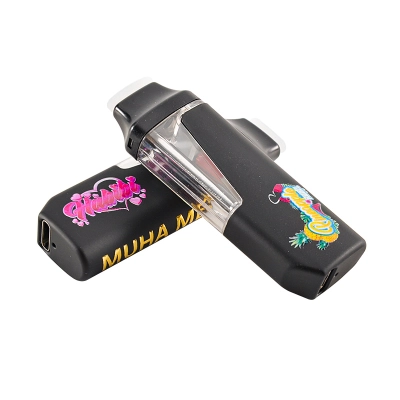
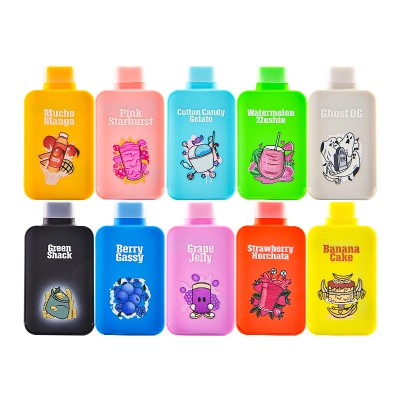
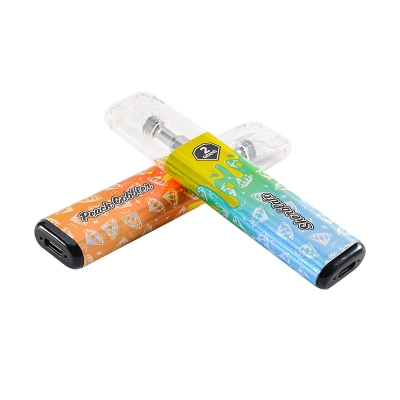
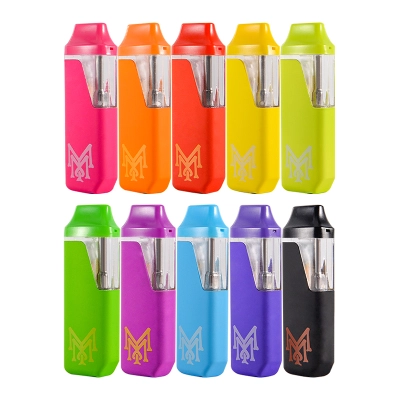
For an at-a-glance view of SKUs and regional availability, start with the brand hub Muha Meds. Carts (0.8–1.0 ml) trade flexibility and 510 compatibility for dependence on the paired battery. All-in-one disposables (often 2 g class) integrate cell, board, and coil so the manufacturer can lock a narrow power curve—one of the most reliable ways to stabilize draws batch to batch. For official model families and naming, see muhameds.com.
How consistency is engineered
1) Atomizer & intake geometry
Ceramic cores with mid-ohm windings and defined intake-port apertures regulate mass flow and heat transfer. Example specs discussed in our Muha Meds 2G disposables review include ~1.4 Ω ceramic coils with dual ~1.8 mm intakes—suited to medium-viscosity oils when paired with conservative voltage limits. Exact numbers vary by batch/ODM: match viscosity to intake and resistance, then cap the power window to prevent flooding or dry hits.
2) Battery, BMS & firmware
A stabilised power profile is the backbone of repeatability. Typical AIO designs use a 3.6–4.2 V Li-ion cell with a BMS current limit and a firmware time-out. For a 1.4 Ω coil, P=V²/R gives ≈8.6 W at 3.5 V (fresh under-load), tapering as the cell sags; cut-offs (e.g., 8–10 s) and undervoltage protection keep behaviour consistent across units. See also: UL 8139 context and IEC (IEC 62133-2) for portable-cell safety principles.
3) Standardized puffing conditions
To make apples-to-apples comparisons, labs and buyers rely on routine vaping-machine conditions (puff volume, duration, interval). Using those conditions—even for simple bench checks—lets you compare lots or devices without arguing about “puff counts.” Reference methods: ISO (ISO 20768 and amendments) and CORESTA Recommended Methods.
4) Materials & build
Food-contact declarations for tank/mouthpiece polymers (e.g., PCTG) and repeatable capping/torque practices matter because sealing is the last mile of consistency. When seals are right, the device wicks at the intended rate and holds mass between sessions. See handling/resting tips in the Muha Meds carts guide.
How to verify consistency (simple buyer protocol)
- Mass-by-difference: weigh empty, weigh filled, then re-weigh after a controlled 50-puff run and again after 24 h to spot leak/evap drift.
- 50-puff regime: 3-s draws at a standard flow and interval. Log device mass at 0/25/50 puffs and note any spitting or dry hits.
- Electrical sanity: measure coil resistance at rest and under-load voltage sag on the first few draws; compare to your spec window.
- Documentation: for AIOs, request electrical safety evidence and UN 38.3 Test Summaries from the cell supplier or assembler.
For a worked example (power math, intake sizing, viscosity notes), see the 2G review linked above; for 0.8 ml cartridge guidance, see the carts guide. If you operate dual-chamber devices with on-screen status, keep settings constant across lots for better repeatability.
Acceptance windows & QC worksheet
Below are buyer-side example windows for screening stability. They are deliberately conservative and should be adapted to your oil rheology and target user profile.
| Metric | Method (bench) | Suggested acceptance window | Interpretation |
|---|---|---|---|
| Mass consumed / 50 puffs | Mass-by-difference (0→50) | 0.30–0.42 g (oil-dependent) | Outliers suggest over/under-power or wicking mismatch. |
| 24 h hold loss | Mass at 50 puffs → +24 h | ≤2.0 % | Higher drift suggests evaporation or micro-leak. |
| Coil resistance (rest) | DMM, 20 °C | 1.2–1.8 Ω (example for 2 g class) | Too low → high current; too high → cold puffs. |
| Under-load sag (first 10 puffs) | Inline probe, 3-s draw | ΔV ≤ 0.40 V | Excess sag indicates cell IR or BMS limit too tight. |
| Time-out / preheat | Scope or smart USB logger | Time-out 8–10 s; preheat ≤1 s @ ≤2 W | Over-aggressive preheat causes flooding; no preheat may feel rough with viscous oils. |
Tip: log ambient temp (°C) and oil viscosity class with each run; both materially affect results.
Quick power check (example)
Assume fresh under-load 3.5 V and 1.4 Ω →
Current I = V / R ≈ 2.5 A
Power P = V² / R ≈ 8.6 W
If your under-load voltage is 3.2 V with the same coil, P ≈ 7.3 W. Expect noticeably cooler puffs and lower mass-per-puff.
Optional: dual-chamber & on-device screens
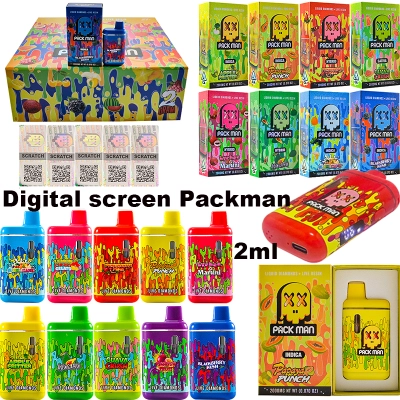
Newer housings add compact displays for battery status and chamber selection. The benefit isn’t “more vapor,” it’s repeatability: operators can hold settings constant across lots, switch flavors cleanly, and see when cells need charging before performance drops. Reference model: Muha Meds dual-chamber with screen.
Compliance & transport documentation
- Device/electrical safety: context for UL 8139 – UL Solutions
- Cell safety: IEC 62133-2 (portable Li-ion safety) – iec.ch
- Transport: UN 38.3 (UN Manual of Tests & Criteria) – unece.org; IATA Lithium Battery Guidance – iata.org
- Analytical methods: ISO routine vaping machine (ISO 20768, latest amendments) and CORESTA RM – iso.org, coresta.org
Failure modes & mitigations
| Symptom | Likely cause | Quick mitigation (buyer-side) |
|---|---|---|
| Spitting / flooding | Intake too large for viscosity; preheat too strong | Reduce preheat; trial smaller intake spec; rest filled units 12–24 h before testing. |
| Dry / burnt puffs | Power too high; intake too small; high terp % | Lower target P by 10–15%; select mid-ohm coil; verify oil rheology vs intake. |
| Large ΔV under load | High cell IR or aggressive current limit | Swap lot; request IEC 62133-2 test evidence; use bench logger to confirm current limit. |
| 24 h mass loss > 2% | Seal/cap torque inconsistency; material mismatch | Audit torque SOP; request food-contact declarations; try alternative mouthpiece polymer. |
Limitations & transparency notes
- This guide provides buyer-side engineering checks, not medical claims or consumer advice.
- Numbers shown (e.g., 1.4 Ω, 1.8 mm intakes, ΔV thresholds) are illustrative windows derived from industry practice and should be validated on your oils.
- Method references (ISO/CORESTA/UL/IEC/UN/IATA) are cited as orientation for reproducible testing and compliance, not as endorsements.
References (selected)
- UL 8139 device/battery electrical safety (overview): UL Solutions
- IEC 62133-2 (portable Li-ion cells/batteries safety): iec.ch
- UN 38.3 transport testing & UN Manual of Tests & Criteria: UNECE
- IATA Lithium Battery Guidance (air transport): IATA
- ISO routine vaping-machine methods (ISO 20768 and amendments): ISO
- CORESTA Recommended Methods (vaping/aerosol collection): CORESTA
- Official Muha Meds shop (model families & naming): muhameds.com
Version & change log
2025-11-02: Added acceptance windows, QC worksheet, risk matrix, and expanded compliance checklist; clarified scope/limitations; kept all internal links and anchor text unchanged.

3 Comments
I didn’t know some of these details before. Appreciate the info!
Thanks for sharing this.
Very insightful! I always enjoy reading your posts — they’re clear and practical.