
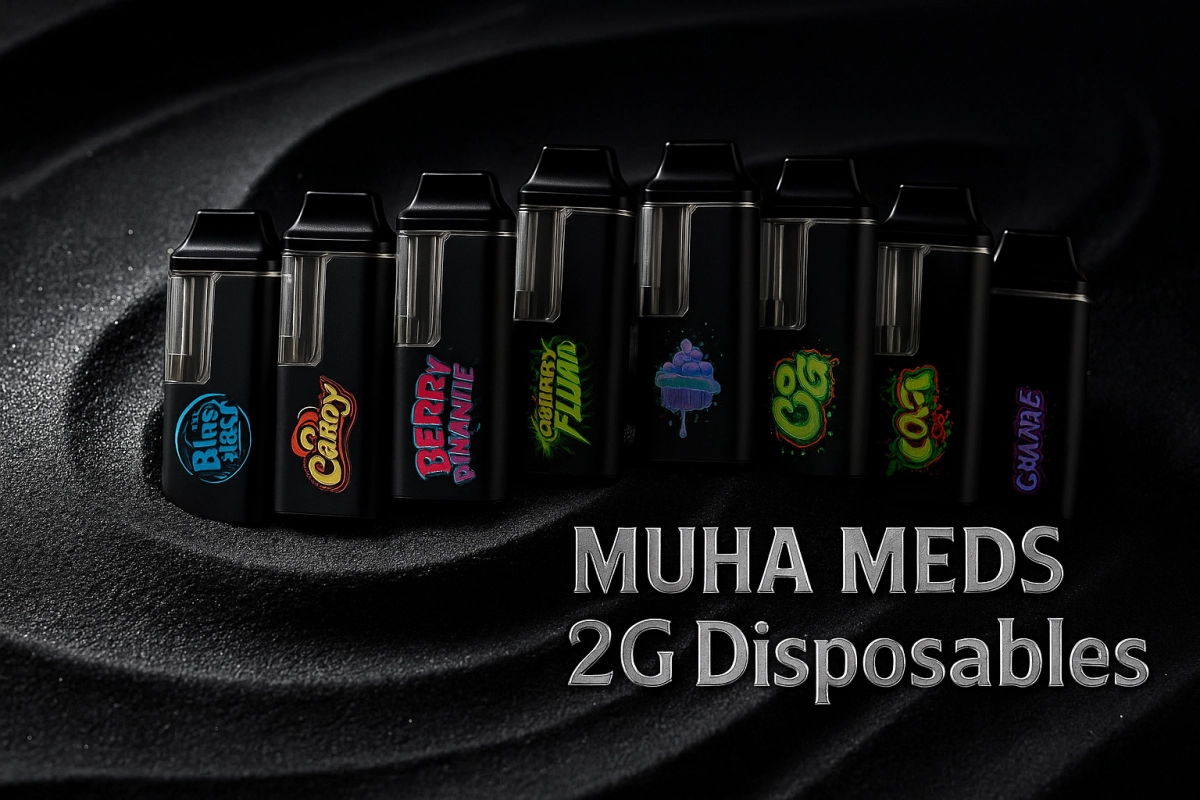
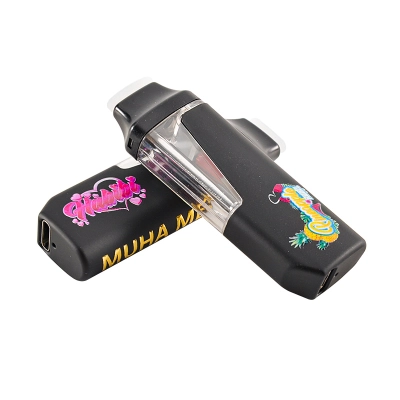
Goal: give B2B buyers a replicable way to evaluate muha meds 2g devices—without hype—so you can verify specs, request the right documentation, and compare results to 1 g carts and earlier 0.8 ml SKUs.
1) Verified key specs (hardware)
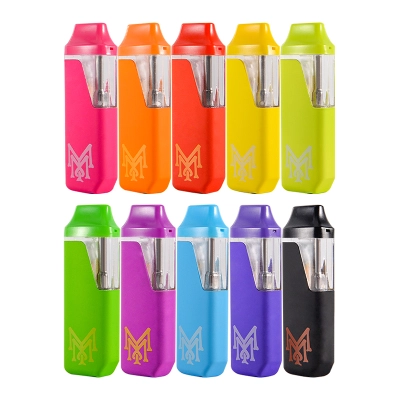
Representative configuration used for procurement checks. Tolerances may vary by batch/ODM request; verify against your PO and golden sample.
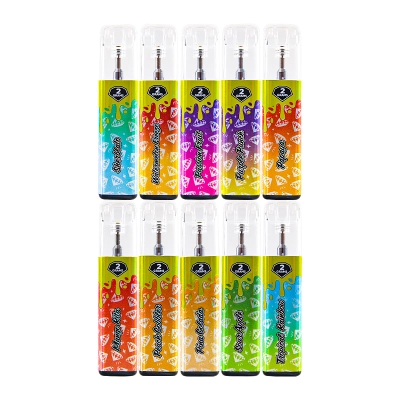
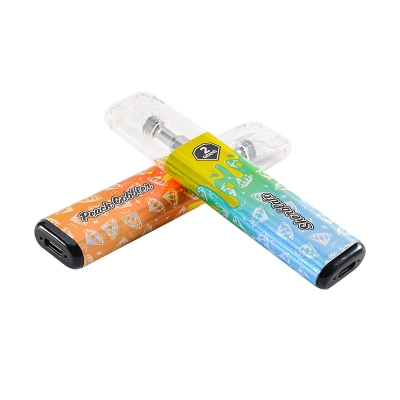
| Reservoir (nominal) | 2 ml (2 g oil class) |
|---|---|
| Battery | 240 mAh rechargeable (auto-draw) |
| Intake ports | 2 × 1.8 mm (laser/punch) |
| Coil | ~1.4 Ω ceramic core |
| Tank / mouthpiece | PCTG (food-contact grade) |
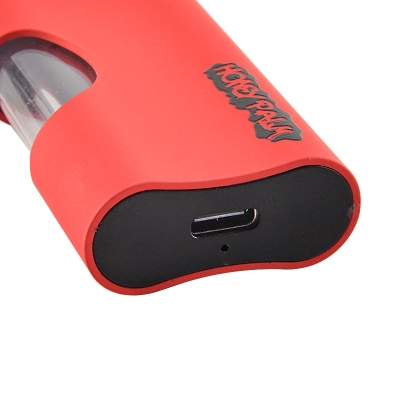
| Charging | USB bottom-charge; auto-draw activation |
| Pre-heat | As requested (many 2 g shells ship without fixed pre-heat; confirm firmware) |
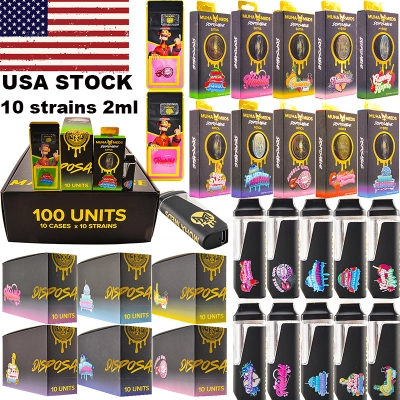
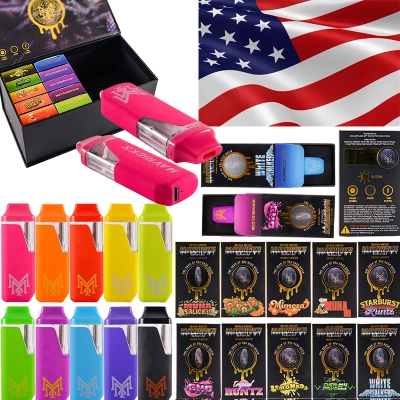
| Packing | Device + inner sleeves (20 per small box) + master carton (spec per PO) |
2) 2 g vs 1 g/0.8 ml — capacity & run-time consistency
Capacity math (mass-by-difference)
- Weigh empty shell (±0.01 g).
- Fill to target (2.00 g). Record net fill mass.
- After conditioning, record device mass again (leak/evap check ≤ 0.02 g/24 h).
This lets you compare true fill to label claim across 2 g, 1 g and 0.8 ml SKUs.
Puff modeling (non-health)
At identical firmware settings, a 2 g device should deliver ~2× the mass output of a 1 g device before cut-off—battery permitting. If battery is undersized or voltage sags, output falls; see battery & coil math.
3) Replicable bench test (for buyers without a lab)
Use the same protocol across suppliers to keep results comparable.
- Conditioning: 25 °C, 50 %RH, mouthpiece up, 24 h.
- 50-puff regime: 3-second draw, 30-second interval, 200 ml/min flow (ISO/AFNOR e-cig draw profile). Record device mass at 0/25/50 puffs.
- Ohm/voltage check: measure coil resistance at rest (target ~1.4 Ω). Log no-load battery voltage and under-load sag during the first 5 puffs.
- Thermal observation: IR spot check that shell temps stay within your SOP limits; note any hot-spots near the PCB/charging port.
- Post-run seal check: mass drift after 2 h and 24 h (leak tolerance per your spec).
This method avoids health claims; it is for consistency & traceability only. For analytical potency/contaminants, use ISO/IEC 17025 labs.
4) Battery & coil math (quick checks)
- Power window: P = V² / R. With 3.7 V nominal and ~1.4 Ω, instantaneous power ≈ 9.8 W. If firmware caps voltage, expect lower.
- Capacity fit: A 240 mAh cell at a 3-second duty per puff yields limited headroom at high power. Expect recharges for full 2 g consumption unless your oil is low-viscosity and the firmware conservative.
- Intake ports: 2 × 1.8 mm suits medium-viscosity oil. For very thick distillate, request larger ports or higher pre-heat allowance—verify against your SOP.
5) What to request from suppliers (documents & compliance)
Batch & QA
- Filled-lot COA: potency & contaminant panel from an ISO/IEC 17025 lab (preferably ILAC MRA signatory).
- Device QA summary: leak-rate, visual defects, DOA/return-rate for the past three lots.
- Firmware note: pre-heat availability, voltage curve, cut-off & lockout logic.
Safety & transport
- UL 8139 (or equivalent safety assessment) for battery system/charging.
- IEC 62133-2 cell test summary (or supplier’s CB report).
- UN 38.3 test report for air shipment; MSDS for cells.
- RoHS material declaration; housing polymer data sheet (PCTG).
Hello, please share for our Muha Meds 2G order:
• Filled-lot COA (ISO/IEC 17025; ILAC MRA preferred)
• UL 8139 / IEC 62133-2 / UN 38.3 evidence for the device & cell
• QA summary (leak/DOA rate) for last 3 lots
• Firmware note (pre-heat, voltage curve, cut-off)
• Confirmation that the tank is PCTG and ports are 2×1.8 mm
Thank you.
FAQ (procurement-focused)
Does 2 g always last ≈2× a 1 g device?
In mass it can, but real-world run-time depends on power settings, viscosity, and battery management. Verify with the 50-puff regime and mass-by-difference rather than relying on “puff counts.”
When should I prefer a 1 g cart instead?
If you require interchangeable strains with existing carts/fillers or want lower per-device liability, a cartridge route may suit. See Muha Meds carts plus the non-commercial Muha Meds carts guide.
Standards & authoritative references
- UL 8139 — Electrical Systems of Electronic Cigarettes and Vaping Devices (UL Solutions).
- IEC 62133-2 — Secondary cells and batteries containing alkaline or other non-acid electrolytes — Safety requirements.
- UN Manual of Tests and Criteria — UN 38.3 transport tests for lithium cells/batteries.
- Directive 2011/65/EU (RoHS) — hazardous substances restriction.
- ISO/IEC 17025 & ILAC MRA — competence of testing laboratories & mutual recognition.
B2B hardware review for educational procurement use only. No medical or health claims. Always follow local law and age restrictions. © Vapehitech.


2 Comments
Informative and straightforward. Exactly what I needed today.
This helped me a lot. Looking forward to more posts like this.