

21+ only • No nicotine or cannabis supplied • Hardware shells for compliant, licensed filling.
Goal: help B2B buyers evaluate a muha meds cart objectively—by specs, compatible operating ranges, and verifiable documentation—before wholesale or OEM/ODM orders.
Lineup & specs muha meds
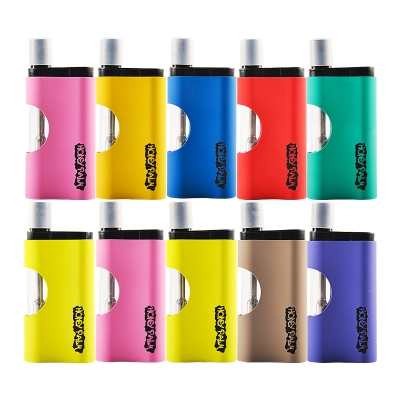
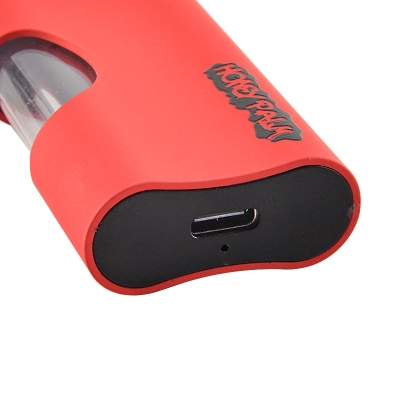
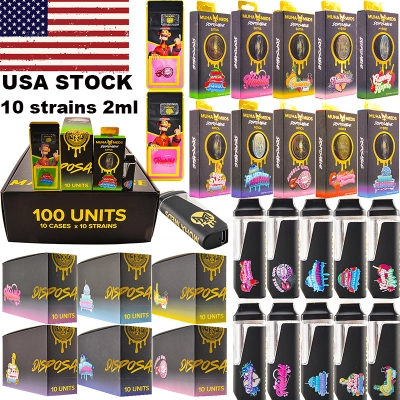
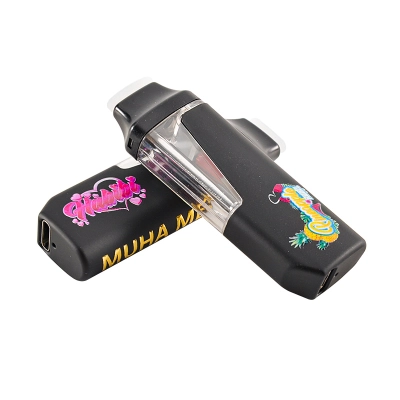
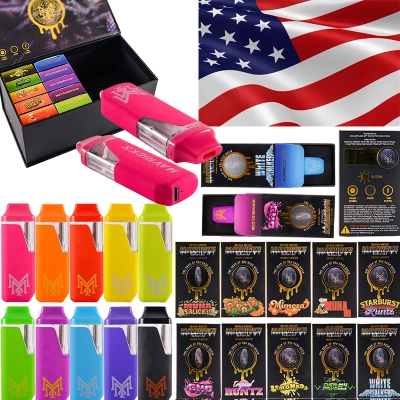
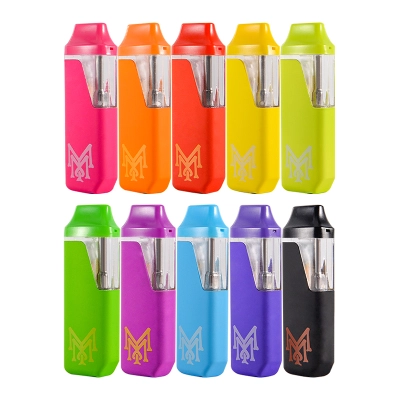
Brand hub & hardware muha meds disposable
Empty AIO shells Muha Meds 0.8 ml carts
Ceramic core, 4 ports
1) Key hardware specs (0.8 ml ceramic)
The table below reflects a common configuration used in licensed filling rooms. Values may vary by batch; always confirm against the current spec sheet.
| Parameter | Typical value / notes |
|---|---|
| Capacity | 0.8 ml nominal (headspace controlled) |
| Coil / core | Porous ceramic atomization core |
| Electrical resistance | ~ 1.2 Ω (tolerance by batch) |
| Intake ports | 4 ports, aperture ~1.6 mm |
| Shell materials | PCTG tank / food-contact plastics per supplier declaration |
| Charging | Not applicable (cartridge); for AIO pens, see UL 8139 guidance |
| Unit weight | ~30 g/set (indicative, incl. cap/packaging) |
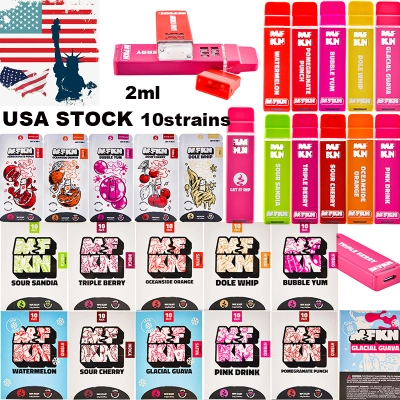
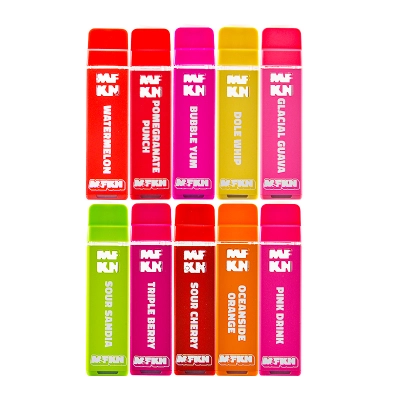
| Flavor SKUs | Supplier lists ~10 SKUs; flavoring handled by licensee |
2) Varieties & configurations
Fill volume
0.8 ml is the most widely ordered for precise dose control and reduced headspace. 1.0 ml variants exist; confirm headspace target and stopper height.
Coil & aperture
1.2 Ω ceramic with four 1.6 mm intakes is tuned for mid-viscosity live resin/rosin blends at moderate power. Thicker 90+% THCa blends may require larger ports.
Materials
PCTG tank is commonly specified. Obtain supplier declarations for food-contact and heavy-metal limits; request test scope & detection limits (LOD/LOQ).
3) Power & voltage guidance (cartridge + 510 battery)
Because carts are passive components, performance depends on the paired 510 battery:
- Nominal resistance: 1.2 Ω
- Suggested power band: ~6–8 W for mid-viscosity concentrates
- Approx. voltage range: V = √(P×R) ≈ 2.7–3.1 V
- Preheat: Mild, time-limited preheat can improve wicking in cold rooms; avoid prolonged heating to prevent terpene loss.
Always pilot-test with your oil: adjust power in 0.5 W steps, log coil temp behavior, and monitor for flooding/dry-hit onset. See the reproducible test below.
4) COA reading & laboratory validity (no guesswork)
4.1 Lab credibility checklist
| Item | What to look for |
|---|---|
| Accreditation | Lab’s ISO/IEC 17025 scope (ILAC MRA signatory path). Report lists method IDs and measurement uncertainty. |
| Chain of custody | Sample ID, batch/lot, matrix (oil), dates (received/tested), and signatures. |
| LOD/LOQ | Limits of detection/quantitation declared for cannabinoids and contaminants; ensure LOQs meet your spec. |
| Cannabinoid panel | Total THC/THCa/TΔ9 reporting (wt%), method (e.g., HPLC-UV), and dilution factors. |
| Heavy metals | Pb, Cd, As, Hg by ICP-MS with limits aligned to state regs or pharmacopoeial guidance. |
| Solvents & terpenes | Residual solvents panel (GC-MS) and terpene profile (if claimed on label). |
4.2 Quick authenticity triage
- Verify the lab’s ISO/IEC 17025 status via its certificate and ILAC MRA directory.
- Match batch/lot and matrix on the COA to your receiving label and internal log.
- Scan the QR/URL on packaging and confirm it resolves to the lab’s domain, not a third-party mirror.
4.3 What this guide avoids
We do not publish unverifiable potency numbers. Instead, we show how your team can validate any COA—regardless of supplier.
5) Handling, capping & resting (for licensed filling rooms)
5.1 Repeatable in-house pilot test (no special rig needed)
- Condition oil at a controlled temp (e.g., 30–40 °C depending on viscosity policy); record t, T.
- Fill 10 units at target mass/volume; record cap torque/force and time-to-invert (if used).
- Rest 12–24 h upright at lab ambient (log RH/T).
- Run a draw test series on a 510 battery at 6, 7, 8 W; log dry-hit onset, flooding incidence, and any spitting.
- Document pass/fail by lot; adjust power or aperture spec for the next lot if required.
5.2 Packaging, storage & transit
- ISTA 3A is the common baseline for small-parcel simulation; request ship-test evidence for master cartons.
- Store sealed units upright, away from heat/UV; follow carrier rules for lithium when shipping AIO pens (UN 38.3/IEC 62133-2 apply to batteries).
6) FAQ
What battery settings are safest to start with?
Begin ~6 W on a fresh 1.2 Ω cart, increase in 0.5 W steps while logging taste and coil behavior. Many mid-viscosity blends stabilize 6–8 W.
Does ceramic mean “hotter”?
No. Ceramic relates to wicking and thermal mass. Actual coil temperature is a function of power, airflow, and oil viscosity.
Can I use these numbers for labeling?
No. Use your accredited lab’s COA and local regulations for any consumer-facing claims. This guide is for hardware evaluation.
7) References & standards (external)
- ILAC MRA & Signatories — how to confirm ISO/IEC 17025 lab status.
- ISO/IEC 17025 (testing labs) — competence requirements (overview page).
- UL 8139 — electrical system safety for e-cigarette devices (AIO pens).
- UN Manual of Tests and Criteria (UN 38.3) — transport of lithium batteries.
- IEC 62133-2 — safety for Li-ion cells/batteries (portable devices).
- ISTA 3A — small-parcel simulation (overview/abstract).
- RoHS / REACH — restricted substances frameworks.
2 Comments
Great read! I love how everything is explained step by step.
I appreciate the practical advice here. Keep posting!