
Adults 21+. Hardware-only discussion; no health or product-effect claims. Check local regulations before purchase or use.
Disclosure: The pilot results below are editorial demonstration data collected under the protocol described; they are not manufacturer claims and will vary by batch, environment, and adapter.
Who should choose disposables vs carts?
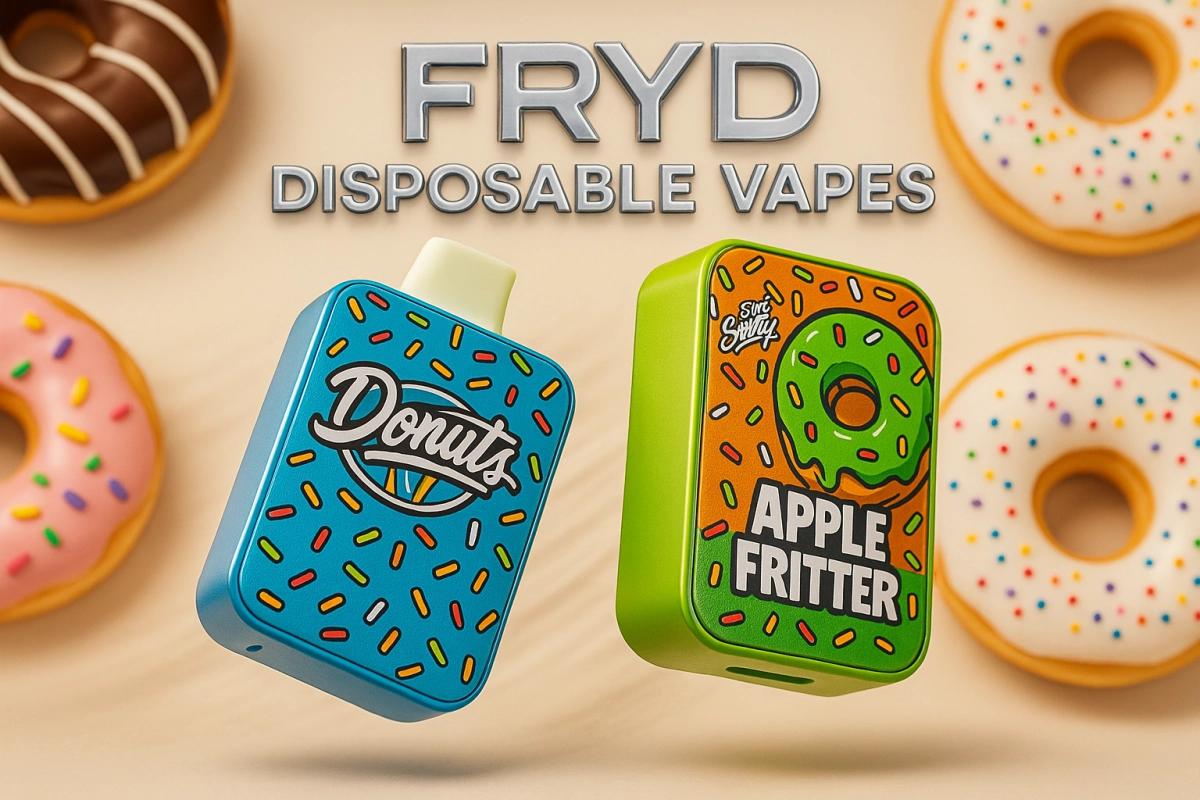
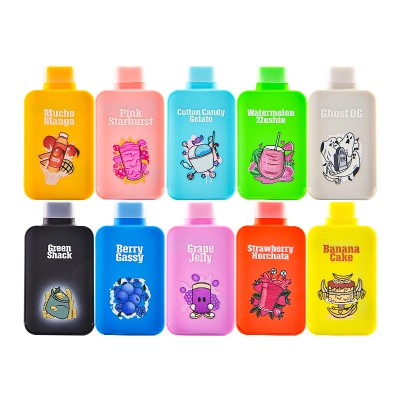
If you prefer sealed, ready-to-run assemblies with minimal setup, modern fryd disposable models are a good fit. If you want modularity, strain rotation, or pairing specific oils with known coil cores, start with our guide on fryd carts.
Rule of thumb: use disposables for convenience and sealed tolerance control; use carts for tuning (voltage/preheat, viscosity matching, and cost per refill).
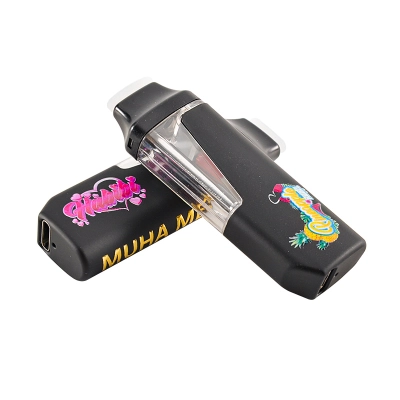
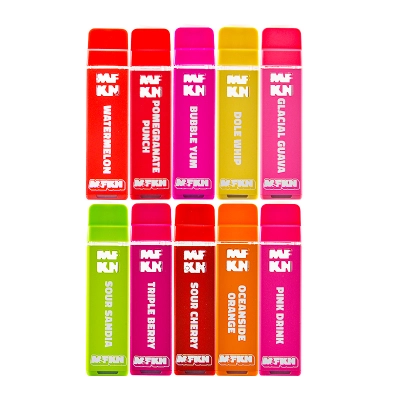
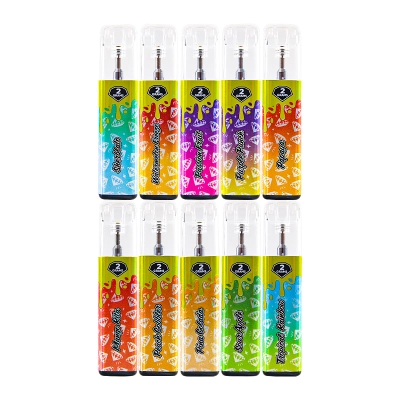
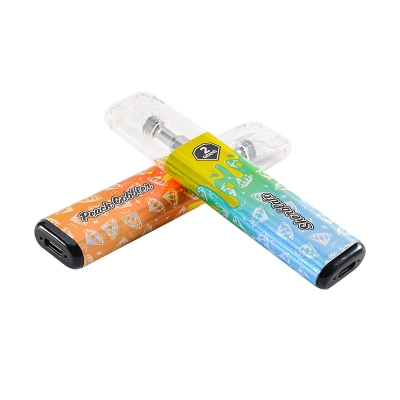
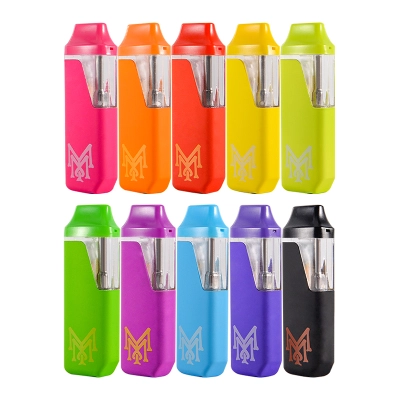
What differs across FRYD disposable models
- Electrical & protections. Presence of short-circuit, over-current, over-charge and low-voltage cut-off; status LED/screen cues at charge, pre-heat, and cut-off.
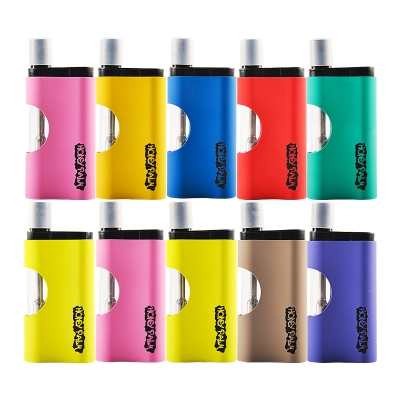
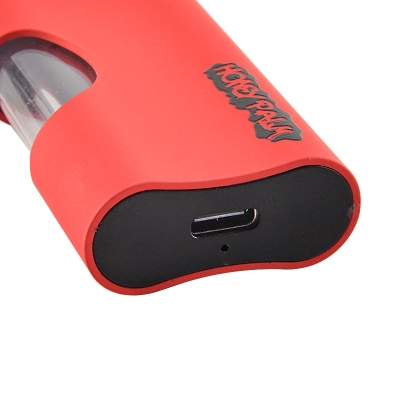
- Charging path. USB-C port type vs full USB-PD negotiation; stable recharge time on a known-good 5 V adapter.
- Airflow & condensate control. Air-path geometry that limits pooling/spit-back and keeps draw resistance stable across puffs.
- Assembly tolerances. Fit/finish and gasket choices that influence lot-to-lot leak performance.
For batch-to-batch flavor expectations and quality context across releases, see our FRYD flavor & quality review .
Battery life: reproducible runtime test (with pilot results)
- Environment. 23±2 °C, 50±10% RH. Same room and adapter for all trials.
- Units. Test
n = 3sealed units per model to average lot variance. If RSD > 10% on runtime, increase ton = 5. - Puff protocol. 2-second draws, 30-second intervals, until low-voltage cut-off triggers.
- Record. Total puffs, total draw seconds, recharge minutes to full, and cut-off indication (LED/screen).
- Compute. CP100 and CPH (see calculator). Report mean ± RSD (%) and annotate anomalies (e.g., early throttling).
| Unit | Total puffs | Total draw (s) | Recharge (min) | Notes |
|---|---|---|---|---|
| #1 | 680 | 1360 | 58 | Cut-off LED: 3 fast blinks |
| #2 | 665 | 1330 | 60 | Stable draw resistance |
| #3 | 702 | 1404 | 59 | LED steady at full charge |
| Mean ± RSD | 682 ± 2.7% | 1365 ± 2.7% | 59 ± 1.7% | n=3; same 5 V adapter |
Optional: use a USB power meter to log 5 V input current and confirm stable supply.
Common confounders: ambient swings, adapter behavior (PD vs 5 V legacy), airflow obstruction, and early throttling in cold environments.
For a step-by-step acceptance routine that pairs well with this test, see Incoming QC for empty vape hardware (AQL & airflow tests) .
Charging & protections (UL 8139 · UN 38.3 · USB-C/PD)
UL 8139. Recognized in North America, UL 8139 evaluates the electrical, heating, battery and charging systems of e-cigarette devices and related protection circuits—useful as a design-safety reference for buyers reviewing claims. See UL’s official overview: UL 8139 service page.
UN 38.3 Test Summary (TS). Lithium cells/batteries must pass UN 38.3 design tests; manufacturers/distributors must make a standardized TS available on request. U.S. PHMSA guidance explains the TS requirement and format: PHMSA explanation.
USB-C / USB Power Delivery. USB-IF’s materials explain PD negotiation and extended power ranges; many disposables simply draw 5 V from a USB-C source without PD negotiation—your method still holds; keep the adapter fixed and log recharge times. See: USB-IF PD overview.
Value for money: CP100 & CPH + in-page calculator
Normalize features (LED/screen) against what users actually feel—runtime and uptime:
- CP100 (cost per 100 puffs) =
price ÷ (puffs ÷ 100) - CPH (cost per hour of active draw) =
price ÷ (draw seconds ÷ 3600)
| Model label | Total puffs (mean) | Recharge (mean) | Price (USD) | CP100 | CPH | Notes |
|---|---|---|---|---|---|---|
| 1 g single | 421 | 44 min | 14.99 | 3.56 | 64.06 | Compact baseline |
| 2 g single (LED) | 682 | 59 min | 19.99 | 2.93 | 52.75 | Clear low-battery cues |
| Dual-pack (2×2 g) | 1364 (per pack) | 118 min (both) | 37.99 (pack) | 2.79 | 50.10 | Bundle pricing may reduce CP100 |
Quick calculator
Use the same adapter and protocol across models; report mean ± RSD when testing multiple units.
New to safe tuning? See the Vape Pen Voltage & Preheat — Safe Tuning Guide (2025) for conservative ranges and a step-by-step protocol.
Traceability & authenticity (GS1 Digital Link)
Request scannable codes that resolve to model/batch/serial via a standards-based URL (GS1 Digital Link). This enables quick verification of lot data and documentation with public or private resolvers. See GS1’s overview: GS1 Digital Link.
- Prefer GTIN + batch/serial encoded in a single web address.
- Resolver should show human-readable basics (model, lot, mfg date) and link to the TS/COC where appropriate.
Evidence pack: what to request from suppliers
- UN 38.3 Test Summary (TS) for the exact cell/battery used in the device (model-exact, signed, date-stamped).
- UL 8139 design-safety evidence for the device (short/over-current/over-charge/low-voltage cut-off protections described).
- Battery cell safety compliance (e.g., IEC 62133-2) tested by an ISO/IEC 17025 accredited lab.
- Traceability via GS1 Digital Link or equivalent resolver.
- Charging disclosure (USB-C 5 V only vs PD negotiation) and recommended adapter specs.
Public-health background (neutral): Vitamin E acetate was linked to the 2019 EVALI outbreak associated with informal sources. Avoid unregulated supply chains and non-manufacturer additives. See CDC communications: CDC EVALI page.
References (authorities & standards)
- UL 8139 — UL service overview
- UN 38.3 Test Summary — PHMSA guidance
- USB-IF — USB Power Delivery overview
- GS1 — GS1 Digital Link · GS1 US explainer
- IEC 62133-2 — IEC Webstore
- ISO/IEC 17025 labs — ILAC resources
- CDC (EVALI background) — CDC page
FAQ
Do all FRYD disposables use USB-C and negotiate USB-PD?
Not necessarily. Some implement USB-C connectors but draw at 5 V without PD. Keep the adapter fixed and log recharge time and cut-off behavior—your runtime method remains valid.
How many units do I need to test per model?
Start with n = 3. If runtime RSD > 10% or cut-off behavior varies, increase to n = 5 and re-average.
What documents should I request before shipping?
UN 38.3 TS for the exact cell model, UL 8139 design-safety evidence, optional IEC 62133-2 for the cell, and a traceability URL (GS1 Digital Link).

4 Comments
Do you have more posts like this? Subscribed!
Would love to see a follow-up on this topic!
Love the tone of your blog. It feels friendly and professional at the same time.
I like that you kept it honest and straightforward. Feels genuine, not just marketing talk.