
How to Use a Vape Pen: Setup, First Puffs & Care (2025)
Important (Adults 21+)
Content is for educational purposes about empty vape hardware. Always follow local laws and the oil manufacturer’s safety guidance. Do not modify devices beyond the instructions. We make no health claims.
Quick-Start Checklist (60 seconds)
- Inspect device for damage; confirm correct cartridge/thread (most common: 510).
- Hand-tighten cartridge to snug, not over-tight.
- If device supports preheat, run a short cycle.
- Set low power to start (e.g., 2.6–2.8 V for many ceramic 510 carts).
- Take gentle, 2–3 second puffs, wait 30–60s between puffs.
- If taste is harsh → lower power; if weak → tiny step up.
What’s in the Box & How It Works
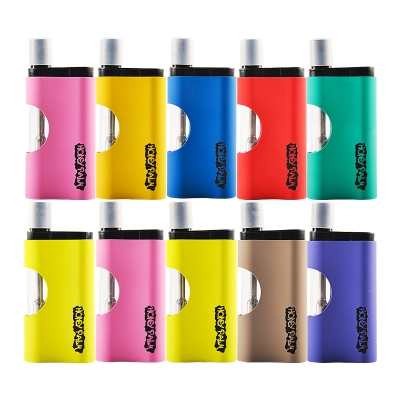
Typical components:
- Battery/Body (button-activated or draw-activated)
- Cartridge/Tank (ceramic coil and wick; filled by licensed packagers)
- Mouthpiece (+ sometimes airflow control ring)
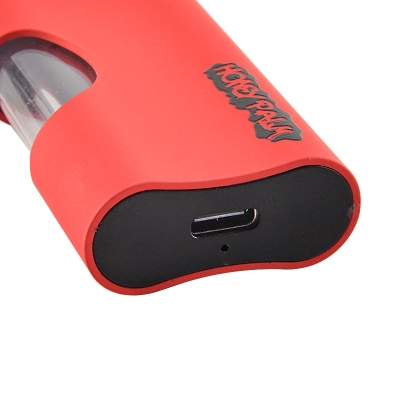
- USB-C or Micro-USB Cable (if rechargeable)
How it works: The battery powers a heating element (coil) that warms the oil to vaporize it. Correct power + airflow keeps vapor smooth and reduces clogging or scorch.
Vape Pen Setup
- Check compatibility
Match thread (e.g., 510), cartridge resistance (Ω), and device range stated by manufacturer. - Attach the cartridge
Keep the pen upright; hand-tighten until snug. Avoid tools. - Prime (optional but helpful)
If the pen has preheat, run a short preheat (1–2 seconds). No preheat? Take a gentle unpowered draw to pull oil toward the coil. - Start low
Begin at low voltage/power. Step up gradually and test flavor, temperature, and comfort. - Airflow
If adjustable, start mid-range; reduce airflow for denser vapor, increase for cooler draws. - First test puff
Short draw (2–3s). Evaluate taste, temperature, and comfort.
Device Compliance Quick Check
- Look for certification to UL 8139 (electrical system) or equivalent.
- Battery cells tested to IEC 62133-2 (portable Li-ion safety) or local equivalent.
- Manual available; charger specs clearly stated; labels intact.
How to Take Your First Puffs
- Gentle & short: 2–3 seconds beats 6–8 seconds for new setups.
- Pace yourself: Wait 30–60 seconds between puffs to let wicks re-saturate.
- Mouth → lungs: Many prefer a mouth-to-lung style (sip, then inhale) for control.
- Listen to feedback: Harsh → lower power/shorter draw. Thin → tiny power bump or slightly longer draw.
- Keep it upright during use to help wicking and reduce leaks.
Dialing In Settings (Preheat, Voltage, Airflow)
Preheat
Useful in cold rooms or with viscous oil. Keep cycles short to avoid over-thinning.
Voltage / Power (conservative starting ranges; then tune)
- Ceramic 510 carts: start around 2.6–3.3 V and adjust by 0.1–0.2 V steps.
- Cotton-wick carts: begin slightly lower to reduce scorching risk.
- All-in-one disposables: fixed curve; if there’s a low/med/high switch, begin low.
Airflow
Tighter airflow → warmer, denser; looser airflow → cooler, smoother. Adjust to taste.
Tip: Changes in temperature and oil viscosity affect performance. In winter, a touch more preheat or a hair more voltage may help; in summer, consider the opposite.
Troubleshooting Clogs & Burnt Taste
Quick fixes
- Clog at mouthpiece: Warm the tip between fingers for 10–20s; take gentle preheat or unpowered draw to clear.
- No vapor but lights on: Check contacts (battery and cart base), wipe with a dry swab.
- Gurgle/leak: Keep upright; very gently blow through mouthpiece with a tissue at tip.
- Burnt taste: Voltage too high or chain-puffing. Lower power, slow down, ensure coil is re-saturated.
Mini decision table
| Symptom | Likely Cause | Action |
|---|---|---|
| Tight draw / no flow | Viscous oil, cold coil, blockage | Short preheat, palm-warm tip, unpowered primer puff |
| Harsh / burnt | Voltage too high, long pulls | Drop voltage 0.1–0.2 V, shorter puffs, longer rest |
| Weak vapor | Voltage too low, loose airflow | Bump voltage slightly, reduce airflow |
| Leaking | Heat swings, over-thin oil | Store upright, avoid hot cars/sun, shorter preheat |
Stop-Use Checklist
- Battery/device becomes very hot to touch or emits odor/smoke.
- Cracked battery housing, bulging/swell, or visible leakage.
- Repeated auto-firing or uncontrolled activation.
- Any sign of short circuit at contacts after cleaning.
Cleaning & Care
Weekly quick clean (2–3 minutes)
- Power off. Remove cartridge.
- Isopropyl alcohol (IPA) 70% on a cotton swab: clean contact pins and the 510 well; dry fully.
- Wipe exterior; avoid liquid entering electronics.
Deep clean (monthly or as needed)
- Check threads, airflow ring, and any condensation traps.
- Replace worn O-rings or disposable mouth tips if applicable.
Habits that extend life
- Avoid chain-puffing; give the coil time to re-saturate.
- Keep devices upright; don’t pocket carry without a case.
- Do not blow compressed air into the mouthpiece—it can force oil where it shouldn’t go.
Charging & Battery Safety
- Use the included cable (prefer USB-C when provided).
- Charge on a hard, non-flammable surface; avoid beds/sofas.
- Unplug after full charge; don’t leave on charge overnight.
- Keep ports and contacts dry and clean.
- If the device becomes excessively hot, disconnect and let it cool; discontinue use if heat persists.
Battery & Charging Essentials
- Use the supplied or certified charger; avoid overnight or unattended charging.
- Place devices on a hard, non-flammable surface while charging; unplug at full.
- Stop using the device if it becomes abnormally hot, swells, leaks, smells, or smokes.
- Do not charge or use if the device has visible damage, liquid ingress, or loose contacts.
- Recycle damaged Li-ion batteries properly—do not trash; check local guidance.
Storage & Travel Tips
- Upright, cool, dark place (room temp). Avoid direct sun and hot cars.
- Cap the mouthpiece (if you have caps) to limit dust/contaminants.
- For travel, use a protective case; many airlines restrict in-flight charging—check policies.
Flying with Vape Hardware
- Pack devices in carry-on only; protect from accidental activation.
- Do not recharge devices on board aircraft.
- Typical airline limits: Li-ion ≤ 100 Wh per battery (check your carrier).
Methodology & Limits
How ranges were chosen. We start from widely used ceramic 510 cartridges and mainstream pen batteries. Starting ranges are intentionally conservative to reduce coil scorching and allow controlled tuning. Users should always prefer the specific ranges in the device manual if available.
- Tune protocol: increase power in 0.1–0.2 V steps (or one level) with 30–60s wick re-saturation between tests.
- Acceptance criteria: smooth draw, no harshness, no burnt odor, stable contact pins, no visible leaks.
- Environment: test at room temperature; if cold, add brief preheat; if hot, reduce preheat and power.
- Limitations: devices vary by coil design, oil viscosity, and firmware—follow the manufacturer’s specifications whenever provided.
FAQ
Q1. Button vs draw-activated—what’s better for beginners?
Both work. Draw-activated feels more natural; button pens add manual preheat and finer control. Start low either way.
Q2. Can I refill a disposable?
Many disposables are not designed for refilling. For safety and compliance, use hardware as intended by the manufacturer.
Q3. My pen blinks—what does it mean?
Common signals: low battery, over-current/short, or over-heat. Check the manual; recharge or let it cool.
Q4. How often should I clean?
Do the weekly quick clean of contacts and the 510 well; deep clean monthly or if performance drops.



1 Comments
I’ve been researching this topic for a while, and your explanation was one of the clearest I’ve found online. Thanks for keeping it straightforward.