
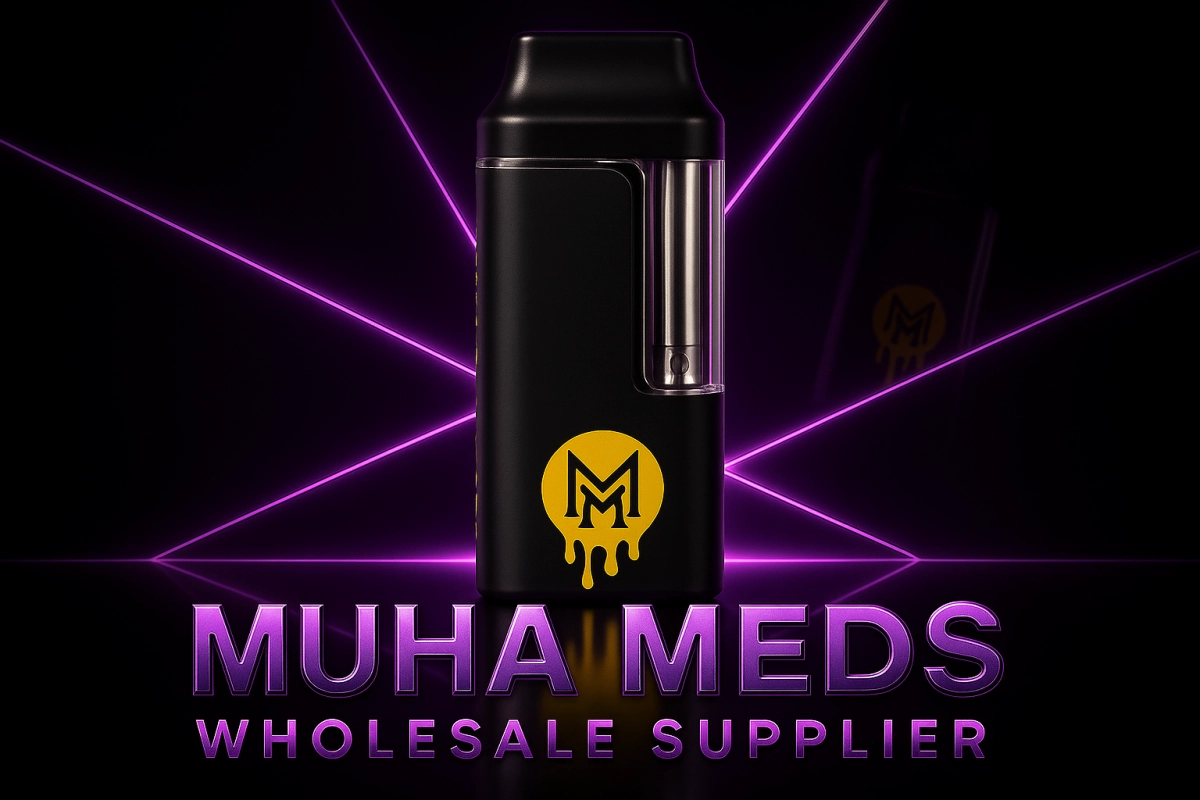
MoFu · Informational / How · Pillar: Muha Meds · Keyword: muha meds wholesale
When B2B buyers search for muha meds wholesale, they are not just looking for a price list. They want suppliers who can keep batches consistent, documentation clean, and repeat purchase orders stable. This guide outlines a practical framework you can use to vet any Muha Meds–style wholesale supplier for QC, traceability, and long-term readiness—without turning the process into a full-time job.
1. Scope and buyer intent: what “muha meds wholesale” means here
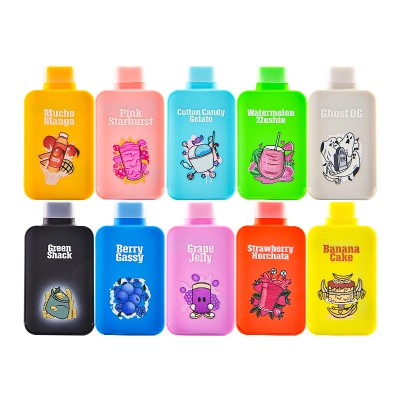
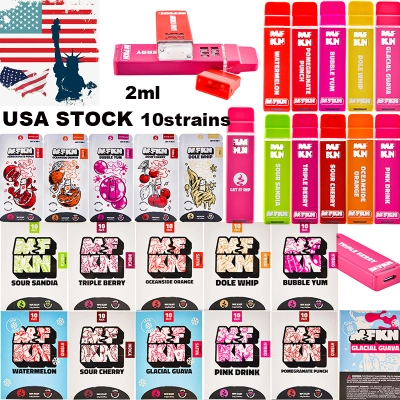
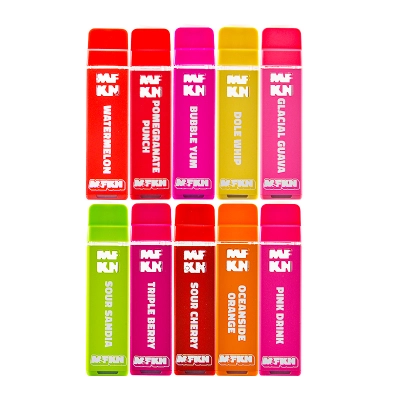
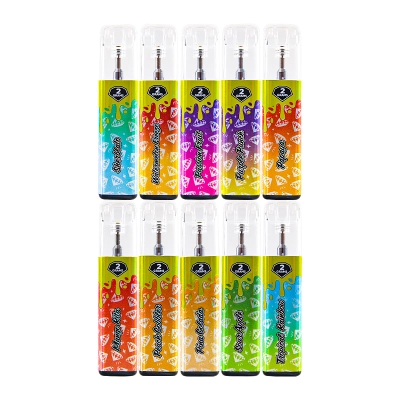
This framework is written for B2B buyers who are evaluating empty hardware programs only. It covers shell devices, cartridges, and retail-ready packaging—no oil, no consumables. When we say muha meds wholesale in this guide, we mean the hardware and packaging systems that support brand-style programs, not the filled product itself.
Typical questions this framework is designed to answer include:
- “How do I know if a supplier can keep quality stable across batches?”
- “What traceability information should I demand at the carton and case level?”
- “How do I judge whether a supplier is ready for repeat purchase orders, not just a one-off deal?”
Scope note: everything below focuses on hardware-only risks: tolerances, visual standards, labeling, packaging, shipping, and documentation. It does not provide advice on filled products or downstream use.
2. Pillar 1 – QC readiness: specs, sampling plans, and acceptance criteria
A supplier is QC-ready when they can show you three things: a clear spec sheet, a realistic sampling plan, and written acceptance criteria that match how you actually buy and inspect.
2.1 Spec sheets that are usable for inspection
You should be able to point to a spec and ask: “Can my team check this in 30 minutes after receiving a shipment?” Practical spec sheets translate into measurable checkpoints such as:
- Critical dimensions and tolerances for cartridges and shells.
- Allowed cosmetic defect types and severities (e.g., minor scuffs vs critical print errors).
- Packaging configuration: units per tray, per inner box, per master carton.
- Label content: lot/batch ID, production date, and any buyer-specific codes.
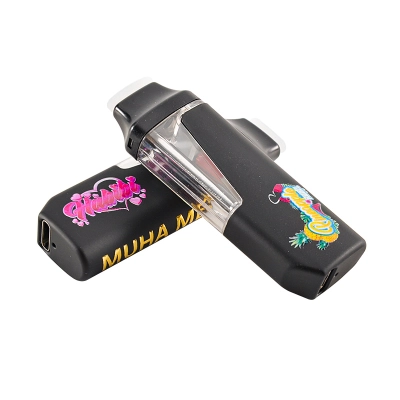
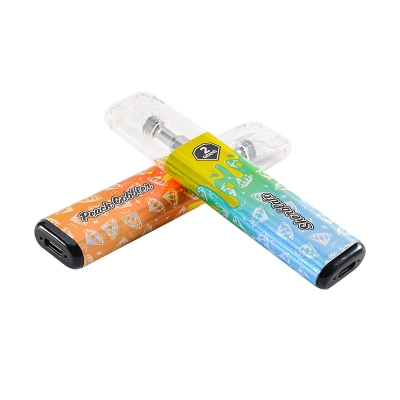
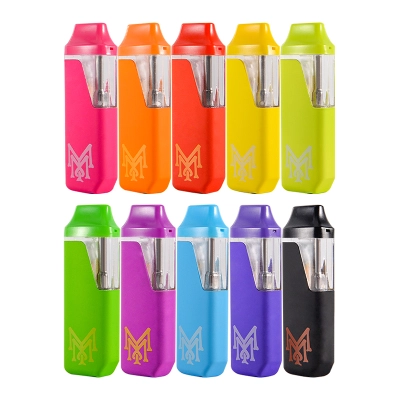
For product families like empty muha meds disposable and muha meds vape cartridges, you should expect separate spec sheets—one for devices, one for cartridges, and one for packaging.
2.2 Sampling plans based on recognized standards
You do not have to become a statistician, but you should know whether your supplier’s sampling logic is based on recognized attribute sampling standards such as ISO 2859-1 or ANSI/ASQ Z1.4. Both define acceptance sampling systems indexed by an Acceptance Quality Limit (AQL) for lot-by-lot inspection.:contentReference[oaicite:0]{index=0}
At minimum, ask the supplier to:
- Specify which standard they use for incoming, in-process, and outgoing inspection.
- Show the AQL levels applied to critical, major, and minor defects.
- Provide an example inspection record (lot size, sample size, number of defects, pass/fail decision).
2.3 Written acceptance criteria that prevent arguments later
Many disputes come from vague expectations. Clear acceptance criteria should define:
- What gets counted: defect categories and what qualifies for each.
- What triggers action: thresholds for rework, concessions, or lot rejection.
- How evidence is documented: photos, counts, and references to spec items.
| QC element | What to ask for | Why it matters |
|---|---|---|
| Spec sheet | PDF with tolerances, defect definitions, packaging map | Turns “quality” into something you can actually measure |
| Sampling plan | AQL levels and reference to ISO 2859-1 or ANSI/ASQ Z1.4 | Aligns your inspection with widely used attribute standards |
| Acceptance criteria | Written triggers for rework, concessions, or rejections | Reduces arguments when a shipment fails expectations |
| QC records | Example outbound inspection reports with lot references | Proves the supplier actually uses their QC system |
3. Pillar 2 – Traceability: lot IDs, carton labels, and data sharing
Traceability is the ability to say, “These cases came from this lot, produced on this date, with these parameters,” and then share that information across partners when something goes wrong.
3.1 Lot and case-level identification
At a minimum, each master carton should carry:
- Lot or batch ID that ties back to a production record.
- Production date or date code.
- SKU/variant identifier and quantity per carton.
Standards organizations like GS1 describe traceability as three core actions: identify items, capture data, and share it along the supply chain.:contentReference[oaicite:1]{index=1} Even if you do not fully implement GS1 barcodes or data standards, you can still borrow this mindset for your own Muha Meds programs.
3.2 Data that travels with the shipment
A traceability-ready supplier will send, or be prepared to send, structured data with each shipment:
- Purchase order number and internal job/order reference on the supplier side.
- Lot IDs and quantities per carton, sometimes as a packing list with lot breakdown.
- Any special inspection results associated with that run (e.g., tightened QC for a new variant).
3.3 Authentication and packaging verification
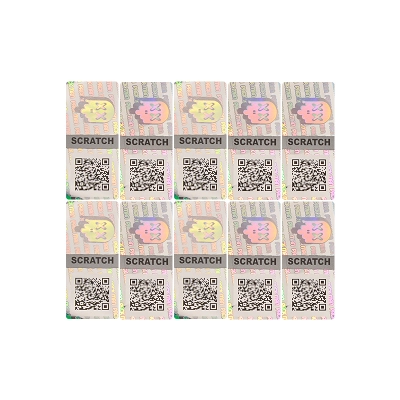
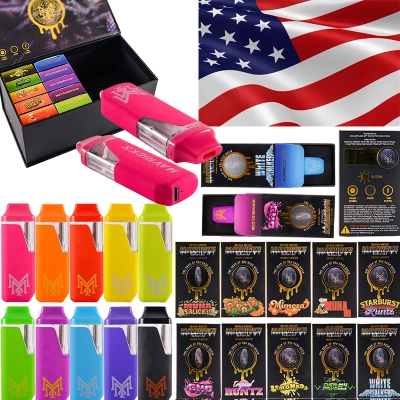
For brand-style hardware, packaging is part of the traceability and risk story. Features like printing quality, placement of security elements, and consistency of codes across cases can all signal whether you are receiving what you expect. Your internal process can lean on external resources like muha meds verification to define what a “good” box or case should look like.
4. Pillar 3 – Repeat-PO readiness: stability across time and people
A one-time “miracle batch” is not the goal. Repeat-PO readiness means a supplier can replicate acceptable performance under normal conditions, with normal staff changes and equipment maintenance.
4.1 Portfolio and roadmap alignment
As you plan for the next 12–24 months, you want to know whether your supplier’s portfolio and roadmap line up with your own. Resources like the muha meds 2025 overview can help you understand how form factors, packaging, or feature sets are evolving, so that your vetting work today still makes sense for the product mix you will buy tomorrow.
4.2 Process stability indicators
Some practical signals of repeat-PO readiness include:
- Documented change control procedures for materials, print, or critical dimensions.
- Consistent results across several lots, not just one perfect pilot run.
- Historical lead-time performance and on-time-shipment data.
- Named contact points for QC, production, and logistics—not just one salesperson.
5. A 30-minute incoming inspection flow for new suppliers
Before you can trust a supplier long term, you should standardize a quick but meaningful incoming inspection routine. The goal is not to re-do their entire QC; it is to verify that what you received matches your agreed tolerance, labeling, and packaging expectations.
- Verify shipment identity (5 minutes). Match PO number, SKU, variants, and quantities to your order. Confirm that the carton labels include lot IDs and basic traceability data.
- Carton-level sampling (5 minutes). Open cartons from different pallet positions and visually confirm inner packaging, labels, and basic count.
- Unit-level sampling (15 minutes). Based on an attribute sampling plan aligned with ISO 2859-1 or ANSI/ASQ Z1.4, pull a sample and check: obvious cosmetic defects, assembly issues, and packaging consistency.:contentReference[oaicite:2]{index=2}
- Record and escalate (5 minutes). Capture any nonconformities with photos and counts, then trigger your defined escalation path if thresholds are exceeded.
Tip: run this routine on the first several POs from any new supplier. Once performance proves stable, you can gradually reduce frequency or sample size according to your risk tolerance.
6. Supplier readiness matrix (scoring template)
The matrix below gives you a structured way to compare different Muha Meds–style wholesale suppliers on more than just unit price. Each row can be scored (for example 1–3 or 1–5) and tracked over time.
| Dimension | What “ready” looks like | Questions to ask |
|---|---|---|
| QC documentation | Specs, sampling plans, and acceptance criteria are written and shared | “Can you show your latest outbound inspection report for a similar lot?” |
| Traceability | Lots and cartons are clearly identified and data can be shared quickly | “How do you encode lot IDs on cases, and how fast can you trace a problem?” |
| Packaging robustness | Packaging has been tested against realistic distribution hazards | “Which packaging test standards do you use (e.g. ASTM D4169, ISTA 3 Series)?” |
| Repeat-PO stability | Performance and lead times are consistent across several POs | “Can you share your on-time delivery rate and any recent changes in process?” |
| Issue response | Clear process for containment, rework, and corrective actions | “Walk me through how you handled your last quality incident.” |
7. How to use Vapehitech resources in your vetting workflow
Your internal vetting framework becomes stronger when it is supported by clear examples and product-family overviews. On Vapehitech, you can:
- Use the muha meds wholesale overview as a category-level reference when aligning SKUs and packaging families.
- Map device-type risks using dedicated hardware pages for empty muha meds disposable and muha meds vape cartridges.
- Align your roadmap planning with the muha meds 2025 product and format overview.
- Define packaging and box-level checks based on the muha meds verification guide for packaging features and authentication steps.
8. FAQ
What is the main difference between a “cheap” and a “ready” Muha Meds wholesale supplier?
A “cheap” supplier focuses on unit price. A “ready” supplier can provide usable specs, sampling plans, inspection records, traceable lot IDs, and stable performance over several POs. The framework in this article is designed to help you tell the difference.
Do I need to understand ISO and ANSI standards in detail to use this framework?
No. You mainly need to know that there are established attribute sampling standards such as ISO 2859-1 and ANSI/ASQ Z1.4, and that your supplier should be able to reference them when describing their inspection methods.:contentReference[oaicite:3]{index=3}
How does packaging testing fit into Muha Meds wholesale supplier vetting?
Even perfect units can arrive damaged if packaging is weak. Standards such as ASTM D4169 and ISTA 3-Series describe laboratory tests that simulate typical transport hazards so you can evaluate how well a shipping container protects its contents.:contentReference[oaicite:4]{index=4}
What is the fastest way to start if I have no framework today?
Begin by formalizing three things: a short spec and defect list for each SKU family, a simple sampling plan referencing an AQL standard, and a 30-minute incoming inspection routine like the one described above. You can refine and expand the framework as you learn from actual shipments.
9. References
- GS1 – Global Traceability Standard and related guidance on identifying, capturing, and sharing supply-chain data. GS1 Global Traceability Standard.
- ISO – Attribute sampling plans for lot-by-lot inspection indexed by AQL. ISO 2859-1:1999.
- ASQ – Attribute sampling procedures widely used for incoming and outgoing inspection. ANSI/ASQ Z1.4.
- ASTM – Performance testing of shipping containers under simulated distribution hazards. ASTM D4169.
- ISTA – General simulation performance tests for transport packaging. ISTA 3-Series Test Procedures.
- GS1 – How GS1 standards support identification, capture, and sharing of product and location data across supply chains. How GS1 Standards Work.
3 Comments
Thanks for sharing this, really useful content.
Clear explanation and well written.
I learned something new today, great job!