

Scope (empty only): This page is empty only. It covers dual-chamber shell features, labeling/verification logic, and handling considerations for empty formats. We do not discuss contents, potency, effects, or any filling workflows. Brand names are used for identification only; this page is not affiliated with any brand owner.
Internal routing (MoFu path)
MoFu readers usually want clarity: which dual-chamber features matter, what to standardize, and how to reduce surprises at receiving. Use the internal path below to keep terminology consistent across tags, family pages, case-pack logic, and verification language.
Recommended internal path (non-promotional)
- muha meds dual chamber — tag view to align vocabulary and compare like-for-like listings
- muha meds case — family hub to keep naming consistent across formats and pages
- muha meds master case — case-pack layer to support storage, counting, and warehouse handling
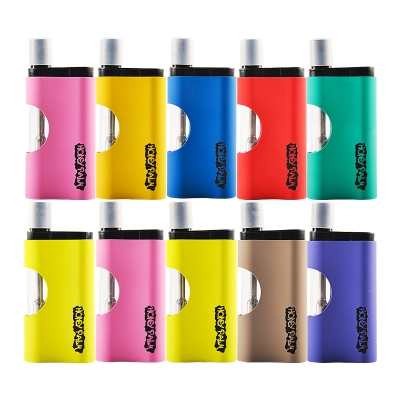
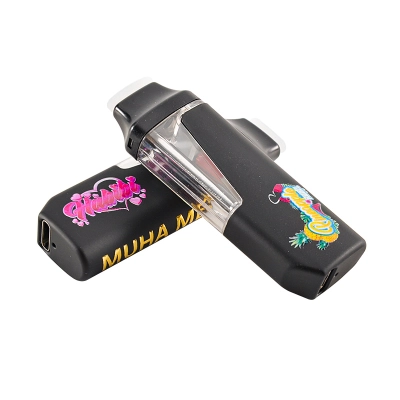
- dual-chamber with screen reference — a concrete reference page for photos and pack-field placement (empty only scope)
- muha box verification — shared language for packaging cues, identifiers, and verification routines
What “dual chamber” means in an empty-only context
“Dual chamber” is often used broadly. For an empty only procurement spec, it should mean a single shell that contains two physically separated reservoirs (or two isolated internal paths) with a selector or a defined switching mechanism. The important point for buyers is not marketing language—it is whether the two sides are truly isolated and whether switching is stable and repeatable.
| Term | Procurement meaning (empty only) | What to verify | Why it matters |
|---|---|---|---|
| Dual chamber | Two separated reservoirs/paths in one shell | Physical separation + stable switching | Prevents cross-mixing and reduces returns/disputes |
| Selector / switch | Mechanism that selects which side is active | Detents, alignment, repeatability | Most common failure point in the format |
| Indicator (if present) | Human-readable state cue | Clarity + consistency across lots | Reduces handling errors and mis-picks |
MoFu takeaway
A dual-chamber shell is not “better” by default. It is better only when you can standardize the selector behavior, keep the two sides isolated, and maintain clear identifiers through storage and distribution.
How dual-chamber architecture changes QC priorities
Dual chamber adds parts and interfaces. That creates new ways to fail—usually at seams, seals, and switching alignment. For MoFu teams, the best approach is to shift from “general visual checks” to function-driven checks that validate isolation and switching.
What changes compared to single-reservoir formats
- Two reservoirs to protect: cracks, warp, or seal drift on either side can create inconsistent performance.
- A switch layer to validate: selector tolerance and alignment become core acceptance criteria.
- More labeling complexity: you must control how identifiers are placed so the format is still auditable at receiving.
- Higher configuration risk: if internal structure changes without change control, the format can drift quickly across lots.
Key features to evaluate (shell + packaging)
Evaluate features as “failure prevention,” not “extra functions.” If a feature increases exceptions at receiving or increases configuration drift, it is not an upgrade for most channels.
1) Chamber isolation (the non-negotiable)
- Physical separation: two reservoirs remain separated across handling and normal temperature swings.
- Seal consistency: seams and joints do not open or deform in storage and distribution.
- Leakage control mindset: focus on where failures would show up (seams, joints, and stress points).
2) Selector stability (repeatable switching)
- Positive stops (detents): selector positions are distinct and not “in-between.”
- Alignment tolerance: switching remains consistent across multiple cycles of rotation/toggle.
- Resistance profile: switching is neither loose (drifts) nor overly tight (breaks or stresses joints).
3) Indicator clarity (when present)
- State is obvious: users can tell which side is active without guesswork.
- Consistency across lots: indicator placement and behavior do not vary shipment-to-shipment.
- Doesn’t hide identifiers: indicator elements must not force labels to cover key carton fields.
4) Packaging that stays auditable in warehouse handling
- Carton fields: product ID, lot/batch, and count fields stay readable after routine handling.
- Label zones: reserve space so 3PL labels do not cover your critical identifiers.
- Case-pack logic: inner grouping (if used) reduces mix-ups during put-away and case-break.
Usage & handling basics (empty only)
In an empty only guide, “usage” is about handling, switching discipline, and storage practices that keep the format consistent and auditable. The goal is to reduce exceptions, not to encourage consumption or discuss contents.
Switching discipline (practical)
- Use full positions only: treat “half-way” switching as a defect risk.
- Cycle-check in receiving: verify the selector moves cleanly and lands in stable positions on a small sample from each lot.
- Record any drift: if selector feel changes across a lot, quarantine and escalate before distribution.
Storage & handling hygiene
- Prevent crush and warp: avoid tight stacking that can deform corners or stress seams.
- Keep identifiers readable: avoid re-labeling practices that cover lot/batch or count fields.
- Separate lots physically: dual chamber increases configuration risk; mixed lots make root-cause analysis harder.
MoFu shortcut
If your team cannot explain “how to tell which side is active” in one sentence, your workflow is not ready to scale the format. Fix indicator clarity and selector discipline before you increase volume.
Operational benefits (when dual chamber is worth it)
Dual chamber can be a strong format when it reduces SKU sprawl or supports clearer differentiation—without creating exceptions at receiving. The “value” is operational: fewer disputes, fewer mixed lots, and clearer control over configuration.
| Benefit | What changes in practice | What must be true |
|---|---|---|
| Clearer format differentiation | One shell format communicates a “two-side” structure | Indicator/switch state is unambiguous |
| Better configuration control | Standard selector + stable isolation reduces variability | Change control is enforced across lots |
| Fewer receiving disputes | Defined checks reduce “it looks fine” ambiguity | Lot/batch fields remain readable and consistent |
| Improved warehouse handling | Case-pack logic reduces counting errors | Counts and carton fields are standardized |
Common pitfalls and how to avoid them
Pitfall 1: Treating “dual chamber” as a label, not a spec
If your RFQ does not define isolation and switching behavior, you will get drift across suppliers and lots. Fix this by specifying acceptance criteria for selector stability and isolation outcomes (not marketing wording).
Pitfall 2: Underestimating configuration drift
Small changes (selector tolerance, internal structure, seam method, label placement) can change failure rates quickly. Use documented sample approval and require sign-off for any change to internal layout or identifiers.
Pitfall 3: Identifier chaos at receiving
Dual chamber adds complexity—so you cannot afford messy labeling. Keep carton fields consistent, reserve label zones, and separate lots physically so traceability stays intact.
What to escalate immediately
- Selector that does not land in stable positions
- Visible seam stress, warp, or deformation after normal handling
- Missing or inconsistent lot/batch fields
- Any sign that two sides are not behaving as isolated
RFQ-ready checklist (standardize before sampling)
A strong MoFu RFQ turns “dual chamber” into auditable fields. The checklist below is written to reduce ambiguity so samples and production match.
| Spec field | What to define | Why it matters |
|---|---|---|
| Dual-chamber definition | Two separated reservoirs/paths; isolation requirement | Prevents “dual” in name only |
| Selector behavior | Positions, stops, and repeatability expectations | Controls the most common failure mode |
| Indicator spec (if present) | Placement, readability, and lot-to-lot consistency | Reduces handling errors and confusion |
| Seam / joint risk points | Where you will inspect and what counts as a defect | Improves acceptance consistency |
| Carton fields | Product ID, lot/batch format, date code format, counts | Keeps receiving auditable |
| Label zones | Dedicated panel for warehouse labels vs carton fields | Prevents identifier coverage |
| Change control | Which changes require approval (selector, layout, fields) | Prevents silent drift after sample approval |
| Sampling plan | Lot sampling approach + pass/fail recording | Improves dispute resolution and repeatability |
Practical note: If you do not have a documented sampling plan, start with an AQL-based approach for visual defects and add functional checks for selector stability and isolation. (See ISO 2859-1 in References for the sampling framework.)
Verification & identifier discipline (QR + codes)
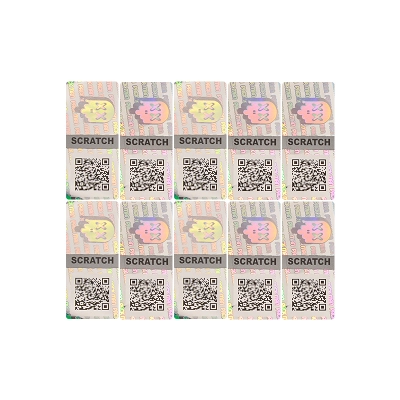
Verification is partly about authenticity and partly about operations. Even when a QR flow exists, do not treat it as the only control. Strong receiving relies on consistent carton fields, domain checks, and repeatable label placement.
Practical safeguards (non-technical)
- Domain discipline: verify where a QR resolves before you trust what it shows.
- Don’t let labels hide fields: reserve a dedicated panel for warehouse labels.
- Record lot/batch fields: make traceability usable (not decorative).
- Use change control: label placement changes can break receiving even when the shell is fine.
MoFu takeaway
QR can support verification, but receiving should still work when QR is missing, damaged, or altered. Build your process around consistent identifiers first—then treat QR as an extra layer.
Receiving workflow tips (warehouse reality)
The fastest way to reduce problems is to standardize a short inbound routine. Dual chamber formats benefit from a small functional check because selector drift is easy to miss in purely visual inspection.
5-minute inbound checks per lot
- Carton field check: product ID + lot/batch + counts are present and readable.
- Selector spot-check: cycle a small sample; confirm stable positions and consistent feel.
- Seam check: look for stress points, deformation, or inconsistent joints.
- Lot separation: store lots separately to keep traceability clean.
- Record exceptions: document the exact failure mode; do not rely on “looks off.”
3PL label hygiene
- One dedicated label panel: make it easy for warehouses to label without covering your identifiers.
- One dedicated field panel: keep carton fields on a flat panel away from seams and tape lines.
- Repeatable placement: consistency reduces rework and speeds put-away.
FAQ
Is “dual chamber” always two equal-size reservoirs?
Not necessarily. For empty only specs, what matters is physical separation and stable switching—not whether both sides are identical. If size symmetry matters to your workflow, specify it explicitly in the RFQ.
What is the most common operational failure mode?
Selector instability (loose switching, unclear positions, drift) and identifier issues (missing or covered lot/batch fields). Both are preventable with clear acceptance criteria and label-zone planning.
How do we compare dual chamber listings fairly?
Compare like-for-like on isolation, selector behavior, and identifier discipline. Ignore marketing descriptors unless they map to measurable checks. Standardize your sampling routine before you scale volume.
Does this guide cover contents or performance outcomes?
No. This page is empty only and focuses on shell features, packaging/identifier logic, and handling considerations.
References
- ISTA test procedures (distribution simulation)
- ISTA 3A overview (parcel-oriented simulation)
- ASTM D4169 distribution testing framework
- ASTM D5276 drop testing
- ASTM D642 compression testing
- ISO 2859-1 (AQL sampling by attributes)
- ISO 22383 authentication evaluation guidance
- ISO 780 handling marks
- GS1 General Specifications
- GS1 Digital Link standard
- FTC guidance on QR code scam risk
- FBI IC3 PSA on QR code tampering
- FBI IC3 PSA on QR-related fraud patterns
References are provided for educational context on distribution testing, sampling frameworks, handling marks, global identifiers, and QR risk awareness.







3 Comments
Simple and to the point.
Straightforward and informative.
Nice post. Well written.