
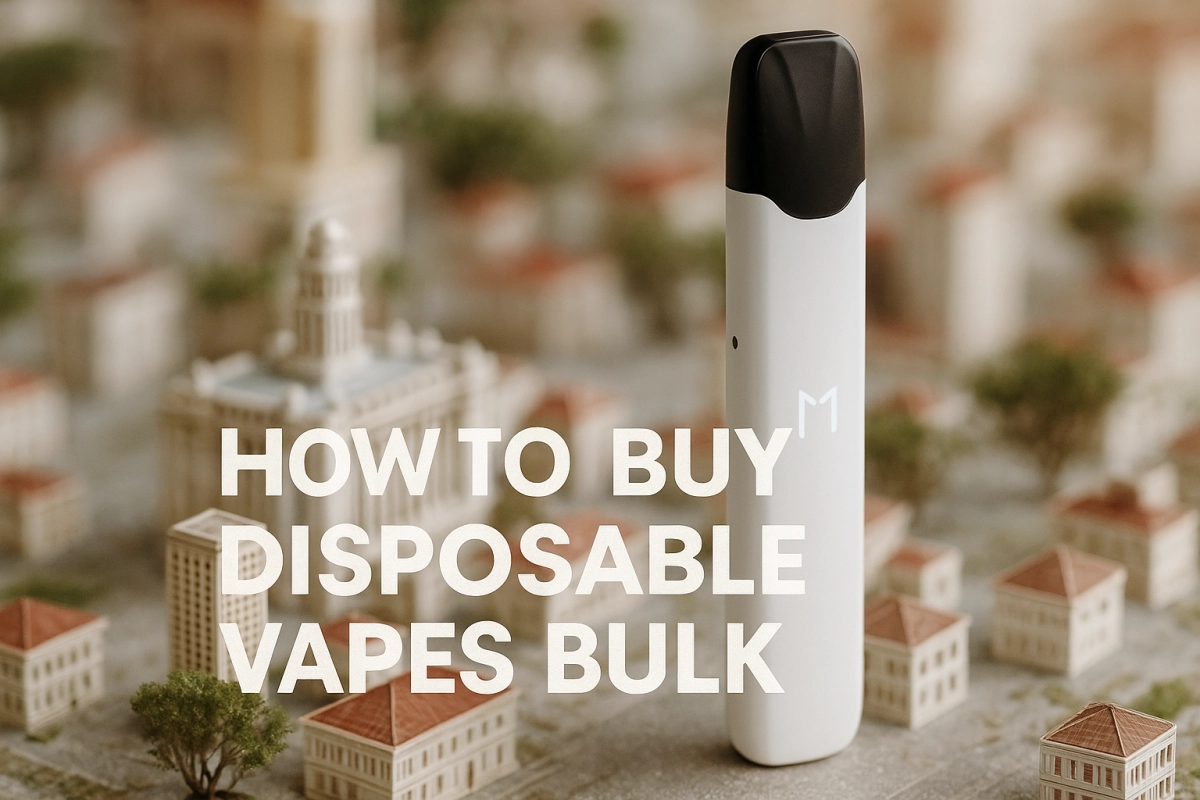
A procurement-first BoFu guide for teams evaluating disposable vapes bulk orders—focused on landed cost, MOQ logic, QC discipline, and repeatable supplier decisions.
Why bulk purchasing changes your real unit cost
In B2B, “bulk” is less about buying more and more about buying repeatably. When you purchase disposable vapes bulk, you’re not only negotiating a lower unit price—you’re locking a process: consistent lots, stable packaging, standardized receiving checks, and fewer surprises.
The fastest way teams lose money in bulk is by comparing quotes on a single line item (“$X per unit”) while ignoring what procurement actually pays: freight, pack-outs, rework, returns, and dispute time. Bulk only becomes a cost advantage when those extra costs are measured and managed.
Treat your first bulk PO as a process qualification: validate consistency across inbound cartons, not just one “golden sample.”
If you need the complete sourcing framework beyond this BoFu checklist, start with our pillar: disposable vape pen wholesale.
A simple landed-cost model (that avoids quote traps)
Use this lightweight model to compare suppliers without turning your article into a spreadsheet. It keeps the conversation objective and non-salesy—ideal for a Commercial / Pros & Cons post.
Landed cost per unit (practical version)
Landed Cost / Unit = Unit Price + Packaging & pack-out + Freight + Duties/taxes + QC/inspection + Defect & dispute allowance
Three quote traps to call out
- Spec drift: a quote that quietly changes materials/finishes between sample and production.
- Pack-out mismatch: “unit price” ignores master carton count, inner boxes, labels, inserts, or sealing steps.
- Trade-term confusion: the cheapest unit price can be the most expensive landed cost if responsibilities aren’t clear.
When you reference trade terms in your RFQ, link to the official rules and definitions (useful for readers who aren’t logistics specialists): Incoterms® 2020 (ICC) and Know Your Incoterms (trade.gov).
MOQ explained: three MOQs buyers confuse
“MOQ” is often treated as one number, but bulk programs usually have three different minimums. Clarifying them upfront prevents delays, re-quotes, and supplier friction.
1) SKU MOQ
The supplier’s minimum for a specific model/configuration. If you change features mid-quote (color, finish, window, screen housing, etc.), you often change the MOQ and the lead time.
2) Stock / warehouse MOQ
For stocked inventory, MOQs are commonly expressed in lots or cartons (for example, “X pcs/lot”). Your receiving process should match those lot sizes (carton labeling, pallet counts, and inspection samples).
3) Customization MOQ
The minimum to run custom packaging (boxes, inserts, seals, labels) or any custom component changes. Customization makes sense when your replenishment plan is stable enough to amortize setup costs.
Practical MOQ strategy
Start with a pilot that is large enough to test lot consistency, not just a single sample. Then scale in predictable tiers as your inbound QC data stabilizes.
For the category view most aligned to this article’s keyword intent, see: disposable vapes bulk.
Bulk buying pros & cons (with mitigations)
| Pros (why teams buy bulk) | Cons (what can go wrong) | Mitigation (how to reduce risk) |
|---|---|---|
| Lower effective cost per unit when freight, pack-out, and handling are optimized. | Cash tied up in inventory if demand planning is weak. | Split into pilot + replenishment tiers; avoid locking all volume before the first inbound QC pass. |
| Lot consistency improves repeatability of receiving checks and retail readiness. | Quality drift can occur across lots if specifications aren’t controlled. | Use a written spec sheet + carton labeling rules + lot IDs; document every change as a new revision. |
| Stronger negotiating leverage on pack-outs, labeling, and scheduling. | Hidden landed costs from unclear responsibilities (fees, customs, delays). | State Incoterms and handoff points; include “what’s included” for labels, cartons, and documentation. |
| Fewer re-quotes when the program is standardized. | Receiving disputes waste time and trigger returns/chargebacks. | Require carton-level traceability; photograph pallets on arrival; use standardized defect categories. |
For a concise brand-level workflow example, you can reference how packaging governance supports receiving discipline: lot traceability.
Supplier selection scorecard (what to verify)
This is where your article earns trust: a supplier scorecard is non-salesy, measurable, and genuinely helpful to BoFu readers. It also creates a natural bridge to your internal QC resources without “hard selling.”
Category A: Quote clarity (prevents rework)
- Exact configuration: list all options and what’s fixed vs optional.
- Pack-out definition: unit, inner box, master carton, labels, inserts, seals—what’s included?
- Change control: what triggers a new quote (spec revision, print revision, carton count changes)?
Category B: QC methodology (prevents “it looked fine in samples”)
- Sampling plan: confirm attribute sampling is used consistently for inbound and pre-shipment inspections.
- Defect categories: define critical/major/minor with photo examples.
- Disposition rules: what happens if results exceed acceptance numbers—rework, replace, or reject?
Helpful external references (quality systems, not product marketing): ISO 2859-1 (AQL-indexed attribute sampling), ANSI/ASQ Z1.4 inspection levels explained (ASQ), and a simple anchor-text guideline for good internal linking: Google link best practices.
Category C: Traceability (prevents receiving disputes)
- Carton labeling: lot ID, date code, and carton counts that match your receiving records.
- Scan-friendly IDs: use standardized identifiers so different warehouses interpret labels the same way.
- Evidence readiness: photo protocol for pallets/cartons (arrival condition, seals, label close-ups).
If you want a standards-backed approach to encoding identities and batch/serial data, see: GS1 Digital Link.
QC and receiving: make “bulk” repeatable
Bulk programs fail when QC is treated as “a feeling” rather than a routine. Your goal is not perfection—it’s repeatability: the same lot should behave the same way, and your receiving team should be able to prove it.
What a practical inbound QC routine looks like
- Inbound photo set: pallets, master cartons, seal condition, and label close-ups.
- Sampling plan: select samples by a defined AQL logic (not “grab a few”).
- Attribute checks: cosmetic/fit/finish, alignment, labeling accuracy, pack-out completeness.
- Record keeping: link findings to lot IDs so results are comparable over time.
A helpful internal reference for structuring this section without sounding salesy: QC checklist.
Keep your article “battery-light” while staying useful
Because this is a hardware procurement article, you don’t need to deep-dive into power systems to be credible. Focus the QC narrative on what receiving teams can verify immediately: packaging integrity, labeling governance, and lot-level consistency.
Copy/paste RFQ template for bulk quotes
This section drives BoFu conversion without sounding like a sales pitch. It gives readers a usable template and shows you understand procurement reality.
- Program name: ____________________
- Scope: empty disposable hardware + packaging components (no consumables)
- Target configuration: ____________________
- Quantity tiers: pilot ____ / replenishment ____ / scale ____
- Pack-out requirements: unit box? inserts? master carton count? label format?
- Trade term preference: EXW / FOB / DAP / DDP (specify destination)
- QC method: attribute sampling + defect categories + photo evidence
- Traceability: carton label must include lot/date code + carton counts
- Lead time & change control: what triggers a new quote or schedule reset?
If your team needs a general entry point for catalog and program context, link readers to: empty vape wholesale.
FAQ
How many times should I use the exact keyword “disposable vapes bulk”?
Use it where it makes sense (H1 + early in the introduction + one mid-body use is often enough). Overusing exact-match anchors can look unnatural—keep anchors descriptive and concise.
What should I prioritize when supplier quotes look similar?
Prioritize clarity and repeatability: explicit pack-outs, change control, defined QC sampling, and carton-level traceability. Those reduce the hidden costs that don’t show up in the unit price.
Do I need to publish specific pricing numbers in the blog?
Not necessarily. A stronger, non-salesy approach is to publish the landed-cost framework and show how buyers should compare tiers. That positions your content as procurement guidance, not an advertisement.
What external sources are acceptable for a “most authoritative” procurement article?
Prioritize primary and standards bodies (ISO, ICC, GS1, ASQ) and official guidance pages for web/SEO best practices. Avoid low-quality “listicles” and keep references tightly connected to your scorecard.
3 Comments
Loved your writing style. Keep it up!
Great tips, thanks for sharing!
Really enjoyed this post! Very helpful.