
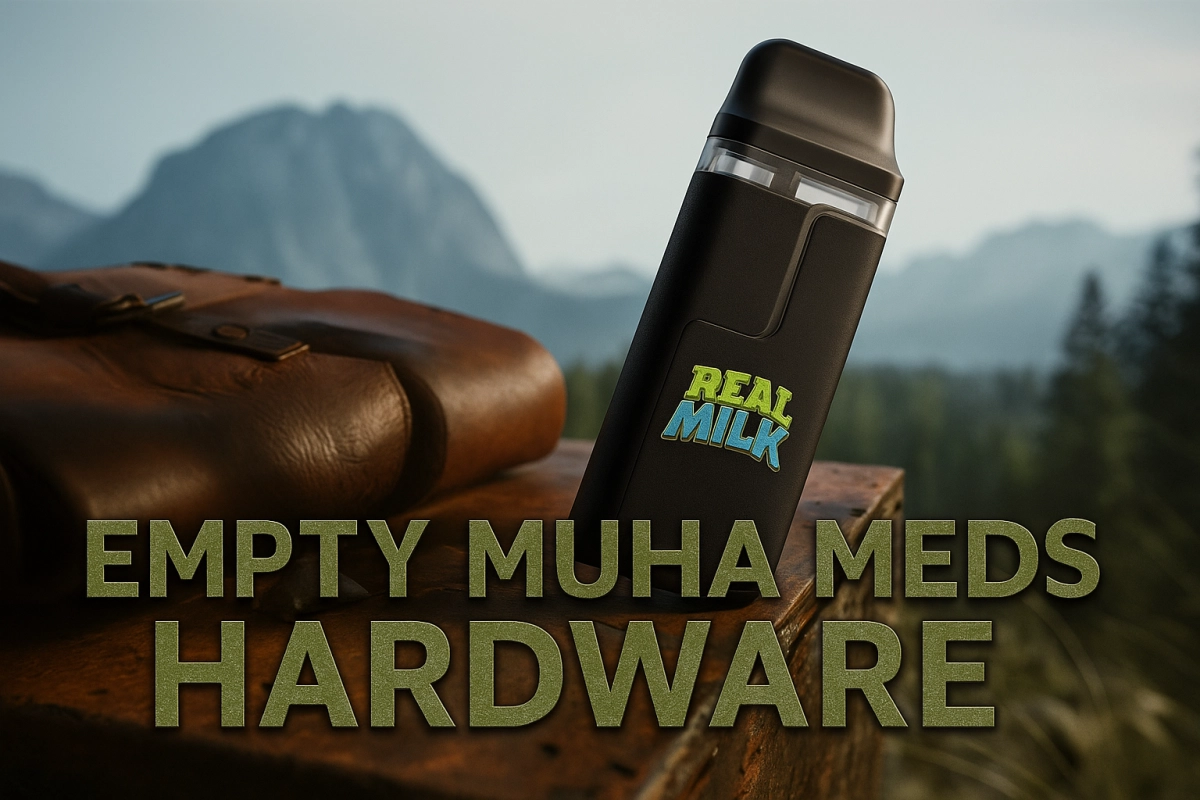
Sourcing & Standards · MoFu · Empty Hardware Only
Scope. This guide is for B2B buyers who want to work with empty Muha Meds-style hardware only—no oil, no THC, no CBD, no nicotine. We focus on how to source empty Muha Meds shells responsibly, understand the difference between brand and hardware, and build a sourcing and QC framework that keeps you out of the “gray oil” problem space.
At Vapehitech, Muha-style hardware is organized so you can keep “empty” clearly separated from any filled products. For a high-level overview of formats, start with empty muha meds. If your focus is all-in-one shells, use empty muha meds disposable as your disposable hub; for 510-style options see empty muha meds carts. Capacity-specific guidance can be found in our long-form reviews of muha meds 2g empty disposable and muha meds 3.5g empty disposable.
1) Why focus on empty Muha Meds hardware?
Muha Meds is one of the most recognizable names in the disposable and cartridge space. That visibility cuts both ways: on one hand, the silhouette and logo are familiar to consumers; on the other, the brand has been heavily counterfeited and copied on unregulated products.
For many manufacturers and distributors, the safest model is to stay on the hardware side only: they design and qualify empty Muha Meds-style shells, then sell those shells to licensed fillers who own the oil, the formulation, and the finished-product compliance story. This “empty only” approach has three big advantages:
- Clear risk boundary. You are responsible for the mechanical and electrical performance of the shell—not for what somebody decides to fill into it later.
- Cleaner documentation trail. Your files focus on drawings, materials, and packaging tests instead of potency, pesticides, and consumer labeling.
- Easier cross-market deployment. Hardware rules vary, but oil and finished-product rules vary even more. Staying on the shell side gives you more geographic flexibility.
Important. Even if you only handle empty hardware, your customers operate in regulated spaces. Good sourcing and QC on shells are part of their overall risk management, which becomes a selling point for you as a hardware partner.
2) Brand vs hardware vs oil: three different risk layers
When people say “Muha Meds,” they usually mix three very different things:
1. Brand layer (logos, names, IP)
- Covers the Muha Meds name, logo, and overall trade dress.
- Controls who is allowed to ship finished products that actually claim to be Muha Meds.
- Involves trademark and advertising rules in every jurisdiction where products are sold.
2. Hardware layer (empty shells)
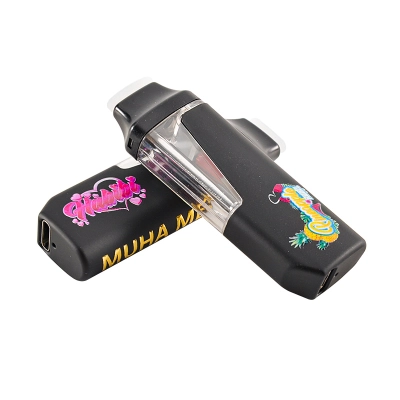
- Includes the plastic and metal parts, tank volume, airflow path, and electronics of empty Muha-style devices.
- Determines leak rates, clog rates, and user experience once oil is added.
- Can be evaluated with engineering tools: drawings, sampling plans, packaging tests.
3. Oil / formulation layer
- Includes THC/CBD content, cutting agents, residual solvents, pesticides, and microbiological safety.
- Must be controlled by licensed producers with validated labs and regulatory filings.
- Is where public health incidents like EVALI have historically been rooted.
Public-health investigations into the 2019 EVALI outbreak in the United States, for example, found strong associations between lung injuries and illicit-market THC products containing vitamin E acetate and other cutting agents acquired outside regulated supply chains, not with empty shells themselves.
- CDC — Outbreak of Lung Injury Associated with E-Cigarette or Vaping Products
- NEJM — Vitamin E Acetate in Bronchoalveolar-Lavage Fluid Associated with EVALI
- FDA — Lung Injuries Associated with Use of Vaping Products
Takeaway. When you keep your business explicitly on the hardware layer for empty Muha Meds devices, you can still support your customers’ quality goals while leaving brand licensing and oil compliance to the entities that are set up to handle them.
3) Mapping empty Muha Meds shells: carts vs disposables, 2 g vs 3.5 g
From a hardware perspective, empty Muha Meds formats fall into two big buckets: cartridges and disposable all-in-one devices. Within each family you then choose capacities and visual variants.
Empty Muha Meds carts (510)
Muha-style cartridges are 510-threaded tanks designed to be paired with separate batteries. On the empty muha meds carts page, you’ll typically see ceramic-core designs optimized for thicker oils, with standardized inlet geometry and chimney dimensions.
- Pros: Compatible with existing 510 batteries; easy to mix-and-match with other hardware families.
- Cons: Separate battery adds another SKU and user decision; more variables in the field.
Empty Muha Meds disposable shells
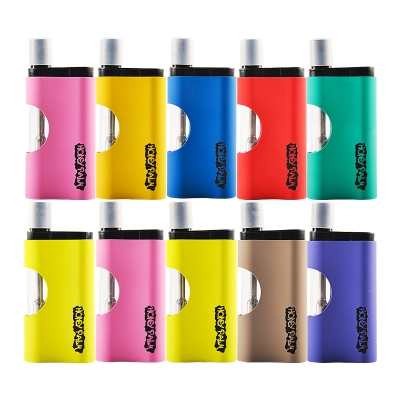
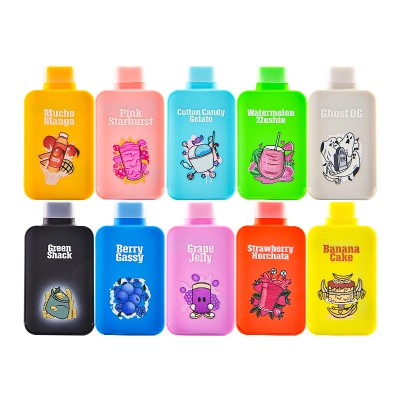
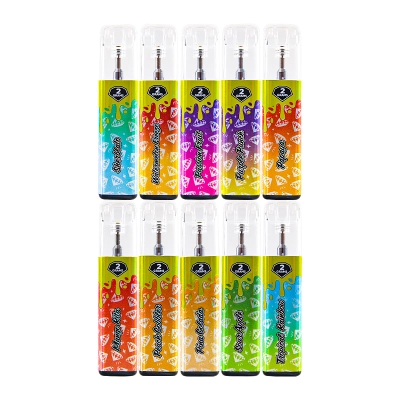
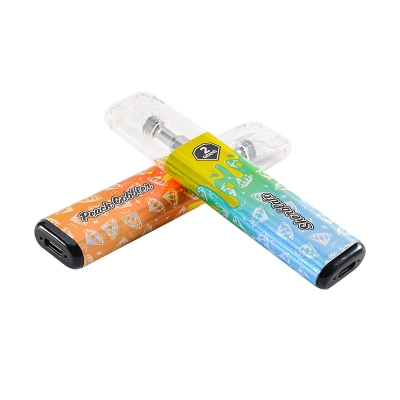
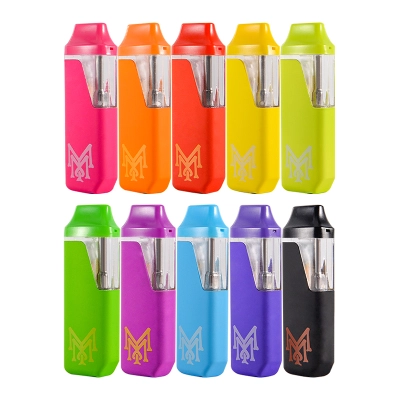
Empty all-in-one shells integrate tank, coil, and power section into a single sealed housing. These are the devices most people picture when they think of Muha Meds disposables. Your empty muha meds disposable options usually come in multiple capacities and may offer simple LEDs or small displays depending on model.
2 g formats
Reviews like the muha meds 2g empty disposable analysis show why 2 g has become a sweet spot for regular users: fewer replacements and stronger value stories while keeping the device reasonably compact.
- Best for heavy or daily users in adult-use markets.
- Higher stakes for leak and clog issues (more oil per unit).
- Often paired with rechargeable power sections so the cell lasts for the entire tank.
3.5 g formats
Larger shells such as the muha meds 3.5g empty disposable push capacity even further. These devices are visually impactful and can anchor top-tier value SKUs.
- Suitable for markets where large formats are legal and logistically supported.
- Require especially careful QC and packaging, as each failure is costly.
- Often deployed as “flagship” items rather than entry-level SKUs.
Capacity strategy. Many B2B programs standardize on one cartridge family plus one or two disposable capacities (for example 2 g and 3.5 g). This keeps tooling and QC focused while offering clear “good, better, best” choices to downstream brands.
4) Sourcing framework for empty Muha Meds shells
When you buy empty Muha-style shells, you are really buying three things at once: dimensional consistency, controlled materials, and a packaging system that can withstand real shipping conditions. A simple, written sourcing framework helps you compare suppliers on more than just headline price.
Step 1: Request real documentation, not only photos
- Drawings / spec sheets. Ask for key dimensions of tank volume, chimney height, inlet size, and mouthpiece fit. Even a simplified PDF drawing is better than nothing.
- Material statements. Look for declarations that plastics and metals meet internal limits on heavy metals and restricted substances (often aligned with RoHS-style expectations).
- Basic test summaries. Many serious hardware makers summarize internal leak tests, thermal cycling, and basic reliability checks.
Step 2: Evaluate the lab ecosystem your customers will rely on
While you do not run oil testing as a hardware supplier, your customers still ask whether your shells are compatible with their COA and compliance workflows. It helps to understand the accreditation language they use.
- ISO/IEC 17025. This is the global standard for testing and calibration laboratories. Many cannabis and hemp testing labs seek accreditation to it.
- ILAC MRA. The International Laboratory Accreditation Cooperation maintains a list of signatory bodies that accredit labs for ISO/IEC 17025.
- ILAC — MRA and signatories directory
- ANAB — ISO/IEC 17025 cannabis testing lab accreditation
- IAS — Cannabis testing laboratory program
Why this matters for empty hardware. When your customers show regulators or investors a clean file with ISO/IEC 17025-accredited COAs, it helps if they can say that their shells came from a supplier who understands and supports that quality mindset—even if you never touch the oil yourself.
5) Lot acceptance and QC checks (without touching oil)
You do not need oil to screen the quality of empty Muha Meds hardware. A simple acceptance plan lets you block obviously bad lots before they hit a filling line.
Sampling and visual checks
- Sampling plan. Many buyers adapt attribute sampling concepts from standards like ISO 2859-1 to select a small, statistically meaningful sample from each lot.
- Window integrity. Hold shells up to backlight to inspect for gaps, bubbles, and poor adhesion around windows.
- Mouthpiece fit. Check latch engagement and look for stress whitening or cracks after a few open/close cycles.
- Airflow parity. Draw (without oil) through several units to confirm both air inlets behave similarly and there are no obvious whistles or blockages.
Dry leak and packaging checks
While you cannot simulate oil exactly, you can still look for obvious weaknesses:
- Gently flex windows and seams to see if adhesive lines separate under light stress.
- Shake sample trays to detect excessive rattle that might cause chipping or rubbing in transit.
- Inspect cartons, inner bags, and trays for consistent labeling and lot codes.
Organizations like ISTA publish small-parcel test procedures that many companies use to evaluate packaging systems for e-commerce and courier shipments. These procedures combine vibration, drops, and compression steps to see whether packaging protects what is inside.
- ISTA — Test Procedures Overview
- ISTA 3A — Packaged-Products for Small Parcel Delivery Systems (overview)
- ISO 2859-1 — Sampling procedures for inspection by attributes (general reference)
Practical rule. If a supplier cannot pass basic visual, fit, and packaging checks on empty Muha Meds shells, you should be very cautious about scaling with them—even if the unit price looks attractive.
6) Compliance surfaces when you only handle empty shells
Staying on the hardware side simplifies your compliance story, but it does not erase it. There are still a few technical and logistics surfaces to pay attention to.
Transport and batteries
Many Muha-style disposables use small rechargeable cells. Even if you never fill the devices, you still ship lithium-containing hardware, which brings basic transport expectations. The UN Manual of Tests and Criteria, Section 38.3, sets out test requirements for lithium cells and batteries used in air and ground transport, and regulators such as PHMSA provide guidance on the required test summaries.
- UN Manual of Tests and Criteria — Section 38.3 (overview)
- PHMSA — Lithium Battery Test Summary guidance
Minimal expectation. For empty Muha Meds disposables that contain cells, your logistics or compliance team should at least be able to show a UN 38.3 test summary or equivalent documentation from the cell or device manufacturer.
Marketing and claims
- Avoid health or therapeutic claims. As a hardware seller, you do not need to promise effects or outcomes—leave that entirely to licensed brands operating under their local rules.
- Be precise about “empty.” Make clear in your materials that devices ship without oil, without nicotine, and are intended for use only in legal jurisdictions.
- Respect age-restriction expectations. Even if you only ship B2B, it is normal to align your materials with 18+ or 21+ age framing depending on the markets you serve.
7) FAQ & next steps
Does working with empty Muha Meds shells still carry risk?
Yes—any product that eventually carries regulated substances has some reputational and contractual risk. But by staying on the hardware side, documenting your QC, and steering clear of oil and finished-product claims, you keep your risk profile closer to that of a component supplier instead of a consumer brand.
How much documentation do I really need for shells?
At minimum, keep drawings or spec sheets, sampling records for each lot, photos of packaging and labeling, and any relevant test summaries (packaging, basic reliability, and where applicable, lithium-cell transport testing). This gives your customers something concrete to put in their compliance files.
What if a customer wants me to fill the shells for them?
If you are not set up as a licensed producer in their jurisdiction, the safest answer is no. You can instead introduce them to licensed fillers and keep your role clearly on the hardware side. Blurring the line between components and finished products is where regulatory complexity spikes.
How do I explain this to non-technical buyers?
Use simple language: “We sell empty Muha Meds-style hardware and invest in engineering, packaging tests, and dimensional QC. You keep control of oil, lab testing, branding, and finished-product licensing.” Most buyers intuitively understand why that split protects both sides.
Disclaimer: This article is for B2B hardware education only. It does not provide legal advice, does not endorse any specific brand of oil, and does not promote the use of controlled substances. Always consult local regulations and qualified counsel when designing your product and compliance strategy.
3 Comments
Super simple and useful.
I like this one. Good job.
Helpful review. Thanks!