
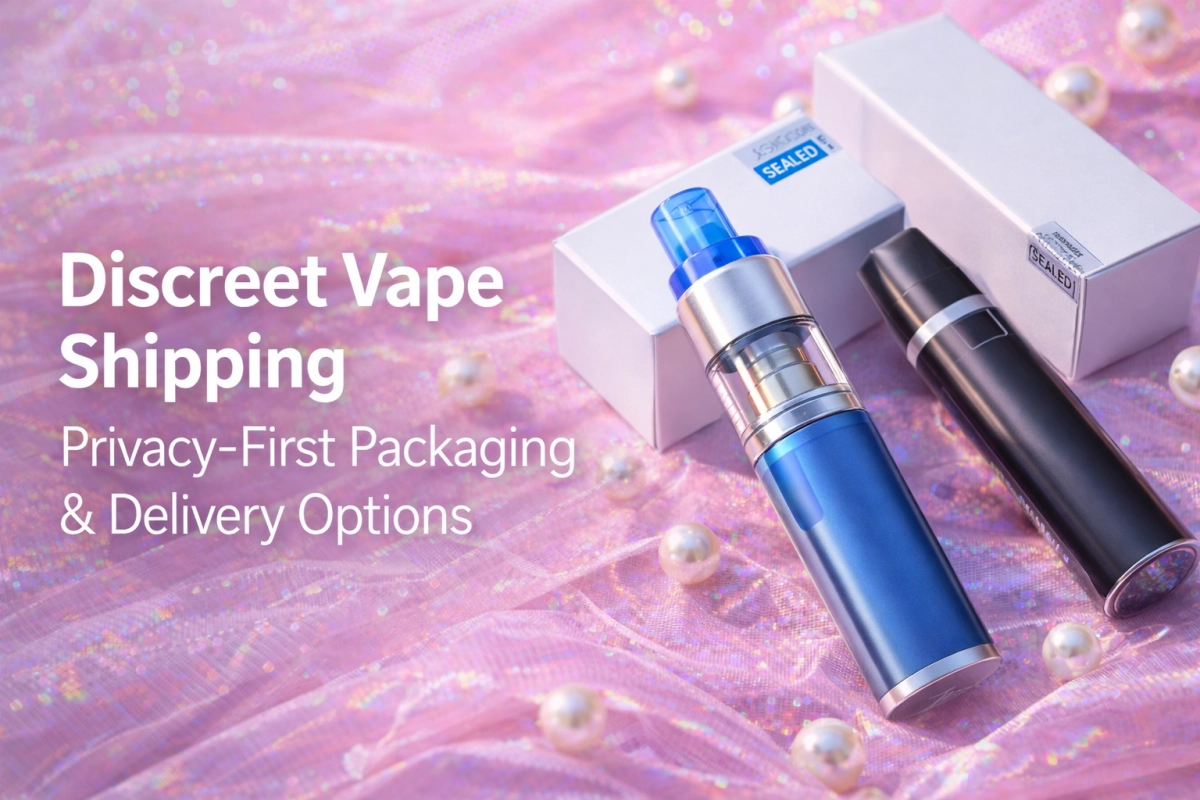
Scope: This page is written for empty only logistics and packaging workflows. It avoids discussing filled substances, dosing, or medical claims. It also avoids “how to bypass” language. “Discreet” here means privacy-preserving and plain packaging + disciplined data handling, while staying accurate and compliant.
Direct answer: what “discreet” means (and what it does not)
The most reliable “discreet vape shipping” programs are not built on secrecy. They’re built on repeatable controls: (1) a plain outer shipper that avoids unnecessary product exposure, (2) packaging that prevents transit damage, and (3) privacy discipline—collecting only what is required, controlling who can access it, and keeping clean records for audits and customer service.
Use this definition to keep the article safe and credible
- Discreet = plain exterior + minimized external product cues + privacy-by-design handling of shipping data.
- Not discreet = mislabeling, misdeclaration, hiding contents, or encouraging rule evasion.
- Goal = fewer failed deliveries, fewer disputes, lower theft risk, and better documentation.
If you keep one internal standard for how you handle personal information, point readers to your privacy policy so expectations stay consistent.
“Discreet” is a quality system: plain outside, protected inside, and auditable records end-to-end.
Reality check: eligibility, rules, and carrier limits
Delivery options for vape-related shipments are constrained by changing rules and carrier policies. A credibility-first guide should tell readers the truth: you cannot assume every mainstream carrier lane is available. In the U.S., federal frameworks for “covered products” can trigger age verification, package labeling expectations, and nonmailable restrictions depending on what is being shipped and to whom.
|
What teams often assume |
What mature programs do instead |
Why it matters |
|---|---|---|
|
“Discreet means no one asks questions.” |
Discreet means plain + compliant. No concealment. No misdeclaration. |
Risk drops when your process survives scrutiny. |
|
“Any carrier can ship it if the label is vague.” |
Confirm eligibility by lane/account and keep policy links in your SOP. |
Prevents refusals, returns, and account issues. |
|
“Packaging is just a box.” |
Define a pack-out spec and validate it with recognized testing concepts. |
Fewer damages = fewer disputes and reships. |
Practical guidance: If your shipping information and timelines need to stay consistent across your site, align your operational statements with your public shipping & delivery page and keep any policy-sensitive language compliance-first.
Privacy-by-design: data minimization and access controls
“Discreet” is as much about data as it is about packaging. Mature programs reduce privacy risk by minimizing data, limiting access, and documenting retention rules. Use a privacy risk framework mindset: define what data is required to fulfill shipping and service obligations, and avoid collecting “nice-to-have” details that create exposure.
Privacy controls that are easy to implement (and easy to explain)
- Data minimization: collect only what is required for fulfillment, support, and legal obligations.
- Purpose limitation: don’t reuse shipping data for unrelated marketing without clear consent and policy alignment.
- Access control: only staff who need address/contact data can view it; log access when possible.
- Retention rules: keep documents only as long as necessary for accounting, disputes, and required compliance.
- Redaction habits: when sharing screenshots or tickets, redact personal info by default.
When you evaluate vendors or 3PL partners, include privacy posture in the same way you evaluate packaging and documentation (see the supplier scorecard approach).
Packaging: plain outside, protected inside, proof for disputes
Discreet packaging is not “mystery packaging.” It’s plain, strong, and consistent. Think of packaging in three layers: (1) external plain shipper, (2) internal protection that prevents movement and abrasion, and (3) evidence artifacts that help you resolve damage/shortage disputes.
Layer 1: plain outer shipper (privacy + theft resistance)
- Use a plain corrugated carton or plain mailer without high-signal branding on the exterior.
- Avoid external descriptions that invite theft or embarrassment (keep what’s printed externally minimal and operational).
- Use tamper-evident closure methods that show obvious interference (focus on integrity, not “security theater”).
Layer 2: internal protection (damage prevention)
- Define a pack-out spec: separators, cushioning, anti-scuff sleeves, and void fill rules.
- Control movement: if it can rattle, it can abrade, crack, or arrive “used-looking.”
- Keep consistency across SKUs so warehouse training is simple and repeatable.
Layer 3: proof artifacts (claims and disputes)
- Photo set: carton exterior (multiple angles) + internal pack-out + label close-up.
- Record shipment weight and dimensions at handoff; keep it attached to the order ID.
- Keep a standard naming format for images so you can retrieve evidence in seconds.
Want a packaging primer that stays on-site? Use your internal overview for packaging basics as the “hub” and keep this article focused on discreet shipping decisions.
Labeling & documentation: accurate, minimal, consistent
Documentation is where many “discreet shipping” programs accidentally become risky. The safe approach is simple: keep external exposure minimal, but keep internal records accurate and reconcilable. Avoid suggesting vague labeling as a workaround. Instead, focus on consistency.
|
Do (safe) |
Don’t (risky) |
|---|---|
|
Keep invoices/packing slips accurate and tied to order IDs. |
Encourage misdeclaration or “creative” descriptions. |
|
Minimize external product cues while preserving operational needs. |
Publish advice that helps bypass carrier or regulatory checks. |
|
Store proof artifacts (photos, weights, handoff records) in one place. |
Rely on “trust me” explanations during disputes. |
Delivery options: reduce failed delivery without risky shortcuts
“Delivery options” should be described as service reliability choices—not as tactics to avoid rules. Common causes of failed delivery include address errors, signature mismatch, missing recipient availability, and incorrect expectations about carrier eligibility.
Options that reduce failed delivery and privacy exposure
- Signature-required delivery where applicable (reduces “left at door” loss and misdelivery disputes).
- Delivery windows / appointment delivery for commercial receiving docks or controlled handoffs.
- Pickup / hold for pickup when available (reduces porch loss and protects privacy in shared housing).
- Address validation and standardized formatting to prevent carrier correction delays.
MoFu decision question (what readers actually need)
If your goal is discreet vape shipping, ask: Which option reduces my total risk? “Risk” includes failed delivery, returns-to-sender, damaged cartons, privacy exposure, and time spent resolving disputes.
If your policy and timelines for delivery need to stay consistent with other pages, keep “options” aligned with your public shipping & delivery information.
Failure modes: refused, returned, damaged, lost
The most “discreet” shipment is the one that arrives on time, intact, and with minimal back-and-forth. Use a failure-mode playbook so your team responds consistently and keeps evidence organized.
|
Issue |
First action |
Evidence to collect |
Prevention lever |
|---|---|---|---|
|
Refused / returned |
Pause reship; confirm eligibility + correct data. |
Tracking events + address snapshot + order ID. |
Eligibility SOP + address validation. |
|
Damage |
Request photos immediately; quarantine affected units. |
Outer carton photos + internal pack-out photos. |
Pack-out spec + cushioning rules. |
|
Lost / misdelivered |
Open an inquiry; check signature/hand-off records. |
Proof-of-delivery record + label photo set. |
Signature-required where appropriate. |
|
Wrong address |
Confirm formatting; fix at source (CRM/order form). |
Customer confirmation + standardized address output. |
Address rules + validation step. |
Keep your customer-facing expectations consistent with your return & refund policy to reduce avoidable disputes and support tickets.
Copy/paste checklist (receiving + shipping desk)
Discreet vape shipping checklist (compliance-first)
- Define “discreet”: plain outside + privacy-by-design + no evasion language.
- Confirm eligibility: verify lane/account policy before promising delivery options.
- Minimize external cues: plain shipper; minimal exterior detail beyond operational needs.
- Protect inside: pack-out spec prevents movement, abrasion, and crush damage.
- Collect proof: carton + pack-out photos, weights/dimensions, handoff records.
- Control access: limit who can view address/contact data; redact in tickets by default.
- Standardize exceptions: refused/RTS/damage/loss playbooks with consistent evidence requirements.
- Audit monthly: top 10 reasons for failed delivery + packaging damage rate + dispute cycle time.
MoFu takeaway: a “discreet” program is measured by fewer failures and faster dispute resolution—not by how little you document.
Authoritative references used
External links are provided for verifiability and policy context. This article uses them as compliance anchors, not as marketing claims.
- ATF: Vapes and e-cigarettes (delivery sale expectations)</a >
- ATF: PACT Act overview (delivery sales, age verification, labeling)</a >
- USPS Publication 52: Covered products generally nonmailable</a >
- UPS: Tobacco & vaping product shipment policy</a >
- FedEx: Tobacco shipping prohibition (includes vaping products)</a >
- NIST Privacy Framework (privacy risk management)</a >
- ASTM D4169 (distribution environment packaging test practice)</a >
- ISTA test procedures (general simulation packaging tests)</a >
- GS1 Global Traceability Standard (traceability system design)</a >
Editorial note: This article is informational and focuses on empty only logistics and packaging workflows. It does not provide legal advice. Always confirm requirements for the markets where you operate and the carrier lanes you use.
FAQ
Does “discreet vape shipping” mean hiding what’s inside?
No. In a compliant program, “discreet” means a plain exterior and privacy-by-design handling of personal information—while keeping internal records accurate and reconcilable.
What is the single best way to reduce theft and embarrassment risk?
Use a plain outer shipper and minimize external product cues, then reduce “left at door” scenarios where appropriate through service options that create a controlled handoff.
What causes the most failed deliveries?
Address errors, signature/recipient availability mismatches, and incorrect assumptions about eligibility or carrier policy. Fixes are operational: validation, SOP alignment, and consistent exception handling.
How do I make packaging “discreet” without increasing damage rates?
Keep the exterior plain, but strengthen the interior pack-out: prevent movement, add abrasion protection, and standardize cushioning rules. Evidence photos help resolve disputes quickly.
What should I collect for proof if something goes wrong?
Carton and pack-out photos, tracking events, handoff records, and order ID linkage. Discreet programs win disputes by producing repeatable evidence, not by writing longer explanations.

3 Comments
Simple and to the point.
Useful information. Appreciate it.
Good read. I enjoyed this.