
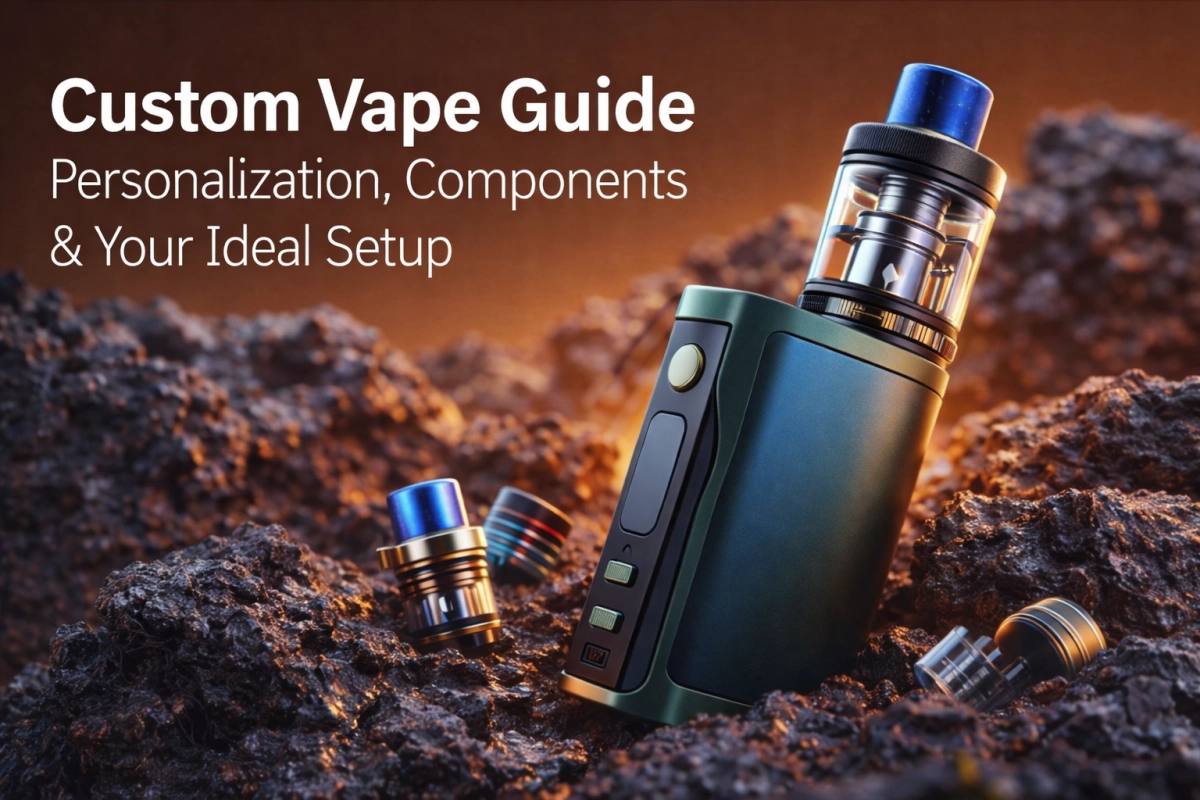
Scope: This page is written for empty only customization, sourcing, and QC workflows. It avoids discussing filled substances, dosing, or medical claims. It focuses on verifiable controls: specification sheets, compatibility logic, traceability fields, acceptance sampling records, packaging validation, and change control.
Direct answer: what “custom vape” means in practice
A custom vape is not just a new color or logo. In a B2B-ready context, “custom” means you can repeatedly produce the same variant with controlled specs, consistent incoming acceptance, and traceability that links cartons to paperwork and internal receiving records. If you want a single hub page to anchor your site-wide topic naming, use your pillar resource: custom vapes.
What “good” looks like (empty only)
- One variant name = one spec sheet: form factor, interface, airflow path, seals, finish, and packaging levels are defined.
- Change control: any revision has an effective date/lot, and you can isolate inventory if needed.
- QC that produces artifacts: acceptance sampling logs, photo sets, and disposition records (PASS / HOLD / ESCALATE).
- Traceability fields captured at receiving: lot/batch, carton identifiers, and paperwork linkage.
If your program cannot answer “Which variant is this?” and “Which lot is this?” quickly, it is not truly custom—it's ad-hoc.
Practical definition: “Custom” is a repeatable outcome you can prove with documents, not a one-time appearance change.
The customization stack (what you can actually control)
To keep a ToFu guide useful, think of customization as a stack. You can customize layers independently, but the program only works when the layers do not conflict. Here is the stack most teams use when they want reliable outcomes.
|
Layer |
What changes |
What you must document |
Common failure mode |
|---|---|---|---|
|
Visual |
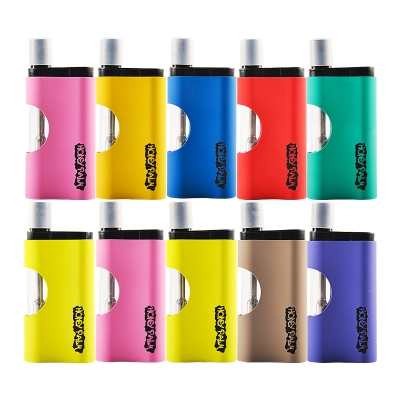
Color, finish, printing, engraving, icon system |
Finish spec, print positions, artwork version, photo reference |
“Looks close enough” drift across lots |
|
Mechanical |
Shell geometry, mouthpiece shape, tolerances, assembly sequence |
Critical dimensions, fit checks, assembly checkpoints |
Leak paths appear when tolerances stack |
|
Interface |
Thread/connection family, seating depth, contact geometry |
Compatibility rules + allowed adapter/fit solutions |
“Universal” assumptions cause returns |
|
Packaging |
Unit pack, inner pack, master carton, labeling zones |
Dielines, pack-out spec, carton label fields |
Retail-ready outside, chaos inside operations |
|
Traceability |
Identifiers, lot/batch logic, carton indexing |
Field definitions, receiving capture rules |
Can’t isolate suspect inventory later |
Keep the stack simple: if you cannot inspect it, record it, and repeat it, do not promise it as “custom.”
Personalization choices that matter (and what to document)
1) Finish + print: the most visible, least “self-explanatory” layer
Finishes tend to drift across production because teams assume color words (“black,” “silver,” “matte”) are precise. They are not. For repeatable outcomes, document finish targets using: (a) a named finish spec, (b) a physical reference sample, and (c) a photo reference captured under consistent lighting.
2) Packaging: where customization becomes operational
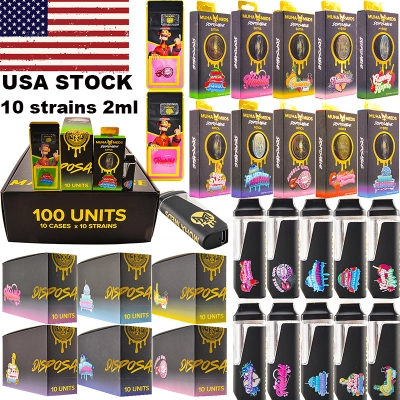
For empty only programs, packaging is often the first place buyers feel the “custom” value because it turns assortments into reorderable variants. If you need a neutral, systems-first overview of packaging options and structure, link readers to disposable vape pens packaging.
Packaging fields that reduce disputes (simple and effective)
- Variant name (exact text, not a nickname)
- Lot/batch (required field; never blank)
- Case-pack (units per inner/master)
- Carton identifier range (so you can isolate cartons later)
3) “Build” decisions: prioritize compatibility and leak control over novelty
The fastest way to create a fragile custom program is to optimize for novelty before compatibility. Start by fixing the fundamentals: stable fit, consistent assembly, and documented receiving checks. Novelty comes after repeatability.
Component map (empty only) and compatibility
The word “components” can get vague. Below is a practical map used in many empty only programs. The goal is not to list every part, but to identify what is likely to affect compatibility, leak resistance, and inspection.
|
Area |
What to specify |
What QC can verify at receiving |
Why it matters |
|---|---|---|---|
|
Shell & structure |
Material class, finish, critical dimensions, assembly seam rules |
Fit/flush checks, cosmetic limits, seam alignment |
Geometry and tolerances influence leak paths |
|
Mouthpiece & airflow path |
Air inlet geometry, airflow path shape, sealing features |
Visual checks + simple airflow consistency checks |
Air path design affects perceived smoothness and consistency |
|
Seal points |
Gasket type, press-fit depth, adhesive/ultrasonic parameters (as applicable) |
Leak-screen sampling + defect taxonomy |
Most failures are seal-point failures, not “mystery issues” |
|
Heating core section |
Core type, mounting method, alignment rules |
Alignment checks, visible damage, consistent build quality |
Misalignment can create inconsistent performance and returns |
|
Interface / connection |
Thread/connection family, seating depth tolerance, contact geometry |
Fit checks and contact consistency checks |
Compatibility drives fewer disputes and fewer RMAs |
If your program includes cartridge-style compatibility, your category hubs help readers navigate formats without turning the article into sales copy: empty vape cartridges and empty vape pens.
For connection/fit problems, avoid “universal” language. Instead, diagnose the actual failure mode—seating gap, contact miss, or thread mismatch. Your on-site troubleshooting guide is a good neutral internal reference: 510 thread adapters.
Compatibility is not a promise. It is a rule set you write down, test, and enforce in receiving.
Build your perfect setup: a decision framework
“Perfect” should mean “perfect for a specific use-case.” Use this framework to choose which customization decisions to lock first, and which to leave flexible until you have real-world feedback.
Step 1: Pick your primary goal (choose one)
- Low return risk: prioritize compatibility rules, seal-point controls, and conservative finishes.
- Retail clarity: prioritize packaging hierarchy, label zones, and variant naming discipline.
- Brand differentiation: prioritize finish + graphics—but only after operational repeatability is proven.
- Fast replenishment: prioritize fewer variants and strict change control.
Step 2: Lock a “baseline variant” before you add options
Start with a baseline variant and define it with a one-page spec: critical dimensions, finish, interface family, and packaging levels. Then add options one at a time. This prevents multi-variable drift where no one can explain which change caused which outcome.
Step 3: Define a “stop rule” for incoming acceptance
A custom program becomes expensive when receiving teams keep debating. Define objective stop rules such as: missing lot/batch field, inconsistent carton identifiers, unexpected finish shift, or compatibility failures beyond your threshold. Stop rules protect inventory integrity and make escalations faster.
QC you can audit: sampling, records, and lab reports
To keep QC neutral and verifiable, anchor your approach to standards-based principles: documented processes (quality management), attributes-based inspection with acceptance sampling, and competent testing where it applies.
Acceptance sampling: record-driven, not opinion-driven
A widely used approach for lot-by-lot incoming checks is acceptance sampling by attributes indexed by AQL (commonly referenced under ISO 2859-1). The key for ToFu readers is not memorizing tables—it is documenting your lot size, sample size, defect taxonomy, and disposition decision every time.
|
Record field |
Example (safe) |
Why it matters |
|---|---|---|
|
Lot size (N) |
N from receiving paperwork (carton count × case-pack) |
Prevents “moving target” inspection |
|
Sample size (n) |
n recorded per your inspection level |
Proves repeatability |
|
Defect taxonomy |
Critical / Major / Minor (defined internally) |
Turns adjectives into consistent decisions |
|
Counts |
Major = X, Critical = Y |
Links findings to a disposition |
|
Disposition |
PASS / HOLD / ESCALATE + reason code |
Makes outcomes auditable |
|
Evidence |
Photo set + receiving record ID |
Enables independent review later |
When testing matters, prioritize competence (not impressive PDFs)
If your program relies on third-party testing, the credibility signal is the competence framework behind the work. Many industries reference ISO/IEC 17025 as a competence standard for testing and calibration laboratories. Keep reports linked to lot identifiers and revision status, and store them in the same structure every time.
Tip: QC becomes “authoritative” when your evidence is (1) repeatable, (2) searchable, and (3) tied to lot/batch and receiving records.
Traceability & anti-counterfeit controls (standards-aligned)
Custom programs attract copycats because visible elements are easy to mimic. Traceability and authentication evaluation reduce disputes because they shift conversations from “looks real” to “show the linkage.”
Three traceability questions your team should answer quickly
- Which variant is it? (exact variant name + revision)
- Which lot is it? (lot/batch captured at receiving)
- What evidence proves it? (paperwork + carton identifiers + receiving record)
Practical traceability fields (simple and high impact)
- Variant name (exact text)
- Lot/batch (required field)
- Carton identifier range (helps isolate inventory)
- Receiving record ID (one per shipment)
- Paperwork linkage (purchase and shipment docs stored together)
If you use global identification, align to common supply chain concepts (e.g., GTIN for trade items) and keep identifier governance consistent across variants. Also, if you evaluate authentication solutions, use performance-criteria thinking: tools should be assessed for reliability and operational fit, not hype.
Winning the “real vs fake” debate is less important than preserving proof and making the same call every time with the same evidence.
Packaging reliability and transit validation
Custom packaging is part of the product experience, but it is also part of operational risk. A packaging system should survive the real distribution environment without turning into damaged inventory or relabeling chaos.
What to validate (without over-engineering)
- Label durability: identifiers remain legible after normal handling
- Pack-out integrity: unit/inner/master hierarchy stays intact
- Carton consistency: case-pack counts do not drift
- Evidence preservation: carton identifier range is captured before put-away
Packaging validation is about predictability. Your goal is fewer disputes, fewer “mystery mix-ups,” and faster receiving.
Materials & finishes: compliance-friendly documentation
Materials and finishes often become a hidden blocker when programs scale across regions. A practical ToFu approach is to keep documentation clear: material class, finish type, and restricted-substance posture aligned to where you operate.
Low-drama documentation rules
- Record the finish spec (not just a color name) and keep a reference sample.
- Keep a revision log when coatings, inks, or plastics change.
- Store compliance-related documents in the same folder structure as lot evidence.
Copy/paste checklist for a custom program
|
Step |
Output (artifact) |
Owner |
Pass condition |
|---|---|---|---|
|
1) Define baseline variant |
One-page spec + photo reference |
Product/QC |
Variant name and revision are unambiguous |
|
2) Lock packaging hierarchy |
Dieline versions + pack-out spec |
Ops |
Unit/inner/master structure is repeatable |
|
3) Write compatibility rules |
Allowed interface family + fit checks |
Engineering/QC |
“Universal” language removed; rules documented |
|
4) Set incoming acceptance |
Sampling record template + defect taxonomy |
QC |
Every lot gets a recorded disposition |
|
5) Implement traceability capture |
Receiving record ID + carton photo set |
Receiving |
Lot/batch + carton identifiers captured before put-away |
|
6) Change control |
Revision log + effective lot/date |
Ops/QC |
Any change is isolatable in inventory |
If you implement only three things, start here: baseline variant, incoming acceptance records, and traceability capture.
Authoritative references used
External links are provided for verifiability and standards context. This page uses them as public anchors for QC governance, traceability design, authentication evaluation, packaging validation, and materials compliance posture.
- ISO 9001 explained (quality management)
- ISO/IEC 17025 (testing and calibration laboratories)
- ISO 2859-1 (acceptance sampling by attributes, AQL)
- GS1 Global Traceability Standard
- GS1 GTIN (trade item identification key)
- ISO 12931 (performance criteria for authentication solutions)
- ISO 22380 (product fraud risk and countermeasures)
- Mapping Global Trade in Fakes 2025 (OECD/EUIPO)
- ISTA test procedures (Procedure 3A overview)
- ASTM D4169 (shipping container/system performance testing)
- RoHS Directive (EU)
- REACH Regulation (EU)
Editorial note: This article is informational and focuses on empty only customization, sourcing, and QC workflows. It does not provide legal advice. Always confirm requirements for the markets where you operate.
FAQ
What is the safest first step when starting a custom vape program?
Start with a baseline variant and write a one-page spec plus photo reference. Then define incoming acceptance records (lot size, sample size, defect taxonomy, disposition) so every shipment is judged the same way.
How do I keep customization from becoming “random changes”?
Use change control: any change in finish, geometry, packaging, or identifiers must have an effective lot/date and a revision log. If you cannot isolate it in inventory, do not introduce it.
What causes most returns in customization programs?
Usually it is not the logo. It is compatibility assumptions, seal-point drift, and inconsistent receiving decisions. Fix the fundamentals first; then add options.
How many variants should a new program launch with?
Fewer than you think. One baseline variant plus one optional finish or packaging variation is often enough to learn quickly while keeping QC and traceability clean.
3 Comments
Clear and well written.
Helpful content. Thanks for sharing.
Nice post. Very easy to read.