
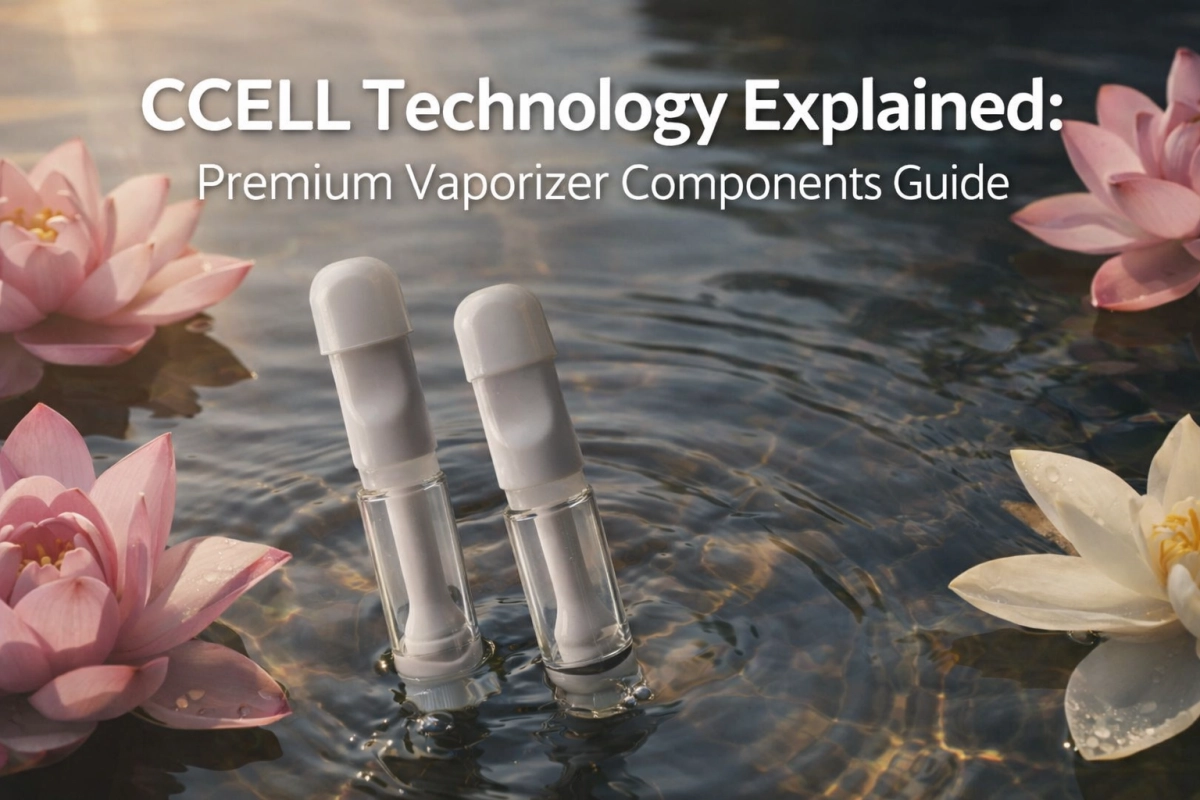
Scope: This guide is empty only. We explain what people mean by CCELL technology and how “premium” vaporizer components are typically described at a device and component level (heating core, materials, seals, airflow, and QC). When we say “performance,” we mean consistency + leakage control + repeatable manufacturing signals (not medical advice, not chemical potency, and not instructions for filling or use). This page is not affiliated with CCELL or its trademark owner.
What “CCELL technology” means (and what it doesn’t)
In most buyer conversations, CCELL technology is shorthand for a design philosophy: a cartridge-style platform that prioritizes stable heat delivery, predictable wicking/feeding behavior, and clean assembly tolerances so the device performs consistently across many units of the same run.
On Vapehitech, the cleanest way to route readers who want a real-world format overview is your category hub: ccell. Keep that anchor stable in any CCELL-related explainer so your internal linking reinforces a single pillar destination.
ToFu rule: keep the focus on components, not contents
CCELL’s official materials often discuss the platform in the context of different reminders about viscosity ranges and product goals. For a ToFu “What” guide, you can stay neutral by focusing on component design and verifiable manufacturing signals: materials, seals, airflow architecture, and inspection logic.
Component map: the premium parts that actually matter
Use the table below as a “component dictionary.” It translates premium language into checks that catalog teams and buyers can understand without needing lab equipment.
| Component | What it does | What to verify (buyer-visible) | Typical failure pattern |
|---|---|---|---|
| Heating core (ceramic element) | Controls heat distribution and repeatability | Core alignment, clean assembly, stable output across samples | Hot spots, inconsistent output, early “taste drift” |
| Center post + contact geometry | Maintains electrical contact and mechanical alignment | No wobble, consistent seating, clean interfaces | Intermittent connection, misalignment, rattling |
| Tank / housing (glass or engineered plastic) | Structural stability and content isolation (as a container) | No cracks, no stress whitening, consistent wall thickness | Cracks, deformation, micro-leaks at interfaces |
| Mouthpiece interface | Seals and protects airflow path | Uniform snap/press fit, no gaps, consistent fit force | Loose mouthpiece, seepage at top joint |
| Seals (O-rings / gaskets) | Stops leakage and prevents pressure-driven seepage | Correct compression, clean seating, no pinching | Slow leaks, seep lines, swelling or compression-set |
| Airflow path | Sets draw feel and pressure balance | Consistent draw across units, no whistling, no obvious restriction | Gurgling, whistling, unstable draw, leak risk from imbalance |
| Thread / base machining | Mechanical fit and long-term stability | Smooth threading, no cross-thread signs, uniform base seat | Wobble, stripped threads, intermittent contact risk |
Material browsing shortcut (category-level)
If you want a category that naturally reinforces “premium components” language (especially in ToFu articles), consider linking readers to metal & glass vape cartridges when you discuss housing stability and clean interfaces.
Ceramic heating cores: how consistency is engineered
Ceramic heating cores are often discussed as a premium feature because they aim to manage heat distribution and feeding behavior in a controlled way. From a purely component perspective, the goal is straightforward: reduce variability by keeping heat spread more even and by keeping the “supply path” less sensitive to tiny manufacturing shifts.
CCELL’s own technical pages describe newer ceramic heating platforms (for example, EVOMAX) in terms of improving heat distribution and consistency. If you want readers to check the manufacturer’s description directly (without you making performance promises), reference: CCELL technology overview (official) and Ceramic-EVOMAX cartridge page (official).
ToFu-safe phrasing that avoids hype
- Good: “Designed to promote more even heat distribution and stable draw behavior.”
- Avoid: “Guaranteed clog-free” / “100% leak-proof” / “best performance.”
In informational content, the safest pattern is: describe design intent + tell readers what to verify.
Materials: ceramic, stainless, and borosilicate glass basics
Premium components are often defined by materials that stay stable under normal device conditions and are manufactured to consistent specs. While vendors may use brand-specific language, you can support your explanation with widely recognized materials references:
- Borosilicate glass (3.3): commonly referenced for stable glass properties in technical contexts. See: ISO 3585:1998 (borosilicate glass 3.3).
- Stainless steel sheet/plate baseline spec: a common reference family for stainless used across industrial applications is ASTM A240/A240M.
- Seals and elastomers (framework thinking): for a “how standards describe rubber articles” reference point, see 21 CFR 177.2600.
Note: Standards links are provided for educational context. They do not indicate that any specific product is certified or compliant. Use them as a vocabulary reference for sourcing conversations and documentation requests.
A concrete “example SKU” can help readers visualize components
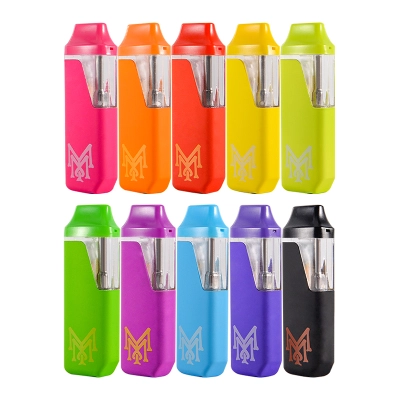
If you want a single product page as a visual reference (without turning the article into a promo), link once to a stable CCELL family listing like CCELL White cartridges when you describe mouthpiece fit, tank body, and base geometry.
Airflow + seals: why leak resistance is a systems problem
Many “performance” complaints trace back to a simple engineering reality: airflow, pressure, and seal compression all interact. If a device’s airflow path is inconsistent or the seal compression is uneven, pressure differentials can amplify tiny imperfections into visible seepage.
What buyers can verify without lab tools
- Fit repeatability: the mouthpiece and base should seat consistently across multiple samples.
- Seal seating: O-rings/gaskets should not look pinched, twisted, or unevenly compressed.
- Draw consistency: the same SKU should feel similar from unit to unit (no “one tight, one loose”).
- Interface cleanliness: debris at joints can create leak paths and misalignment.
Why premium builds feel “predictable”
Predictability comes from the stack-up: tight machining/fit, controlled seal compression, and a stable airflow path. It’s rarely one “magic part.” It’s the discipline of the whole assembly.
Manufacturing discipline: the QC signals buyers can verify
For ToFu readers, QC should be explained as a simple concept: sampling + consistency checks. Even a great design can fail if production drift is uncontrolled. If you want a globally recognized reference for attribute sampling and acceptance quality language, ISO’s AQL sampling standard is a useful vocabulary anchor: ISO 2859-1 (AQL sampling) — latest edition status.
A practical receiving workflow (empty only, device-first)
- Identify the lot: record the run label, packaging cues, and the exact SKU naming you will publish.
- Sample consistently: pick a repeatable sample size and checklist (even if it’s simple).
- Check joints and interfaces: mouthpiece fit, base fit, seal seating, and visible alignment.
- Compare units: look for “one-off” anomalies (wobble, gaps, uneven fit force).
- Document drift: if a lot differs from your last verified run, treat it as a change-control event.
If your readers want a deeper, structured comparison of CCELL vs non-CCELL options (without you repeating it in this ToFu post), use a single “further reading” internal link: CCELL vs other 510 options. (This article stays ToFu and does not provide filling instructions.)
Catalog language that stays ToFu-safe and consistent
For informational content, your best SEO outcome usually comes from clean definitions and consistent naming, not aggressive claims. Here’s a naming pattern that reads naturally and reduces listing confusion:
- Pillar term: CCELL technology (definition-first, no hype)
- Format: cartridge-style device
- Core type: ceramic heating core (or equivalent neutral description)
- Housing: glass / metal / engineered body (describe, don’t overpromise)
- Inspection language: AQL sampling / receiving checklist / change-control notes
Trademark note (recommended in all CCELL posts)
“CCELL” is a trademark of its respective owner. Use the term to describe market-recognized technology and compatible component families, and avoid any language that suggests affiliation or endorsement.
FAQ
Is this guide about consumables, potency, or effects?
No. This guide is empty only and focuses on component design, materials, assembly logic, and QC vocabulary. It does not provide medical advice or claims.
What should I look for if I’m trying to understand “premium components” quickly?
Start with the interfaces: seal seating, mouthpiece/base fit, and alignment. Premium builds usually show fewer “stack-up” issues (wobble, gaps, inconsistent fit force) across multiple samples of the same run.
Why do ceramic cores get so much attention?
Because they’re often used as a shorthand for controlled heat distribution and repeatable behavior. In a ToFu context, treat that as design intent and verify what you can: clean assembly, consistent fit, and stable unit-to-unit behavior.
Which standards are useful to reference without making compliance claims?
Materials and inspection vocabulary references (like ISO glass properties, ISO attribute sampling, and broadly used metal specifications) can help teams speak precisely without implying certification.
References
- CCELL technology overview (official)
- Ceramic-EVOMAX cartridge page (official)
- CCELL EVO news post (official)
- CCELL 3.0 bio-heating overview (official)
- ISO 3585:1998 — Borosilicate glass 3.3
- ASTM A240/A240M — Stainless steel plate/sheet/strip specification
- ISO 2859-1 (AQL sampling) — latest edition status
- 21 CFR 177.2600 — Rubber articles intended for repeated use
- ISO 10993-1 (biological evaluation framework) — overview page
- FDA guidance on ISO 10993-1 (risk-based evaluation context)
References are provided for educational context on technology descriptions, material vocabulary, and general inspection frameworks. They do not indicate certification or compliance for any specific SKU.



3 Comments
Good read. I found this useful.
Clear and easy to understand.
Very helpful post. Thanks for sharing.