

Adults 21+ • Empty hardware • Information only. We compare threaded cartridges (carts) with all-in-one (AIO) disposables in the Big Chief family using objective traits and verifiable standards. For topic consolidation, we reference the hub once with an exact match: big chief cart.
What you’ll get: a feature matrix, an engineering-grade method to evaluate performance without lab instruments, and a multi-standard authenticity checklist. We avoid health/efficacy claims and keep the tone vendor-neutral.
Quick overview: carts vs. disposables
Threaded cartridges (“carts”)
- Strengths Modular—swap batteries and carts; lower chassis waste; power tuning possible.
- Watchouts Battery mismatch (over/under-voltage) can hurt flavor or cause sputter; more parts to manage.
All-in-one disposables (AIO)
- Strengths Factory-matched coil & battery; hassle-free; strong out-of-box consistency.
- Watchouts Single-use chassis; if no diagnostics, it’s harder to tune pre-heat/power routine.
Need a fuller primer on AIO variants? See our Big Chief disposable guide.
Objective feature matrix
| Dimension | Big Chief cart (threaded) | Big Chief disposable (AIO) |
|---|---|---|
| Power pairing | Battery-dependent; choose volts/watts carefully (stable output preferred) | Factory-matched coil & battery; typically steadier output |
| Diagnostics | Varies by battery body (some screens/LEDs) | LEDs common; some models add screens—see disposables with screens |
| Coil & airflow | Ceramic coils; airflow depends on cart design | Ceramic coils; airflow engineered with enclosure |
| Inlet geometry & wicking | Sensitive to oil viscosity; battery heat/power impacts feed | Matched wicking; short pre-heat helps thicker profiles |
| Flexibility | High—swap carts, batteries, mouthpieces | Moderate—choose 1G/2G, dual-chamber, screen |
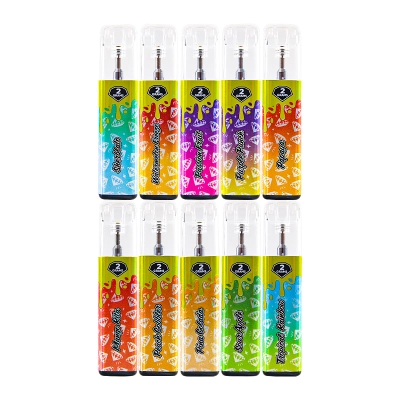
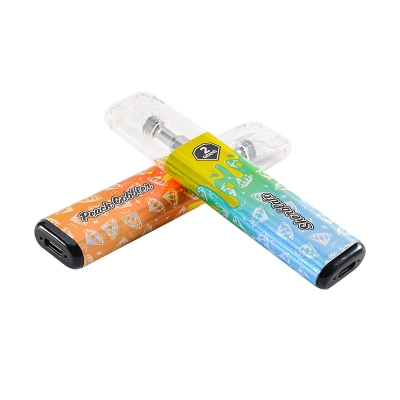
| Special variants | Mostly single-chamber | Dual-chamber options—e.g., Big Chief Duo 2G disposable |
| Waste & reuse | Battery reusable; cart disposed | Single-use chassis in most AIOs |
How to evaluate performance (replicable at home)
Don’t have a lab? You can still run a disciplined comparison. The steps below reference internationally recognized concepts so results are reproducible:
1) Puffing profile & timing (ISO 20768 concept)
Use a consistent puff profile (e.g., 55 mL over ~3 s with 30 s intervals) as defined for vaping machines in ISO 20768:2018. At home, mimic this by timing a 3-second puff with 30-second rests and maintaining the same routine for both devices.
2) First-puff consistency
After 24 h upright rest at 20–24 °C, record whether a short, gentle pre-heat (2–4 s) reduces first-puff delay/noise on thicker profiles. Keep notes for 3 sessions and look for repeatability rather than absolute numbers.
3) Clog & recover check
Across 50 puffs, count any hard draws and how easily a gentle pre-heat clears them. Use the same oil style and storage conditions to keep the comparison fair.
4) Power behavior
For carts, prefer batteries with stable voltage/wattage output and, ideally, a low-ramp pre-heat. For AIOs, screens or consistent LED patterns make it easier to keep power behavior the same every session.
5) Handling & storage
Rest devices upright, avoid hot cars/cold storage, and wipe threads. These operational controls reduce variance and make your notes comparable.
These methods are qualitative and reproducible; they avoid medical/efficacy claims while still letting users compare real-world consistency.
Value framework (beyond unit price)
- Consistency dividend Fewer restarts and clog-clears → fewer wasted puffs and support tickets.
- Diagnostic advantage Screens/clear LEDs reduce troubleshooting time and returns.
- Operational friction Carts need battery matching; AIOs remove this variable but are single-use chassis.
For a broader AIO overview (1G vs 2G, screen vs no-screen), see our Big Chief disposable guide.
Authenticity & compliance: verifiable steps
Whether you choose carts or AIO disposables, the following evidence is requestable today and backed by official sources:
- Lab competence for any COA. Confirm the testing lab is accredited to ISO/IEC 17025 and appears under an ILAC MRA signatory (avoids unverifiable reports).
- Puffing & method literacy. Use the puffing profile definitions from ISO 20768:2018 as a conceptual reference so your notes are consistent.
- Device safety context. For e-cig/e-vape electrical systems, see UL 8139.
- Cell/pack safety & transport. Request IEC 62133-2 evidence for cells where applicable and the UN 38.3 Test Summary for shipping.
- Materials compliance. Compare supplier declarations with the EU RoHS Directive.
- Packaging robustness. For parcel routes, ask for ISTA 3A results (vibration/drop) to reduce in-transit damage.
Chain-of-custody essentials for any COA: lot/batch ID, sample date, lab sample ID, signatures, and accreditation scope. Decline documents missing these fields.
FAQ
Can carts match AIO consistency?
Yes—when battery output is stable, pre-heat is gentle, and inlet/wick geometry fits viscosity. Many teams still prefer AIOs because coil-battery pairing is engineered at the factory.
Is a screen necessary on disposables?
No, but diagnostics (screen or consistent LED signaling) make it easier to repeat the same routine across temperatures—improving first-puff behavior.
Which offers better value?
Carts win on modularity and reuse; AIOs win on out-of-box repeatability. Use the value framework above to decide which cost drivers matter most for your workflow.
References (Authoritative, Non-affiliated)
- ILAC MRA — accreditation signatories directory
- ISO/IEC 17025 — competence of testing laboratories
- ISO 20768:2018 — vaping machine routine analytical conditions
- UL 8139 — e-cig/e-vape electrical & battery safety context
- IEC 62133-2 — safety requirements for Li-ion cells and batteries
- PHMSA — UN 38.3 Test Summary requirement
- EU Commission — RoHS Directive
- ISTA — Test Procedures (incl. 3A)
Education only. Adults 21+. Empty hardware; no medical or efficacy claims.





3 Comments
Simple, modern and well-written. Keep it up!
Very nice article, easy to understand and professional.
This was actually helpful! Looking forward to your next post.