
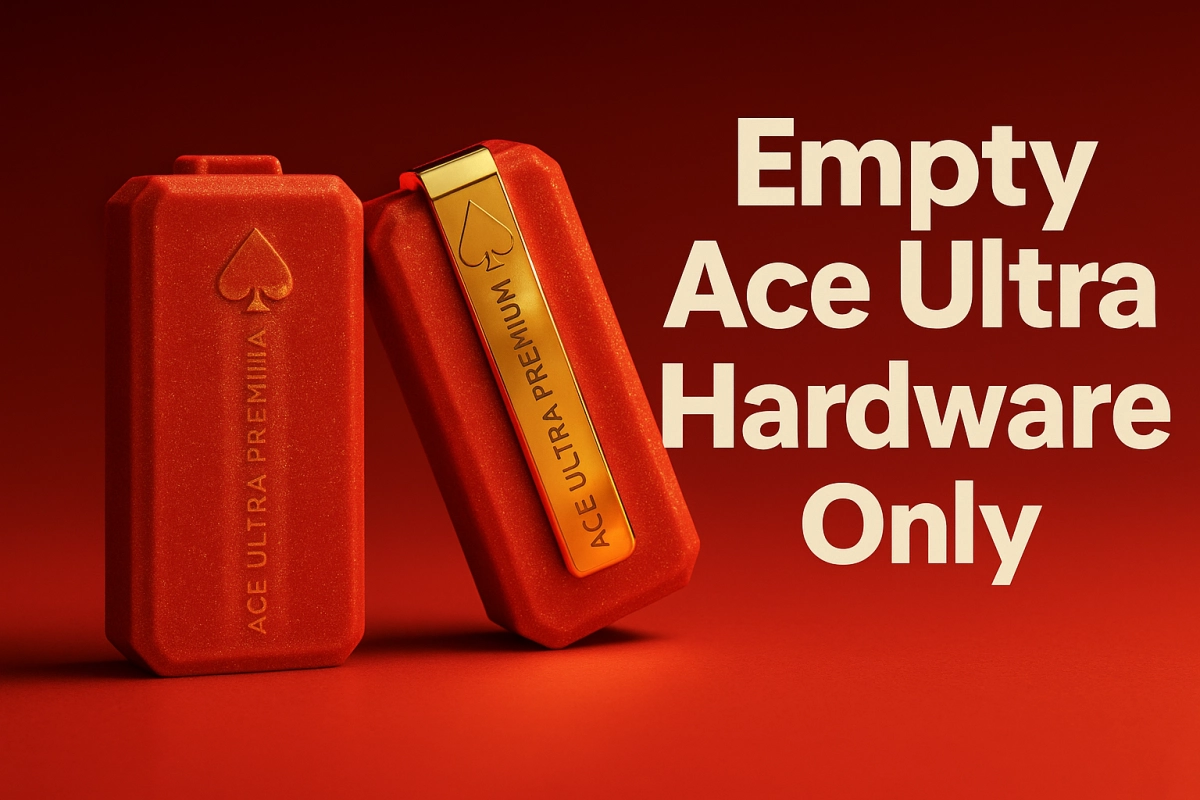
Sourcing & Standards · MoFu · Empty Hardware Only
Scope. This guide is written for B2B buyers who are evaluating empty Ace / Ace Ultra-style hardware only — no oil, no THC, no CBD, no nicotine. It focuses on how the broader market currently describes “Ace Ultra Premium”, why many investigators now treat it as a ghost brand, and what that means for serious buyers who only want compliant shells, not mystery oil. The article is based on public investigations, safety advisories, and listings for empty Ace Ultra-style hardware from 2023–2025 and is intended for hardware sourcing and QC planning in legal markets only.
Last reviewed. November 2025. Ace-related marketing, enforcement actions, and safety reports continue to evolve, so always cross-check with the latest public documents and your own legal counsel.
At Vapehitech, Ace-branded hardware is organized so that “empty” stays clearly separated from any finished products. If you are mapping the family for sourcing, start with our empty ace ultra overview. For all-in-one formats, the ace vape pen page and ace 2 gram disposable line-up show how 2 g shells are structured. Popular artwork variants such as the ace ultra premium red box and ace ultra premium orange box illustrate how packaging changes while the underlying hardware spec stays consistent.
1) The Ace / Ace Ultra story: hype, ghost-brand risk, and why it matters
In just a few years, “Ace Ultra” and “Ace Ultra Premium” have gone from obscure names to highly visible labels on cartridges and disposables in the gray and illegal THC market. Some dispensaries and online shops market Ace Ultra as a premium 2 g live-resin or liquid-diamonds disposable with bold claims about flavor and potency. At the same time, multiple investigations and consumer-safety articles now describe Ace Ultra as a ghost brand whose packaging and artwork are widely available as empty boxes and shells on wholesale platforms.
A 2025 investigative release, for example, reports that “Ace Ultra Premium” packaging and logos are sold as empty components for as little as a few dozen cents per unit on global B2B platforms, allowing unlicensed fillers to present any oil as if it came from one unified brand. Those investigators describe Ace Ultra Premium not as a single licensed manufacturer but as a design that anyone can buy and use, with no centralized control over oil quality, lab testing, or labeling.
Community discussions echo this. In harm-reduction forums, experienced users frequently list Ace Ultra Premium among brands considered “fake” or “trap-pack” labels: packaging and hardware are real enough, but the people filling the devices are unknown, unlicensed, or operating far outside state-legal systems.
Why this matters for hardware buyers. If you buy or sell Ace-style shells, you are operating at the intersection of three layers: brand (logos, trade dress, claims), hardware (empty shell), and oil (THC or CBD formulation). Keeping your business clearly on the hardware layer, with documented QC and strict customer screening, is the safest way to avoid being pulled into ghost-brand and unsafe-oil stories.
2) What “empty Ace Ultra” actually means in 2025
When B2B sites talk about an empty ace ultra product, they are usually referring to one of two things:
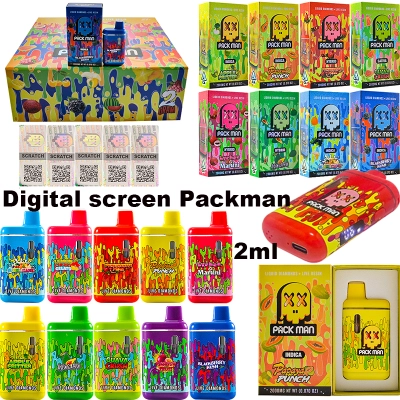
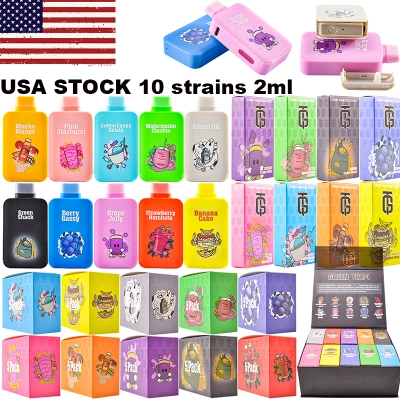
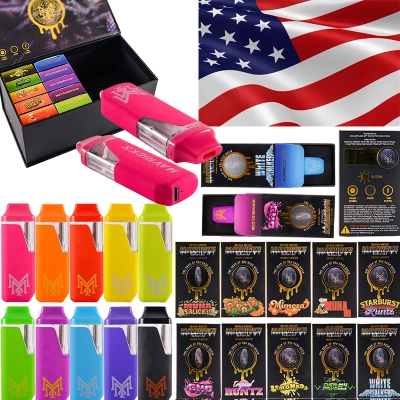
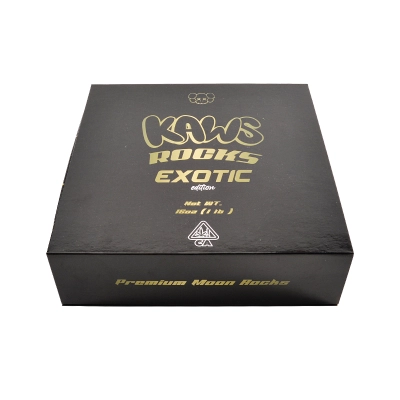
- Empty packaging sets — just the master case, small boxes, inserts, and sometimes pre-printed labels featuring Ace Ultra artwork and strain names, sold without any device or oil. These are widely advertised on wholesale platforms as “empty Ace Ultra Premium 2 g packaging” or similar.
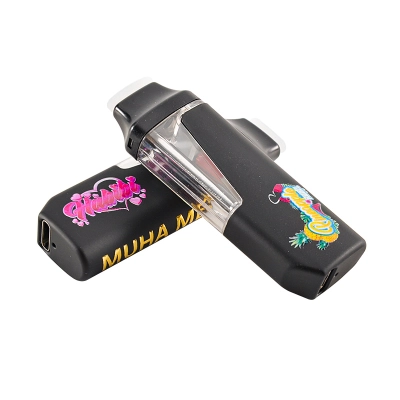
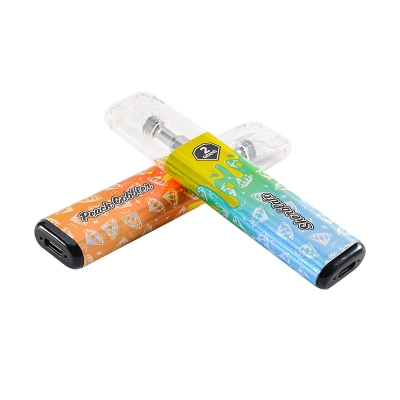
- Empty all-in-one hardware + matching packaging — finished shells with tanks, coils, and rechargeable sections, packaged in Ace-style outer boxes but shipped without any oil inside. Several B2B distributors market “Ace Ultra Premium 1 g / 2 g empty disposables” with NFC chips, colorways, and multi-warehouse stock.
On the legitimate hardware side, the second category is where serious quality work happens: engineering, leak control, machining, PCB layout, and packaging tests. On the illicit side, however, the same shells and boxes can be used by anyone with a filling setup and a label printer.
Takeaway. For a responsible B2B buyer, “empty Ace Ultra” must mean hardware and packaging only, sold to licensed fillers only, with a clear paper trail and no promises whatsoever about what oil might eventually go into those shells.
3) Ghost brands, unsafe oil, and why hardware-only is safer for B2B
The broader context is not just Ace. In the United States, private retail data reviewed in 2025 suggests that unauthorized flavored disposable vapes accounted for roughly one-third of tracked e-cigarette sales in 2024, despite years of FDA enforcement actions. At the same time, public-health agencies have linked serious lung injury outbreaks (EVALI) to THC cartridges acquired from informal sources, particularly those cut with vitamin E acetate and other untested additives.
Safety-focused articles about fake or unregulated cartridges routinely warn that:
- Fake or ghost-brand carts may contain residual solvents, pesticides, or cutting agents that were never evaluated for inhalation.
- Packaging can be professionally printed while the oil inside is made in a completely uncontrolled environment.
- Unofficial sellers often provide no verifiable COA, batch number, or track-and-trace information, even when QR codes appear on the box.
In that setting, Ace Ultra becomes a textbook example of a ghost brand. Some journalists and consumer-safety teams now describe “Ace Ultra Premium” as packaging and branding that anyone can purchase, rather than a tightly controlled, single-license manufacturer. Forum moderators on “clean cart” communities go even further, explicitly listing Ace Ultra among fake brands made by hardware suppliers and sold to local dealers to fill with “whatever.”
Where hardware-only fits. By staying strictly on the empty-shell side, documenting QC, and refusing to touch oil or consumer branding, a hardware business keeps its risk profile much closer to that of a component manufacturer and much farther from unregulated THC vendors. That does not erase reputational risk, but it makes the risk intelligible and manageable.
4) Mapping empty Ace Ultra hardware: formats, capacities, and variants
When you strip away marketing copy and THC claims, empty Ace Ultra-style hardware falls into a few recognizable buckets. Understanding these helps buyers write better specifications and sampling plans.
4.1 All-in-one disposables (1 g and 2 g shells)
Most empty Ace Ultra disposables are all-in-one devices with:
- A tank sized for roughly 1 g or 2 g of oil (often marketed as 1 ml or 2 ml capacity).
- A ceramic or composite coil optimized for thick distillates or live resin.
- A rechargeable power section designed to last longer than the tank volume.
- Optional features like LED indicators, small screens, or NFC chips embedded in the housing.
For licensed fillers, 2 g shells are especially attractive because packaging, testing, and logistics costs are amortized over a larger unit volume — but that also means each hardware failure wastes more oil. That is why capacity-specific QC (for example, on the ace 2 gram disposable format) is so important.
4.2 Packaging and colorways (red, orange, black, seasonal editions)
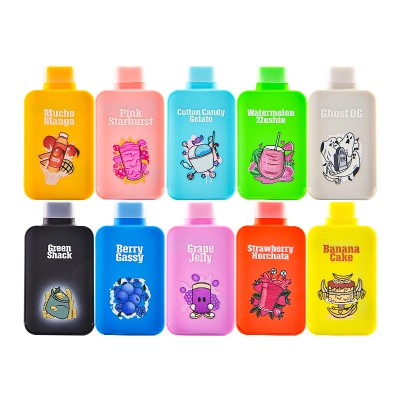
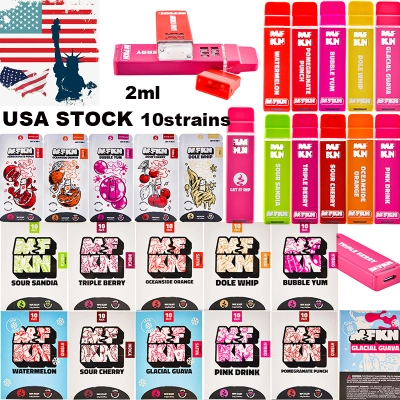
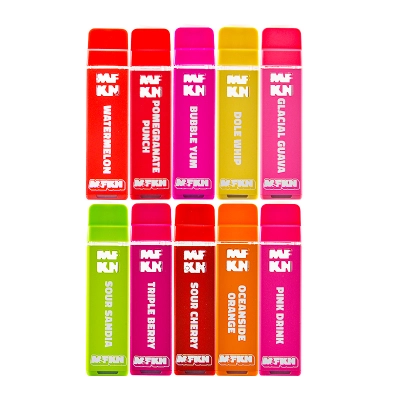
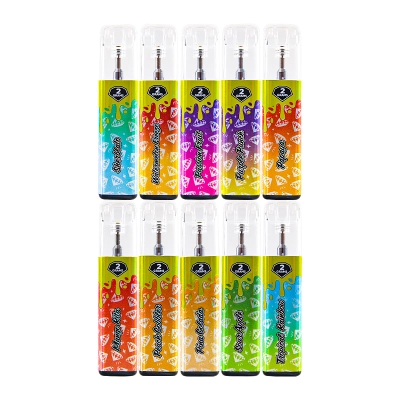
Ace Ultra packaging has become a mini-design ecosystem of its own. B2B empty-hardware catalogues list:
- Black master cases with red inner boxes (“Red Box” editions).
- Orange spring or seasonal boxes (“Orange” editions), sometimes offered from multiple regional warehouses.
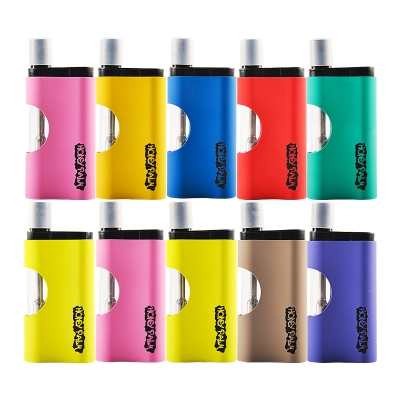
- Collaborative variants such as Ace Ultra x Packman co-branded shells.
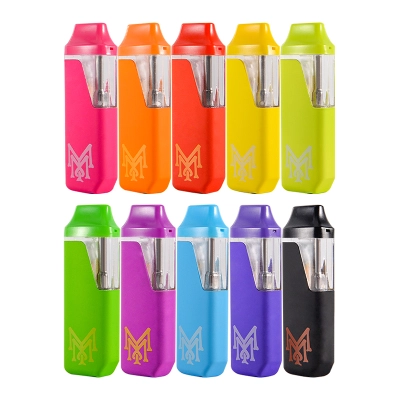
For a hardware planner, the key is to treat red, orange, and other colorways as visual layers only. Internally, coil geometry, oil inlets, wicking material, airflow path, and battery specs should remain documented and consistent across the family.
Practical mapping. Many teams maintain a simple table: one row per hardware spec, with columns for 1 g / 2 g, coil type, resistance range, and which packaging SKUs (for example, ace ultra premium red box, ace ultra premium orange box) are allowed to use each spec. This prevents random mix-and-match that creates QC confusion later.
5) Sourcing framework for empty Ace Ultra-style shells
Once you decide to touch empty Ace Ultra-style hardware at all, the next task is to build a sourcing framework that looks beyond price-per-unit. A simple written framework can be the difference between a controlled hardware program and a ghost-brand mess.
5.1 Documentation: drawings, materials, and packaging
At minimum, every “empty Ace Ultra” hardware SKU you buy should come with:
- Mechanical drawings or spec sheets covering tank volume, inlet size, chimney height, mouthpiece fit, and tolerances. Even simplified PDFs are better than a few marketing photos.
- Material declarations stating which metals, plastics, and seals are used in all wettable components, plus internal limits on heavy metals and restricted substances.
- Packaging descriptions and test summaries for master cases and inner boxes, ideally with references to vibration/drop tests or standard packaging procedures where applicable.
Many serious empty-hardware suppliers now publish at least high-level packaging test information and describe multi-warehouse stock strategies, especially when shipping from U.S. or EU warehouses for faster delivery.
5.2 Sampling, leak tests, and stress checks without oil
You do not need THC oil to screen empty Ace Ultra-style devices. A good incoming inspection for each lot might include:
- Sampling based on attribute-sampling concepts (for example, ISO 2859-1 style plans adapted for your volumes).
- Dry draw tests to check airflow parity and whistle-free pulls across multiple units.
- Window and seam inspections under backlight to detect gaps, bubbles, or poor adhesive lines.
- Simple mechanical stress tests: flexing shells, snapping mouthpieces on and off, and checking for crack formation.
- Charging-port insertion cycles on rechargeable variants to spot early mechanical failures.
For larger programs, it is common to run bench tests with non-THC surrogate fluids to simulate viscosity and thermal load while staying within local legal boundaries.
5.3 Traceability and anti-ghost controls
Because Ace Ultra is so heavily associated with ghost-brand behavior, a hardware supplier who cares about reputation should build traceability into every step:
- Unique lot codes printed on master cases, inner boxes, and device bodies where possible.
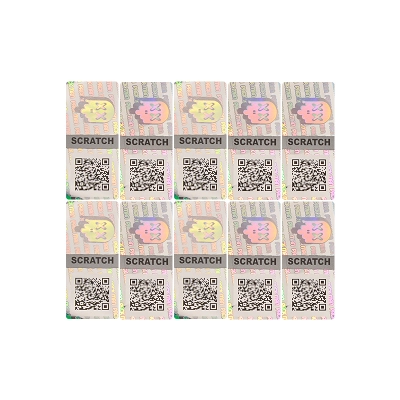
- Optional NFC chips or serialized QR codes, controlled at the hardware level rather than by unvetted third parties.
- Internal records mapping each lot to a specific licensed filler or distributor, with geography and license references.
Rule of thumb. If a supplier cannot show you who their Ace Ultra-style hardware goes to and under what conditions, you should assume a non-trivial share of those shells end up in informal markets with little regard for consumer safety.
6) KYC and customer screening: who should be allowed to buy these shells?
Sourcing is only half the picture. The other half is deciding who you will sell empty Ace Ultra-style shells to. Several safety-focused articles and ghost-brand investigations argue that hardware makers and wholesalers have a responsibility to avoid becoming silent partners to illegal operations.
For Ace-style hardware, a practical KYC (know-your-customer) program might require:
- Proof of state or national licensing where THC is legal, including license numbers and expiration dates.
- Corporate registration records that match the names on packaging and lab reports.
- COA examples from accredited labs for the customer’s existing products, including lab name and accreditation status.
- Written confirmation that the buyer will not ship filled Ace Ultra-branded products into jurisdictions where THC vapes are illegal.
- An internal list of red-flag behaviors (for example, refusing to provide any documentation, insisting on anonymous payment, or requesting “stealth” shipping labels).
Reality check. KYC cannot guarantee that every shell will be used perfectly, but it moves your business away from the most chaotic parts of the ghost-brand ecosystem and shows regulators that you took reasonable steps to avoid misuse.
7) Checklist and talking points for licensed fillers
If you are a licensed filler or brand owner in a legal market and you still want Ace Ultra-style silhouettes, the safest way to approach them is to treat the hardware as just one component of a much stricter compliance story. The following checklist can help frame internal conversations.
7.1 Hardware & packaging checklist
- We only source empty Ace Ultra-style hardware from suppliers who provide drawings, material declarations, and packaging test summaries.
- Every ace vape pen or similar device passes a defined incoming inspection (visual, mechanical, and dry draw tests).
- Each ace 2 gram disposable variant we use is pinned to a specific oil viscosity and preheat/power profile, documented in our internal SOPs.
- Artwork variants like ace ultra premium red box and ace ultra premium orange box are treated as visual skins only; the underlying hardware spec is tightly controlled and traceable.
- We document every lot movement from hardware receipt through filling, testing, and case packing.
7.2 Communication and risk framing
In markets where Ace Ultra has already been mentioned in consumer warnings, it can be smarter to move your oil into a distinct, clearly licensed house brand while using Ace-style hardware only as an internal mechanical reference. If you do keep Ace naming on the box, your legal and compliance teams should be comfortable explaining:
- Who legally owns the brand in your jurisdiction.
- How consumers can verify COAs and batch numbers from accredited labs.
- Why your products are not part of the ghost-brand streams flagged in public investigations.
Soft recommendation. Many sophisticated operators now prefer to treat Ace Ultra as an engineering benchmark rather than a consumer-facing identity, precisely because the name appears in both licensed and unlicensed channels.
8) FAQ, disclaimers, and next steps
Q1. Is Ace Ultra a legitimate THC brand or a pure ghost brand?
Public sources show a mixed picture: some licensed dispensaries and online shops list Ace Ultra-branded products, while ghost-brand investigations and harm-reduction forums describe Ace Ultra Premium as a design that can be freely copied and re-filled by unlicensed actors. For hardware suppliers and B2B buyers, the safest assumption is that the name alone does not guarantee anything about oil quality or regulatory status.
Q2. What does “empty ace ultra” mean in Vapehitech content?
On Vapehitech, “empty ace ultra” refers to empty hardware and packaging only. We focus on the mechanical and packaging layers — tank volume, coil design, materials, and artwork — and leave all oil selection, lab testing, and consumer branding decisions to licensed customers operating under their local laws. We do not fill devices, ship THC oil, or provide medical or legal advice.
Q3. How does this relate to EVALI and other lung-injury concerns?
Public-health investigations into EVALI consistently point toward THC cartridges from informal sources and additives like vitamin E acetate, not toward empty shells by themselves. Nonetheless, any hardware program that ignores how its shells are used in the field is missing part of the risk picture. That is why we stress KYC, traceability, and support for customers who want to operate transparently with accredited labs.
Q4. Is this article endorsing Ace Ultra as a brand?
No. This article is an independent hardware-focused analysis intended for B2B readers. It does not endorse any filled Ace or Ace Ultra product, and it should not be read as a recommendation to use or sell THC vapes in any jurisdiction. Our goal is to help hardware buyers understand the ghost-brand context and design safer, better documented sourcing programs.
Disclaimer: This article is for B2B hardware education only. It does not provide medical or legal advice and does not encourage or promote the sale or use of THC products in any jurisdiction. Ace and Ace Ultra are names used by their respective owners. All trademarks belong to their respective holders. Always consult local regulations, accredited laboratories, and qualified counsel when designing your product and compliance strategy.
4 Comments
Very helpful, thanks for sharing!
Love the details here.
Perfect timing, I was looking for this!
Great stuff, will check it out!