
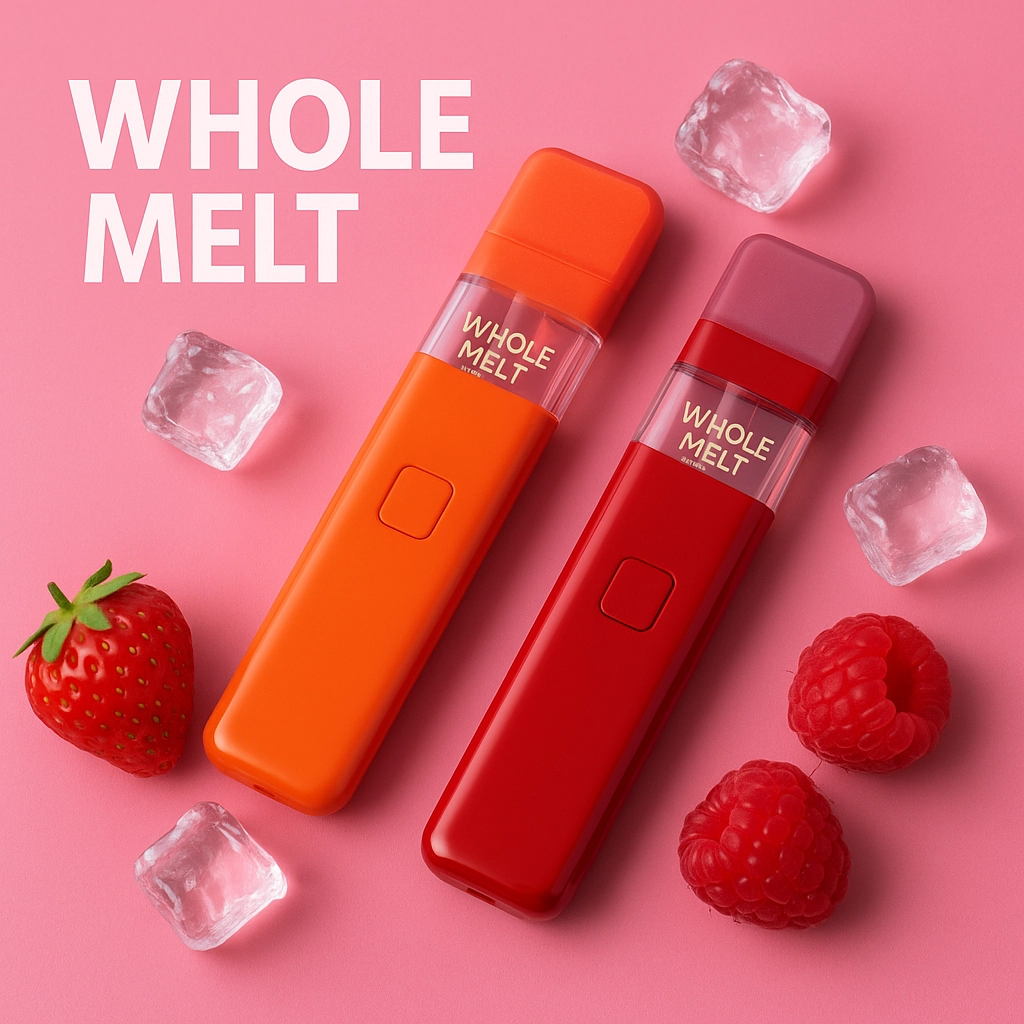
The Complete Guide to Whole Melt Extracts Disposable Vapes Informational / Guide • MoFu
Clear operation guidance for solventless “whole melt” in disposable devices, plus compliance basics and a transparent evidence & methods section.
Quick navigation: Whole melt disposable devices (catalog)
What Is Whole Melt?
“Whole melt” commonly refers to solventless extracts refined to melt cleanly under heat with minimal residue—e.g., select hash rosin or full-melt fractions. Because of viscosity and terpene sensitivity, operation favors lower initial power with gradual ramp-up and short puffs to avoid scorching.
Ramp in small steps
Rest 15–20 s
Helps reduce flooding
Why a Disposable for Whole Melt?
- Pre-matched components: battery output, coil geometry, airflow tuned to melt behavior.
- Lower learning curve: no rebuilds; consistent once dialed in.
- Sealed path & baffles: reduces debris and spitback; many designs add condensate traps.
Key Features & Benefits
Heating & Power Control
Begin low, then raise slowly until output is steady and flavor remains clean. For voltage pens, ≈2.0–3.0 V is a pragmatic starting band; for temperature-controlled systems, many users report clean flavor around ~350–430°F (175–220°C). These ranges are operational heuristics—always adjust to the specific device and extract.
Coils & Wick Materials
Porous ceramic and mesh-ceramic heaters distribute heat evenly and provide capillary action suited to viscous concentrates. Stainless or kanthal heaters embedded in ceramic cores are common; uniform heating reduces hot spots that mute flavor.
Airflow & Condensate Management
Isolated airflow paths, anti-spitback baffles, longer vapor paths, and removable mouthpieces help reduce droplets and simplify cleaning.
Formats & Capacities
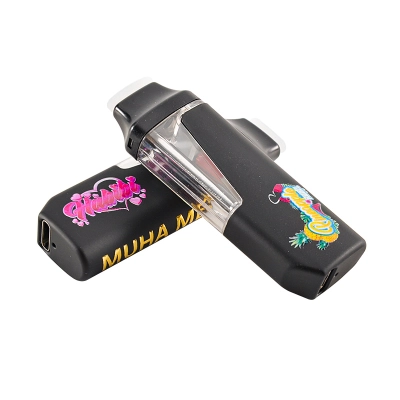
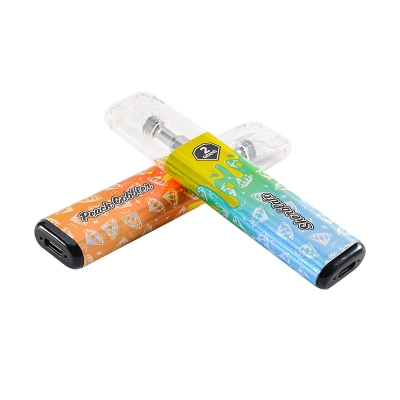
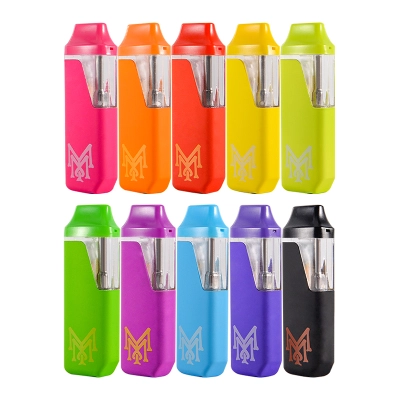
Whole-melt disposables typically offer 0.5–2.0 g chambers. Larger capacities increase session count but demand tighter control of wicking and heat. If you need examples or datasheets, see Device formats & capacities.
Usage Guide: Temperatures, Coils & Technique
Dialing In Temperature/Voltage
- Prime low: Start at the lowest setting; take 1–2 primer puffs.
- Ramp by one notch: Increase only if vapor is thin or pooling; stop once flavor is clean.
- Short draws: 2–4 s puffs; avoid chain-puffing on high settings.
- Cool-down: Rest 15–20 s between puffs to allow thermal equalization.
Coil Care for Solventless
- Avoid dry firing; use gentle preheat only if provided.
- Store upright; wipe mouthpiece weekly to manage condensate.
- If dark browning appears, lower setting and shorten puffs.
Whole Melt vs Distillate — What to Expect
| Aspect | Whole Melt Extracts | Distillate Carts |
|---|---|---|
| Viscosity | Thicker; benefits from gentle preheat | Thinner; wicks more easily |
| Operating range | Lower–mid temps preferred | Broader range tolerated |
| Flavor sensitivity | High—hotspots mute flavor rapidly | More tolerant |
| Residue risk | Higher if overheated | Lower |
Compliance Snapshot (US • EU/UK)
United States
- Age 21+ at retail; retailers should check photo ID for customers under 30; vending machines restricted where under-21 are present; free samples prohibited. See FDA Tobacco-21 and retail guidance [1].
- Authorization (PMTA/MGO): Only products with a formal FDA Marketing Granted Order may be marketed as “authorized.” Always self-check the public MGO resources for the exact SKU [2].
This guide is informational only and does not verify any specific product. Always verify with primary regulatory sources and request up-to-date documentation from suppliers (e.g., ISO/IEC 17025 lab COAs [5] and, if claimed, ISTA 3A packaging summaries [6]).
Evidence & Methods (How this page was built)
We designed this page as a neutral MoFu guide. Compliance statements link to primary regulators (FDA, UK GOV/MHRA, EU TPD). Packaging claims reference ISTA definitions. Lab competence references ISO/IEC 17025. Operating ranges are presented as industry heuristics for solventless concentrates—clearly labeled as practical guidance rather than health claims or regulatory limits. We include a limitations statement below to avoid overstating certainty.

Care & Troubleshooting
If vapor is thin
- Take 1–2 gentle primer puffs; raise one setting if needed.
- Warm the device in hand for 30–60 seconds in cold environments.
If flavor is harsh or muted
- Lower temperature/voltage and shorten puffs to 2–3 seconds.
- Allow longer cool-down between puffs (15–20 seconds).
If flooding or spitback occurs
- Store upright; check mouthpiece for condensate and wipe.
- Use slower, steadier draws; avoid chain-puffing on high settings.
Further Reading / Where to find
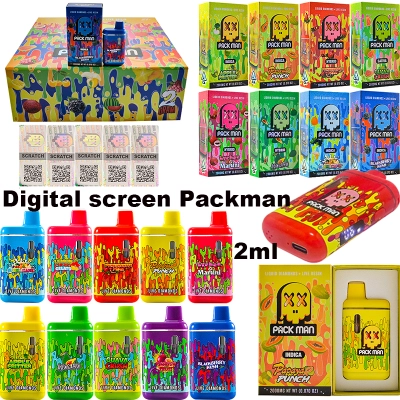
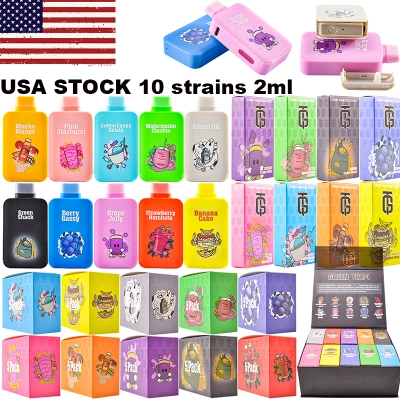
For examples of configurations and datasheets, see: Where to find whole-melt pens.
References (primary sources)
- FDA Tobacco-21 & retailer guidance — https://www.fda.gov/…/tobacco-21
- FDA marketing orders (PMTA/MGO) — explainer & granted orders list — About orders • Granted orders
- UK GOV / MHRA e-cigarette consumer regulations hub — https://www.gov.uk/…/mhra-e-cigarette… • UK consumer regs — https://www.gov.uk/…/e-cigarettes-regulations…
- EU TPD Article 20 summary (nicotine concentration, tank volumes, warnings) — EUR-Lex summary PDF
- ISO/IEC 17025 overview — competence of testing & calibration laboratories — ISO official page
- ISTA 3-Series / 3A overview — transport simulation tests — ISTA procedures • 3A PDF
- ISO/IEC 17025 accreditation directories (to verify lab certificate No. & scope): ANAB • UKAS • A2LA • IAS
- ISTA member labs / test resources (to verify “ISTA 3A” claims): ISTA labs
Editorial Standards & Disclosures
- Independence: Informational only; no endorsement of any specific product.
- Sourcing: Compliance statements link to regulators (FDA, UK GOV/MHRA, EU TPD); testing & packaging reference ISO and ISTA.
- Updates: We maintain a changelog for material edits.
- Affiliations: If a page contains affiliate links or sponsorship, we disclose them conspicuously per FTC Endorsement Guides.
Learn more about our editorial method and corrections policy. Contact the editor via About us.
- 2025-10-15 — Added HowTo schema, third-party accreditation directories, ISTA lab finder, COA example placeholder, and explicit reviewer meta.

3 Comments
Thanks for sharing, this was super helpful.
Great post, really enjoyed reading this!
Really enjoyed reading this one!