
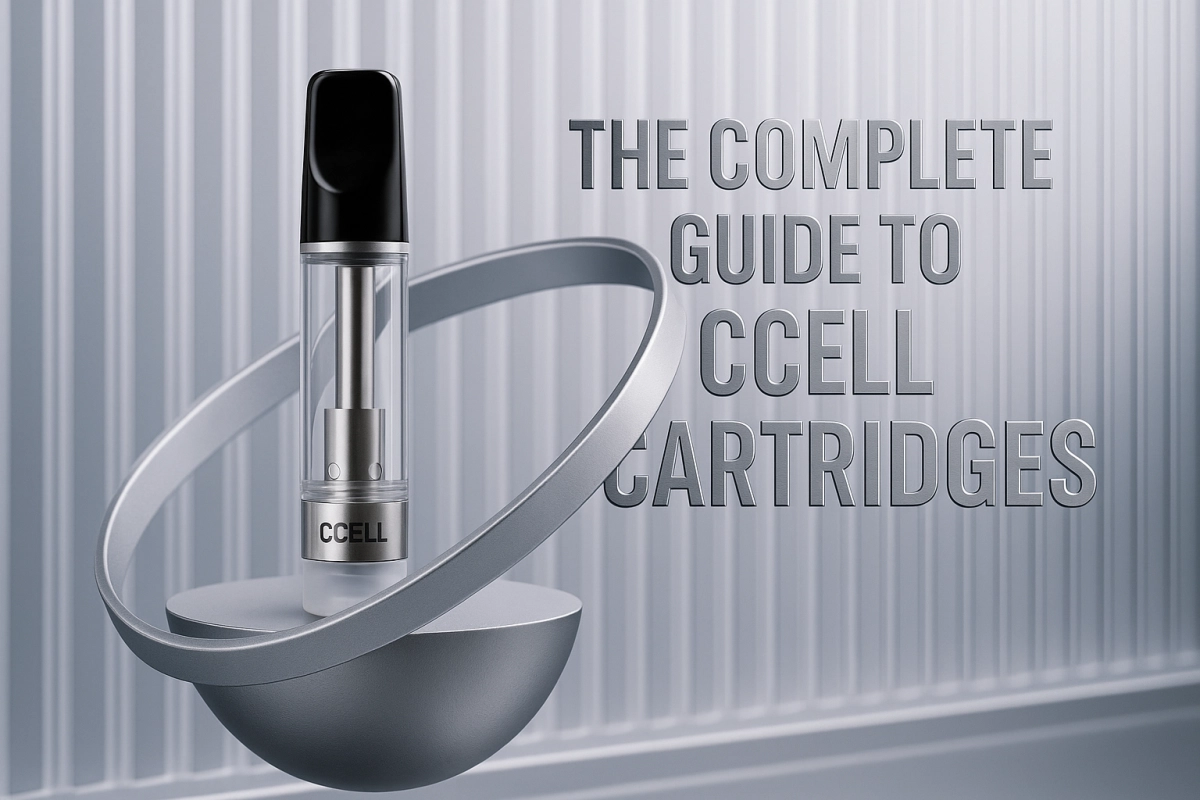
CCELL® Hardware · ToFu · Empty Cartridges Only
Scope. This guide is written for 21+ readers and licensed B2B teams who work with CCELL® cartridges or CCELL-style ceramic 510 carts. We focus on how a ccell cartridge is built, how to choose the right type for different oils, and what “best practices” look like at the filling and QA level. Vapehitech supplies empty hardware only and does not produce, fill, or sell any THC, CBD, nicotine, or other consumable oils. CCELL® is a registered trademark of its respective owner; usage here is for descriptive and compatibility purposes only, not for brand affiliation.
At Vapehitech, CCELL and CCELL-style SKUs live inside a broader empty hardware map. For brand owners who want to work directly with CCELL formats, start with our ccell cartridge overview and then zoom out to the full vape carts wholesale catalog. If your roadmap includes all-ceramic builds, the 510 ceramic cartridge family sits alongside classic 0.5 g and 1ml vape cartridge layouts and next-step 2000mg cartridges for 2 g formats, so your team can benchmark CCELL against other ceramic 510 options in one place.
1) Why CCELL cartridges matter for oil brands
Over the last decade, CCELL® has become a de-facto reference standard for ceramic 510 cartridges. When buyers say “ccell cartridge” in a sourcing meeting, they usually mean a specific combination of features: a sintered ceramic core, a 510 thread, a 0.5 ml or 1.0 ml tank, and a center post and housing that have been validated for use with high-viscosity oils.
From a brand point of view, CCELL cartridges are attractive because they are engineered to work with thick, terpene-rich oils and to stay stable over a full tank. CCELL’s porous ceramic wick and heating element are designed to absorb and vaporize viscous oil evenly, delivering consistent vapor without relying on traditional cotton wicks that can scorch or collapse under heavy use.
At the same time, CCELL has invested in safety upgrades, moving the core metal components in many cartridges to medical-grade 316L stainless steel and subjecting them to heavy-metal testing in regulated markets. This gives licensed producers and extractors a clearer baseline when they map out compliance and QA for their hardware layer.
For B2B buyers, the bottom line is simple. CCELL cartridges are not a magic bullet, but they give you a well-documented ceramic 510 platform with known volumes, resistance values, materials, and filling instructions. That makes it easier to design your oil, voltage, and packaging around a predictable hardware baseline instead of reinventing the wheel with every batch.
2) Inside a CCELL cartridge: ceramic, metals, and airflow
To use CCELL cartridges effectively, it helps to understand what is actually inside the metal and glass housing. At a high level, a modern ccell cartridge combines three core subsystems: the ceramic core, the metal center post and contacts, and the airflow and tank geometry.
Ceramic core and heating element
The heart of a CCELL cartridge is a sintered porous ceramic cylinder. Instead of using cotton as a wick, the oil travels through thousands of microscopic channels in the ceramic core and into the heating zone. The resistance wire is embedded in or wrapped around this ceramic, so the oil is heated evenly along the surface rather than at one small hotspot.
- Porous structure. The micro-channels in the ceramic wick help pull high-viscosity oils into the core without requiring aggressive preheating.
- Even heat distribution. By spreading the heating element along the ceramic, CCELL reduces the risk of localized scorching and improves consistency across puffs.
- Flavor and terpenes. Because the ceramic can operate in a low-to-moderate voltage range, many producers find they can preserve more terpenes and subtle flavor notes compared with older cotton-wick coils.
Metals and safety upgrades
For most of the industry, the center post and other wetted metal components are one of the main safety concerns. In response, CCELL has upgraded many cartridge lines so that the core metal components are made from medical-grade 316L stainless steel, a material widely used in medical devices, pharmaceutical equipment, and food processing equipment because of its corrosion resistance and stability at elevated temperatures.
CCELL and licensed partners in regulated markets also emphasize heavy-metal testing for cartridges, verifying that finished devices stay under strict state limits for lead and other metals before they are paired with oil. For brands, this does not eliminate the need for in-house validation, but it does mean you are starting from a hardware platform that has already been tested against specific thresholds.
Tank, airflow, and 510 connection
Most CCELL cartridges used in oil programs share a few structural traits:
- Tank volumes. Common formats include 0.5 ml and 1.0 ml tanks, typically in a 10.5 mm outer diameter body that matches many standard 510 batteries.
- Shell materials. High-end models use borosilicate glass for the tank, sometimes paired with polymer (such as PCTG) in specific product families.
- 510 thread. A standard 510 thread allows the ccell cartridge to interface with a wide range of stick batteries, compact 510 mods, and integrated 510 devices.
- Aperture design. Intake hole diameters and counts are tuned for thick oils, often around multi-port configurations that meter flow without flooding.
For a filling lab or brand operations team, these details matter. They determine which batteries you can pair with a given CCELL cartridge, how viscous your oil can be, and how much headspace you should leave above the oil line during filling.
3) Main CCELL cartridge types and sizes
CCELL’s catalog evolves frequently, but most oil brands encounter CCELL cartridges through a few core device families. You do not need to memorize every product code, but you should understand the main size and material options and what they imply for your oil and packaging.
0.5 g (0.5 ml) vs 1 g (1.0 ml) CCELL cartridges
The classic CCELL form factor is a slim 510 cartridge with either a 0.5 ml or a 1.0 ml tank. Both share similar ceramic technology and center-post materials, but they are positioned for slightly different use cases:
- 0.5 ml / 0.5 g. Compact, popular in markets that favor smaller trial sizes or premium SKUs with high price per gram. Easier to finish before flavor changes or oxidation become an issue.
- 1.0 ml / 1 g. The workhorse format in many regions, providing better value per milliliter and fewer cartridge changes for frequent users.
Most brands treat 0.5 g and 1.0 g CCELL cartridges as interchangeable from an oil-formulation standpoint, but they differ in shipping weight, packaging real estate, and how quickly customers will go through each cart.
Glass vs polymer tanks
CCELL offers cartridges with full borosilicate glass shells and others that use high-grade, chemically resistant polymers for the tank body. As you compare options, consider:
- Glass tanks. Excellent chemical resistance and premium feel; often paired with metal and ceramic mouthpieces.
- Polymer tanks. Lighter weight and more impact-resistant; suitable for certain oil types when made from high-quality materials rated for contact with cannabis oils.
For terpene-heavy or more experimental formulations, many brands still favor glass-shelled CCELL cartridges because they minimize interaction with the oil. Polymer-shell cartridges can still be appropriate when they come with robust test data and clear material specifications.
Standard 510 carts vs pods and disposables
Although this guide focuses on the ccell cartridge as a 510-threaded cart, CCELL also manufactures pod systems and disposable AIO devices. The underlying ceramic technology is similar, but the form factor and airflow layouts differ. For many B2B programs, a 510 cartridge remains the most flexible choice because it can be paired with multiple battery SKUs and integrated into existing packaging and point-of-sale systems.
4) How to spec a CCELL cartridge for your oil
Choosing a CCELL cartridge is not only a design decision; it is a process decision. You want a hardware spec that fits your oil’s viscosity, your customers’ expectations, and your production line’s capabilities.
Match cartridge type to oil viscosity
CCELL cartridges are engineered for thick oils, but not all formulations behave the same. When you build your spec sheet, document:
- Oil type. Distillate, live resin, rosin, blend, or CBD-dominant oil each have different viscosity profiles.
- Terpene percentage. High terpene content can thin the oil; low terpene content may create a thicker, slower-moving oil.
- Target operating temperature. Some oils need slightly higher temperatures to atomize efficiently; others are sensitive to heat and perform better at the low end of the voltage range.
Work with your lab team to validate that the chosen CCELL cartridge, with its specific aperture size and ceramic core, can handle your oil at room temperature and under realistic consumer usage patterns.
Voltage and power ranges
A ccell cartridge is only half of the equation; the battery matters just as much. CCELL and partner guides consistently highlight a 2.5–3.5 V window as a balanced operating range for many THC and live-resin carts, with the lower end (around 2.5–2.8 V) favored for smooth, terpene-forward sessions and the mid range (up to ~3.3 V) used when denser vapor is required.
For B2B brands, the practical takeaway is to:
- Standardize on a narrow recommended voltage range for each oil + cartridge pairing.
- Validate that your chosen batteries can hold that range consistently under load.
- Include clear voltage guidance in any branded battery or kit packaging.
Capacity, pricing, and portfolio logic
Finally, think about how the CCELL cartridge will sit inside your product portfolio:
- 0.5 g vs 1 g pricing. Smaller carts can carry a higher price per gram and reduce exposure if a formulation is still evolving.
- Cross-compatibility. Reusing the same ccell cartridge type across multiple SKUs simplifies sourcing and QA.
- Step-up formats. As your program grows, you may introduce larger 1 ml / 1 g carts alongside higher-capacity disposables that use different hardware families.
Document all of this into a simple internal spec sheet for each CCELL-based SKU: cartridge code, volume, oil type, target voltage, and any filling or storage limits.
5) Best practices for filling and using CCELL cartridges
Because CCELL publishes clear filling and usage guidance, B2B teams can build reliable SOPs instead of guessing. The details vary by exact model, but most ccell cartridge programs follow a similar pattern.
Filling: technique and headspace
- Use the correct fill port. For refillable CCELL cartridges with removable mouthpieces, oil should be dispensed into the space between the center chimney and the outer wall of the tank—not into the center airway.
- Fill to 80–90% of rated volume. For 0.5 ml and 1.0 ml CCELL cartridges, many suppliers recommend filling slightly below the maximum to allow for thermal expansion and to reduce leak risk.
- Control oil temperature. Warming the oil gently into a recommended temperature band makes it easier to fill without creating bubbles, but excessive heat can damage terpenes and destabilize the formulation.
- Check torque and seals. For screw-on or press-fit mouthpieces, torque and alignment should be part of your QA checklist to prevent micro-leaks and contamination.
Priming and first use
Whether you fill in-house or work with a toll processor, priming is critical for ceramic cartridges:
- Allow freshly filled carts to stand upright for a dwell time (commonly up to 20–30 minutes) so oil can fully saturate the ceramic core.
- Before activating the heater, take several gentle, unpowered pulls to draw oil into the wick and eliminate dry spots.
- For branded batteries, consider including a low-voltage “first session” recommendation to minimize the risk of burning the ceramic before it is fully wetted.
Common failure modes and how to reduce them
Even with high-quality hardware, failures happen. The most common issues with CCELL and CCELL-style cartridges include:
- Dry hits and burnt taste. Often tied to insufficient priming, excessively high voltage, or oils that are too thick to move through the ceramic at normal room temperature.
- Leaks and seepage. Can result from overfilling, filling into the wrong port, extreme temperature cycling, or damaged seals.
- Clogging and restricted airflow. More likely with very viscous or high-sugar oils, or if carts are stored horizontally for long periods.
An effective QA program will tie each failure mode back to specific preventive controls: fill volume checks, oil viscosity windows, torque checks for mouthpieces, and incoming inspection of the ccell cartridge lots themselves.
6) Genuine CCELL vs “CCELL-style” cartridges
Because CCELL has become a reference brand, the market is full of products described as “CCELL-style” or even mislabeled as CCELL when they are not. For B2B buyers, it is important to draw a clear line between genuine CCELL cartridges and generic ceramic 510 carts.
What CCELL says about its own role
CCELL’s public materials emphasize that the company only manufactures cartridges and atomizers. CCELL does not fill them with oil or distribute finished THC or CBD products. That means any cart that arrives pre-filled has passed through someone else’s supply chain and QA system, even if the hardware inside is genuine CCELL.
Signals of genuine CCELL hardware
While specific authentication flows may change over time, genuine CCELL cartridges and pods are typically associated with:
- Traceable product codes and packaging that match CCELL’s catalog and documentation.
- Consistent machining quality, glass clarity, and branding on the metal band or base.
- Availability through authorized distributors and brand partners rather than anonymous marketplaces.
How to think about “CCELL-style” cartridges
Many manufacturers now produce ceramic-core 510 cartridges that use design patterns similar to CCELL’s. Some of these CCELL-compatible or CCELL-style carts are high quality; others are not. Instead of treating the label at face value, qualify them as you would any other hardware:
- Request detailed material declarations (metals, glass, polymers, seals).
- Ask for heavy-metal and extractables/leachables test data where applicable.
- Run your own AQL sampling and bench tests for leakage, resistance, and power handling.
In other words, “CCELL-style” is not a guarantee of performance. It is simply a hint about the general architecture. Your sourcing and QA processes should do the rest.
7) Where empty CCELL-compatible hardware fits into your program
From a program-design standpoint, CCELL technology is one layer in a larger system that includes formulation, lab testing, packaging, and distribution. For many brands, the most resilient approach is to treat CCELL and CCELL-compatible cartridges as part of a modular empty-hardware library rather than as one-off SKUs.
Build a small, validated hardware library
- Select a handful of primary ccell cartridge formats (for example, 0.5 ml glass, 1.0 ml glass, and one full-ceramic 510 option) that cover 80–90% of your oil lineup.
- Fully qualify those formats: incoming inspections, filling trials at different viscosities, voltage stress tests, and shelf-life checks under realistic storage conditions.
- Document everything into internal SOPs and checklists that your production and QA teams can repeat without reinventing their workflow on every launch.
Separate hardware risk from oil and branding risk
Because CCELL only sells empty hardware, brands and licensed processors remain responsible for oil formulation, potency, and compliance. For a B2B hardware partner such as Vapehitech, the focus is similarly narrow: sourcing and supplying empty CCELL and CCELL-compatible cartridges that meet your specifications and can be slotted into your existing compliance framework.
Keeping that separation clear—hardware as components, oil and branding as your domain—makes it easier to demonstrate to regulators, investors, and customers that your organization understands where each risk sits and how it is managed.
Plan for growth beyond a single cartridge type
Even if you start with one hero ccell cartridge, your program will probably expand quickly. Over time, you may add higher-capacity disposables, full-ceramic 510 carts for more delicate oils, or 2 g / 2000 mg formats. Treat this as a roadmap, not a surprise: build your data and SOPs so they can scale from your first CCELL-based SKUs to a multi-format portfolio.
8) FAQ & next steps
Does using a CCELL cartridge automatically make a product safe?
No hardware choice can guarantee safety on its own. A ccell cartridge with upgraded materials and a strong heavy-metal testing record is a better starting point than an unknown clone, but oil formulation, lab testing, packaging, and distribution channels all have to meet or exceed your local regulations.
What voltage should we recommend for customers using CCELL cartridges?
There is no single “correct” voltage, but many producers and CCELL’s own educational resources converge on a 2.5–3.5 V window for THC carts, with live resin often performing best around 2.5–3.3 V. In practice, the best approach is to validate a voltage range for each oil and then publish those recommendations on your packaging and branded batteries.
Can we refill CCELL cartridges multiple times?
Some CCELL models are designed to be filled and capped once, then treated as single-use; others can be opened and refilled when handled with care. From a regulated-market perspective, most brands treat CCELL 510 cartridges as single-fill, single-use packaging tied to a specific lab-tested batch, even when a device is physically refillable.
How can we incorporate CCELL and CCELL-style carts into our sourcing strategy?
Start by defining your ideal hardware library in terms of volume, materials, and target voltage ranges. Then work with hardware partners who can supply genuine CCELL cartridges where required and high-quality CCELL-compatible ceramic 510 carts where flexibility or price sensitivity matter more. Tie every addition to that library back to a written AQL plan and a documented set of bench tests.
Disclaimer: This article is for B2B hardware and packaging education only. It does not provide medical or legal advice, does not endorse any specific oil formulation, and does not promote the use of controlled substances. Always consult local regulations and qualified counsel when designing your products and compliance strategy.

3 Comments
Looks interesting.
Thanks for the info!
Really like this!