
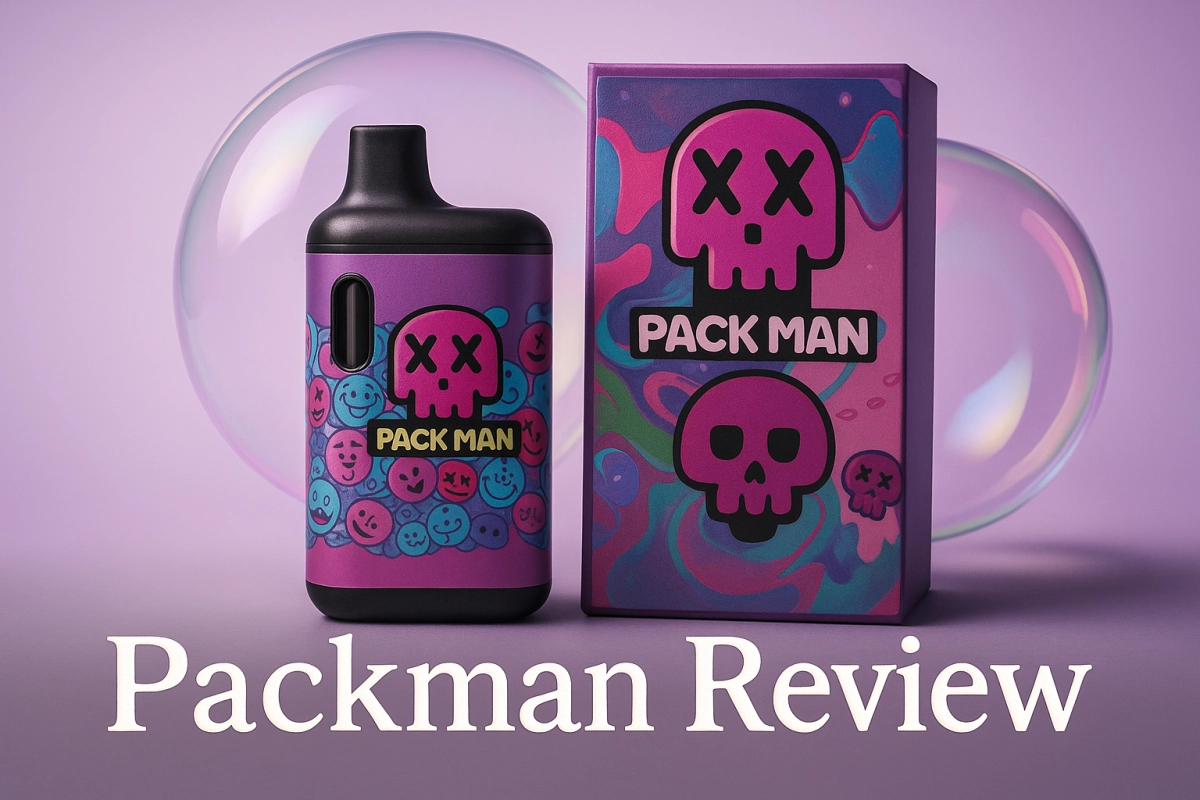
This article is written for B2B teams sourcing empty Packman-style disposable hardware only. If your brand architecture leans on the Packman silhouette, use this page to evaluate performance, QC, documentation, and total cost—without hype or unverified claims.
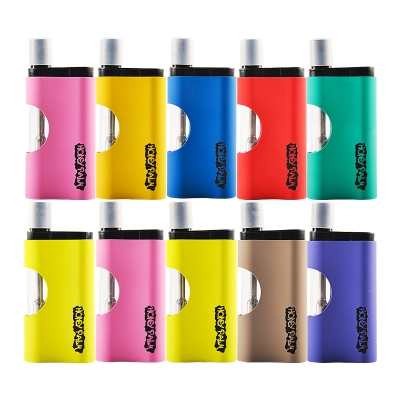
For many buyers, “Packman” has become shorthand for a compact, squared disposable profile that consumers recognize instantly. For procurement, what matters is not the cartoon silhouette—it is whether the hardware platform behind that shell is stable, documented, and scalable.
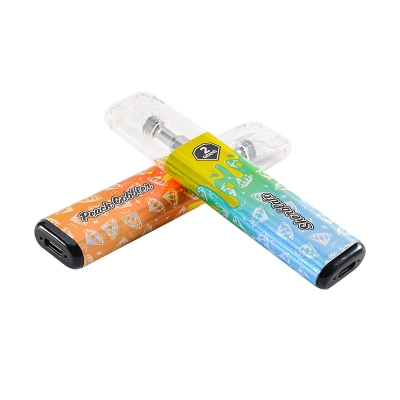
On Vapehitech, the curated packman lineup is positioned as structured, spec-driven shells for compliant operators: defined capacities, repeatable filling behavior, and room for clean labeling. Use this review as a technical filter before you commit real volume.
1) Hardware architecture: what “good” Packman performance looks like
Recommended baseline for serious 1–2 g programs
- Capacity: 1 g and 2 g (≈1–2 ml) variants with disclosed tolerances.
- Ceramic core: porous coil typically in the 1.2–1.6 Ω range to support thick formulations with controlled power.
- Oil inlets: multi-port layout (e.g. 4 ports in the 1.5–1.8 mm class) to prevent both starvation and flooding on viscous oils.
- Battery: ~280–400 mAh with overcharge, over-discharge, and short-circuit protection for full-tank completion.
- Activation: responsive draw-activation with consistent ramp; no “light on, no vapor” lag when filled correctly.
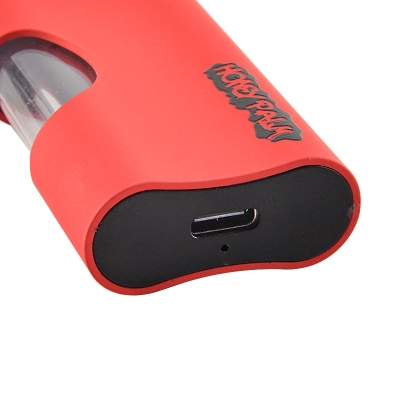
- Charging: modern Type-C modules for 2 g programs; secure connector design to limit port damage in logistics.
Why these ranges matter
At 1–2 g, undersized intakes, unstable resistance, or weak cells multiply into dry hits, leaks, early returns, and compliance risk. A mature Packman-style shell locks in geometry and firmware that:
- keeps coil wetting predictable across flavors and formulations,
- limits thermal stress on oils and housing,
- reduces variance between lots so your SOPs and automation do not need constant re-tuning.
Practical step: always run pilot fills with your thickest formulation across a real timeline (fill → cure → transport → shelf) before signing long-term Packman allocations.
2) 1 g vs 2 g: positioning inside your Packman stack
From a buyer’s perspective, “Which Packman should I standardize on?” is a capacity and margin question:
- 1 g Packman: better for conservative markets, trial runs, tighter price points, and channels that favor smaller tickets.
- 2 g Packman: better for mature markets where users accept higher unit pricing in exchange for fewer purchases and longer use cycles.
Treat capacity as a structured cluster instead of mixing everything on one SKU sheet: reference your 2 g-focused assortment via pacman 2g and your 1 g-focused options via packman 1g when modeling retail ladders, margins, and inventory.
As a rule: lock one Packman geometry per capacity per market; avoid silent mid-season changes in molds or chipsets that break your automation or labels.
3) Documentation pack: performance is meaningless without paperwork
Any Packman-style proposal that claims “premium” pricing must ship with verifiable compliance and safety support. For licensed operations, the minimum expectation includes:
- A UN 38.3 lithium battery test summary for the exact cell/pack, traceable to the manufacturer and aligned with current PHMSA/UN guidance (test summary overview).
- Design aligned with UL 8139-style principles for ENDS electrical systems (UL 8139 context), covering wiring, protections, and heating controls.
- Evidence referencing IEC 62133-2-type battery safety expectations for portable lithium cells (IEC 62133-2 outline).
- Material & heavy metal reports for coil, center tube, solder joints, and mouthpiece from accredited labs; ideally with documentation suitable for REACH/RoHS style assessments (REACH basics).
- Consistent lot coding across master carton, inner box, and device to support recalls, audits, and inventory rotations.
Request PDFs with report numbers, issuing labs, and dates—not cropped screenshots. If a Packman-style offer cannot provide this within 24–48 hours, treat it as a sourcing risk, regardless of how attractive the shell looks.
4) Value and ROI: where Packman pays off
From a BoFu viewpoint, Packman-style hardware wins or loses on total landed cost per successful unit, not on unit quote alone. Patterns we see across stable programs:
- Lower functional reject rates: mature Packman geometries reduce DOA, clog, and leak rates when paired with verified coils and batteries.
- Predictable automation: consistent dimensions work better with trays, jigs, and semi-auto fillers, lowering labor and damage.
- Brand leverage: the familiar profile supports fast shelf recognition while leaving enough canvas for your own compliant branding.
If you need a deeper teardown before finalizing your 2 g decision, use the Packman 2g review as a companion: it focuses on unboxing, bench tests, and whether the 2 g format justifies its premium in real operations.
5) 30-unit acceptance test your team can run in-house
Before scaling any Packman supply, run a short incoming QC on each lot. A simple 30-unit protocol catches most issues:
| Check | Sample Size | Target / Threshold | What It Confirms |
|---|---|---|---|
| Dead-on-arrival (no activation) | 30 units | ≤ 1 failure (< 3.3%) | Assembly, battery protection, and chipset integrity. |
| Visible leakage | 30 units after 48 h @ 23–25 °C | 0 leaking units | Seal design and torque consistency. |
| Draw resistance spread | 30 units on fixed-flow rig | CV% ≤ 10% | Uniform airflow and user experience. |
| Activation delay | 30 units | 100% fire within 1–2 s | Reliable sensor response and firmware. |
Keep these records with lot IDs. Over time, they form a data-backed supplier scorecard and justify premium or downgrade decisions.
6) Logistics & sourcing: keeping Packman decisions low-risk
- Regional stock vs ex-factory: near-market stock can raise unit price but cuts lead-time volatility and customs exposure.
- Locked configuration: require written notice for any change in molds, chipsets, batteries, or intake geometry.
- Packaging readiness: design cartons with reserved zones for local warnings, excise labels, and track & trace IDs.
- Structured communication: one point of contact for specs, COAs, and logistics reduces error risk across teams.
When these points are aligned, Packman-style shells stop being a “trendy shape” and become a stable platform you can roll out across multiple SKUs and regions with confidence.







3 Comments
Nice work, keep it up!
This helped me understand the topic better.
Very interesting read, thanks for sharing.