
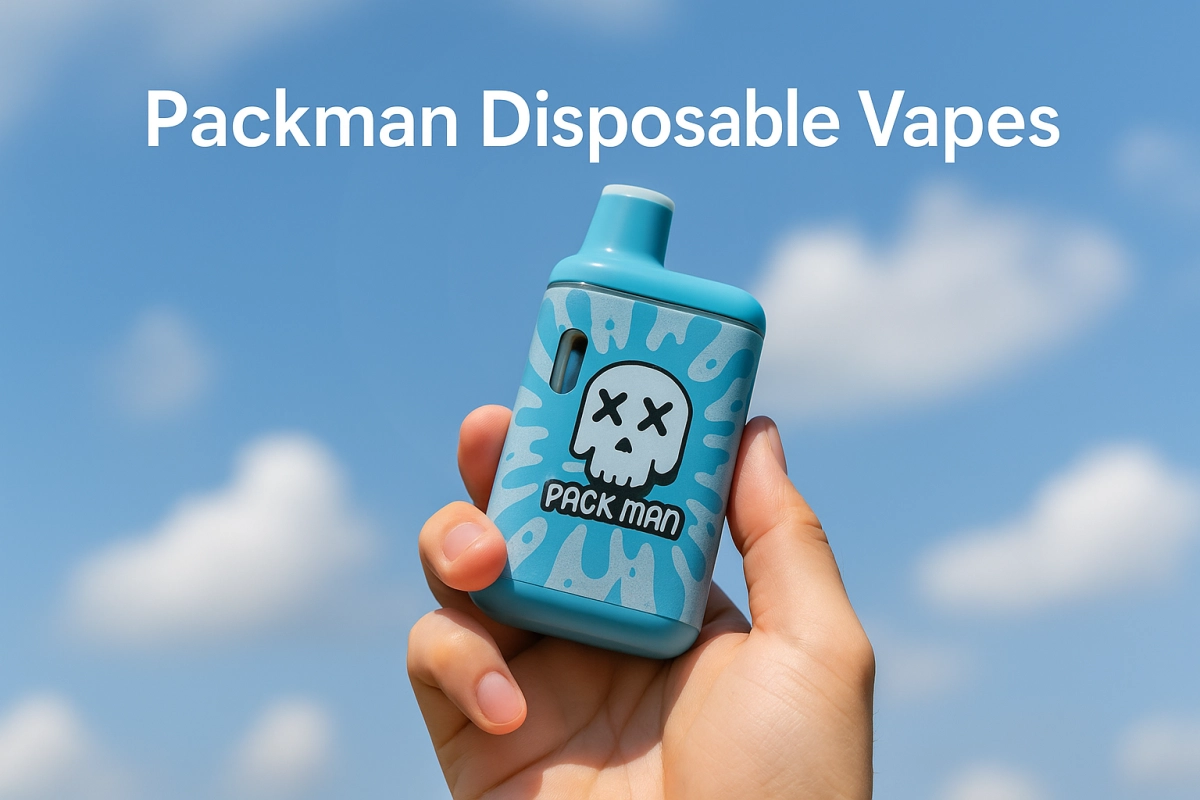
Packman Disposable Vapes: A Comprehensive Buyer’s Guide
This guide helps buyers choose the right Packman disposable configuration—capacity/runtime, coil & battery behavior, and whether a simple or screened UI fits your use case—then closes with documents to request from suppliers and a lightweight test protocol to validate samples.
How to Use This Guide
Start with the series overview to confirm naming and availability, then browse the disposable catalog for current shells and finishes. Use the 2-gram section to assess runtime trade-offs, and check our two model picks to see which UI and cost profile matches your fleet.
Series hub: Packman lineup hub
Form Factor & Build
Shell, finish & tolerances
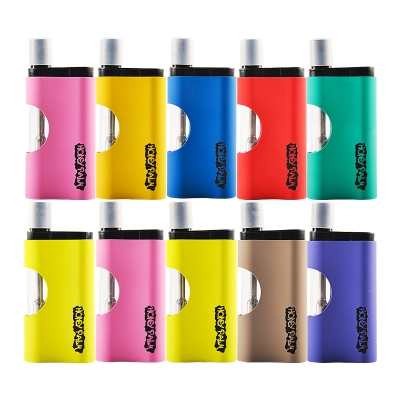
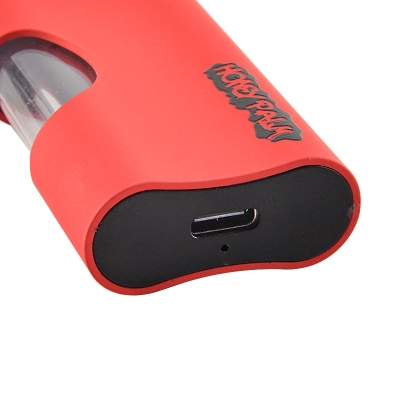
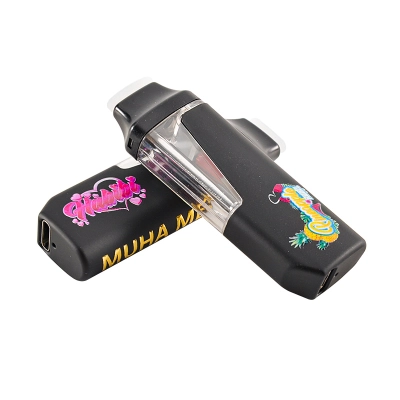
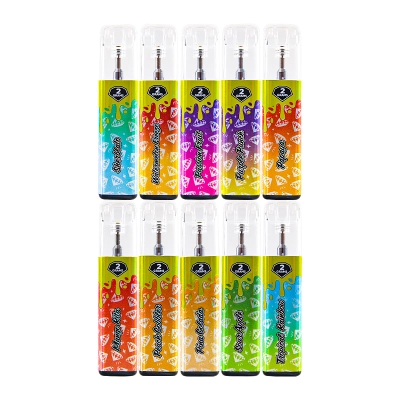
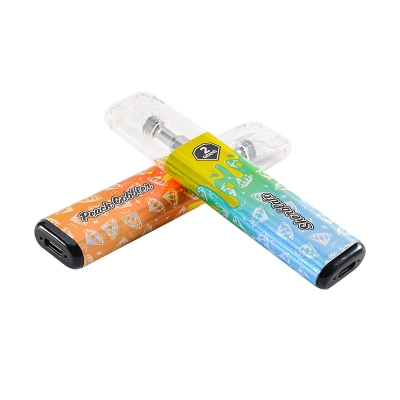
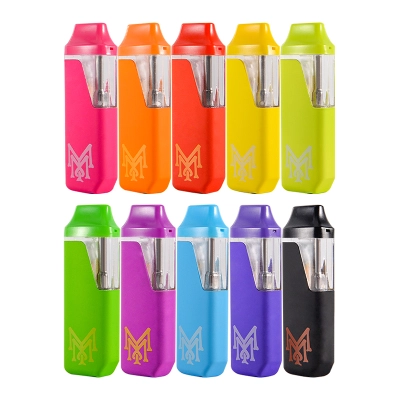
Recent lots exhibit even seams, consistent paint, and snug mouthpiece fit. USB-C ports sit flush; connector wobble is minimal under normal handling.
- Airflow: mid-tight; comfortable for daily use.
- Condensation: mouthpiece geometry redirects micro-condensation away from lips.
Family & variants
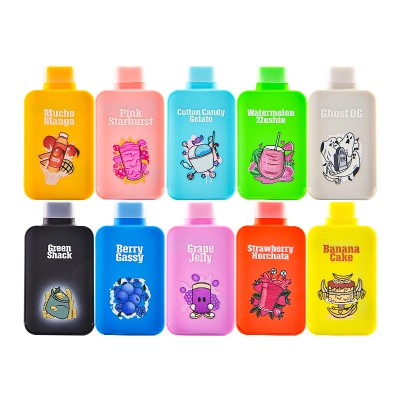
“Disposable” spans simple indicator versions and LED-screen models with battery/puff readouts. Capacity labels (e.g., 2g) denote nominal fill mass.
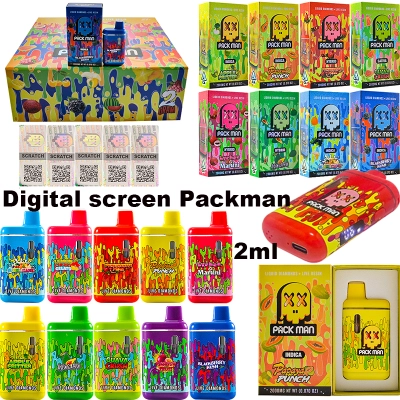
Browse the family: Packman disposable catalog
Capacity & Runtime (1g vs 2g)
Two-gram formats reduce interruptions and handling at scale but add weight and may require tighter seal/QC. Runtime still depends on formulation viscosity, coil efficiency, and user behavior (draw length/frequency).
Fewer with 2g
Lower with 2g
Higher with 2g
| Aspect | 1g | 2g |
|---|---|---|
| Weight/feel | Lighter | Heavier, longer runtime |
| Charge interruptions | More frequent | Less frequent |
| Seal & airflow demands | Standard tolerance | Tighter preferred |
| SKU efficiency | More units per period | Fewer units; longer service life |
Capacity-focused collection: 2-gram Packman options (capacity & runtime)
Screened vs Non-screened Models
LED screens improve usability (charge visibility, sometimes puff count) but do not inherently change thermal performance—driven by coil, airflow, and formulation. If your fleet relies on predictable charging, screened units reduce guesswork and support better rotation discipline.
- Indicators: battery steps are easy to parse; treat puff counters as convenience estimates.
- Durability: screen windows add a minor ingress risk under abuse; normal use is stable.
- Charging: confirm protection IC for over-charge/short-circuit safeguards.
Recommendations (V7 / V6)
Pick 1 — Packman V7 (screened, 2g)
Best for: retail visibility, clear UI, seasonal finishes.
- Readable icons; steady battery steps; USB-C top-up
- Refined trim; strong shelf differentiation
Pick 2 — Packman V6 (screened, 2g)
Best for: cost-controlled fleets standardizing on a proven baseline.
- Simple screen; predictable charge indication
- Conservative trim; easy to keep in stock
| Aspect | V7 (recent) | V6 (established) |
|---|---|---|
| UI/screen | Polished icons, clear steps | Simple battery steps |
| Shell/finish | Seasonal colorways | Classic finish |
| Charging | USB-C; confirm protection IC | USB-C; confirm protection IC |
| Best fit | Visual differentiation | Budget-sensitive fleets |
Pricing & Total Cost of Ownership
TCO depends on runtime per unit, failure/replacement rate, and handling steps. 2g formats reduce replacements and charge interruptions, which can offset higher unit cost. Ask suppliers for failure-rate snapshots over recent batches: DOA %, early clog %, charge-port defect %, and transit damage %.
- Key inputs: runtime per charge, charges per unit, DOA/RMA %, transit damage %, restocking cadence.
- SKU strategy: mix V7 (front-of-store) with V6 (budget lanes) to cover visibility and cost control.
Supplier Documents & Compliance Checklist
Examples below are informational (not legal advice). Requirements vary by region and change over time.
Core specs
- Exploded view/spec sheet (coil type & resistance, battery mAh, chamber design)
- Protection IC statement (over-charge / short-circuit)
- Charging guidance (USB-C, charge-through behavior)
- Screen behavior (if any): indicators, limits, reset logic
Compliance & logistics
- UN 38.3 test summary (cell/pack) for transport
- RoHS/REACH materials statements
- Wetted-parts heavy-metal screening (contact surfaces)
- ISTA-style handling notes (drop/temperature where applicable)
- Carton/SKU labels & MOQ policy
Download: buyer TCO & failure-rate capture template (CSV)
Use this to record sample results and supplier disclosures.
Sample Test Protocol (Lightweight)
This optional, repeatable protocol helps buyers validate samples without lab equipment. It does not evaluate health outcomes.
- Visual & fit: check seam uniformity, port seating, mouthpiece fit; note defects.
- Airflow consistency: take five short puffs per unit; confirm similar draw resistance across units.
- Ramp-up & flavor neutrality: after storage, confirm low first-hit harshness and absence of hardware aftertaste.
- Charge indicator behavior: partial charge → brief use → recharge cycle; confirm indicators recover predictably.
- Condensation handling: after consecutive puffs, inspect mouthpiece for pooling; wipe and recheck.
- Screen readability (if any): check at indoor light and near window glare.
- Documentation match: verify coil resistance (ohm), battery mAh, and protections match the spec sheet.
For transport and materials diligence, suppliers commonly reference UN 38.3, ISTA 1A/2A, RoHS/REACH, and lab work performed to ISO/IEC 17025 competence principles.
FAQ
Is “Packman” the same as the arcade character PAC-MAN?
No. Here “Packman” refers to vape hardware naming. PAC-MAN is a separate arcade IP owned by Bandai Namco Entertainment Inc.
Does a screen improve performance?
It improves usability (charge visibility, sometimes puff count). Thermal performance depends on coil, airflow, and formulation.
Which should I stock—V7 or V6?
V7 for visual differentiation and a polished UI; V6 for cost-controlled standardization. Many fleets stock both to serve different lanes.


2 Comments
Good read! Learned something new today.
Short, clear, and right to the point. I like it.