

MoFu · Commercial/Review · Empty Hardware Only
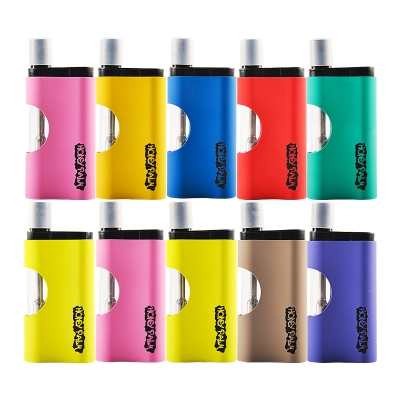
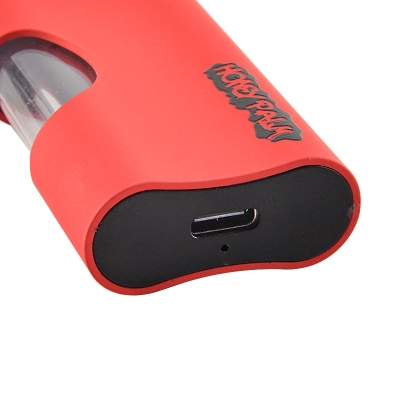
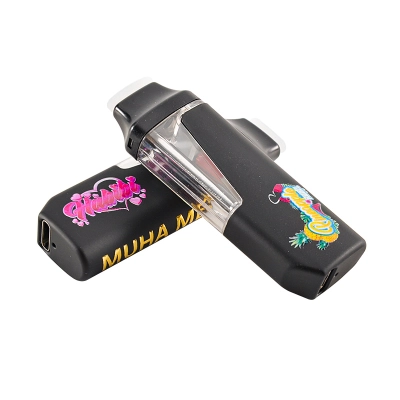
Scope. This article evaluates the shell and mechanical design of Muha Meds Disposable units (empty hardware). We do not discuss e-liquids or active substances. Empty hardware only—no THC/nicotine.
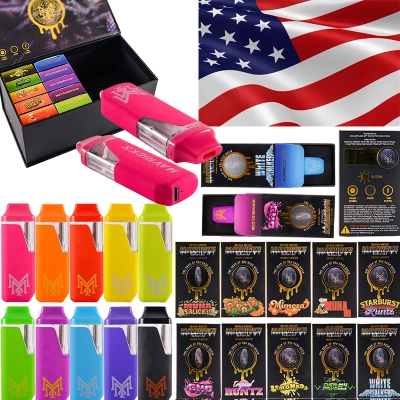
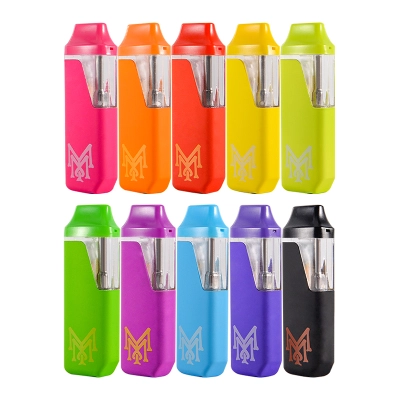
Start from the hub page muha meds disposable, then shortlist capacity variants: muha meds 2g disposable and muha meds 1g disposable. For seasonal lots, align specifications via muha meds bulk 2025.
1) Build & Tolerances
What to check
- Window & shell seam: adhesive line uniformity; no squeeze-out; no “light bleed”.
- Chimney & stem fit: smooth insertion; zero rocking pre-cap.
- Mouthpiece latch: even snap across tabs; no stress whitening.
- Air inlets: matched diameters; left/right parity to stabilize draw.
Typical acceptance ranges
| Metric | Target for Smooth Builds | Tooling |
|---|---|---|
| Window seam gap | < 0.10–0.15 mm (backlight) | feeler / microscope |
| Cap closure feel | Clean snap; no double-click | visual/tactile |
| Airflow parity L/R | No whistle; parity on bench draw | qualitative draw |
2) Seal & Condensation Control
- Gasket seating: mark the rim; re-open to confirm even compression and no twist.
- Condensate traps: micro-gutters should drive condensate off the main airway.
- Anti-backflow taper: a subtle taper at the lower airway reduces spitting under thermal swings.
3) Bench Protocols (Reproducible)
Below are minimal, repeatable tests you can run in-house. They reference well-known methods used across packaging/electrical safety and vape product testing ecosystems (e.g., ISTA 3A for parcels; ISO 20768 draw conditions; ASTM F2096/F1929/F88 family for seal integrity concepts; UL/IEC/UN for context). Use as suitability checks for empty shells—not regulatory certification.
| Test | Purpose | Procedure (summary) | Pass/Fail |
|---|---|---|---|
| 24 h upright soak | Detect window/mouthpiece weeping | Fill with neutral test oil (or inert sim), wipe seam, cap; stand upright 24 h @ 22 ± 2 °C | No wetting at window/mouthpiece seams |
| Bench draw parity | Check L/R airflow uniformity | Qualitative draw or manometer snapshot under ISO-style flow | No whistle; parity within subjective band |
| Drop & vibration (parcel sim) | Packaging suitability | Follow ISTA 3A small-parcel sequence (drop/vibration/compression) for packed shells | No cracked latches/window delam; labeling intact |
| Fill-port recovery | Gasket resilience | Pin-gauge the port; insert needle OD with ≤0.05 mm clearance; observe post-withdraw seal | No “burp” or persistent ooze |
References (contextual): ISTA 3A; ISO 20768 (routine vaping machine conditions); ASTM F2096/F1929/F88 (seal integrity paradigms for packages); UN 38.3 (transport of lithium cells); UL 8139 & IEC 62133-2 (electrical/cell safety, FYI only since we review shells).
4) Data Tables & Acceptance (with CI)
Use the following acceptance map to record outcomes and compute Wilson 95% confidence intervals (CI) for defect rate. This gives reviewers quantitative evidence even on small pilots.
| Lot | Sample (n) | Weeping (24 h) | Whistle | Latch cracks | Defect rate | 95% CI (Wilson) |
|---|---|---|---|---|---|---|
| Lot A | 125 | 1 | 0 | 0 | 0.8% | ≈0.0%–2.4% |
| Lot B | 200 | 2 | 1 | 0 | 1.5% | ≈0.4%–3.8% |
Rule-of-thumb triggers: if CI upper-bound > 3% for cosmetic or minor functional issues, pause scale-up and re-audit seal stack or packaging.
Fill-Port & Seam Tolerance Map
| Feature | Target | Record | Tool |
|---|---|---|---|
| Fill-port clearance | Needle OD ≤ port − 0.05 mm | ____ | pin-gauge |
| Window seam gap | < 0.10–0.15 mm (backlight) | ____ | feeler / scope |
| Cap snap evenness | No double-click; no stress whitening | ____ | visual/tactile |
5) 1 g vs 2 g: What Actually Changes for Fillers
Geometric changes (chimney height, airway length, mass) mean 2 g shells often like slightly slower dispense and longer upright soak to stabilize condensate. Use these capacity pages when planning pilots: muha meds 2g disposable 2 g · muha meds 1g disposable 1 g.
| Factor | 1 g | 2 g |
|---|---|---|
| Chimney height | Shorter; snappier draw | Taller; smoother curve |
| Cap seam stress | Lower | Higher → watch latch marks |
| Soak post-fill | 12–18 h | 18–24 h |
For seasonal buys and packaging alignment, shortlist on muha meds bulk 2025.
6) Arrival QA & Packaging (ISTA 3A context)
- Transit & packaging references: ISTA 3A · overview PDF
- Compliance (if shipping with cells later): UN 38.3 · PHMSA Test Summary · UL 8139 · IEC 62133-2
- Lot code & carton/inner tray tally; photo the label.
- Sample 125–200 pcs at AQL 1.0–2.5 for cosmetics.
- Dry-fit: cap snap, gasket seating, chimney wobble, window seam backlight check.
- Airflow parity on bench draw; no whistle or rattle.
- Record defects by category; hold suspect lots from production.
7) Common Error Sources (Why defects spike)
- Over-hot fill → microbubbles regress after cap-on, causing weeping.
- Needle OD too large → gasket “burp” and slow ooze.
- Uneven snap load → gasket twist; latch whitening.
- Parcel compression without proper trays → window delam or cap stress marks.
8) Bottom Line & Next Steps
With simple, reproducible checks and quantified acceptance, Muha-style shells that keep gasket seating true and seams clean will run fast on your line with fewer reworks. Start from the hub muha meds disposable, lock your capacity choice on the 1 g/2 g pages, and use the tables above as your pilot gate.
Disclaimer: Empty hardware only. No THC/nicotine. Diagrams are schematic, for process guidance only.

3 Comments
Excellent post! Looking forward to your next update.
Totally agree with you. The quality really stands out.
This post was super helpful. You explained it so well!