
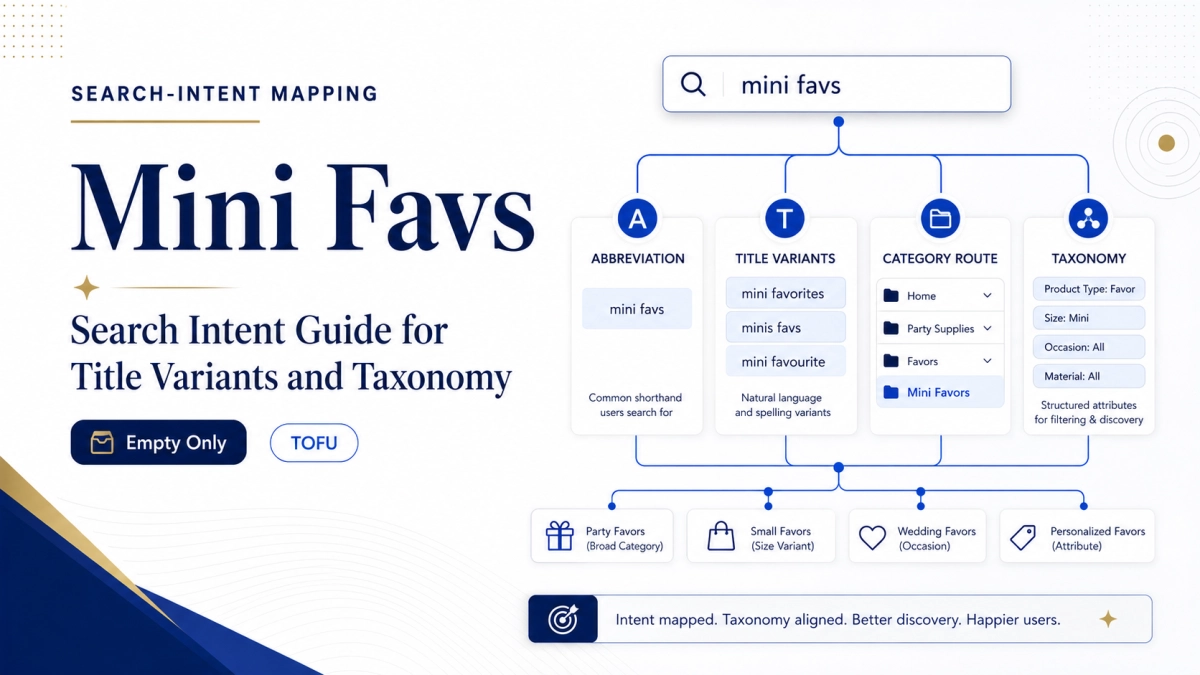
Scope: This brief is written for qualified wholesale catalog teams, SEO teams, content editors, and retail taxonomy owners reviewing empty only Favorite-related rows in markets where allowed. It explains how the shorthand query “mini favs” can be mapped to fuller title variants, category structure, internal links, and proof-led page wording. It does not cover filled material, formulas, filling steps, dosage claims, potency claims, medical claims, therapeutic claims, consumer use directions, or youth-facing messaging.
Why “mini favs” needs mapping
The phrase mini favs is a shorthand query. A user who searches it may not be asking for a single page title. They may be trying to find Mini Favorites, Favorites Minis, Favorite 2G Minis, or a compact Favorite-family row. That makes the phrase valuable for search-intent mapping, but risky if every page tries to target it in the same way.
The cleaner approach is to treat “mini favs” as the abbreviation layer, then map it to a controlled category route, selected product-title variants, and a small set of internal links. This helps buyers, editors, and search engines understand which page should own the shorthand query and which pages should support it.
The key idea
Let the category page own the shorthand. Let product pages support exact row examples. Let this article explain how the abbreviation, title variants, and taxonomy should stay aligned.
Quick answer
A Mini Favs Search Intent Brief should define “mini favs” as a shorthand query, map it to the broader Favorite category first, then explain how fuller title variants such as Favorites 2G Minis and Favorite mini 2g should be handled across H1s, product cards, filters, tags, and internal spreadsheets.
Primary intent
The query is likely shorthand for a Favorite mini-format family, not a full product title.
Main destination
The category page should receive the exact-match anchor and act as the pillar route.
Supporting rows
Product rows should be used only where they clarify title variants or taxonomy exclusions.
Cleanup goal
Reduce duplicate targeting, mixed naming, and unclear internal paths.
Search intent map
Search-intent mapping begins by separating what the user typed from what the site should show. “Mini favs” is short, informal, and ambiguous. It should not automatically become the H1 on every related page. Instead, it should be treated as a query label that points to the most helpful category-level destination.
| User query | Likely meaning | Best site route | Copy action |
|---|---|---|---|
| mini favs | Short form for Mini Favorites or Favorite mini-format rows. | Favorite category page. | Use once as the exact-match internal anchor. |
| mini favorites | Expanded shorthand with the same broad intent. | Category page plus selected row examples. | Use as a synonym in explanatory copy. |
| favorites minis | Phrase-order variant tied to a product-row name. | Relevant product row. | Use in title-variant discussion. |
| favorite mini 2g | Capacity-led title variant. | Specific product row. | Use when comparing title order and capitalization. |
| favorite 2g | Broader Favorite 2G family query. | Category route or non-mini row. | Do not merge fully with mini-favs intent. |
Abbreviation mapping
Abbreviations create SEO value when they are mapped, not when they are repeated. For this topic, “mini favs” should be documented as a shorthand query that points upward to the Favorite category and sideways to a small group of title variants.
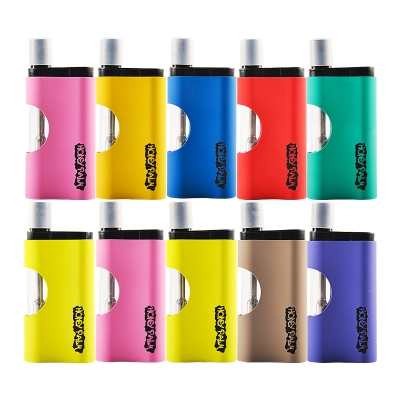
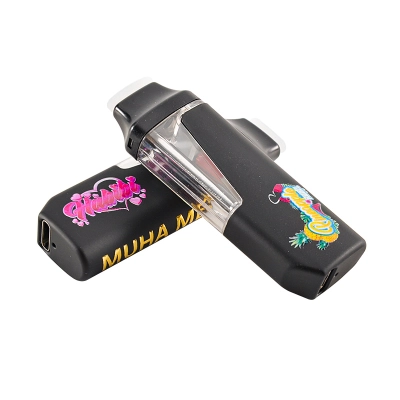
When the brief needs a fuller product-row example, use Favorites 2G Minis. This anchor is short, readable, and close enough to the shorthand query to help users understand the relationship between abbreviated search language and full catalog wording.
| Abbreviation layer | Expanded form | Where it belongs | Reason |
|---|---|---|---|
| mini favs | Mini Favorites. | Intro and search-intent map. | Defines the shorthand without overusing it. |
| favs | Favorites or Favorite family. | Taxonomy note. | Clarifies the family route. |
| 2g mini favs | Favorite 2G mini-format rows. | Variant comparison table. | Adds capacity context without making it the only route. |
| favorite mini | Favorite mini-format title variant. | Title variant cleanup. | Captures reordered wording. |
| favorites minis | Favorites 2G Minis row wording. | Product-row support. | Connects shorthand to a real title pattern. |
Mapping rule
Use the shorthand to explain search behavior. Use the full form to label rows. Use the category page to hold the pillar route.
Title variants
Google recommends clear, concise, and accurate titles that help users understand the page. For this brief, that means one page should not try to own every version of the phrase. Instead, each title variant should be assigned to a role: category route, product row, comparison row, or exclusion row.
Use Favorite mini 2g when explaining reordered title patterns. This keeps the article anchored in real site pages while avoiding overuse of the exact-match keyword.
| Title variant | Recommended role | Page-level action | Do not |
|---|---|---|---|
| Mini Favs | Search shorthand. | Use in this brief and as a synonym signal. | Use as every product title. |
| Mini Favorites | Expanded shorthand. | Use in explanatory copy. | Compete with the category route. |
| Favorites 2G Minis | Product-row phrase. | Use for a specific supporting row. | Make it the only canonical phrase. |
| Favorite mini 2g | Phrase-order variant. | Use in title cleanup and internal sheet mapping. | Mix capitalization randomly. |
| Favorite 2G small-screen row | Related but not the same intent. | Use as an exclusion or boundary example. | Let it absorb mini-favs intent. |
Internal taxonomy cleanup
Internal taxonomy cleanup is the process of deciding which pages should be grouped together, which terms should be treated as synonyms, and which terms should remain separate. For “mini favs,” the main cleanup task is to prevent shorthand, category, product-row, and related-row language from competing with each other.
A related but separate row, such as the Favorite 2G small-screen row, can help define the boundary. It belongs in the wider Favorite 2G family, but it should not become the primary destination for the mini-favs shorthand.
| Taxonomy layer | Recommended owner | What to clean | Outcome |
|---|---|---|---|
| Shorthand query | This search-intent brief. | Explain mini favs as an abbreviation. | Users understand the naming map. |
| Pillar route | Favorite category page. | Use the exact-match anchor once. | Clear internal authority signal. |
| Product row | Favorites 2G Minis row. | Use as a specific title example. | Reduced keyword overlap. |
| Phrase-order row | Favorite mini 2g row. | Document capitalization and order. | Cleaner catalog language. |
| Boundary row | Favorite 2G small-screen row. | Keep related-but-separate queries separate. | Better page targeting. |
Internal link plan
Internal links should be limited, specific, and spaced with context. The exact keyword should appear once as anchor text and should point to the category page. Supporting links should explain title variants, not create a sales-heavy path.
| Priority | Anchor text | Target page | Use in this article |
|---|---|---|---|
| 1 | mini favs | https://www.vapehitech.com/Favorite/ | Main exact-match anchor in the overview. |
| 2 | Favorites 2G Minis | https://www.vapehitech.com/USA-Stock-Favorites-2G-Minis-Disposable-Liquid-Diamond-Vape-Pen | Full title example in abbreviation mapping. |
| 3 | Favorite mini 2g | https://www.vapehitech.com/Favorites-2g-Minis-Liquid-Diamonds-Disposables-vape-pen-wholesale | Phrase-order example in title variants. |
| 4 | Favorite 2G small-screen row | https://www.vapehitech.com/New-Favorite-Disposable-with-small-screen-Vape-Pens-2G-wholesale | Boundary example in taxonomy cleanup. |
Anchor rule
Do not chain links together. Place each link inside a sentence that explains why the target page helps the reader.
Official references
Use external references to support search structure, links, title variants, product grouping, data identity, claim review, and qualified-retailer wording. These references help the article stay educational and proof-led.
| Reference area | How to use it | Source |
|---|---|---|
| Link and anchor guidance | Use when explaining why anchors should be descriptive, concise, and relevant. | Google link best practices |
| Search title guidance | Use when explaining why each title variant needs a clear page role. | Google title link best practices |
| SEO fundamentals | Use when discussing clear page titles, snippets, and search-result clarity. | Google SEO Starter Guide |
| Breadcrumb markup | Use when explaining category routes and page position inside the site. | breadcrumb structured data |
| Product variant grouping | Use when deciding which rows belong under a shared family and which differ by attributes. | ProductGroup variant structure |
| Product group vocabulary | Use when defining shared family fields and variant-determining fields. | ProductGroup vocabulary |
| SKU identity control | Use when deciding when a row needs separate identity treatment. | GTIN management standard |
| Retail compliance awareness | Use when keeping the brief focused on qualified retail teams and allowed-market review. | FDA retail compliance basics |
| Age-verification awareness | Use when explaining why the article should not be youth-facing. | Tobacco 21 age-verification guidance |
| Claim review | Use when removing unsupported promotional or outcome language. | truthful advertising guidance |
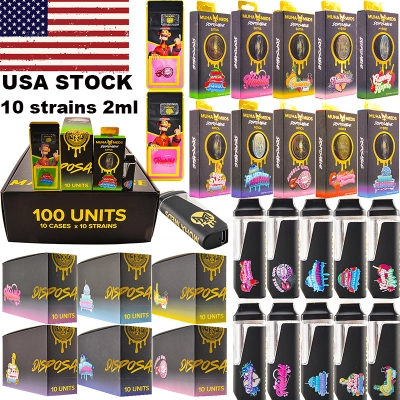
| Stock-route wording | Use when separating USA stock wording from origin claims. | U.S. origin claim guidance |
Cleanup checklist
Use this checklist before publishing a mini-favs search-intent article, category note, or supporting product-row copy. The goal is to make the abbreviation useful without letting it create duplicate targeting.
| Task | Question to answer | Recommended action | Risk if ignored |
|---|---|---|---|
| Assign the shorthand | Which page owns “mini favs”? | Map it to the Favorite category page. | Multiple pages compete for the same query. |
| Limit exact-match anchors | How many times is the exact anchor used? | Use it once in the article body. | Anchor text looks forced. |
| Separate row examples | Which product rows support the mapping? | Use only rows that clarify title variants or boundaries. | TOFU content becomes too sales-led. |
| Clean title variants | Are Favorite, Favorites, mini, Minis, 2G, and 2g used consistently? | Create one title-variant table and apply it to internal sheets. | Catalog teams publish mixed page titles. |
| Confirm empty only scope | Does the article stay within allowed page scope? | Discuss naming, taxonomy, links, and proof files only. | The page moves into restricted or unsupported claims. |
| Review external references | Do official references support the copy? | Use Google, Schema.org, GS1, FDA, and FTC references where relevant. | The article lacks trust signals. |
FAQ
What does mini favs mean in this brief?
It is treated as a shorthand search query for Mini Favorites or Favorite mini-format rows. The brief maps that shorthand to category, product-row, and title-variant logic.
Which page should receive the mini favs anchor?
The exact-match anchor should point to the Favorite category page because it is the broadest and most suitable pillar route for the abbreviation.
Should product rows also target mini favs?
They can support the topic, but they should not all target the same shorthand as their main phrase. Use product rows for fuller title variants and real row examples.
Why include a small-screen Favorite 2G row?
It helps define the boundary between a related Favorite 2G row and the mini-favs shorthand. Boundary examples prevent taxonomy overlap.
How many internal links should this article include?
Four internal links are enough: one category link using the exact keyword and three supporting product-row links for title variants and taxonomy boundaries.
Can this article include stronger sales language?
No. This is a TOFU search-intent mapping brief. It should explain abbreviation mapping, title variants, internal links, and taxonomy cleanup without aggressive selling.
What does empty only mean here?
Empty only means the article discusses catalog wording, page structure, and taxonomy planning for unfilled rows. It does not discuss filled material, formulas, filling steps, dosage, potency, medical claims, therapeutic claims, or consumer use directions.
Is this legal advice?
No. This is an educational content and taxonomy brief. Teams should seek qualified legal, tax, customs, trademark, labeling, and market-specific review before publication.
```
0 Comments