
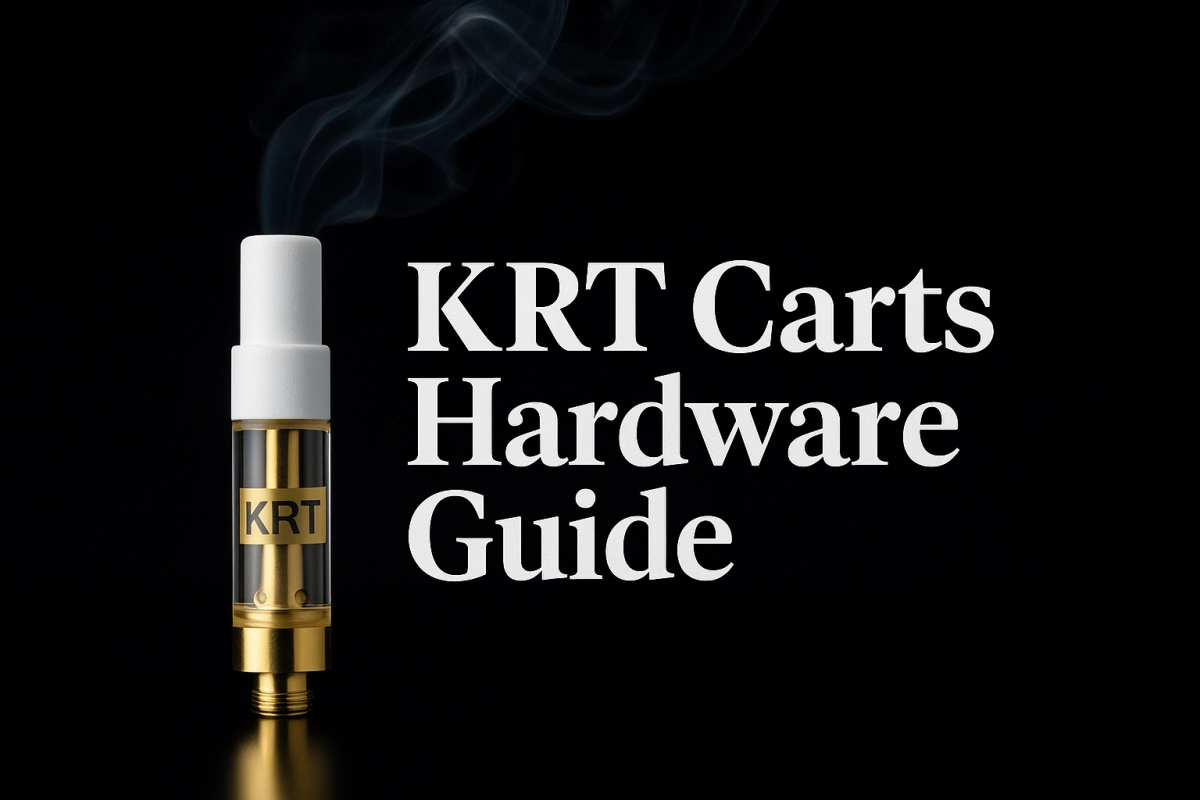
Brand & Cartridge Guides · MoFu · Empty Hardware Only
Scope. This article is written for 21+ readers and licensed B2B buyers who work with cannabis vape cartridges in legal markets. We focus on the cartridge hardware behind “KRT carts” — coil and tank design, quality standards, packaging and labeling expectations, and safety lessons from public-health data. Vapehitech supplies empty hardware only for licensed fillers. We do not sell or fill THC, CBD, nicotine, or any consumable oil, and we are not affiliated with KRT or any other finished-product brand.
At Vapehitech, KRT-style hardware is organized so your team can keep empty components, oil formulation, and branding decisions clearly separated. For a fast snapshot of compatible SKUs, start with krt carts. If you are benchmarking KRT against a broader program of empty cartridges, the vape carts wholesale hub shows your main 510 families. For ceramic-core builds, see our 510 ceramic cartridge lineup, and use the 1ml vape cartridge and 2000mg cartridges hubs when you structure 1 g vs. 2 g offerings.
1) What people mean when they say “KRT carts”
In most consumer conversations, “KRT carts” refers to branded, THC-containing cartridges sold under the KRT name in regulated or gray markets. What a buyer actually holds in their hand, though, is a combination of three layers:
- The oil and formulation — cannabinoid profile, terpenes, diluents or thickeners (if any), and contamination risk.
- The cartridge hardware — tank, coil, airway, seals, and metals in contact with the oil.
- The packaging and labeling — brand, batch ID, THC/CBD disclosure, warnings, and authenticity cues.
From a hardware supplier’s point of view, KRT-style carts are one specific way to package high-viscosity cannabis oil in a 510-format cartridge. The question for B2B teams is not just “Is this an official KRT cart?” but also “Does the underlying cartridge design, material stack, and QA program meet the standard we need for our brand and jurisdiction?”
Reminder. Nothing in this guide overrides local law. Always confirm your plans with your own legal and compliance teams and, where necessary, the regulators who license you.
2) Hardware anatomy of a premium THC cartridge
Different brands use different aesthetics, but most premium THC cartridges share a similar internal architecture. When you evaluate KRT-style hardware, you want to break the design down into a few critical blocks.
Ceramic heating element and wick
- Porous ceramic core. Modern THC carts commonly use a sintered ceramic core to wick oil to the heating coil. The pore structure and density control how quickly viscous oil can move without dry hits.
- Embedded coil. The resistance, alloy choice, and contact area of the coil influence ramp time and maximum power before degradation products appear.
- Thermal management. A cartridge that runs too hot can accelerate terpene breakdown and increase formation of unwanted byproducts; too cool and it may clog or flood. Many brands design their KRT-style carts to perform in a recommended voltage window and publish that range in consumer-facing FAQs.
Tank, airway, and seals
- Tank material. Glass and high-grade polymers such as PCTG are common. The tank must tolerate solvents, terpenes, and acidic components without leaching or cracking.
- Airflow path. The dimensions of the central chimney and intake apertures affect draw resistance, aerosol particle size, and leak behavior.
- Seals and gaskets. Food-contact elastomers must resist swelling in contact with oil and maintain a stable seal under transport, altitude changes, and repeated heating cycles.
Capacity and form factor
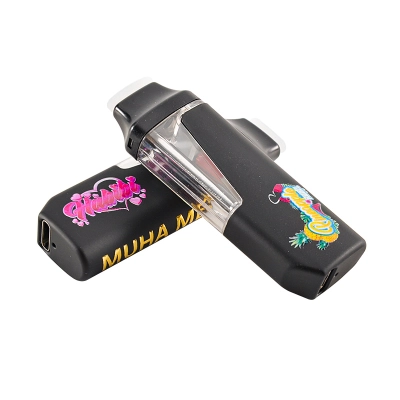
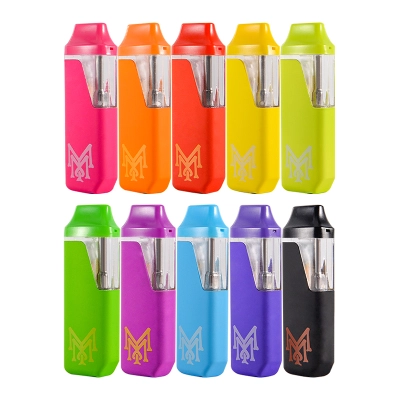
Most KRT-style products are built around a 0.8 g or 1 g format. From a hardware perspective, your decision is about stability and unit economics: larger tanks can reduce per-gram packaging costs, but they put more oil at risk if a batch fails QA or a hardware defect appears late.
For brands that want consistency across their lineup, it is common to standardize on one 1ml vape cartridge geometry and build flavor or strain variety around that, rather than managing multiple incompatible platforms. Heavy-use customers may also expect higher-capacity 2000mg cartridges in premium lines.
3) Authentic vs. fake KRT-style carts: packaging & COAs
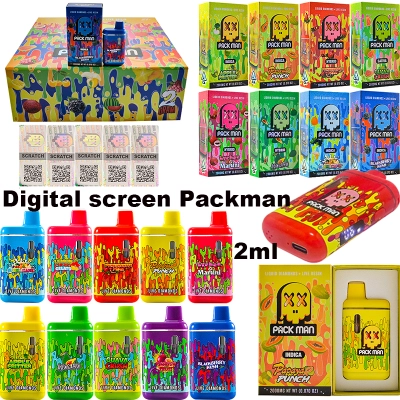
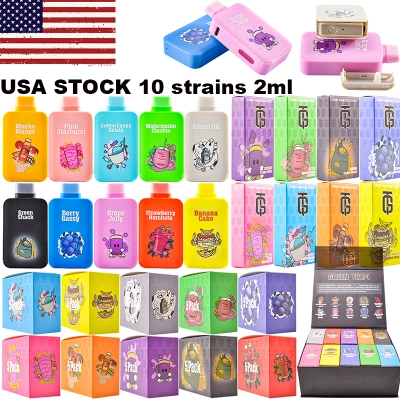
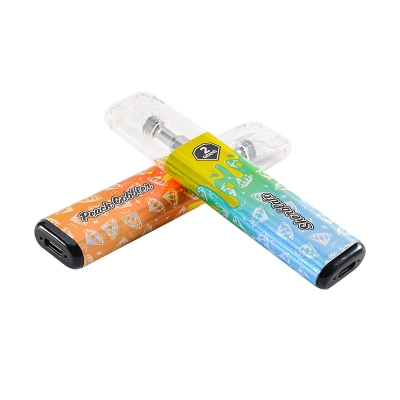
The KRT name appears on both licensed products and unregulated copycat carts. Across the cannabis industry, counterfeit packaging has become a major safety issue: boxes and pre-branded cartridges can be bought online and filled with untested oil, then sold as if they were official stock.
Regardless of brand, a legitimate, regulated THC cartridge should offer at least three layers of reassurance:
- Coherent packaging. Batch number, packaging date, license or manufacturer identification, and THC/CBD content are clearly printed, rather than vague slogans like “lab tested.” The California Department of Cannabis Control (DCC) lays this out in its labeling checklists for manufactured products and final-form items, which explain what must appear on each panel of compliant packaging.[A]
- Verifiable Certificates of Analysis (COAs). Lab results from an accredited laboratory, showing cannabinoid profile and contaminant screens (pesticides, residual solvents, heavy metals, microbials, and mycotoxins) for the specific batch. Many states publish lists of licensed laboratories and minimum testing panels.[B]
- Traceable supply chain. Products move through licensed distributors and retailers; invoices and manifests match the batch IDs on boxes and COAs.
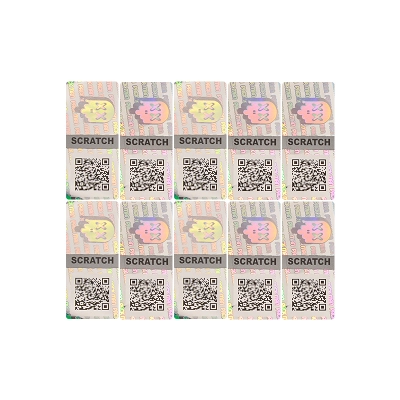
Fake carts typically fall down on one or more of these points: mismatched or missing batch data, unverifiable or obviously generic COAs, QR codes that resolve to unrelated websites, or oil that bears no relationship to the advertised potency or ingredients. Public-facing guides from consumer-protection–oriented retailers and trade publications have repeatedly documented these patterns in counterfeit THC carts.[C]
4) Safety lessons from EVALI and counterfeit carts
In 2019–2020, the United States experienced a large outbreak of e-cigarette, or vaping, product use–associated lung injury (EVALI). Analyses by the U.S. Centers for Disease Control and Prevention (CDC) and the Food and Drug Administration (FDA) found a strong association between EVALI cases and THC-containing cartridges sourced from informal channels, often containing the cutting agent vitamin E acetate.[D]
CDC investigators detected vitamin E acetate in the bronchoalveolar-lavage fluid of many EVALI patients while it was absent from healthy comparison samples, reinforcing the link between this additive and the outbreak.[E] The agency’s public-health advisories continue to warn against using THC vape products obtained from friends, dealers, or unregulated online sellers, and against adding vitamin E acetate or other unapproved substances to vape products.[F]
Critically, investigations did not show a single licensed hardware platform as the cause; instead, patterns pointed to illicit oils, unverified additives, and counterfeit packaging. Hardware still matters, but it cannot fix contaminated oil.
Implication for KRT-style programs. If your brand is considering a KRT-style flavor or aesthetic, your primary safety levers are:
- Vet oil suppliers rigorously and reject unverified cutting agents, especially vitamin E acetate or thickening agents not cleared for inhalation.
- Use accredited labs for comprehensive batch testing and keep COAs accessible via QR codes or short URLs.
- Lock in packaging and labeling that make counterfeiting harder and clear traceability easier.
- Avoid any involvement with gray-market redistribution that blurs the line between licensed and illicit channels.
5) Hardware safety: metals, materials, and testing
While EVALI was primarily linked to oil additives, hardware quality is still a central risk variable. Recent work has highlighted that some cannabis vape cartridges can leach nano-scale metal particles into oil and aerosols, including nickel, chromium, lead, and other metals of concern when devices are poorly engineered or manufactured.[G]
The American Chemical Society has also summarized findings that metal particles may be present in cannabis vape hardware and liquids even before first use, underscoring the importance of material choice and manufacturing controls.[H] State regulators have reacted by tightening heavy-metal limits in compliance testing, and some investigations have traced failures back to specific cartridge components and poor-quality alloys.[I]
When you evaluate KRT-style hardware, your QA checklist should include:
- Material declarations. Confirm which alloys and polymers are used in the center post, housing, and mouthpiece, and require documentation that they meet applicable food-contact or medical-grade standards.
- Independent heavy-metal testing. Test both empty cartridges and oil-filled units for metals such as lead, cadmium, arsenic, mercury, nickel, and chromium under your jurisdiction’s rules.
- Thermal and stress testing. Evaluate devices under realistic puffing regimens to confirm that seals, wicks, and metals remain stable over the intended life of the product.
- Supplier audits. Work only with manufacturers who can demonstrate process controls, including incoming material inspection and in-process QC sampling.
Using high-quality materials such as borosilicate glass and well-specified stainless steels helps reduce risk, but it does not replace structured testing. A written hardware-qualification protocol and acceptance criteria are key parts of a modern vape program.
6) How regulators look at vape cartridges and labels
Cannabis regulators increasingly treat vape cartridges as a convergence point of multiple risks: youth appeal, high THC potency, exposure to additives, and hardware-related contamination. As a result, packaging and labeling rules around vape carts are tightening in many jurisdictions.
Examples from California and other markets
- California DCC packaging rules. The California Department of Cannabis Control requires child-resistant, tamper-evident packaging, clear THC and CBD declarations per package and per serving, and standardized cannabis warning symbols on all retail units. These requirements are summarized in DCC’s packaging and labeling overview and in its detailed manufacturing and non-manufactured labeling checklists.[A]
- Labeling checklists as practical tools. DCC checklists for manufactured cannabis products in final form explain how to lay out primary and information panels and reference specific sections of Title 4, Division 19, Chapter 11 of the California Code of Regulations. Many brands use these checklists as internal QA documents when they design or refresh cartridge packaging.
- Other jurisdictions. States such as Massachusetts, as well as Health Canada, require THC/CBD content, batch identifiers, health warnings, and, in some cases, explicit statements about heavy-metal testing and recycling constraints on vaporizer cartridges.[B][J]
For KRT-style programs, you should assume that any new visual line — even if it is simply a different flavor panel on a familiar cartridge — will need packaging and labeling reviewed against the current rules of each market where you sell. Regulators regularly update guidance, so build “regulatory checks” into your product-refresh process rather than treating them as one-off exercises.
7) Usage & filling SOPs for brands and fillers
“Usage” has a different meaning for brands and fillers than for end consumers. On the operations side, the goal is to create cartridges that perform consistently and minimize returns and safety complaints.
Building a filling and curing SOP
- Oil prep. Establish standard operating procedures for oil preheating, mixing, and filtration so that viscosity and particulate levels stay within your hardware’s design window.
- Fill volume control. Use calibrated filling equipment to achieve consistent fill weights, leaving appropriate headspace to accommodate thermal expansion during transport.
- Curing time. After capping, allow filled KRT-style cartridges to sit horizontally for a defined curing period so oil can fully saturate the wick and equalize through all intake apertures before devices are shipped.
- Leak and function testing. Implement sampling plans that combine visual inspection, drop tests, and puff testing at recommended voltages to catch early hardware or process failures.
Downstream guidance for retailers and consumers
Although your primary audience is B2B, well-designed KRT-style programs also equip retailers and adult consumers with clear guidance:
- Recommend voltage or power ranges that avoid scorching oil.
- Explain the importance of buying only from licensed retailers, in line with public-health guidance that EVALI cases were heavily concentrated among users of THC carts from informal sources.[D]
- Encourage customers to look for batch numbers and QR links to COAs on packaging and to avoid any cartridges with damaged or suspicious packaging.
8) Where empty KRT-style carts fit into your risk boundary
From Vapehitech’s perspective, “KRT carts” is shorthand for a family of compatible cartridge shells. Our role is limited to supplying empty hardware that meets your engineering and compliance requirements. Brand owners and licensed fillers remain responsible for:
- Selecting compliant formulations and additives.
- Commissioning full-panel lab testing and acting on the results.
- Designing packaging and labeling that obey local laws and communicate risk clearly.
- Keeping products within licensed supply chains and away from youth and prohibited markets.
Treat empty KRT-style cartridges as one building block in a larger system that also includes oil, labs, legal counsel, and retail partners. A high-performing program is one where each block reinforces the others, rather than relying on hardware alone to compensate for upstream shortcuts.
9) FAQ & next steps
Do “KRT carts” automatically mean a product is safe?
No. A branded cart tells you very little by itself. Safety depends on the oil, the hardware materials and build quality, third-party testing, and whether the product comes through a licensed supply chain. Public-health data around EVALI highlight that illicit THC carts from informal sources carry disproportionate risk, regardless of the logo on the box.[D]
Is hardware ever the main cause of vape-related illness?
To date, most documented outbreaks of lung injury have been strongly associated with oil additives such as vitamin E acetate and unregulated THC products, not a specific cartridge model. However, research has shown that poorly engineered hardware can contribute heavy metals and other contaminants, which is why material selection and testing should be non-negotiable parts of your program.[G]
How can my team use this guide in practice?
Turn it into a short internal standard: define which cartridge families you approve for KRT-style oils, what tests each batch must pass, how you review packaging for compliance, and how you verify that all finished products carry valid COAs. Pair that framework with your broader sourcing standards for empty hardware so that KRT-style lines are treated with the same discipline as the rest of your portfolio.
Disclaimer: This article is for B2B hardware and packaging education only. It does not provide medical or legal advice, does not endorse any specific oil formulation or brand, and does not promote the use of controlled substances. Always follow local law and consult qualified counsel and licensed laboratories when designing products and compliance strategies.
2 Comments
Awesome, love it!
Great post, very helpful.