
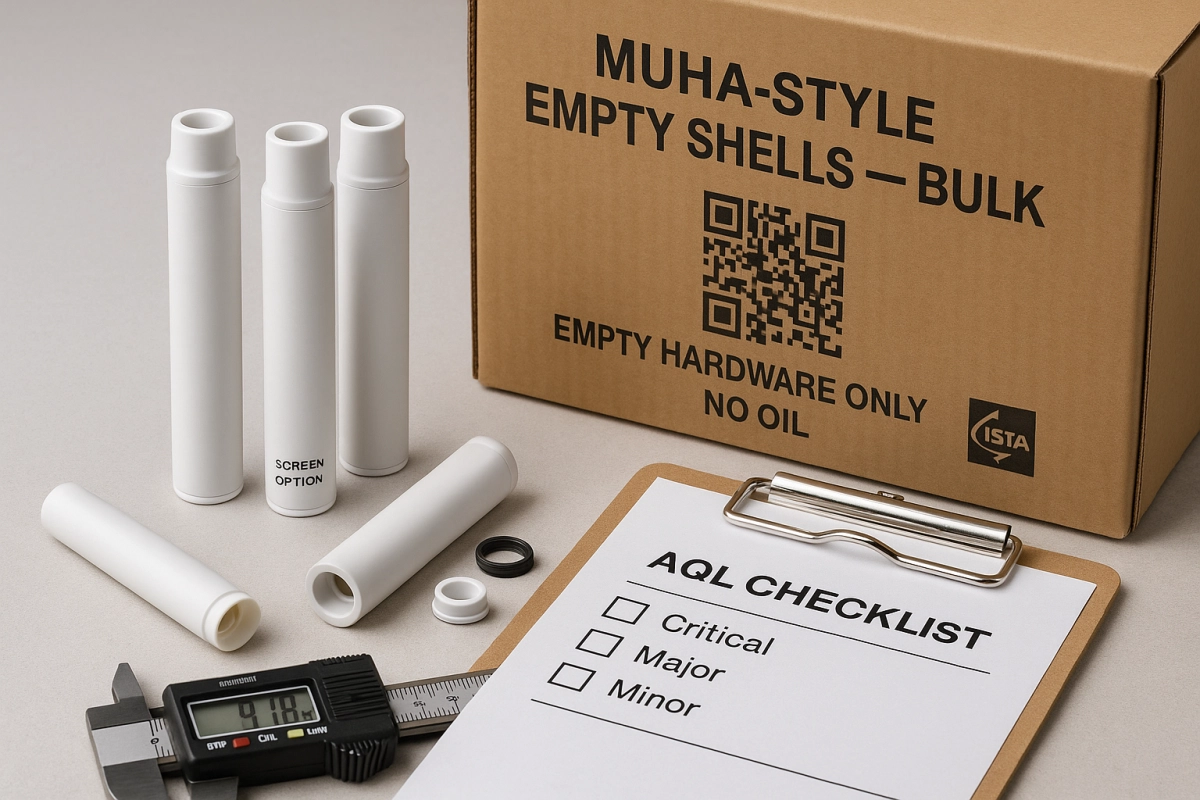
An engineering-first, non-promotional guide for B2B buyers who procure empty Muha Med hardware at scale. Focus: supplier vetting, AQL sampling, leak-prevention specs, traceability, and packaging tests—while keeping battery talk to a minimum.
Scope & disclaimer. This article covers empty hardware only (no oil). Any filling/testing/labeling of finished goods is the responsibility of licensed manufacturers. Follow local laws and avoid medical/health claims.
1) What “Empty” Means—and Why It Matters
“Empty” indicates the shell/enclosure and associated components are supplied without oil. For buyers, this distinction affects claims, testing scope, and labeling boundaries. Use neutral, factual language in all materials (e.g., batch tracking, fit/finish, assembly tolerances), and avoid implying finished-product potency or effects.
- Claims to avoid: therapeutic/health effects; nicotine/cannabis content; unverified “safer/healthier” statements.
- Safe territory: dimensions, materials, seals/gaskets, tolerances, traceability features, and packaging robustness testing.
2) Quick-Start Checklist for empty muha med bulk
- Define incoming QC: pick an AQL sampling plan (attributes) and pre-agree defect categories (critical/major/minor).
- Lock engineering specs: nozzle/port size, gasket material & hardness, thread class, press-fit tolerances, and drop-in variance windows.
- Traceability: QR layout + batch/lot schema compatible with GS1 Digital Link or equivalent.
- Packaging tests: choose ISTA 1-Series (screening) or ASTM D4169 (distribution simulation) for master case/pallet readiness.
- Document handoff: drawings, BOM, inspection sheets, photo pack, and carton labels before mass run.
3) Supplier Vetting: Audit Steps, AQL, and RMA Path
3.1 Audit the factory process
- Process capability & SPC: basic Cp/Cpk or at least gauge R&R on critical dimensions (mouthpiece fit, seal compression).
- Materials documentation: resin grade and gasket elastomer data sheets; confirm food-contact or neutral declarations where applicable.
- Cleanliness controls: assembly area cleanliness class; particle/contamination checks for empty shells.
3.2 Acceptance sampling (AQL)
Use an attributes sampling plan indexed by AQL for lot-by-lot inspection; align defect classes (e.g., C=leak, M=thread burrs, m=scuffs). Keep tables in your SOP to standardize lots across vendors.
3.3 RMA/8D basics
- Containment: quarantine + 100% inspection on suspected lots.
- Root cause & corrective action: tooling wear, mis-torque, gasket spec drift, or handling damage.
- Verification: re-inspection + trend charts for at least 3 shipments.
4) Specs That Reduce Leaks and Field Failures
Most field issues on empty shells trace back to fit/finish and seals—not power systems. Prioritize:
- Gasket & seal stack: specify material family (e.g., FKM/Silicone), hardness (ShA), compression %, and operating window.
- Thread & press-fit: define thread class and run a torque window test; verify no cross-thread at nominal force.
- Intake geometry: keep oil-intake hole count/diameter tolerance tight to stabilize capillary behavior post-fill.
- Surface quality: reject burrs/flash; limit Ra on sealing surfaces; add visual standards (golden sample photos).
Tip: Include go/no-go gauges in incoming QC for thread engagement and port diameter to shorten inspection time.
5) Traceability by Design (QR/Batch)
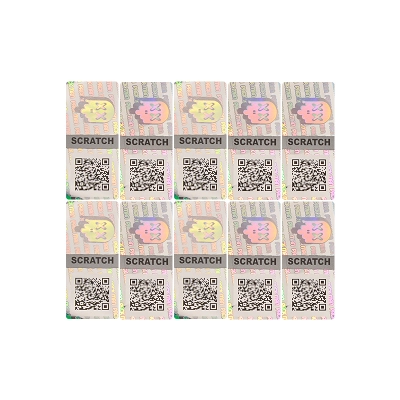
Plan your QR/lot system before artwork. A GS1-compatible URI structure lets a single code resolve to product data, batch info, and support pages—useful for recalls and counterfeit screening. Keep the QR quiet zone clear and test scannability on curved surfaces.
6) Packaging & Transport Readiness (Minimal Battery Talk)
To reduce in-transit damage and dented housings on bulk shipments, validate shipping units via standardized tests:
- ISTA 1-Series: low-cost screening for packaged products ≤68 kg; good for early design checks.
- ASTM D4169: sequence of distribution simulations (vibration, shock, compression) representative of real-world handling.
Note: If your configuration includes integrated cells, your upstream partner should handle UN 38.3 test summaries; for empty shells without cells, focus on carton/pallet integrity.
7) From Sample to Mass Run: A Practical Handoff
- Sample sign-off: drawings + golden samples + tolerance table (PDF) signed by both parties.
- Pilot run (≤5%): run AQL on pilot; confirm no new failure modes; lock packaging spec.
- Mass production: production AQL with photo pack; carton labels include lot, quantity, and QR scheme.
- Pre-shipment: carton photos (6-sides), measurement sheet, and drop/vibration report as applicable.
FAQs
Q1. Can I market performance or potency with empty hardware?
No. Keep to hardware facts (dimensions, materials, tolerances, packaging validation, traceability). Avoid potency/effects or medical framing.
Q2. What’s a sensible AQL?
Commonly C=0 (critical), M=0.65–1.0, m=1.0–2.5 for attributes—tune based on risk and cost. Use the same lot code and inspection level to compare vendors.
Q3. Which packaging test should I start with?
Use ISTA 1-Series as a screening tool for master cases. For distribution simulation or more realistic profiles, plan ASTM D4169 with your lab.
Related Reading on VapeHiTech
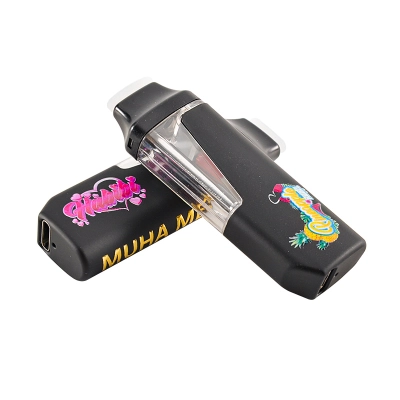
- empty Muha Med bulk — category hub with current shell options.
- empty Muha Med vape pens — form-factor overview and specs.
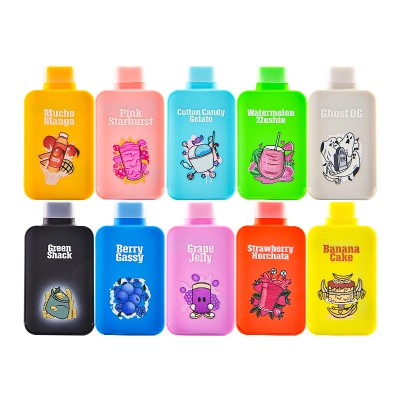
- Muha Meds empty cartridges — thread/port details and usage notes.
- empty Muha Meds 2g — capacity and dimensional references.
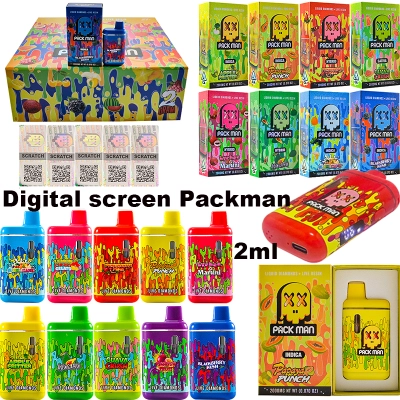
- empty Muha Med 2g screen option — UI/inspection cues (screened variant).
We limit internal links to five, all pointing to live pages on vapehitech.com to reinforce the “empty Muha Med” topic without over-commercializing.
References (Public Standards & Overviews)
- ISO 2859-1: Sampling procedures for inspection by attributes (AQL), official overview — ISO Online Browsing Platform.
- ISO/FDIS 2859-1 (under development) — update notice on iso.org.
- ISTA Test Procedures — program overview; 1-Series purpose/training notes.
- ASTM D4169 — Standard practice for performance testing of shipping containers and systems.
- GS1 Digital Link — standard overview and resolver concept (GS1).
- UN Manual of Tests & Criteria 38.3 — lithium cell/battery transport tests (context note only; not applicable to empty shells without cells).

1 Comments
I love your insights on this topic!