
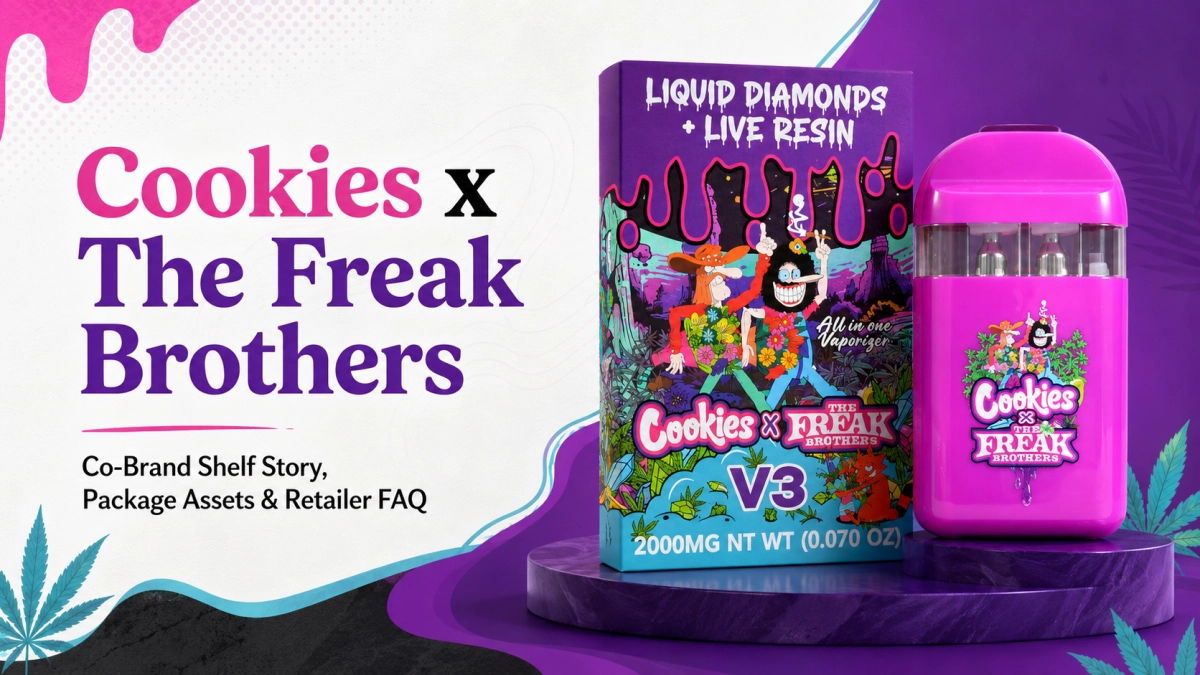
Scope: This educational brief is written for qualified wholesale buyers, retail catalog teams and retail content teams reviewing empty only Cookies x The Freak Brothers listings in markets where allowed. It covers co-brand context, shelf story planning, package asset checks, retailer FAQ structure and claim-control notes. It does not cover filled material, formulas, filling steps, dosage claims, potency claims, health claims, medical claims, therapeutic claims or consumption guidance.
Why this co-brand story matters
Retailers searching for cookies x the freak brothers are usually trying to understand more than a product title. They want to know why the collaboration is recognizable, how the package story should be framed, what assets should be checked before listing and which questions a buyer may ask before approving a catalog row.
The strongest TOFU angle is not a hard sell. It is a clear story brief. Cookies brings broad brand recognition in cannabis culture, while The Freak Brothers brings a long-running counterculture comic and animated series identity. For retail teams, that combination can become a shelf story only when the public copy, package proof, co-brand marks and FAQ answers all point in the same direction.
The key idea
Treat the collaboration as a story-and-asset framework: first explain the co-brand context, then organize visual cues, package files, listing notes and retailer questions around one controlled narrative.
Quick answer
A strong Cookies x The Freak Brothers brief should introduce the official collaboration, explain the cultural link between Cookies and The Freak Brothers, outline the package assets a retailer may request and provide a clean FAQ framework for catalog teams. Keep the language neutral, empty only and documentation-led.
Story role
Explain why the two names belong together: Cookies brand recognition plus The Freak Brothers counterculture history.
Retail role
Help catalog teams frame the collaboration without turning the article into a product pitch.
Asset role
List the package, image, title, proof and FAQ items that should be checked before a listing goes live.
Compliance role
Keep claims truthful, market-reviewed and separated from medical, potency or usage language.
Co-brand context
The official partnership announcement describes Cookies teaming up with The Freak Brothers ahead of 4/20, with a collaboration connected to cannabis products, merchandise and Berner joining the adult animated TV series cast. That gives retail teams a real news basis for the collaboration rather than relying on marketplace screenshots or reposted claims.
The Freak Brothers side of the story matters because the characters are not a new label made only for a package. The official history page says The Fabulous Furry Freak Brothers began as an underground comix in 1968, created by Gilbert Shelton. The official show page connects the modern animated series to Shelton's comics and places the series in modern-day San Francisco.
| Co-brand layer | Retail meaning | How to use it in copy |
|---|---|---|
| Cookies recognition | Gives the collaboration a known cannabis-culture anchor. | Use as the brand-family context, not as a promise of performance. |
| The Freak Brothers history | Adds a counterculture and entertainment reference point. | Use as background for the shelf story and package cues. |
| Official partnership | Confirms the collaboration through a public announcement. | Link to the announcement when introducing the co-brand basis. |
| Merchandise capsule | Shows that the collaboration also appears across visual goods. | Use as a reference for co-brand marks, colors, character artwork and display cues. |
Content boundary
This article should not claim that any package, listing or regional stock is authorized in every market. It should explain the story, then send final approval to market-specific review.
Shelf story map
A shelf story gives retail staff a short, repeatable way to explain why an item belongs in a category. For this collaboration, the story can be built around three points: an official brand partnership, a character universe with roots in underground comics and package assets that make the row easy to recognize.
For broader category routing, connect the article to Cookies vape pen only when the paragraph is discussing the larger Cookies family. Keep the exact match anchor for the Pillar page and avoid repeating it in every section.
| Shelf story element | What it should answer | Recommended retail wording |
|---|---|---|
| Origin | Why this collaboration exists. | Cookies and The Freak Brothers connect cannabis culture with a long-running adult animation and comic universe. |
| Recognition | Why shoppers may notice it. | The co-brand mark and character-led package cues can help the row stand out without requiring long shelf text. |
| Asset control | What must match before listing. | Public title, package proof, co-brand marks, variant wording and image set should be checked together. |
| Retail FAQ | What staff need to know. | Prepare short answers for collaboration background, empty only scope, package files, listing review and claim limits. |
Package asset checklist
Package assets should be organized before a catalog page, buyer sheet or retailer FAQ is published. A clean file set helps prevent mismatched marks, outdated images and unclear version wording.
When a specific V3 row is used as a catalog example, use Cookies Freak Brothers V3 as the internal reference. When the article needs a V2 comparison point, use Cookies x The Freak Brothers V2 as the version reference. These links should support the asset discussion rather than push a transaction.
| Asset | What to verify | Why it matters |
|---|---|---|
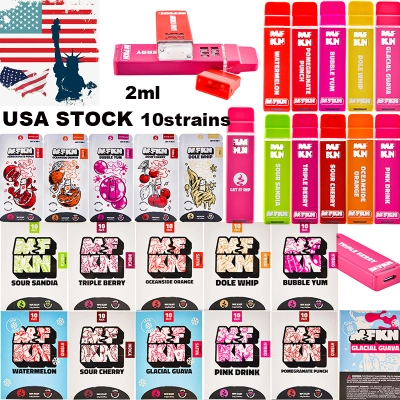
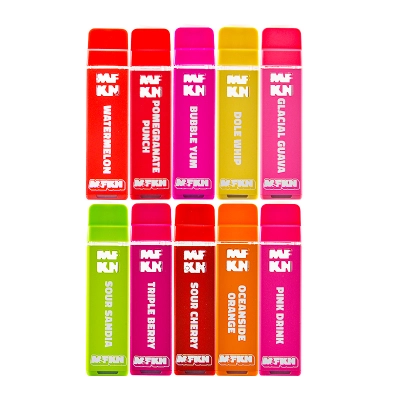
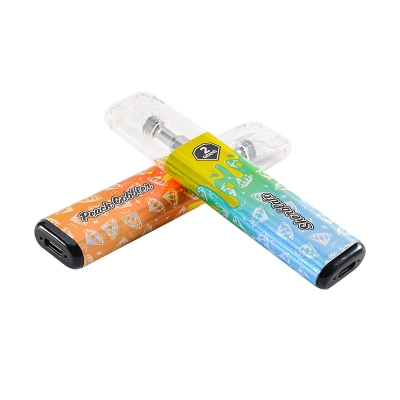
| Front package proof | Co-brand mark, main title, character artwork and capacity wording. | It is the first file most buyers use to confirm recognition. |
| Side and back proof | Warnings, symbols, batch area, barcode area and market-required text placeholders. | These areas often carry review notes that do not appear in a hero image. |
| Image set | Front image, angled image, packaging image and carton image if available. | Retail catalog teams need a consistent set for listing, buyer sheet and internal review. |
| Title file | Approved public title, version wording, capacity wording and empty only scope. | Prevents the title from drifting across page, quote, invoice and carton record. |
| Co-brand mark use | Placement, spacing, artwork crop and color match against the approved proof. | Supports a cleaner presentation and avoids inconsistent visual treatment. |
| Retailer FAQ file | Short answers for story, scope, package proof, review timing and claims. | Gives sales and catalog teams the same neutral language. |
Asset rule
Do not publish a package story from one image alone. Match the title file, proof file, image set and FAQ answer before the article points readers to a catalog row.
Retailer FAQ outline
The retailer FAQ should be practical and short. It should help a buyer understand the co-brand background, identify which package assets to request and know which claims should be avoided in public copy.
| Retailer question | Recommended answer angle | Proof to keep on file |
|---|---|---|
| What is the collaboration? | It is a Cookies and The Freak Brothers co-brand story connected to an official public partnership announcement. | Official announcement link and current internal category route. |
| Why does it matter on shelf? | It combines Cookies recognition with a character universe that has roots in underground comics and adult animation. | Official history link and package image set. |
| What assets should be checked? | Front proof, back proof, co-brand marks, approved title, image set, carton wording and FAQ notes. | Proof folder, title file and asset log. |
| How should the listing describe scope? | Use empty only wording and avoid filled material, formulas, filling steps, dosage, potency, health or medical claims. | Approved scope note and market review record. |
| What should be reviewed before launch? | Public title, internal route, image proof, package proof, external references and claim language. | Final page checklist and approval timestamp. |
| Where should packaging content link? | Use disposable vape pens packaging only when the paragraph is about package assets, not when it introduces the collaboration. | Internal routing note and package asset checklist. |
Claim-control notes
Because the topic sits near cannabis, entertainment IP and package presentation, claim control is part of the content plan. The FTC says advertising claims must be truthful, cannot be deceptive or unfair and must be evidence-based. California DCC packaging and labeling pages also show why packaging and label review should be handled with care in regulated markets.
| Area | Safer wording | Avoid |
|---|---|---|
| Scope | Empty only co-brand story brief for qualified wholesale and catalog review. | Filled material, formulas, filling steps or consumption directions. |
| Collaboration | Refer to official public sources and current proof files. | Unverified claims about universal authorization or market clearance. |
| Package | Use asset checklist, proof review and market-specific label review. | Promises that one package layout is valid everywhere. |
| Performance | Keep the article focused on story, packaging and catalog readiness. | Potency, health, medical, therapeutic or outcome claims. |
| Retail copy | Use short, factual shelf notes and FAQ answers. | Exaggerated claims, pressure language or unverified rankings. |
Content map for the finished article
The finished page should help a first-time reader understand the collaboration while also giving catalog teams enough structure to organize package assets. The route below keeps the page informational and TOFU.
| Section | Reader job | SEO job |
|---|---|---|
| Opening story | Understand why Cookies and The Freak Brothers belong in one brief. | Use the Pillar keyword naturally once in the first screen. |
| Co-brand context | See official sources for the partnership and character history. | Build topical authority with official external links. |
| Shelf story | Turn background into a short retail explanation. | Connect the Pillar page to a broader Cookies route. |
| Package assets | Know which files and proof points to request. | Support version-specific internal links without overlinking. |
| Retailer FAQ | Prepare short answers for catalog and buyer teams. | Capture TOFU and informational query variations. |
| Claim control | Keep public copy neutral and market-reviewed. | Use high-authority compliance references. |
Official references
Use these sources as the article's external reference layer. They support the co-brand background, character history, package review mindset and truthful marketing language. They do not replace qualified legal, customs, tax, trademark, labeling or regulated-market advice.
| Reference area | Use in this article | Source |
|---|---|---|
| Partnership announcement | Use when introducing the official co-brand background. | official partnership announcement |
| Freak Brothers origin | Use when explaining the counterculture and comic background. | Freak Brothers counterculture history |
| Animated series background | Use when connecting the characters to the modern show. | The Freak Brothers show background |
| Official co-brand goods | Use as a visual reference for co-brand marks and artwork consistency. | Cookies x The Freak Brothers collection |
| Packaging review | Use when reminding teams to check packaging requirements by market. | cannabis packaging guidance |
| Label review | Use when reminding teams to separate package proof from public story copy. | cannabis labeling checklist |
| Truthful claims | Use when explaining why the page avoids unsupported claims. | truthful marketing claims |
| Article schema | Use when reviewing structured data for the blog page. | Article structured data guide |
| FAQ schema | Use when reviewing question-and-answer markup. | FAQ structured data guide |
FAQ
What is Cookies x The Freak Brothers?
It is a co-brand collaboration between Cookies and The Freak Brothers. For a TOFU blog, the best angle is to explain the public partnership, the character background and the package assets that retail teams may need to organize.
Why is this topic useful for retailers?
Retailers may need a short shelf story, approved package images, title wording, co-brand mark guidance and neutral FAQ answers before adding a catalog row.
What package assets should be prepared?
Prepare front proof, back proof, image set, title file, carton wording, co-brand mark notes and an approval log. These files should be checked together before publication.
Should the article be promotional?
No. The article should stay informational. It should explain the story, asset checklist and retailer FAQ needs without pressure wording or unsupported claims.
Can this article discuss filled material or use instructions?
No. Keep the scope empty only. Do not include filled material, formulas, filling steps, dosage claims, potency claims, health claims, medical claims, therapeutic claims or consumption guidance.
Is this legal advice?
No. This is an educational B2B content brief. Retailers and catalog teams should seek qualified legal, customs, tax, trademark, labeling and regulated-market support before final publication.
```
0 Comments