

DISCLAIMER
This article discusses leak-resistance engineering in ace ultra empty shells from a hardware perspective only. Vapehitech supplies empty hardware only — no THC, no nicotine, no cannabis oil, and no finished Ace products. Nothing in this guide is medical, legal, or regulatory advice. Always consult qualified professionals for compliance decisions and local law interpretation.
Why Start With Empty Hardware When You Care About Leaks?
If you talk to product teams about leaks in disposable vapes, the first instinct is usually to blame the oil. Viscosity, terpene load, cutting agents, and filling temperature all matter — but in practice, leak performance is always a system outcome:
- Shell geometry and tolerances;
- Seal design and material choices;
- Airflow and pressure equalization paths;
- Oil formulation and filling process.
You cannot fix a fundamentally weak shell with better oil alone. That is why serious brands now start leak-prevention work at the ace ultra empty hardware level: lock down a robust shell first, then tune oils and SOPs around it.
This 101 guide walks through how modern leak-resistant shells are engineered and tested, using the Ace family as the reference frame and Ace Ultra as the higher-spec option within that hardware ecosystem.
Where Ace Ultra Empty Sits in the Ace Hardware Family
The Ace family is best thought of as a layered hardware platform: multiple device lines sharing a common design language, but tuned for different price points, capacities, and markets. Within that family, Ace Ultra targets buyers who care about:
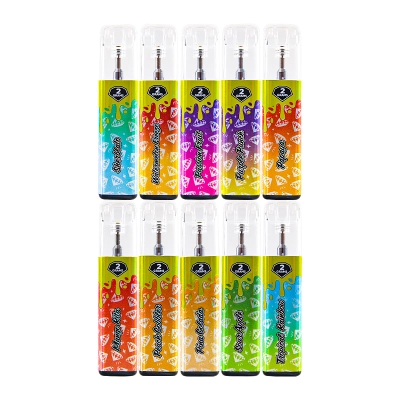
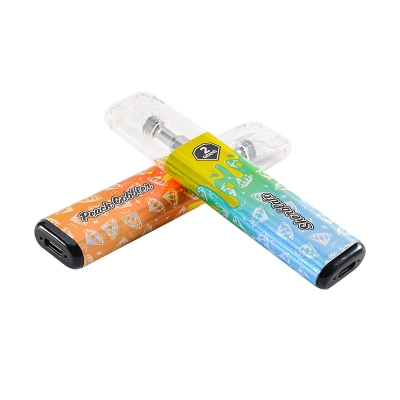
For buyers who want a quick overview of the broader Ace range, including non-Ultra hardware, the ace ultra empty collection page groups related device families in one place. This 101 article goes deeper into the engineering basics behind those shells, especially where leak resistance is concerned.
Shell Geometry: Expansion Space, Headspace, and Wall Design
Leak-resistant design starts with geometry. In an ace ultra empty shell, the shell body, tank cavity, chimney, and mouthpiece all work together to manage three forces:
- Thermal expansion of the oil;
- Internal pressure changes from altitude or hot-car conditions;
- Mechanical stress from drops, vibration, and handling.
Recommended Engineering Parameters for Ace Ultra–Class Empty Shells
Although exact tolerances differ by vendor, most leak-resistant Ace Ultra–class empty shells follow similar engineering ranges:
- Headspace volume: 0.12–0.18 ml reserved above the fill line to allow thermal expansion during 60–75 °C heat-soak conditions.
- Chimney alignment tolerance: ≤0.08 mm radial offset measured at three points along the chimney, ensuring uniform gasket compression.
- Tank wall thickness: 0.95–1.10 mm in high-stress regions; 0.70–0.85 mm in non-load-bearing areas to reduce deformation under pressure.
- Elastomer compression set: Target <18 % after 24 hours at 70 °C, in line with typical elastomer performance profiles.
- Air inlet aperture: 0.18–0.22 mm² cross-sectional area per side for stable MTL draw resistance without promoting siphoning.
These ranges are widely used by hardware engineers because they remain stable across typical oil viscosities (4,000–80,000 cP at 25 °C) and realistic filling temperatures (40–65 °C).
1. Headspace and fill line
One of the simplest leak-control tools is headspace — the small volume intentionally left unfilled above the oil line. In a well-designed Ace Ultra shell, you will usually see:
- Clearly defined maximum fill line or internal reference step;
- Enough vertical clearance for oil to expand under realistic temperature swings;
- Geometry that avoids trapping bubbles in corners that would destabilize pressure balance.
If a formulation demands higher fill volumes, engineering teams must revisit headspace margins rather than simply “overfilling” the cavity and hoping seals will compensate.
2. Wall thickness and reinforcement
Shell walls in ace ultra empty disposables are typically optimized around a balance:
- Thick enough to resist deformation under internal pressure and external grip;
- Thin enough to keep weight and material cost under control.
Strategic ribs or internal bracing can help, but they must be placed to avoid stress concentrations or sharp internal edges that could interfere with wicks or gaskets. Modern designs often use finite element analysis (FEA) early in the process to identify high-stress zones under simulated pressure and drop events.
3. Chimney alignment and interface surfaces
The chimney (or central post) is a classic leak path if misaligned. Ace Ultra shells are designed to give the assembly line:
- Positive locating features that prevent tilt or rotation during press-fit;
- Flat, concentric sealing surfaces where o-rings can deform predictably;
- Enough engagement length to maintain compression over the device’s life.
A simplified cross-section diagram of an Ace Ultra empty shell would include: (1) an oil chamber with 0.12–0.18 ml headspace; (2) a central chimney held within ≤0.08 mm alignment tolerance; (3) a dual o-ring seal zone with 15–20 % targeted compression; (4) airflow inlets sized at 0.18–0.22 mm²; and (5) reinforced sidewalls 0.95–1.10 mm thick in high-stress locations.
Seals, Gaskets, and Interfaces: Keeping Oil on the Right Side of the Plastic
If geometry is the skeleton of a leak-resistant device, seals are the soft tissue that actually keeps oil where it belongs. In ace ultra empty engineering, special attention is paid to:
- Material selection for o-rings and gaskets;
- Cross-section shape and compression targets;
- Surface finish of mating plastic and metal parts.
1. Material compatibility
Not all elastomers behave the same under exposure to terpenes, cannabinoids, and carrier solvents. When Ace hardware is paired with aggressive terpene loads or high-temperature filling, poor material choices can swell, harden, or crack. That is why serious vendors push toward:
- Elastomer families validated against typical distillate and live resin formulations;
- Testing that includes both short-term soak and longer-term storage at elevated temperature;
- Verification that compression set stays within acceptable limits across the device life.
2. Compression range and tolerance stack-up
A gasket that is compressed too little may leak; too much, and it may extrude or fatigue early. Ace Ultra designs typically aim for a compression “Goldilocks zone” that remains valid even when you account for:
- Mold tolerances on plastic and metal components;
- Thermal expansion of the parts themselves;
- Manufacturing variation in gasket cross-sections.
This is where tighter tolerances justify their cost: reducing the overall stack-up makes it easier to hit the right compression band for most units in a production run.
3. Surface finish and cleanliness
Even a perfect gasket can fail if the surface underneath is scratched, contaminated, or poorly finished. That is why leak-resistant shells combine:
- Controlled surface roughness in sealing zones;
- Strict cleaning and handling SOPs before final assembly;
- Sampling plans that visually inspect critical interfaces and reject outliers.
In other words, leak resistance is not only a design decision; it is also a production discipline.
Airflow Path Engineering: Draw Feel vs. Leak Risk
A good disposable must feel right to draw on — but every airflow path is a potential leak path. Ace Ultra empty shells treat airflow as a controlled trade-off, not an afterthought.
Balancing resistance and condensation
Users generally prefer a slightly restricted mouth-to-lung draw for oil-based disposables. To achieve that without inviting leaks, engineers:
- Use carefully sized intake ports near the coil;
- Shape internal channels to minimize dead zones where condensate could accumulate;
- Provide clear routes for condensate to either rejoin the oil path or be trapped safely away from seals.
Pressure equalization and “siphoning” prevention
Sudden pressure changes — such as ascent in an airplane or a hot-car scenario — can drive oil up the chimney or out through air inlets. To minimize that risk, ace ultra empty shells often incorporate:
- Controlled leak points for air, not oil, to equalize pressure without forcing fluid out;
- Vertical and horizontal offsets that make it harder for liquid oil to reach external ports under normal orientations;
- Interfaces designed to tolerate short-term pressure differentials without unseating gaskets.
Thermal & Pressure Effects: Hot-Car, Flight, and Shipping Scenarios
Once devices leave the factory, they enter an environment that engineers cannot control: hot trunks, cold warehouses, pressurized cargo holds, and bumpy delivery routes. Leak-resistant Ace Ultra shells are designed with these scenarios in mind.
1. Hot-car and heat-soak conditions
In many markets, in-car temperatures can exceed 60–70 °C on sunny days. For oil-based devices, that means:
- Oil viscosity drops dramatically, making it easier to flow through marginal seals;
- Internal pressure rises as both oil and trapped air expand;
- Plastic parts soften slightly, potentially changing how seals are compressed.
Ace Ultra shells mitigate this by combining:
- Adequate headspace and expansion volume;
- Gaskets rated for realistic temperature cycles;
- Shell geometries that resist deformation under predictable heat-soak patterns.
2. Altitude and air transport
During air freight or cabin transport, lower external pressure can cause devices to “outgas” if internal pressure is not carefully managed. For empty shells, engineers simulate:
- Pressure cycles approximating typical cargo or cabin conditions;
- Worst-case orientation (device upside-down or sideways);
- Rapid pressure changes combined with temperature fluctuations.
The objective is not to make devices immune to all possible abuse, but to ensure that within realistic shipping envelopes, leak rates stay within acceptable limits when filled according to spec.
3. Vibration and mechanical shock
Road vibration, conveyor systems, and manual handling all add up. Ace Ultra shell designs typically undergo:
- Drop testing of individual units and boxed inventories;
- Vibration testing meant to emulate parcel delivery or palletized freight;
- Post-test inspections for hairline cracks, gasket shifts, and subtle weeping at joints.
For brands operating in multiple regions, aligning internal test protocols with established packaging and battery transport standards helps create a consistent safety narrative.
Bench Testing Protocols for Ace Ultra Empty Devices
Even the best design needs validation. Before rolling ace ultra empty shells into full production, serious buyers run structured bench tests that stress the hardware before oil ever touches it.
1. Visual and dimensional inspection
First, confirm that what the drawings promise is what the factory actually ships:
- Measure key dimensions on a statistically meaningful sample from each lot;
- Visually inspect seal interfaces, chimney alignment, and air-path features;
- Compare measured data against tolerance bands agreed in the PO or specification.
2. Dry leak and pressure tests
Some leak characteristics can be evaluated even before adding oil. For example:
- Apply a known pressure differential across the tank zone and look for pressure decay over time;
- Use dyed water or low-viscosity test fluids to observe gross leak paths in early R&D phases;
- Document which assemblies fail and whether issues are random or systematic.
Quantified Bench-Test Examples
To make results comparable across suppliers, QA teams often use quantitative acceptance criteria such as:
- Pressure decay test: At 12 kPa differential pressure, acceptable units show ≤1.5 % pressure drop over 300 seconds.
- Heat-soak test: After 90 minutes at 70 °C, properly engineered empty shells show zero visible weeping in at least 95 % of units.
- Altitude simulation: Under 8.5 psi equivalent cabin pressure, compliant units avoid chimney upwelling in 98–100 % of samples.
- Vibration test: Using an ISTA 3A random vibration profile around 1.1 Grms for 60 minutes, no deformation or seam separation is expected in production-grade samples.
Publishing thresholds like these in internal SOPs gives procurement, QA, and engineering teams a common definition of “pass” and “fail”.
3. Filled pilot runs and abuse testing
The most telling tests involve real oil in small pilot runs:
- Fill a controlled sample of ace ultra empty devices under production-like conditions;
- Subject them to thermal cycles (hot, cold, ambient), orientation changes, and vibration;
- Log leak incidents, weeping, and condensation separately to understand root causes.
Many teams use a matrix of “test cells” — combinations of oil formulations, fill volumes, and storage conditions — to identify safe operating windows before scaling.
Field-Scale Quality Benchmarks
In large-scale Ace-class hardware programs, internal QA dashboards often track metrics such as:
- Dimensional conformity: >95 % of units within ±0.05 mm of the nominal chimney alignment specification.
- Gasket integrity: >98 % of sampled seals staying within the target compression range after 24-hour aging at 45 °C.
- Shell bonding strength: Average sidewall tensile strength around 10–12 MPa, consistent with ASTM D638 expectations for similar polymer blends.
- Defect rate: Gross leak failures kept below 0.25 % across fully inspected batches.
These numbers are not legal limits, but they illustrate what “good” looks like for ace ultra empty–class shells at production scale.
Common Failure Modes and How Ace Ultra Empty Designs Address Them
No shell is perfect, but some failure modes are far more common than others. Engineering for leak resistance means designing against the most likely ways things go wrong.
1. Top-cap weeping
Symptom: small rings or dots of oil appear around the mouthpiece or top seam over time. Typical causes: gasket under-compression, uneven sealing surfaces, overfilling, or thermal cycling.
Ace Ultra countermeasures include:
- More controlled gasket seats and defined press-fit depths;
- Clear fill-line guidance to avoid accidental overfilling;
- Validation runs that specifically monitor top-cap areas after heat-soak and shipping simulations.
2. Base and sidewall leaks
Symptom: oil streaks on the outside of the shell near the bottom or along side seams. Typical causes: micro-cracks, weld imperfections, or stress from battery swelling.
Ace Ultra designs focus on:
- Robust joint design between tank and lower shell sections;
- Battery integration that avoids direct hard contact between the cell and the oil cavity walls;
- Sampling plans that detect early shifts in welding or bonding quality.
3. Condensation misdiagnosed as leaks
Not every droplet is a leak. Some users confuse condensation — vapor cooling and condensing along the air path — with oil escaping. While both are undesirable in excess, they have different root causes.
To reduce condensation build-up, Ace Ultra shells:
- Use internal geometries that limit large, cold surfaces near the mouthpiece;
- Provide drainage paths where condensed vapor can return to the coil or be trapped away from seals;
- Support tuning airflow and power so that vapor density stays within reasonable bounds.
Hardware vs. Oil: Where Responsibilities Divide
Leak-resistant hardware is a powerful tool, but it is not magic. A realistic division of responsibilities between hardware vendors and oil producers looks like this:
- Hardware side (Ace Ultra): tolerances, materials, seals, airflow, and mechanical robustness under defined test regimes.
- Oil side: viscosity window, terpene load, solvent choices, and filling SOPs compatible with the hardware envelope.
- Brand / QA side: incoming QC on shells, process control on filling lines, and stability testing over the product’s intended shelf life.
At Vapehitech, our role is to keep the Ace hardware side of that equation as strong and transparent as possible, so that licensed brands can build their own oil and compliance strategies on a predictable foundation.
For teams evaluating where Ace fits alongside other device platforms and finished disposables, it can also be useful to compare empty engineering with the behavior of full products in the field. Our ace disposable vape overview provides a complementary, finished-product perspective that sits on top of the same core engineering principles discussed in this 101 guide.
Further Reading and Ace Hardware Resources
If you want to go beyond this 101 and explore more detailed Ace hardware guides, internal QC playbooks, or comparisons with other device families, start with:
- Pillar overview of the Ace hardware ecosystem: ace ultra empty collection page, which groups key device lines and capacities.
- Additional Ace-focused engineering and sourcing articles available under our Ace tag: Ace engineering guides.
Together, these resources are meant to help hardware engineers, sourcing managers, and brand owners make more informed decisions about how they spec, test, and scale Ace Ultra–class devices.
Key Technical & Safety References
- UN Manual of Tests and Criteria, Part III, Sub-section 38.3 (UN 38.3) — defines altitude, thermal, vibration and shock tests for lithium cells and batteries that are relevant when integrating cells into disposable vape shells.
- IEC 62133-2:2017 — Sections 7.3 and 7.4 on safety tests for secondary lithium-ion cells and batteries, including abuse and vibration criteria used as benchmarks for integrated battery performance.
- UL 8139:2023 — Sections 19–22 covering electrical system safety, battery integration, abnormal charging and leakage current limits in electronic nicotine and vaping devices.
- ISTA 3A Packaged-Products for Parcel Delivery — vibration profile Table 6A, drop sequence Table 6B and compression procedures used to simulate shipping stresses on boxed disposable devices.
- ASTM D638 — Standard test method for tensile properties of plastics, used to characterize shell sidewall strength and joint performance in disposable housings.
- ASTM D395 — Standard test methods for rubber property—compression set, applied to elastomer gaskets and o-rings in vape hardware seals.
These references do not replace formal certification or legal review, but they illustrate the broader technical context in which ace ultra empty leak-resistance engineering is performed and validated.







2 Comments
Thanks for sharing!
Looks good!