
Technical review version: 2025. This guide is written for B2B teams and should be re-evaluated at least every 12 months as regulations, standards and internal QA requirements evolve.
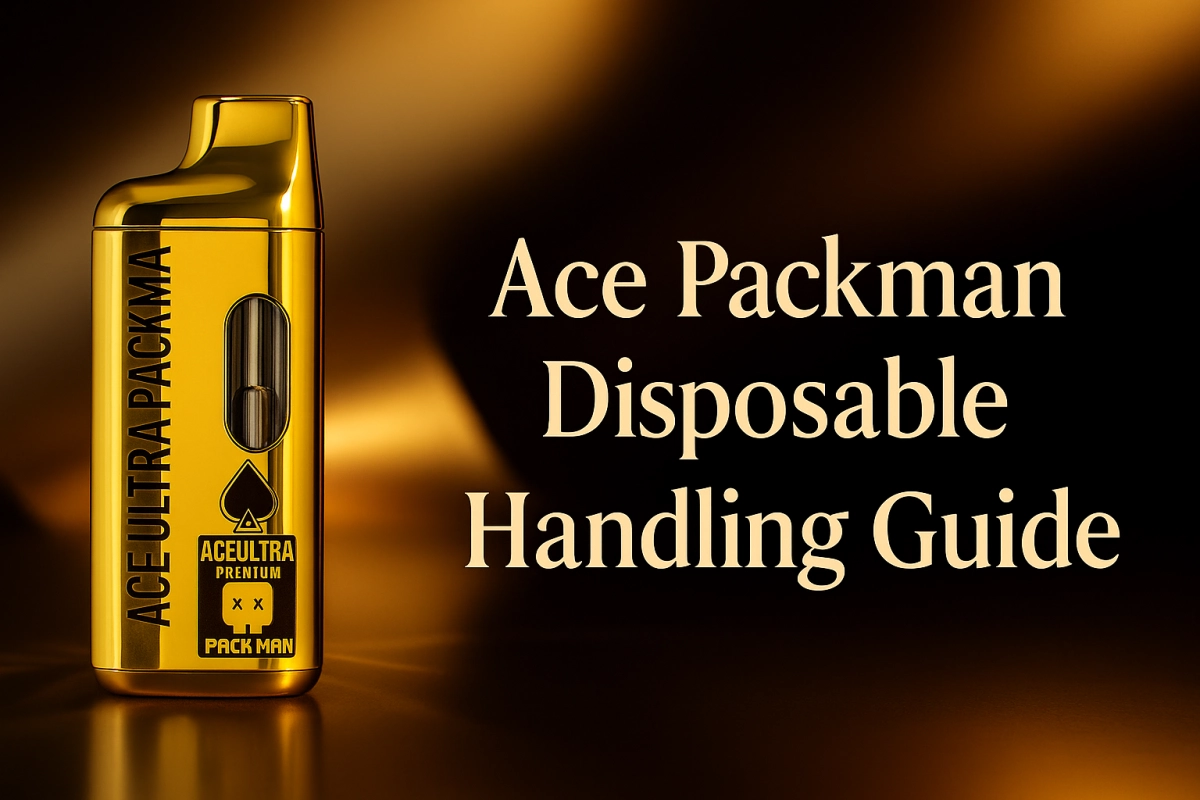
This guide is written for B2B hardware buyers, operations teams and quality engineers working with ace packman disposable empty hardware. On Vapehitech, “ace packman disposable” refers strictly to empty Ace Packman shells and chassis — no oil, no THC, no CBD, no nicotine — supplied for integration into licensed programs in legal adult (21+) markets.
Nothing in this article is legal, regulatory, health or safety advice. Local regulations vary, and final responsibility for filling, testing, labelling and age-restricted distribution rests with licensed partners. All handling practices, inspection levels and tolerance bands described here are illustrative starting points that must be validated against your own QA standards, contracts and regional requirements.
1. Understanding the Ace Packman disposable hardware family
Before defining handling and troubleshooting practices, it helps to anchor Ace Packman in the context of your broader empty-hardware roadmap. On Vapehitech, the family is grouped at a platform level under ace x packman bulk, then split into 1 g and 2 g variants for capacity planning and artwork.
Within that umbrella, four formats tend to show up in B2B programs:
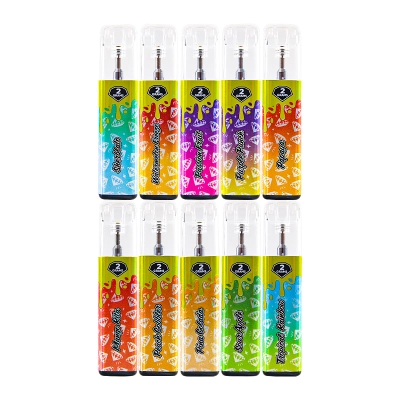
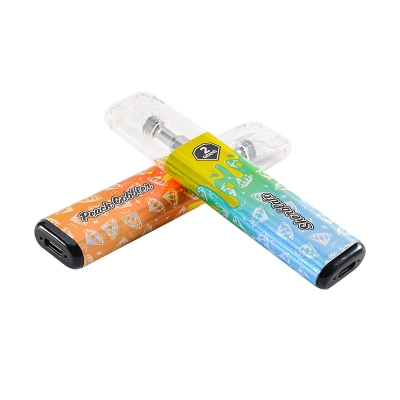
- Hero 2 g flagship: 2 gram housings positioned as full-size, feature-forward devices. On Vapehitech these are typically represented by ace ultra x packman 2g disposable style shells.
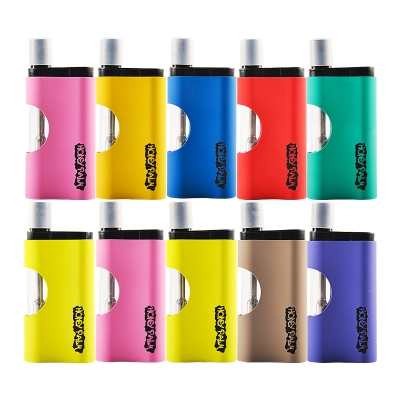
- 2 g aesthetic variants: alternate artwork or slight geometry shifts used for collabs and regional programs, often listed as packman x ace 2g devices.
- 1 g support tier: smaller-capacity shells used for intro packs, samplers or price-sensitive channels, grouped on Vapehitech as empty ace packman 1000mg .
- Platform-level bulk views: pallet- and carton-level planning across capacities and editions, so purchasing and operations teams can work from a single Ace Packman snapshot.
This guide treats all of these as variants of the same ace packman disposable empty hardware platform. The handling principles are shared; only a few checkpoints differ between 1 g and 2 g, primarily in carton weight, tray layout and closure torque windows.
2. Receiving shipments: checks on arrival and first-article review
The most cost-effective troubleshooting is the kind you never need. Robust receiving checks catch misalignment early and prevent assembly teams from working with a problematic batch of Ace Packman shells.
2.1. Carton-level verification
On arrival, warehouse teams should start at the master-carton level:
- Cross-check carton labels against the PO: edition, capacity, colourway and lot.
- Inspect for transit damage: crushed corners, torn straps, water stains or re-taping.
- Verify carton dimensions and net weights against the packing list; large deviations often signal configuration changes or picking errors.
2.2. First-article inspection (FAI) on Ace Packman shells
Before releasing a lot to production, run a structured first-article inspection on a representative sample. A simple quantitative snapshot for 2 g Ace Packman shells might look like this:
| CTQ dimension | Typical nominal | Illustrative tolerance band | Why it matters |
|---|---|---|---|
| Overall body length | 99.5 mm | ±0.20 mm | Controls fit in blisters and retail packaging; too long can jam, too short can rattle. |
| Body width | 22.0 mm | ±0.15 mm | Impacts in-hand feel and tray compatibility across Ace Packman variants. |
| Body thickness | 13.0 mm | ±0.10 mm | Influences mouthfeel, stability when standing and internal clearance for cells/PCBs. |
| Mouthpiece-to-body interference | Press-fit ~0.07 mm | 0.05–0.10 mm | Too loose risks micro-leaks; too tight raises cap-cracking and stress-whitening risk. |
Values above are indicative only and must be replaced with the figures on your own drawings. The point is that FAI should not stop at “looks OK”; it should verify that key Ace Packman dimensions sit inside a defined tolerance window.
3. Storage and in-warehouse handling for Ace Packman shells
Ace Packman housings are compact but still sensitive to temperature, humidity and stacking pressure, especially given their high-coverage artwork and printed panels. Good storage practices reduce the likelihood of warping, ink rub and subtle cosmetic issues that only appear after filling.
3.1. Environmental conditions
Many B2B teams store empty Ace Packman hardware in conditions broadly aligned with standard electronics-warehouse guidelines:
- Temperature: target a stable 18–25 °C band (64–77 °F). Short excursions of a few degrees are usually acceptable; sustained exposure above ~30 °C or below ~10 °C increases risk of plastic creep, carton deformation and condensation.
- Relative humidity: aim for 40–60 % RH. Prolonged humidity above ~70 % RH softens cartonboard and labels; very dry air below ~30 % RH increases static and dust.
- Light exposure: keep cartons closed and away from direct sunlight or UV-rich lighting, especially for darker and neon Ace Packman colourways.
3.2. Stacking and palletisation
Even when cartons pass compression tests, over-stacking is a frequent hidden failure mode. As a starting rule:
- Follow the maximum stacking height printed on shipper artwork if provided. When no value exists, many buyers cap stacked height at ~1.8 m and limit static load so bottom cartons carry no more than ~3–4 times their own weight.
- Use level pallets, full deck boards and stretch-wrap to prevent carton shifting and point loads.
- Apply FIFO or FEFO logic so older Ace Packman lots do not sit at the bottom of long-term stacks.
3.3. Handling open cartons
Once cartons are opened for kitting:
- Limit open time; aim to return partially used trays to covered storage within the same shift.
- Require clean gloves for direct handling to minimise fingerprints and micro-scratches.
- Use simple lids or antistatic film over any Ace Packman trays left on racks between runs.
4. Pre-fill preparation and assembly practices
Once Ace Packman cartons pass receiving checks and shells are staged in the warehouse, attention shifts to how devices are prepared on the line. Many issues labelled as “hardware defects” are in fact handling or assembly process deviations.
4.1. Pre-fill tray inspection
Before loading shells into fixtures:
- Confirm that trays contain only the intended Ace Packman edition and capacity.
- Remove units with obvious cosmetic damage, bent connectors or contamination in the air path.
- Log tray-level rejects; sudden jumps often indicate upstream packaging or transit changes.
4.2. Mouthpiece installation and torque control
After filling and plugging, Ace Packman performance depends heavily on correctly seated mouthpieces. Typical setups use:
- Defined torque or press-force bands. For 2 g Ace Packman shells, many teams work in a band roughly equivalent to 0.3–0.5 N·m closure torque (or its pressing-force equivalent) depending on seal design. Final values must come from your process validation.
- Calibrated tools and fixtures. Manual “feel” alone is not reliable across shifts.
- Periodic pull-off tests. Sampling a small number of capped Ace Packman units per lot and measuring mouthpiece pull force helps confirm that seals stay secure without becoming impossible to remove during failure analysis.
4.3. Line cleanliness and foreign-material control
Ace Packman’s compact internal geometry leaves little room for debris. Good practice includes:
- Implementing basic 5S or similar housekeeping routines around Ace Packman lines.
- Using lint-free wipes and avoiding loose fibres, tape offcuts or label backing near open devices.
- Defining which defects count as critical foreign-material risks and require immediate containment (e.g., metal particles, exposed conductors).
5. Common issues and structured troubleshooting paths
When issues do occur with ace packman disposable empty hardware, a structured classification makes it easier to isolate root causes and decide whether they sit with the hardware, the filling process or downstream handling.
5.1. Visual and cosmetic issues
Typical symptoms include:
- Colour banding or visible shifts between lots.
- Blurred printing or misaligned edition artwork.
- Scuffs, dents or whitening on corners and edges.
First checks:
- Compare affected shells with retain samples from earlier lots to see if the issue is new.
- Review storage logs for temperature or humidity excursions and any over-stacking events.
- Inspect incoming cartons from the same lot for transit stress such as crushed corners.
5.2. Fit, sealing and leak-related complaints
Symptoms may include loose mouthpieces, visible seepage at seals or residue around the air path. Investigation usually starts with:
- Verifying torque or press-force settings on the relevant Ace Packman runs.
- Cross-sections to inspect seal compression and confirm the correct gasket part is in use.
- Checking for mixed components (e.g., 1 g caps on 2 g bodies) in problem lots.
5.3. Activation, airflow or indicator anomalies
Even for empty hardware, operations teams often perform basic activation and draw tests after filling is complete:
- For units that will not power or charge, confirm fixture wiring, cables and test procedures.
- For tight or inconsistent draw, check for partial blockages, cap mis-seating or damage at inlets.
- For unusual indicator behaviour, document patterns (e.g., blinking sequences) and lot numbers before escalating to the hardware supplier.
6. QC frameworks: AQL, RoHS-style materials and ISO 9001 systems
Handling and troubleshooting improve dramatically when Ace Packman hardware is embedded in a clear QC framework. Three pillars are commonly used: sampling inspection (AQL), materials controls (RoHS-style) and factory quality-management systems (ISO 9001).
6.1. Using AQL-based sampling for Ace Packman lots
Many importers use acceptance-sampling systems indexed by an Acceptance Quality Limit (AQL) to decide whether a lot passes inspection. Under ISO 2859-1, AQL defines the worst tolerable defect rate that is still considered acceptable on average when using sampling rather than 100 % inspection.
A pragmatic configuration for Ace Packman empty hardware might be:
- Inspection level: General level II for finished units.
- Critical defects: AQL = 0.0 (no critical defects accepted in the sample).
- Major defects: AQL in the 1.0–2.5 band, depending on channel sensitivity.
- Minor defects: AQL around 4.0 as a starting point.
To make this more concrete, consider a shipment of 12,000 Ace Packman devices. Under a General II plan with AQL 1.5 for major defects, the corresponding ISO 2859-1 code letter leads to a sample size in the few-hundred range (for example, 315 or 500 units depending on the agreed revision of the tables). If the accept number for that sample size is 7 and the reject number is 8, then:
- ≤7 major defects in the sample → lot accepted;
- ≥8 major defects in the sample → lot rejected or fully reinspected.
That corresponds to an observed major-defect rate of roughly 7 ÷ 315 ≈ 2.2 % at the acceptance boundary. The exact numbers in your plan should always come from the official sampling tables and be documented in your supplier quality agreement.
6.2. RoHS-style material controls for Ace Packman components
Even though Ace Packman shells ship empty, many markets treat them as part of the broader electronics ecosystem. Aligning plastics, solders and decorative finishes with RoHS-style restrictions on hazardous substances helps downstream partners build compliant technical files.
Typical RoHS frameworks limit a defined list of hazardous substances to 0.1 % by weight in homogeneous materials (and 0.01 % for cadmium), covering metals such as lead and mercury and certain flame retardants and phthalates. In practice, Ace Packman buyers often request:
- Material declarations for plastics, solders and platings used in Ace Packman shells.
- Supporting test reports from laboratories accredited to ISO/IEC 17025 where risk is high.
- A controlled process for updating declarations when components or suppliers change.
6.3. ISO 9001 quality-management systems at the assembly plant
Many buyers prefer Ace Packman hardware to be assembled in factories operating under an ISO 9001-certified quality-management system. ISO 9001 provides a recognised framework for process documentation, internal audits, non-conformity handling and continual improvement.
When reviewing an Ace Packman supplier’s certification, teams typically check:
- The certificate’s scope explicitly covers electronic-device assembly or similar hardware.
- The issuing body is accredited by a national accreditation body or IAF member.
- The certificate is in force, with surveillance audits completed on schedule.
7. Packaging and transit: ISTA 3A-style thinking for Ace Packman cartons
Ace Packman devices rarely travel as single pieces. Palletised shipments and parcel-delivery flows expose cartons to vibration, drops and compression that can damage both hardware and artwork if packaging is not engineered carefully.
7.1. Layered packaging stack
Typical Ace Packman shipments use a layered stack:
- Device trays or blisters that control movement and protect decorated faces.
- Inner boxes sized to match filling and labelling workflows.
- Intermediate cartons formed around tray multiples for efficient picking.
- Master shippers designed for palletisation with clear stacking limits.
7.2. ISTA 3A-style parcel-delivery simulations
For mixed parcel and ground shipments, many companies benchmark Ace Packman packaging against ISTA 3A-style small-parcel test procedures. These general-simulation tests combine random vibration, a sequence of free-fall drops from typical handling heights and top-load compression to represent the stresses that packages under 70 kg experience in courier systems.
Running at least sample-based transit simulations on representative Ace Packman loads before peak season can highlight weak points such as tray collapse, corner failure or insufficient void fill long before they appear as customer complaints. Where possible, align the test configuration (drop orientations, vibration duration, compression loads) with your actual shipping routes and carriers.
8. FAQ for operations and sourcing teams
8.1. Why focus a whole guide just on ace packman disposable handling?
Named hardware platforms like Ace Packman behave more predictably than anonymous generics once you define CTQs, inspection levels and handling rules. A dedicated guide helps engineering and operations teams treat Ace Packman as a repeatable platform rather than a one-off novelty.
8.2. Do these recommendations apply equally to 1 g and 2 g Ace Packman shells?
The core principles are the same. The main differences are in carton weight, tray layout and the torque or closure force required for reliable sealing. It is good practice to set separate torque and sampling targets for 1 g and 2 g families even when the overall handling flow is shared.
8.3. How strict should we be on cosmetic defects for Ace Packman hardware?
Ace Packman shells are often used for higher-visibility editions and collabs, so many teams adopt tighter AQLs for major visual defects than they do for generic hardware. Ultimately the decision should reflect your brand position, channel exposure and tolerance for rework costs.
8.4. Does Vapehitech supply finished Ace Packman devices to consumers?
No. Vapehitech focuses exclusively on empty Ace Packman hardware for B2B customers. All formulation, filling, testing, branding and consumer distribution must be handled by licensed partners operating within local law and age restrictions.






2 Comments
Helpful as always, thank you!
Looks great, keep it up.