
Sourcing & Standards · MoFu · Empty Hardware Only
Scope. This article is written for B2B buyers who are planning an ace ultra premium wholesale program based on empty hardware only—no oil, no THC, no CBD, no nicotine. We focus on how to map ACE Ultra SKUs, choose a wholesale partner, and structure documentation so your licensed fillers can manage oil, testing, and finished-product compliance in their own jurisdictions.
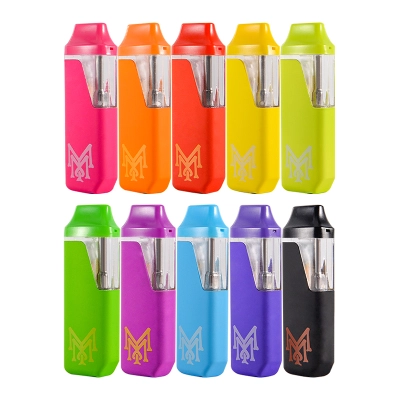
At Vapehitech, ACE hardware is organized so you can plan your ace ultra premium wholesale lineup without mixing empty shells and filled products. For a high-level view of the overall family structure, start with the ace ultra premium bulk overview. If your program is built around all-in-one devices, empty ace dispo serves as the hub for unfilled ACE disposable hardware, while capacity-specific pages such as empty ace ultra 2g disposable and empty ace ultra 1g help you decide how much oil your licensed partners will eventually put into each shell. For QA and shipping method details, see the dedicated Ace Ultra bulk AQL & packaging guide.
1) Why ACE Ultra Premium for wholesale programs?
From a hardware perspective, ACE Ultra sits in the same conversation as other flagship disposable families: it is visually distinctive, built around modern ceramic-core atomization, and designed to support both 1 g and 2 g fill volumes in a compact format. For B2B buyers, the attraction of an ace ultra premium wholesale lineup is not only aesthetics; it is the ability to standardize on one hardware language and then roll flavors, strains, and sub-brands through it over time.
The last few years have also made it clear that hardware and oil must be treated as separate risk layers. Public health investigations into the 2019–2020 EVALI outbreak in the United States, for example, documented at least 2,807 hospitalized cases and 68 deaths and linked the injuries primarily to illicit THC products containing vitamin E acetate and other cutting agents, not to empty shells alone. In other words, you want a hardware program that takes safety seriously without crossing into the role of a finished-product brand.
Takeaway. ACE Ultra hardware gives you a recognizable form factor you can standardize on, while an empty-only wholesale model lets your licensed fillers own all decisions about oil formulation, potency, and finished labels.
2) Mapping the ACE empty lineup (1 g, 2 g, Minis)
Before you negotiate price or MOQ, you need a clear map of what your ACE hardware lineup should look like. Most successful programs pick a small number of shells and then stick to them—rather than constantly adding new shapes that complicate QA, training, and inventory.
2.1 ACE 1 g: entry and medical-style formats
One-gram devices are still attractive in tightly regulated markets, medical channels, and programs where lower per-unit ticket price matters more than absolute value per gram. ACE 1 g shells can be used for:
- Conservative or medical-facing SKUs where patients and regulators are more comfortable with smaller fills.
- “Sampler” or rotating strain lines, where consumers try new genetics without committing to 2 g.
- Markets where excise tax and retail price caps make large formats harder to position.
When you build a 1 g tier into your ace ultra premium wholesale plan, anchoring it on empty ace ultra 1g keeps that capacity in one well-defined mechanical platform instead of spreading volume across too many SKUs.
2.2 ACE 2 g: mainline “value and convenience” SKU
Two-gram devices have become the default in many adult-use markets because they cut replacement frequency in half compared with 1 g while keeping the device pocketable. An ACE 2 g shell gives licensed fillers room to:
- Offer longer runtime for daily users without moving to bulky, multi-day devices.
- Spread packaging and retail handling cost over more oil per unit.
- Launch “flagship” strains with clear value stories based on fewer refills.
Standardizing your mainline volume on empty ace ultra 2g disposable simplifies forecasts and quality tracking: you get one housing, one fill volume, and one set of performance expectations instead of a patchwork of unrelated form factors.
2.3 Minis and seasonal shells
Many ACE programs add minis or seasonal shells once the core 1 g / 2 g lineup is stable. Minis can serve:
- Limited-edition collaborations and holiday drops.
- Tourist-heavy markets where smaller sizes and airport logistics matter.
- “Intro bundles” that include multiple small devices instead of one large one.
Capacity strategy. As a rule of thumb, a lean ACE program starts with one 2 g shell as the workhorse, adds 1 g only if regulators or channels demand it, and introduces minis or special editions later—once the main volumes, defect rates, and replenishment rhythms are all under control.
3) Wholesale channels: official brands vs empty hardware suppliers
When people search for “ACE Ultra” online, they often land on retail-facing sites that sell filled, branded products directly to adult consumers. As a B2B buyer planning an ace ultra premium wholesale program, however, you should distinguish clearly between three roles:
- Brand owners and licensed producers. They create finished, oil-filled ACE products for licensed markets.
- Empty hardware suppliers. Companies like Vapehitech that sell only unfilled ACE-compatible shells and treat them as components, not finished consumer goods.
- Unclear or “gray” sources. Intermediaries that cannot show whether they deal in empty shells or fully branded, oil-filled items, or that blur the line between the two.
For risk management, you want your wholesale relationship to look like #2, not #3. An empty-hardware supplier should:
- State clearly that all ACE devices are shipped without oil or nicotine and are intended for licensed filling only.
- Provide drawings, materials statements, and battery test summaries rather than consumer-facing strain or potency claims.
- Be willing to sit “behind the brand,” letting your licensed partners handle all finished-product labels and marketing.
Practical rule. If a potential “ACE wholesale” source spends more time showing off strains, potencies, and shipping policies for finished THC products than it does explaining hardware and compliance, it is not a good fit for an empty-hardware program.
4) Compliance benchmarks for ACE-style wholesale hardware
Even if you only handle empty ACE shells, regulators and investors will eventually ask what standards your hardware ecosystem references. You do not need to turn into a testing lab, but you should be comfortable with four core topics: battery transport, battery safety, heavy metals, and product-use risk.
4.1 Battery transport: UN 38.3 and PHMSA test summaries
Most ACE Ultra disposables use small rechargeable lithium-ion cells. For these cells and the devices they power to move legally in air or ground transport, they must meet the design tests in Section 38.3 of the UN Manual of Tests and Criteria. Regulators such as the U.S. Pipeline and Hazardous Materials Safety Administration (PHMSA) now expect manufacturers to provide a standardized lithium-battery test summary that confirms a design has passed UN 38.3 tests and provides traceability back to the test lab and report.
When you discuss ACE Ultra hardware with a supplier, ask whether they can provide UN 38.3 test summaries for the cells or devices you plan to ship and whether those documents are kept current as designs change.
4.2 Battery safety: IEC 62133-2 and UL 8139
Beyond transport, lithium cells inside ACE devices should be evaluated against product safety standards:
- IEC 62133-2. This international standard covers the safe operation of portable, sealed secondary lithium cells and batteries under intended use and reasonably foreseeable misuse. Certification work to IEC 62133-2 focuses on risks such as fire, leakage, and explosion under abuse and fault conditions.
- UL 8139. UL 8139 is a North American standard specifically for the electrical systems of electronic cigarettes and vaping devices. It looks at the combined battery, charging, and control electronics to reduce fire and explosion risk in operation and charging, and has been recognized by standards bodies and cited by regulators as a useful benchmark for safer e-cigarette designs.
What to expect. Your empty-hardware supplier may not own full UL or IEC certifications on every SKU, but they should at least be able to state which standards their cell vendors target, provide safety documentation from battery manufacturers, and explain how these expectations inform ACE Ultra design choices.
4.3 Heavy metals and cannabis testing ecosystems
Licensed cannabis and hemp labs in North America almost always test for the same “big four” heavy metals in inhalable products: lead (Pb), arsenic (As), cadmium (Cd), and mercury (Hg). States such as California and others have set strict pass/fail limits for these metals in inhaled cannabis products, and emerging international guidance often follows similar patterns. Analytical methods for heavy metals in cannabis concentrates, including AOAC-approved protocols based on microwave digestion and ICP-MS, are now widely used by accredited labs.
While you, as a hardware buyer, do not run these tests yourself, your ACE Ultra program should align with that ecosystem. That means:
- Requesting material declarations that show how ACE components in the oil path are controlled for heavy metals.
- Making sure your licensed fillers use ISO/IEC 17025-accredited labs or equivalent for routine product testing.
- Keeping hardware documentation in the same compliance file where your customers keep their COAs and lab reports.
4.4 Public-health context: EVALI and cutting agents
The EVALI outbreak forced regulators and clinicians to look closely at what, exactly, was causing acute lung injuries. Subsequent work by CDC, state health departments, and independent researchers has consistently pointed toward certain cutting agents—especially vitamin E acetate in illicit THC products—as a key driver, rather than nicotine-only products or empty shells. That does not make hardware irrelevant, but it does reinforce the value of keeping your business firmly on the component side and letting licensed brands manage oil formulation and product-use risk.
Positioning. In your own materials, you can honestly say that your ACE Ultra program is built on empty hardware, on clear separations of responsibility, and on documentation that supports regulators’ and investors’ expectations for battery safety and materials control.
5) Wholesale ordering structure: MOQ, master cases, and AQL
Once you understand where ACE Ultra fits in your lineup and which standards your suppliers reference, the next question is how to structure your ordering and QA so that defects stay within acceptable limits. Here the key concepts are MOQ, master case design, and AQL.
5.1 MOQ and phased ramp-up
For a new market or brand, it is rarely wise to go straight to very large orders. An ace ultra premium wholesale plan often works best in two phases:
- Pilot phase. Small, clearly bounded lots of ACE 1 g and 2 g devices, used to validate filling, flavor stability, and consumer response. Here the emphasis is on iterative learning, not on squeezing every cent from unit cost.
- Scaling phase. Once failure modes are understood and returns are stable, move to higher MOQs, but only with lot-level documentation and sampling in place.
5.2 Master case and inner packaging
For ACE Ultra hardware, how devices are packed matters almost as much as how they are built. A well-designed master case system:
- Separates devices into trays or blisters that protect windows, mouthpieces, and fill ports during long-distance shipping.
- Uses labeling and lot codes that remain readable even after outer cartons are opened and re-packed.
- Matches the realities of your fillers’ workflows (how many devices fit one shift, one strain run, or one production lot).
These considerations are covered in more detail in the Ace Ultra bulk AQL & packaging guide, which focuses on how to translate packaging and AQL theory into concrete acceptance rules at the warehouse door.
5.3 AQL, defect targets, and feedback loops
Your ACE wholesale contracts should explicitly name the kinds of defects that matter—cosmetic, functional, and safety-related—and specify acceptable quality limits (AQLs) for each. While statisticians can fine-tune sampling plans, a practical B2B framework includes:
- Clear definitions of critical, major, and minor defects (for example: shorted battery = critical, intermittent firing = major).
- Sampling plans that draw a statistically meaningful subset of each lot for inspection.
- Pre-agreed remedies when defect rates exceed thresholds (replacement, credit, or future-lot discounts).
Real-world tip. Pair your formal AQL numbers with feedback from licensees and retailers. An ACE Ultra SKU with “acceptable” defect rates on paper but chronic consumer complaints may still need design or process changes.
6) How to choose an ACE Ultra hardware partner
With so many vendors claiming ACE compatibility, how do you decide who should own your ace ultra premium wholesale stream? A structured vendor checklist helps you look beyond price and MOQ.
6.1 Documentation and transparency
A serious ACE hardware partner will provide, at minimum:
- Mechanical drawings or spec sheets for each ACE shell you plan to use.
- Material declarations for parts in the oil path, with an explanation of how heavy metals are controlled.
- Battery transport documentation, including UN 38.3 test summaries for relevant cells or assemblies.
- Evidence that their own upstream battery and plastics suppliers are used to working with regulated industries.
6.2 Separation between hardware and oil businesses
Vendors who try to sell you hardware, oil, and brands all at once may be convenient in the very short term but create complex regulatory exposures later. In contrast, a hardware-only ACE partner:
- Lets your licensed producers choose their own extractors and labs.
- Keeps COAs, ingredient lists, and potency decisions outside of the hardware contract.
- Focuses its own investment on engineering, packaging, and reliability instead of formulation and retail marketing.
6.3 Ability to scale and standardize
Finally, the right ACE partner can scale with you. That means:
- Consistent tooling and processes so that a 2 g shell ordered this year behaves like one ordered next year.
- Capacity to support multi-market launches without fragmenting designs region by region.
- Willingness to lock in change-control processes so that any hardware modifications are communicated and validated before rollout.
Ideal outcome. In a mature program, you should be able to describe your ACE hardware lineup in one page and trust that every ACE shell in the field matches that description within defined tolerances.
7) FAQ & next steps
Q1. Does an “empty-only” ACE program remove all regulatory risk?
No. Any device that will eventually carry regulated substances sits near regulated spaces. However, by keeping your role limited to empty ACE hardware, documenting your quality controls, and referencing recognized standards for batteries and materials, you keep your profile closer to that of a component supplier than that of a consumer-facing brand or manufacturer.
Q2. How do I explain this model to non-technical stakeholders?
One simple framing is: “We sell empty ACE Ultra hardware. Our responsibility is mechanical, electrical, and packaging quality. Licensed producers own oil formulation, lab testing, branding, and consumer compliance.” Most regulators and investors understand why that division of responsibility is healthier than trying to own every layer yourself.
Q3. Where should I go deeper on ACE QA and acceptance?
This article is intentionally high-level. For methods, sampling plans, and detailed lot-acceptance guidance, use the Ace Ultra bulk AQL & packaging guide as your technical reference. Treat that document as the place where you define how warehouses and fillers actually inspect incoming ACE lots in practice.
Disclaimer: This article is for B2B hardware education only. It does not provide legal advice, does not endorse or sell any oil or nicotine products, and does not promote the use of controlled substances. Always consult local regulations and qualified counsel when designing your product, supply chain, and compliance strategy.
3 Comments
Very informative, appreciate your work.
Nice tips, thanks for sharing!
Awesome article, learned something new today!