
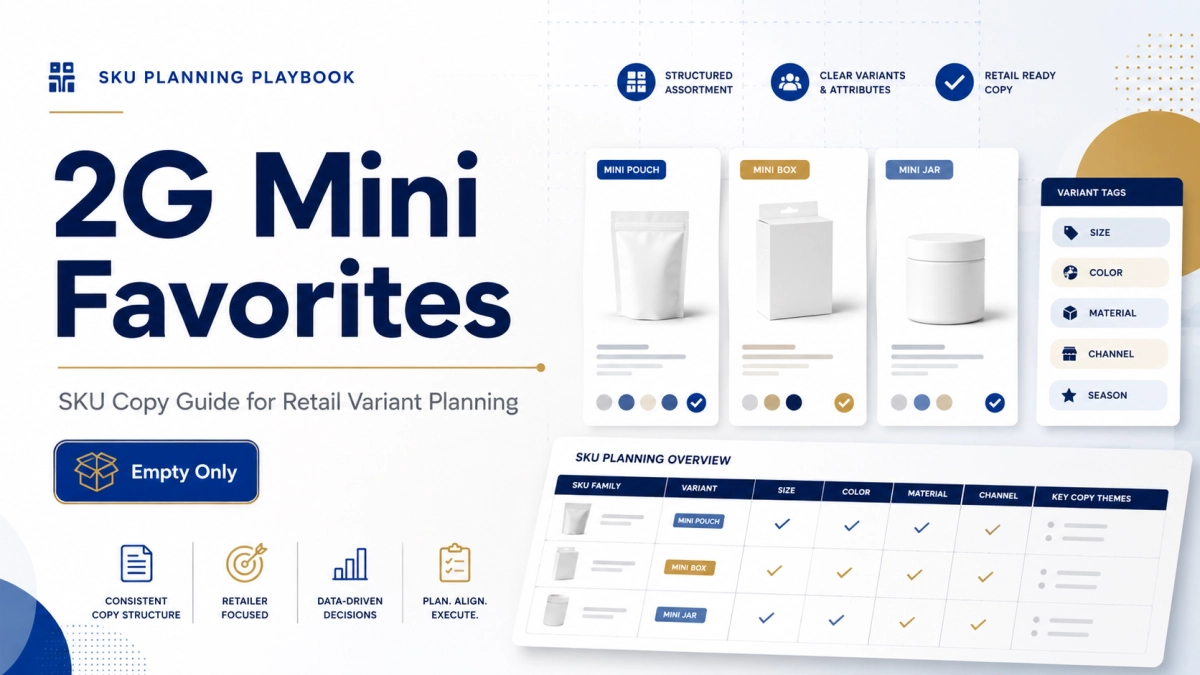
Scope: This playbook is written for qualified wholesale buyers, retail catalog teams, and assortment planners reviewing empty only 2G mini-format Favorite rows in markets where allowed. It covers product copy structure, SKU grouping, variant naming, proof checks, age-gate awareness, and claim-control review. It does not cover filled material, formulas, filling steps, dosage claims, potency claims, medical claims, therapeutic claims, consumer use directions, or youth-facing messaging.
Quick answer
A BOFU SKU planning page for 2g mini favorites should make the retail decision path easy to audit. Start with one category-level context, then separate the public title, variant label, capacity cue, pack route, proof status, and compliance-sensitive wording into controlled fields. This keeps the page useful for buyers without turning the article into a hard-pitch landing page.
Category first
Use the Favorite category as the main context so the pillar keyword points to a broader planning route before individual rows are compared.
Short title logic
Write titles that identify the row, distinguish variants, and avoid promotional add-ons that belong in other fields.
Retail fields
Give buyers separate fields for format, capacity cue, pack route, case route, status, and proof notes.
Claim control
Keep statements factual, evidence-led, market-reviewed, and suitable for qualified retail teams.
Why this SKU planner matters
Retailers do not need longer copy; they need cleaner SKU logic. A 2G mini-format Favorite row can be misread when the public title tries to carry every detail at once. The better path is to use a short title, a controlled variant label, a comparison table, and a proof checklist that shows which details are approved for publication.
The main planning goal is to reduce catalog ambiguity. A buyer should be able to answer four questions quickly: what row is this, how does it differ from nearby rows, what field should be checked before listing, and which claim language should be avoided until reviewed.
Planning principle
Use the category page for keyword and family context, then use individual product pages only when a specific row supports a naming, variant, or proof example.
Retail product copy architecture
A strong 2G mini-format product page should be table-led. The title introduces the row, the opening paragraph explains the retail role, and the table handles comparison details. This prevents the copy from becoming a keyword chain.
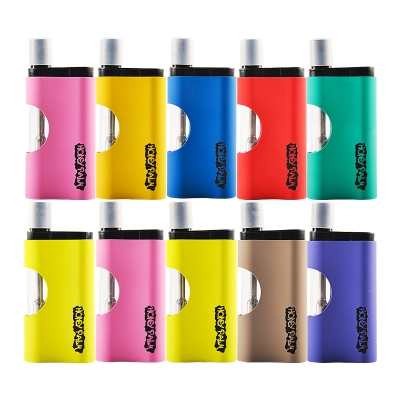
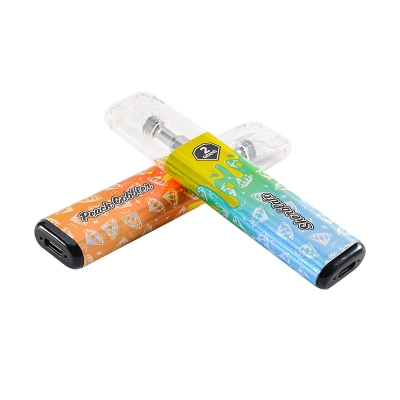
For a row-specific example, reference Favorites 2G Minis in the SKU template section. The anchor stays short, the page stays relevant, and the article keeps the category page as the main keyword destination.
| Copy block | Role in the page | Recommended content | Do not use it for |
|---|---|---|---|
| H1 | Define the planning topic. | 2G Mini Favorites SKU Planner plus retailer copy structure. | Repeating every variant, route, or pack detail. |
| Intro paragraph | Set BOFU intent without aggressive selling. | Explain that buyers need SKU clarity, proof control, and variant logic. | Limited-time claims, universal market claims, or unsupported superiority wording. |
| SKU table | Make comparison easy. | Format, capacity cue, pack route, stock route, proof status, and note owner. | Medical, therapeutic, potency, or consumption claims. |
| Variant notes | Show why one row differs from another. | Mini row, screen-led row, route-led row, or pack-led row. | Unverified feature lists or copied supplier language. |
| FAQ | Answer buyer review questions. | Who the page is for, what empty only means, and what must be checked. | Consumer instructions or use promises. |
2G mini naming rules
Product title guidance from Google Merchant Center emphasizes that titles should clearly describe the linked item and distinguish variants. Apply that same discipline to this article: the title identifies the planning topic, while tables carry the details that buyers need for review.
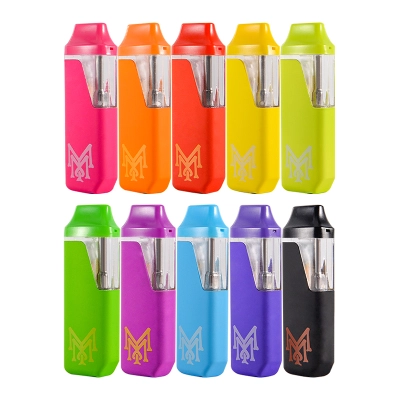
Use Favorite mini 2g as a supporting row when explaining how phrase order can change across product titles, internal sheets, and category copy. The goal is not to force every phrase into the H1. The goal is to decide where each phrase belongs.
| Element | Preferred rule | Retail reason | Review note |
|---|---|---|---|
| Family term | Keep Favorite visible but not repeated in every sentence. | Helps buyers connect the row to the category. | Use once in the title and again only when needed. |
| Mini cue | Use mini to identify the compact assortment role. | Helps shelf planners group smaller-format rows. | Do not turn mini into a quality or outcome claim. |
| 2G cue | Use one approved 2G pattern across the page. | Reduces mismatch between listing copy, proof files, and buyer sheets. | Choose 2G or 2g and document the reason. |
| Variant cue | Add only when it separates one row from another. | Prevents title bloat. | Move secondary details into tables. |
| Route cue | Put stock-region notes in tables or FAQ when possible. | Keeps the title clean. | Avoid availability promises unless current proof supports them. |
Title formula
Family + format + capacity cue + planning intent. For this article, that means: 2G Mini Favorites SKU Planner, then the subtitle explains how retailers should structure product copy.
Variant and assortment map
Retail copy should make assortment relationships visible. A mini-format row may be the parent planning topic, while nearby rows support screen, route, pack, or comparison logic. A neutral map helps buyers understand the assortment without pressure language.
For a non-primary comparison example, use Favorite 2G small-screen row only when the section discusses how a second cue can create a distinct row. This keeps the main pillar link concentrated on the category page.
| Assortment role | What the copy should say | What the buyer can compare | Where it belongs |
|---|---|---|---|
| Core mini row | Mini-format Favorite row with a controlled 2G cue. | Format, capacity cue, pack route, and proof status. | Category context and main SKU table. |
| Phrase-order row | Alternative wording used for title and internal sheet alignment. | Favorite mini 2g vs. Favorites 2G Minis. | Naming section. |
| Screen-led row | Separate row only when the screen cue is a verified differentiator. | Visual cue, row label, and catalog placement. | Variant map. |
| Route-led row | Stock-region or case-planning note with current proof. | Region note, lot plan, and status owner. | Retailer-ready fields. |
| Proof-pending row | Internal review row not ready for public copy. | Missing image, missing title approval, or incomplete pack note. | Proof checklist. |
Retailer-ready SKU fields
BOFU product copy should support a buyer who is close to making an assortment decision. The copy should not sound like a consumer ad. It should read like a clean SKU brief with fields that purchasing, compliance, catalog, and shelf-planning teams can all understand.
| Field | Recommended wording | Purpose | Proof owner |
|---|---|---|---|
| Primary label | 2G Mini Favorites SKU Planner. | Defines the topic and keeps the keyword focused. | SEO owner. |
| Family route | Favorite category context. | Connects the page to the broader assortment. | Catalog owner. |
| Format cue | Mini-format row for compact shelf planning. | Helps buyers group and compare rows. | Merchandising owner. |
| Capacity cue | 2G, written consistently across all public fields. | Prevents mismatched buyer sheets and page copy. | Product data owner. |
| Pack route | Case count, box route, or MOQ route, when verified. | Supports wholesale planning. | Operations owner. |
| Claim status | Approved, revise, hold, or market review required. | Keeps public language evidence-led. | Compliance owner. |
Internal link map
This article should use no more than five internal links. The first internal link should use the exact keyword anchor and point to the category page. Later links should be short, descriptive, and used only where the linked row supports the surrounding section.
| Priority | Anchor text | Target | Use case |
|---|---|---|---|
| 1 | 2g mini favorites | Favorite category page | Main pillar signal and first contextual link. |
| 2 | Favorites 2G Minis | Main mini-format product row | SKU template example. |
| 3 | Favorite mini 2g | Phrase-order supporting row | Naming and variant control example. |
| 4 | Favorite 2G small-screen row | Secondary Favorite 2G row | Variant differentiation example. |
Proof and claim-control checklist
Before publication, every visible claim should have a proof owner. This is especially important for retailer-facing pages because the audience may reuse page language in catalogs, buyer sheets, shelf notes, or quote requests.
| Checklist item | What to verify | Safer wording | Avoid |
|---|---|---|---|
| Keyword anchor | Exact match appears once and points to the category page. | 2g mini favorites. | Repeating the same anchor multiple times. |
| Title proof | Family, mini-format cue, 2G cue, and planning intent are aligned. | SKU Planner, product copy structure, retailer fields. | Overloaded titles with urgency or price language. |
| Empty only scope | The page does not discuss filled material or preparation steps. | Empty only, proof-led, market-reviewed. | Formulas, filling steps, dosage, potency, or use directions. |
| Retail compliance | Age-gate and market review notes are handled as compliance reminders. | Qualified retailers, allowed markets, legal review required. | Youth-facing copy or universal compliance claims. |
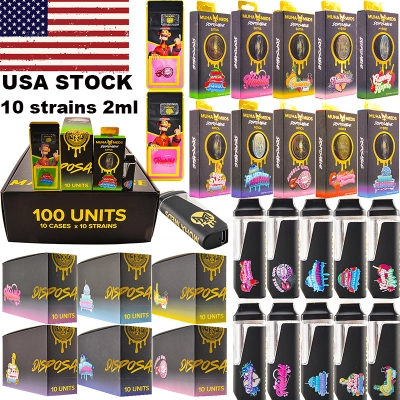
| USA stock wording | Stock-location language is not confused with origin claims. | USA stock route, USA warehouse route, current availability proof. | Unverified made-in claims or broad origin promises. |
| Performance language | All outcome wording has documented support or is removed. | Assortment role, catalog clarity, row differentiation. | Guaranteed sell-through, health outcomes, or unsupported ranking terms. |
BOFU copy rule
Make the page useful for a buyer who is already comparing rows. Use clear fields, short anchors, and proof-led explanations instead of stronger promotional language.
Official references for this SKU planning playbook
The following external references support title discipline, product data structure, variant grouping, truthful claim review, age-gate awareness, and origin-claim caution. They are references for content governance and do not replace qualified legal, tax, customs, trademark, labeling, or market-specific review.
| Reference area | How to use it in this article | Source |
|---|---|---|
| Retail compliance basics | Use for age-gate and retailer compliance awareness in applicable markets. | FDA retail compliance basics |
| Age-verification reminder | Use when explaining why the article should remain qualified-retailer focused. | Tobacco 21 age-verification guidance |
| Product title discipline | Use when explaining clear titles, variant differences, and non-promotional title structure. | product title requirements |
| Product data fields | Use when building consistent product data for title, description, identifiers, and availability fields. | product data specification |
| Variant data structure | Use when grouping mini-format, screen-led, and route-led rows under a shared family concept. | ProductGroup variant structure |
| Product group vocabulary | Use when defining what changes between rows and what stays shared. | ProductGroup vocabulary |
| Unique item identification | Use when deciding whether a row needs a separate identifier or can remain a variant under the same family. | GTIN management standard |
| Truthful claim review | Use when reviewing objective claims, promotional phrasing, and evidence requirements. | truthful advertising guidance |
| USA wording caution | Use when separating stock-location wording from origin claims. | U.S. origin claim guidance |
FAQ
What is a 2G Mini Favorites SKU Planner?
It is a BOFU content page that helps qualified retail and wholesale teams structure product copy for 2G mini-format Favorite rows. The page should explain naming, variant grouping, proof review, and retail-ready fields.
Where should the keyword link point?
The exact keyword anchor should point to the Favorite category page because a category page is better for pillar context than a single row page. Use row pages only for specific SKU examples.
How many internal links should this article use?
Use four internal links in the article body. That is enough to support the category route and product-row examples without diluting the main pillar signal.
Should the article sound promotional?
No. A SKU planning playbook should help buyers review fields and compare rows. It should not rely on urgency, discount, strongest-choice, or guaranteed-outcome language.
What does empty only mean in this article?
Empty only means the article discusses unfilled product-row planning, public copy structure, and catalog governance. It does not discuss filled material, formulas, filling steps, dosage, potency, medical claims, therapeutic claims, or consumer use directions.
How should USA stock language be handled?
Use USA stock or USA warehouse only as a stock-route phrase when current proof supports it. Do not turn stock-route language into an origin claim unless qualified review confirms the wording.
Is this legal advice?
No. This is an educational SKU planning playbook for B2B content governance. Teams should seek qualified legal, tax, customs, trademark, labeling, and regulated-market review before publication.
```
0 Comments